
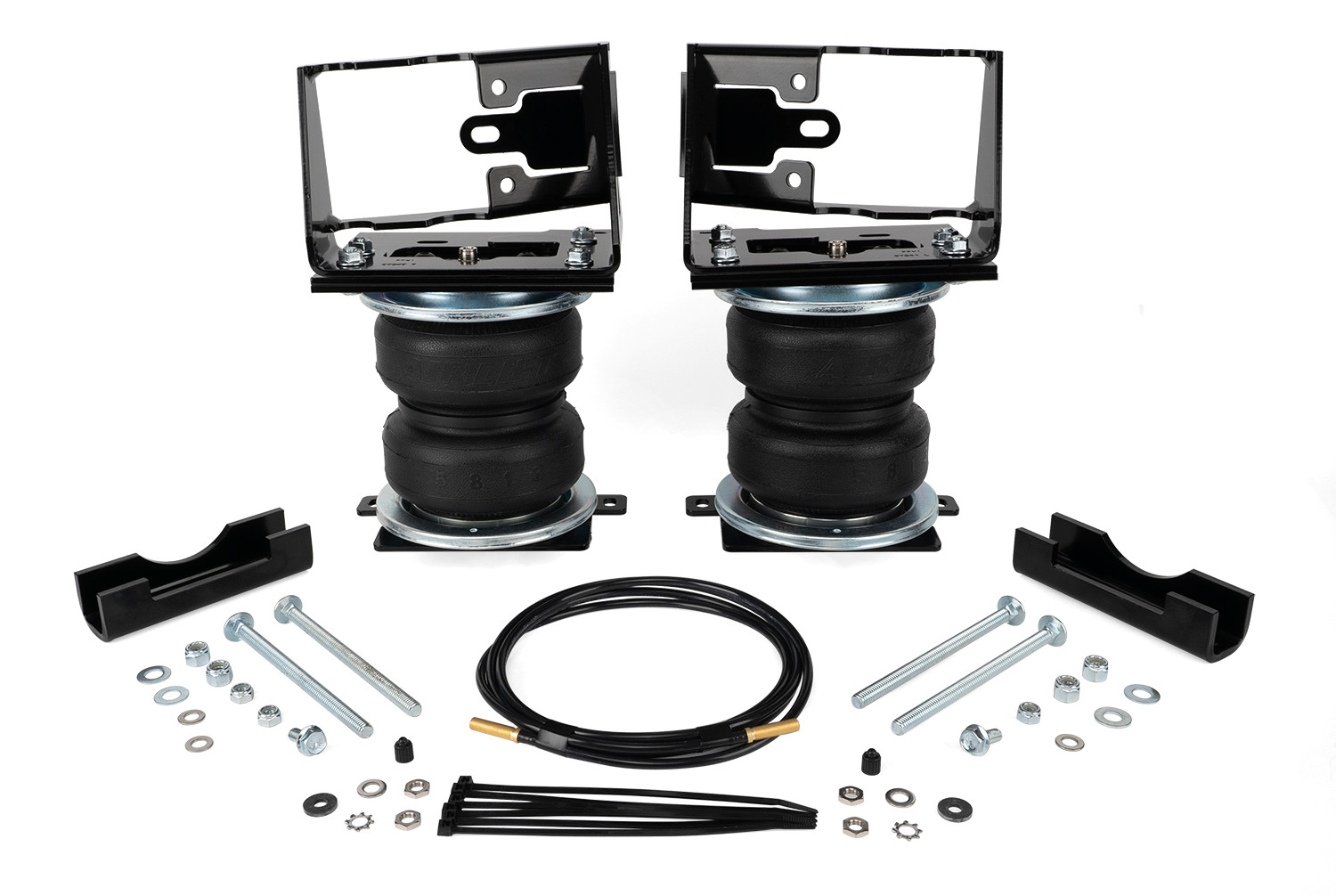
Air Lift LoadLifter 5000 Air Spring Kit 57389Air LiftOriginal price was $764.99. Current price is $553.99.In Stock
View productOur in-house experts typically reply within one business day.

Air Lift


Always the correct part
We know our products
Quality Products
Free Shipping!
Always the correct part
We know our products
Quality Products
Free Shipping!
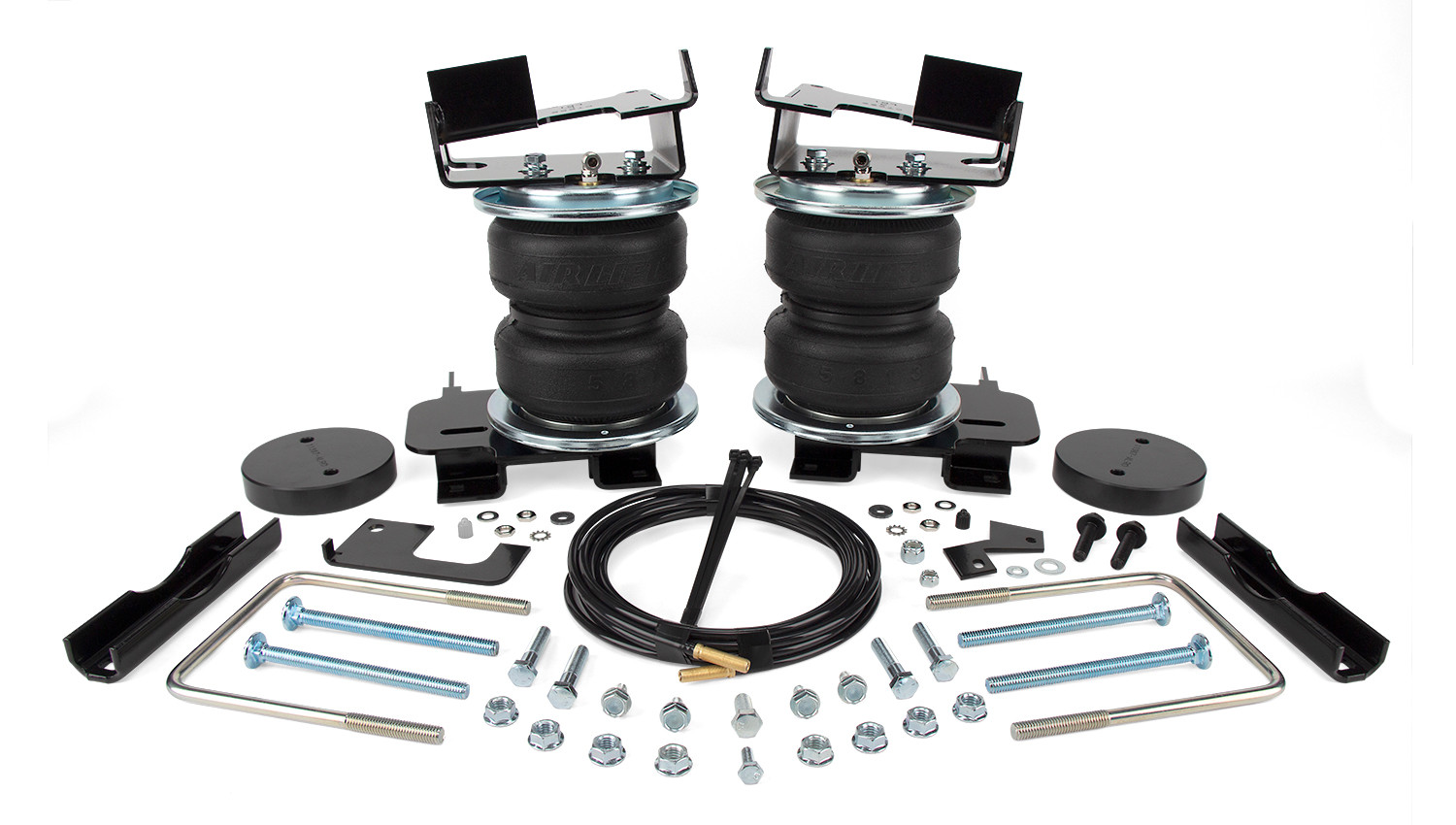
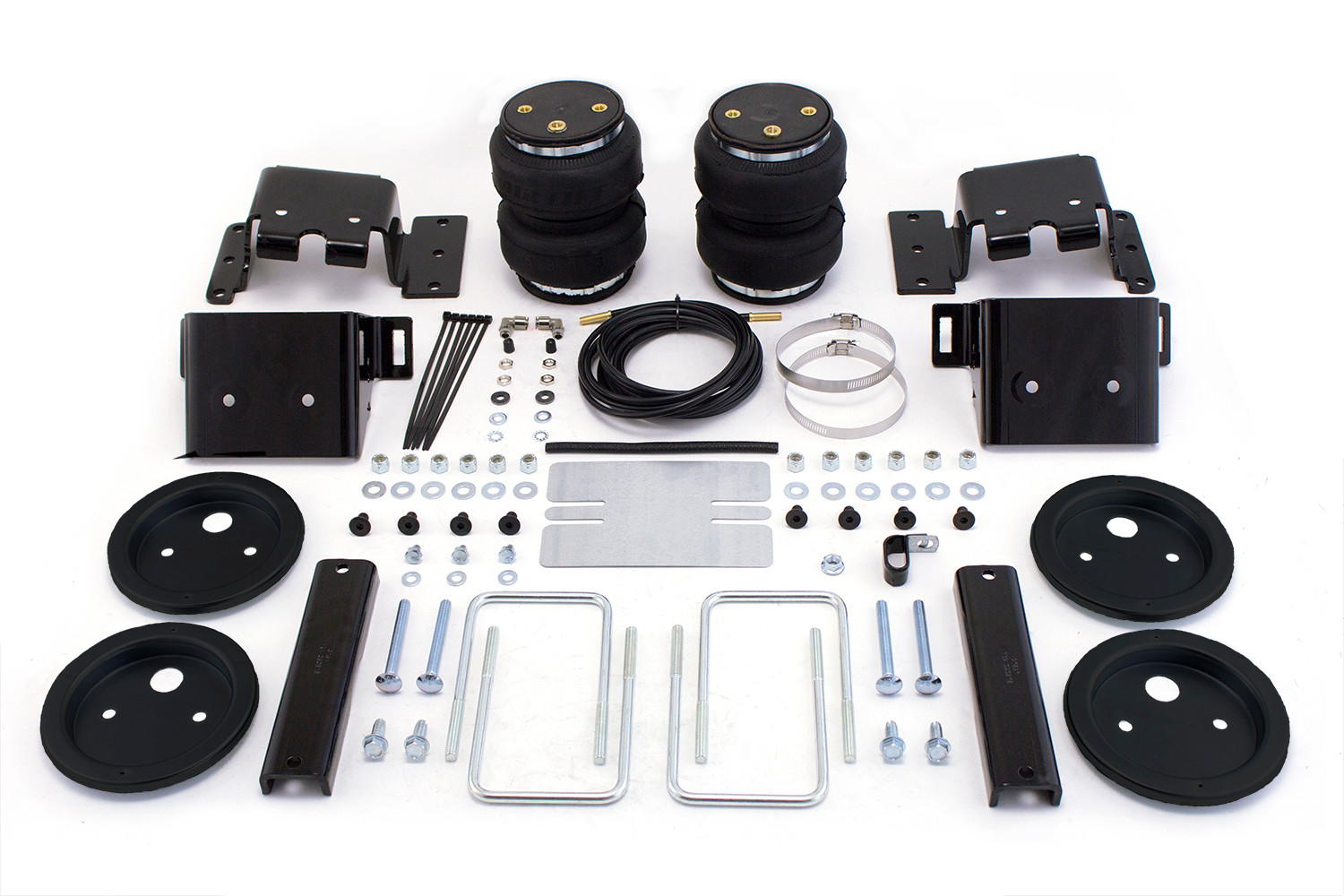
The Air Lift LoadLifter 5000 offers up to 5,000 lbs. of load-leveling capacity. It makes towing and hauling the most demanding loads a comfortable and stress-free experience.

Offering up to 5,000 pounds of load-leveling capacity, the LoadLifter 5000 kit from Air Lift will make towing and hauling with your Toyota Tundra a comfortable and stress-free experience. Fully-adjustable from 5-100psi, our air springs are the perfect partner for your vehicle, helping to eliminate problems frequently faced when towing and hauling, such as squat, poor headlight aim, trailer sway, body roll, and bottoming out. Each kit comes equipped with upper and lower roll plates, to protect the air springs from sharp edges. The air springs are built similar to a tire, reinforced with 2-ply fabric for maximum strength. All of the end caps are made with an ultra-high strength nylon composite formula, strong as steel but much lighter and corrosion proof. Installing the kit is a simple process, requiring only common hand tools and no frame drilling. The LoadLifter 5000 kit comes with clear, easy to follow full-color instructions. As the leader in air suspension products for over 70 years, Air Lift is committed to delivering quality load support products that fit, work and last. To ensure the highest quality, longevity, and customer satisfaction, the key suspension components, including the air springs and all hardware, have all been torture-tested to 1 million cycles on our hydraulic test rig. With a Limited Lifetime Warranty and 60-Day Ride Satisfaction Guarantee, along with a dedicated in-house Customer Service Team, you can purchase this kit with peace of mind. Whether it is towing or hauling, the LoadLifter 5000 kit from Air Lift will give you the ability to use your Toyota Tundra with added safety and comfort.
Air Lift Company has developed dependable air spring suspension products since our inception in 1949. Our original product, a rubber air spring inserted into a car’s factory coil spring, was created and patented in 1950. We’ve come a long way since 1949 and are proud to be a dedicated suspension specialist company.
Today, Air Lift load support products are sold worldwide and are engineered to fit over 540 vehicles. Our extensive product line offers air helper springs for trucks, RVs, SUVs, CUVs, and vans, as well as the most technologically advanced on-board air compressor systems for on-the-go air spring control.
Air Lift leads the industry in no-drill applications – kits that bolt onto your vehicle’s frame, speeding the installation process. Our teams work constantly to bring innovative products to you and upgrade existing products with the latest technology.
All of our efforts are spent ensuring your safety and comfort by designing, engineering, and manufacturing the highest quality suspension products. We are a family-owned business based in Lansing, Michigan, and make your family and cargo’s safety our top priority.
Experts available to answer your questions
Call 888-634-9494Limited Lifetime
Yes, the Air Lift LoadLifter 5000 Air Spring Kit 57383 (Part #BBCG57383) is designed to fit the 2022-2026 Toyota Tundra.
The Air Lift LoadLifter 5000 Air Spring Kit 57383 (Part #BBCG57383) fits 2022-2026 Toyota Tundra models. The 2026 model year is the last year covered by this part number. For newer models, check for an updated version.
The Air Lift LoadLifter 5000 Air Spring Kit 57383 (Part #BBCG57383) fits the following vehicles: 2022-2026 Toyota Tundra. Always verify your specific year, make, and model before ordering.
The Air Lift LoadLifter 5000 Air Spring Kit 57383 (Part #BBCG57383) Refer to the included instructions for installation details. Basic hand tools are typically all you need.
The LoadLifter 5000 Series is an air suspension system that provides load-leveling support for Toyota Tundra trucks. It uses reinforced, commercial-grade air springs with layers of rubber and cords to support loads. The system provides up to 5,000 pounds (2,268 kg) of load-leveling support and is adjustable from 5–100 PSI (0.34–7 BAR). The air springs help maintain level ride height when the vehicle is loaded.
The LoadLifter 5000 Series is designed for Toyota Tundra. The manual does not specify model year, cab style, bed length, or drivetrain variants. Contact Air Lift customer service at (800) 248-0892 or service@airliftcompany.com to confirm fitment for your specific Tundra configuration.
Both kits are LoadLifter 5000 Series for Toyota Tundra but differ in roll plate finish and air spring type. Kit 57383 (Standard LoadLifter 5000) includes zinc-plated steel roll plates (part 11951) and black nylon air lines. Kit 88383 (LoadLifter 5000 Ultimate) includes black powder-coated roll plates (part 11967) and black nylon air lines. The installation procedure is the same for both kits.
Required tools include: standard and metric open-end or box wrenches (set), 9/16" ratchet wrench, ratchet, standard and metric regular and deep-well sockets (set), torque wrench, 5mm hex key, hose cutter or sharp knife, hoist or floor jack, safety glasses, two safety stands, air compressor or compressed air source, and spray bottle with dish soap/water solution.
Yes. The factory jounce bumpers must be removed from both sides of the vehicle. They are held on by three bolts each (one on the side of the frame and two on the bottom of the frame) and are removed using a 12mm ratchet or wrench. The holes left by the jounce bumpers are reused for the upper frame brackets.
Yes. You must remove two plastic covers (one from each side) using a small prybar or flathead screwdriver. On the passenger's (right) side, you must also remove a module by removing two bolts with a 12mm socket or wrench, then tuck the module out of the way. The module is later reattached to the upper brace.
The manual does not specify whether the battery must be disconnected. Contact Air Lift customer service at (800) 248-0892 for guidance on this step.
The M8 button head cap screws (part P) that attach the upper frame brackets to the frame must be torqued to 18 lb.-ft. (24 Nm) using a 5mm hex tool. These screws are initially left loose to allow the brackets to slide front to back, then tightened after the upper brace is aligned.
The air fitting (part I) should be threaded onto the air spring (part G) finger-tight, then finished tightening an additional 1½ turns with a 1/2" wrench. Do not over-tighten.
The 3/8"-24 button head screws (part J) that secure the upper spring bracket (part D) to the air spring must be torqued to no more than 20 lb.-ft. (27 Nm).
The 3/8"-24 button head screws (part J) that secure the lower bracket assembly to the air spring must be torqued to no more than 20 lb.-ft. (27 Nm).
The serrated flange nuts (part L) on the short carriage bolts (part K) must be torqued to 16 lb.-ft. (22 Nm). These nuts are initially left loose when the assembly is first positioned, then tightened after the M8 flanged bolt is installed and torqued.
The M8 flanged bolt (part S) that passes through the upper brace into the frame must be torqued to 18 lb.-ft. (24 Nm).
The M8 flanged bolt (part S) with M8 washer (part R) and M8 lock nut (part Q) that attaches the module to the upper brace must be torqued to 18 lb.-ft. (24 Nm).
The nylon lock nuts (part O) on the lower carriage bolts (part M) that secure the clamp bar (part A) must be torqued to 10 lb.-ft. (14 Nm). Tighten the nuts evenly so the clamp bar remains level.
The original equipment manufacturer (OEM) bolt removed from the brake cable bracket, used with an M8 washer (part R) and M8 lock nut (part Q) to attach the brake cable bracket to the lower bracket tab, must be torqued to 18 lb.-ft. (24 Nm).
Yes. You must drill a 5/16" (8 mm) hole in your chosen location for the Schrader valve. The manual shows three common locations: inside the fuel tank filler door, inside the rear wheel wells, or in the license plate or rear bumper area.
Make clean, square cuts using a razor blade or hose cutter. Do not use scissors or wire cutters, as they will crush or fray the line. The minimum bend radius for the air line is 1" (25 mm). Leave at least 2" (50 mm) of slack in the air line to allow for movement that might pull on the line.
Route the nylon air lines from the air springs along the top of the frame, forward of the axle, then down to the fitting. On the passenger's (right) side, install the air line thermal sleeve over the air line before inserting it into the fitting. Secure the air lines to the upper coil spring mount with zip ties (part BB). Keep at least 6" (150 mm) of clearance between all air lines and the exhaust system. Avoid sharp bends and edges.
The maximum air pressure is 100 PSI (7 BAR). Never inflate the air springs beyond this pressure. The minimum recommended air pressure is 5 PSI (0.34 BAR).
Before operating, perform the following checks: (1) Clearance test—inflate to 40–60 PSI and verify at least 1/2" (13 mm) clearance from tires, brakes, frame, shock absorbers and brake cables. (2) Leak test—inflate to 40–60 PSI and check all connections for leaks; all leaks must be eliminated before road testing. (3) Heat test—ensure at least 6" (152 mm) clearance from heat sources; install heat shield if included. (4) Fastener test—after 500 miles (800 km), recheck all bolts for proper torque. (5) Road test—drive 10 miles (16 km) and recheck clearance, fasteners and leaks.
Yes. Check air pressure weekly. Always maintain normal ride height and never inflate beyond 100 PSI (7 BAR). The air pressure actually needed depends on load and gross vehicle weight rating.
Do not exceed the maximum gross vehicle weight rating (GVWR) or payload rating as indicated by the vehicle manufacturer. Although the air springs are rated at a maximum inflation pressure of 100 PSI (7 BAR), the air pressure actually needed is dependent on load and GVWR.
Check air pressure weekly. After 500 miles (800 km), recheck all bolts for proper torque. If the system develops an air leak, use a soapy water solution to check all air line connections and the inflation valve core before deflating and removing the air spring. Always maintain normal ride height and never inflate beyond 100 PSI (7 BAR).
Inflate the air springs to 40–60 PSI (2.8–4.1 BAR) and use a spray bottle with a soapy water solution to check all air line connections and the inflation valve core for leaks. All leaks must be eliminated before the vehicle is road-tested. If a leak is found, deflate and remove the air spring to repair or replace the leaking component.
Inflate the air springs to 40–60 PSI (2.8–4.1 BAR) and verify at least 1/2" (13 mm) clearance from anything that might rub against each sleeve. Check the tire, brakes, frame, shock absorbers and brake cables. Also ensure at least 6" (152 mm) clearance from heat sources such as the exhaust system.
Yes. Remove the factory jounce bumpers from both sides using a 12mm wrench (three bolts per side). The holes are reused for the upper frame brackets.
Yes. Drill a 5/16" (8 mm) hole in your chosen location for each Schrader valve. Common locations are the fuel tank filler door, rear wheel wells, or license plate area.
Perform clearance test (1/2" minimum from tires, brakes, frame, shocks, cables), leak test at 40–60 PSI, heat test (6" minimum from exhaust), and fastener check. After 500 miles, recheck all bolts. Road test for 10 miles and recheck clearance and leaks.
Check air pressure weekly. After 500 miles (800 km), recheck all bolts for proper torque.
Use a spray bottle with a soapy water solution to check all air line connections and the inflation valve core. Bubbles will form at the location of any leak. Inflate the air springs to 40–60 PSI (2.8–4.1 BAR) before testing. All leaks must be eliminated before road testing.
If the system develops an air leak, use a soapy water solution to identify the location of the leak at air line connections or the inflation valve core. Deflate the air springs and remove the affected component for repair or replacement. Do not operate the vehicle until all leaks are eliminated.
Inflate the air springs to 40–60 PSI (2.8–4.1 BAR) and verify at least 1/2" (13 mm) clearance from tires, brakes, frame, shock absorbers and brake cables. If rubbing is detected, check that all fasteners are properly torqued and that the assembly is correctly positioned. Verify that brake lines have been repositioned away from carriage bolts and that no components are interfering with the air spring sleeve.
On Sale Today
Original price was $764.99. Current price is $553.99.You save $211.00 (28%)
Free Shipping
Ships free on all orders
 Authorized Dealer

Quick Ship
In stock and ready to ship — order now!
FREE ShippingFREE SHIPPING
Estimated delivery Sun, Oct 25 - Wed, Oct 28
Order before 2 PM EST Monday–Friday for same-day processing
Guaranteed safe & secure checkout
No reviews have been added for this product.