

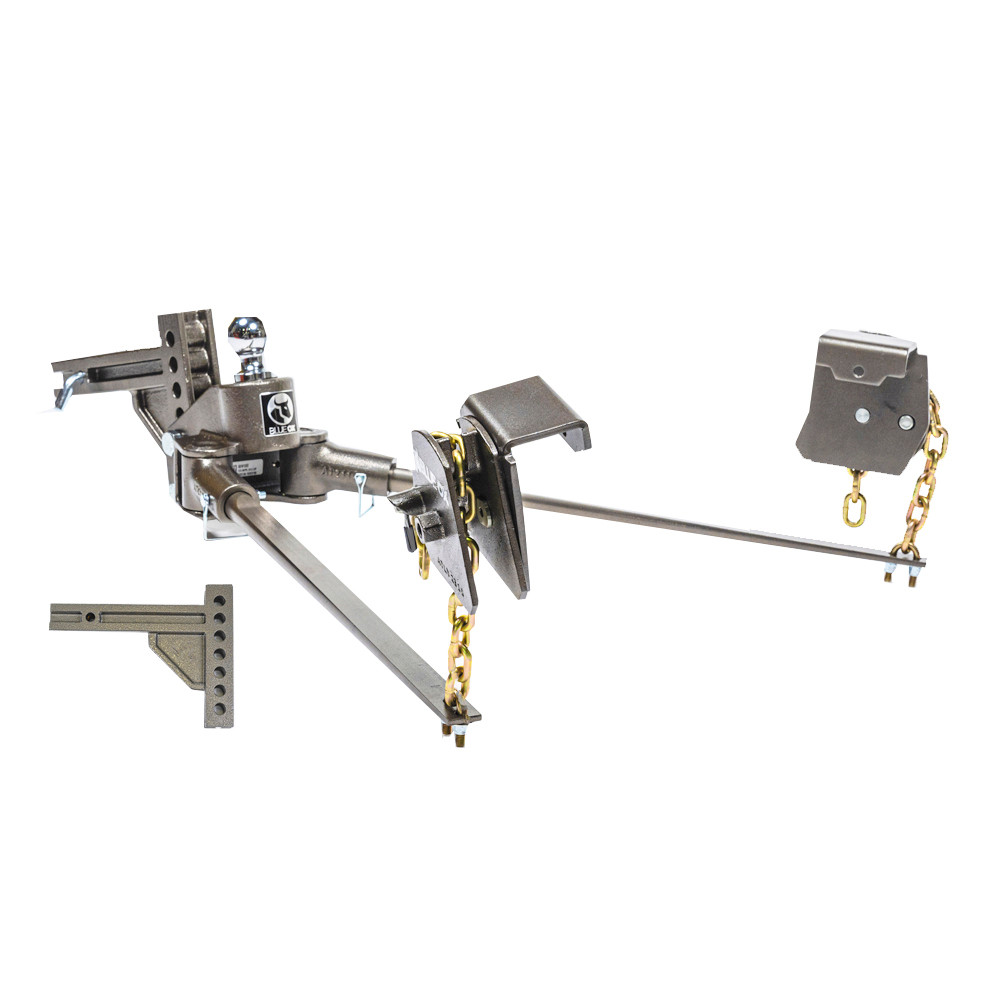
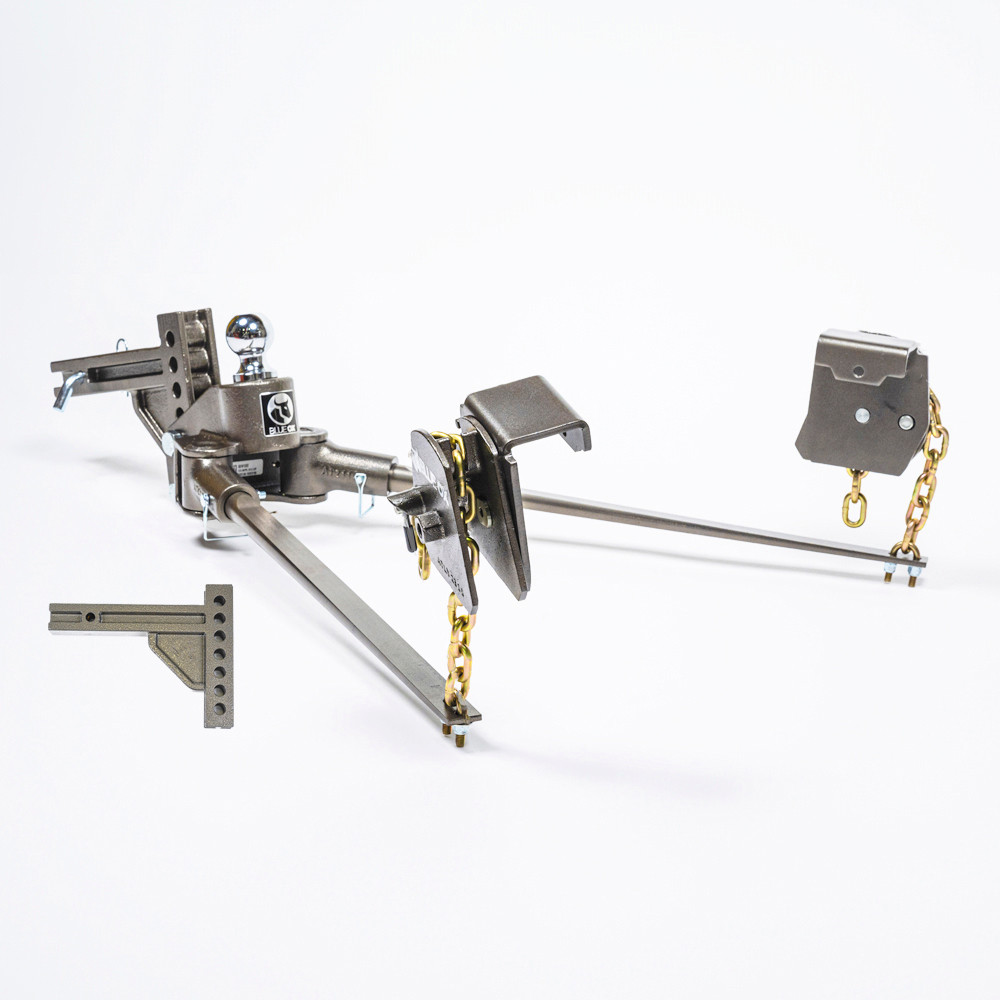
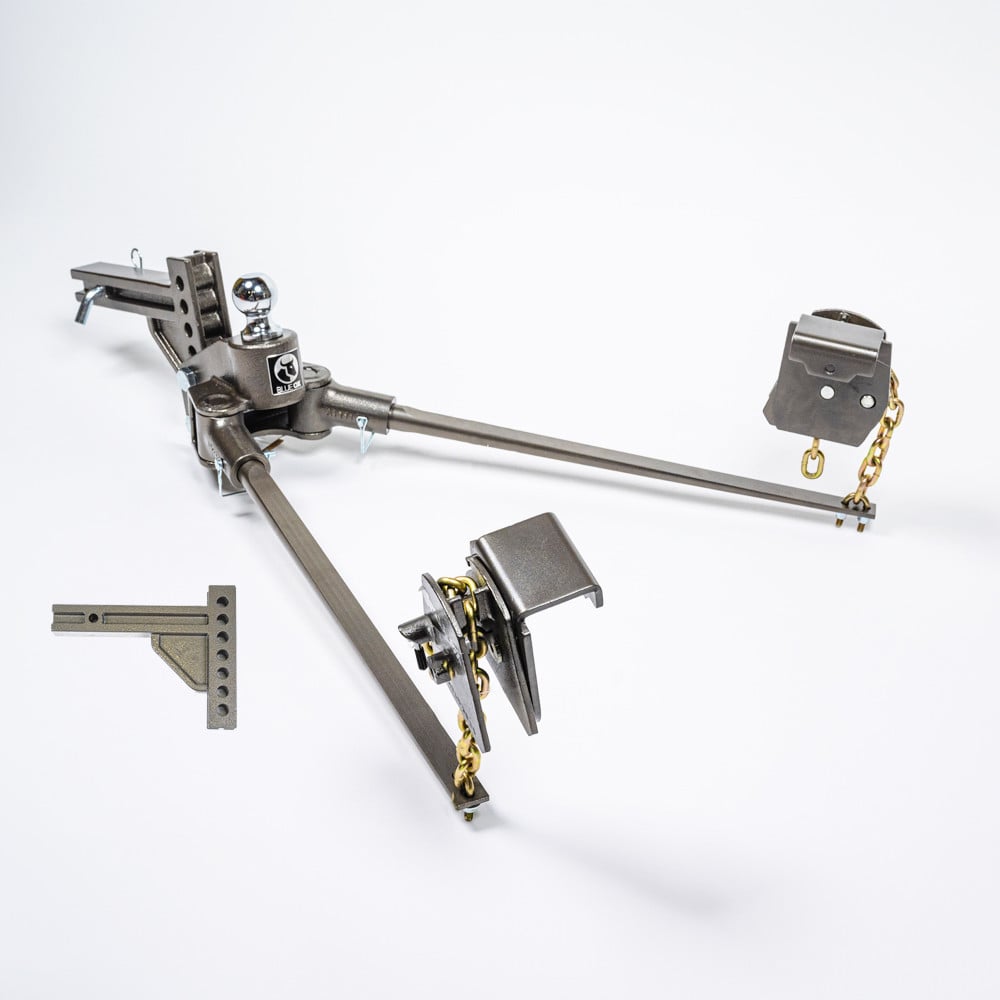
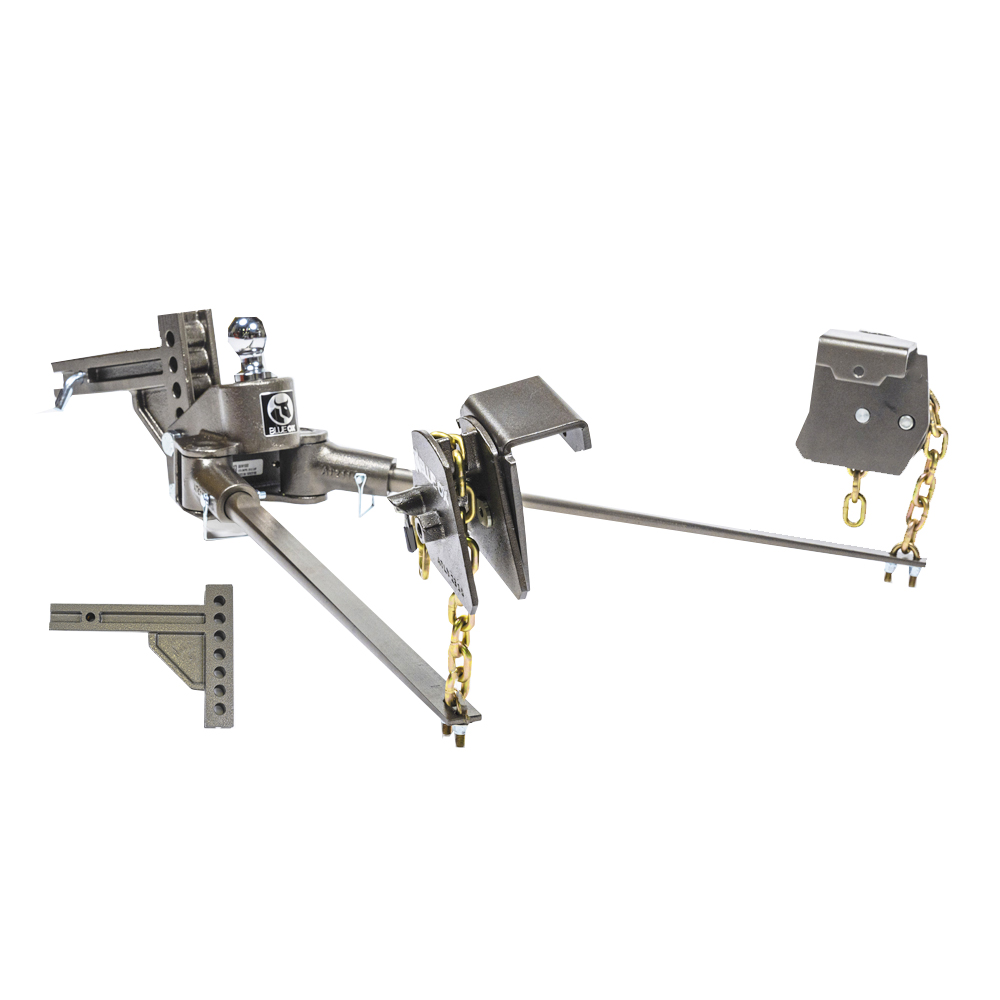
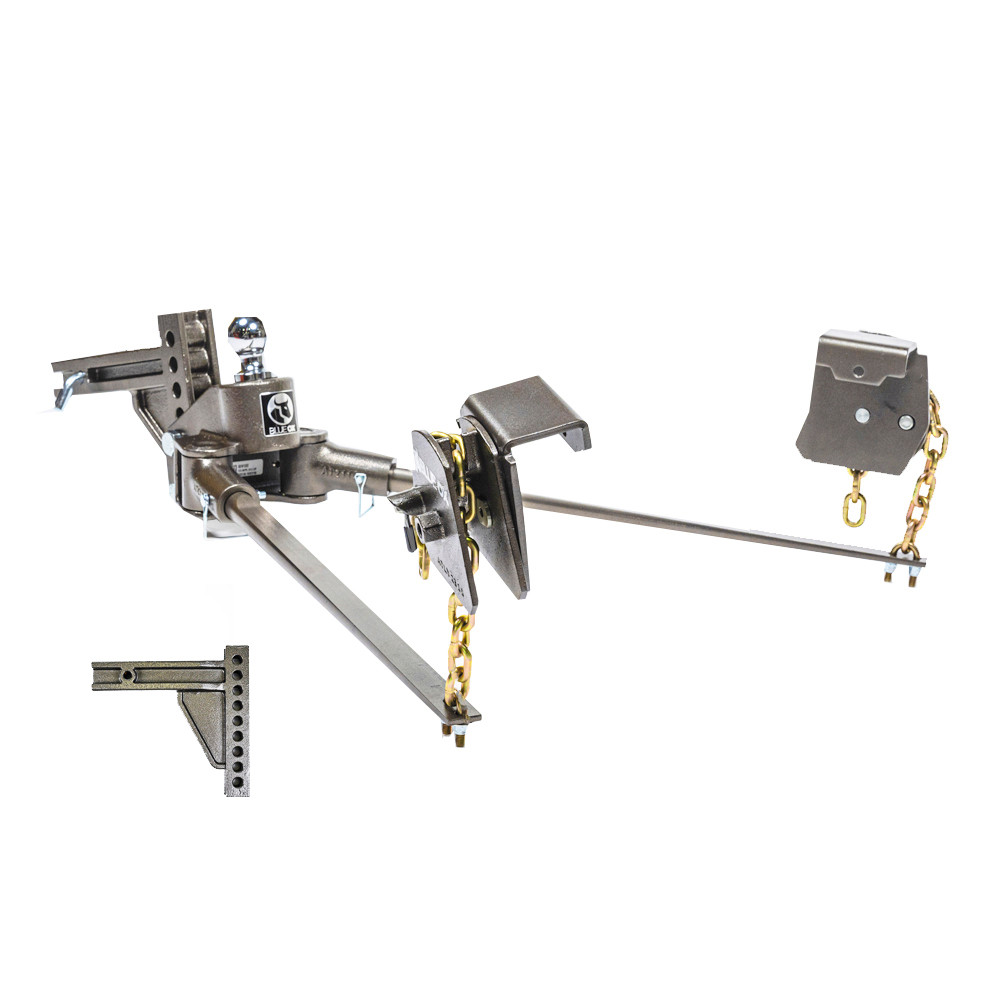
BlueOx 20k, 550 lbs TW, SwayPro Weight Distributing Hitch, 2" Recievers 9-hole/9 receiver stinger BXW0550-SBlue Ox$701.39In Stock
View productOur in-house experts typically reply within one business day.

Blue Ox



Always the correct part
We know our products
Quality Products
Free Shipping!
Always the correct part
We know our products
Quality Products
Free Shipping!

{'feature': 'Weight Distribution', 'description': 'Balances the load of your trailer for a more level ride, improving overall vehicle and trailer stability.
Installation Required Yes/No: Yes
Finish: Powder Coat
1908: 5
7340: No
Experience the perfect balance and friction control with the Blue Ox BXW0550 Weight Distribution Hitch Control. This advanced system is especially designed to balance the load of your trailer and reduce sway, providing you with a more level and comfortable ride. With 4 integrated points of friction, this weight-distribution system significantly reduces sway for enhanced stability while on the move. Furthermore, the system includes an adjustable shank that fits 2-inch trailer hitches. For easy installation, the hitch control features clamp-on brackets that require no drilling. The robust build is finished with a powder coat for added durability and rust resistance.

Blue Ox is known internationally for recreational and commercial towing products, manufacturing in Pender, Nebraska since 1925. The line covers tow bars and vehicle-specific baseplates for flat towing behind a motorhome, sway control and weight distributing hitches, supplemental braking accessories and towing wiring, backed by patented designs and long-standing customer service.
Blue Ox has manufactured since 1925 and is recognised internationally for towing products and customer service. The company operates from Pender, Nebraska, where it grew out of Automatic Manufacturing Co., a business that started with cattle oilers and developed into agricultural equipment, tractor accessories and trailer towing hardware. That agricultural engineering heritage still shows in how the towing products are built, and the company holds patents across weight distribution, fifth wheel and tow bar designs.
Flat towing is the discipline Blue Ox is best known for. Towing a car with all four wheels on the ground behind a motorhome demands a system that stays rigid under braking, articulates properly over uneven ground, and connects to the towed vehicle at points strong enough to take the load. Blue Ox tow bars handle the first two, with self-aligning arms that latch under tension and release without a struggle when the load is off them. Vehicle-specific baseplates handle the third, engineered per make and model to tie into structural mounting points behind the fascia.
The wider flat towing range covers supplemental braking systems, safety cables and the accessories that make a complete legal setup, along with baseplate wiring and dinghy towing harnesses that pass lighting signals to the towed vehicle without back-feeding its electrical system.
For conventional trailer towing, Blue Ox weight distributing hitches with integrated sway control transfer tongue load onto the tow vehicle's front axle and resist the yaw that crosswinds and passing trucks induce.
The company describes its foundation as customer service, designing around what owners actually ask for, and it runs an RV park adjacent to the factory where customers can stay. Sister operations at the same Nebraska site include Automatic grain roller mills and MAD-RAMPS pivoting ramp systems.
Experts available to answer your questions
Call 888-634-9494Limited Lifetime
The SwayPro™ fits any vehicle with a standard 2" receiver hitch (BXW2000 uses a 2-1/2" receiver hitch). It accepts 1" or 1-1/4" ball shanks. The pre-installed hitch ball is 2-5/16" x 20K. Verify your vehicle has a compatible receiver hitch before purchasing.
BXW0350: 350 lbs. BXW0550: 550 lbs. BXW0750: 750 lbs. BXW1000: 1000 lbs. BXW1500: 1500 lbs. BXW2000: 2000 lbs. A minimum tongue weight of 200 lbs. is required for all models.
Torque wrench, tape measure, 1/2" wrench, 3/4" wrench, 1-1/8" wrench, and 1-1/8" socket.
Yes. Air-ride shock absorbers, air springs, or automatic leveling systems on the towing vehicle should be disabled or deflated to the manufacturer's minimum recommended pressure prior to SwayPro™ installation.
Torque the 3/4"-10 bolts to 250 ft/lbs.
Professional installation is recommended. The manual states: "We recommend that this product be installed by an authorized Blue Ox® Professional Installer. Improper installation and/or operation can create a hazard which can cause serious injury, property damage or death. Improper installation and/or operation will void the warranty."
A minimum tongue weight of 200 lbs. is required for all SwayPro™ models.
Check the grease zerk on the front of both bar pivots before each use. Apply a couple pumps of molybdenum grease to each bar pivot at least twice a year. Periodically grease the hitch ball with molybdenum grease. Wipe away excess grease after application.
The SwayPro™ models differ only in their maximum tongue weight capacity and spring bar rating. BXW0350 handles 350 lbs., BXW0550 handles 550 lbs., BXW0750 handles 750 lbs., BXW1000 handles 1000 lbs., BXW1500 handles 1500 lbs., and BXW2000 handles 2000 lbs. All models require a minimum tongue weight of 200 lbs. The BXW2000 uses a 2-1/2" receiver hitch mount; all others use a standard 2" receiver hitch mount.
The spring bars are marked with a dot system on the shank end to identify the weight rating: 350 lb bar = no dots; 550 lb bar = 1 dot; 750 lb bar = 2 dots; 1000 lb bar = 3 dots; 1500 lb bar = 4 dots; 2000 lb bar = 5 dots.
No. Sway prevention is built into the SwayPro™ system and no adjustments are required. The spring bars automatically pivot on the hitch head to balance and prevent trailer sway as the trailer tries to sway.
No. The spring bars are designed to deflect 2"-3" on a properly set system to create the necessary load for an enjoyable ride, but they will always return back to straight.
The SwayPro™ accepts 1" or 1-1/4" ball shanks. A 2-5/16" x 20K hitch ball is pre-installed on the hitch head.
Gross trailer weight is the weight of the trailer (dry) plus liquids (water, propane, sewage) plus cargo. Measure gross trailer weight with a fully loaded trailer on a level surface, preferably on a public truck scale.
Tongue weight is the downward force exerted on the hitch ball by the trailer ball coupler. Measure tongue weight with a fully loaded trailer on a level surface with the trailer ball coupler at tow height.
The hitch ball capacity must meet or exceed the gross trailer weight rating. The pre-installed 2-5/16" x 20K ball is rated for 20,000 lbs. gross trailer weight.
Level the trailer and measure the coupler height. Install the hitch head onto the receiver shank and measure the hitch head ball height. The ball height needs to be the same or 1" higher than the trailer coupler height. Adjust as necessary by moving the hitch head on the receiver mount. For optimal towing performance, it is recommended to set the ball height 2" higher than the top of the trailer coupler. After adjustment, torque the 3/4"-10 bolts to 250 ft/lbs.
Measure 29" back from the center of the ball coupler and mark this point on the trailer tongue framework on both sides. Center and mount the rotating latches to the trailer frame over the marked areas. Remove or relocate any obstructions on the trailer tongue framework if necessary. Finger tighten the bolts at this time.
Torque the 1/2"-13 square head set screws against the trailer tongue framework to 25 ft/lbs and tighten the jam nut. Do NOT use Loctite® Red on the set screw.
The spring bar chain must be straight up and down in the center of the rotating latch when the towing vehicle and trailer are aligned. Release the rotating latch by rotating or pulling out on the lock pin handle. Rotate the bracket using the provided wrench clockwise until the chain slot is on the bottom. Insert the 9th chain link from the top (opposite the u-bolt) into the slot of the latch. Using the wrench, rotate the latch counterclockwise until the lock pin engages in the lock pin hole. Reposition the rotating latch along the trailer frame if necessary to achieve proper alignment.
Yes. Adjustments to the number of links used may be necessary due to certain driving conditions and/or changes to the trailer after initial setup. Advancement to the 10th or 11th link from the top is recommended to compensate for these changes.
Support the weight of the trailer tongue with the trailer jack. Unlock the rotating latch bracket and release the spring bar tension on the chains. Adjust the chain to tighten or loosen one link at a time. Reapply the spring bar tension on the chains by using the wrench to rotate the rotating latches in a clockwise direction until the lock pin engages in the lock pin hole. Lower the front of the trailer allowing the tongue weight to be supported by the towing vehicle. Repeat these steps until the towing vehicle is level.
Each hole raises or lowers the front of the trailer 1-1/2".
Support the weight of the trailer tongue with the trailer jack. Unlock the rotating latch bracket and release the spring bar tension on the chains. Uncouple the trailer. Remove the 3/4" fasteners from the hitch head. Move the hitch head on the receiver hitch mount either up to raise the front of the trailer or down to lower the trailer. Replace the 3/4" fasteners in the appropriate holes and torque to 250 ft/lbs. Couple the trailer to the hitch. Support the weight of the trailer tongue with the trailer jack. Reapply the spring bar tension on the chains by using the wrench to rotate the rotating latches in a clockwise direction until the lock pin engages in the lock pin hole. Lower the front of the trailer allowing the tongue weight to be supported by the towing vehicle. Repeat these steps until the trailer is level.
If the trailer structure interferes with the rotating latches pre-installed set screws, replace them with the shorter 1/2"-13 x 2" set screws provided in the parts kit.
The 2 quick links included are for receiver hitches where the safety chains will not reach. Install quick links on safety chain loops mounted to the receiver hitch and tighten.
Park the towing vehicle and trailer in a straight line on firm, level ground. Support the trailer tongue weight with the trailer jack to ease tension on the spring bar chains. Place excess chain over top of the latch. While holding the wrench firmly, release the locking pin handle by rotating or pulling out on it. Rotate the latch clockwise until the chain is released from the latch on both sides. Disconnect the spring bars from the hitch head by removing locking pins from each side and removing the spring bars from pivot tubes. Unhook the trailer coupler from the hitch head. Remove the hitch pin and clip from the hitch receiver. Remove the hitch head/receiver mount assembly from the receiver tube.
Park the towing vehicle and trailer in a straight line on firm, level ground. Install the hitch head/receiver mount assembly into the towing vehicle receiver tube and secure with the 5/8" x 3" pin and clip. Couple the trailer to the hitch head. Install both spring bars into the bar pivot tubes. Confirm that both rotating latches are tight on the tongue. Before each tow, confirm that all bolts are tightened to specified torque specs. Support the trailer tongue weight with the trailer jack to ease tension on the spring bar chains. Attach the spring bar chains to the rotating latches with the appropriate chain link. Apply tension to the spring bar by using the wrench to rotate the latch counterclockwise until the locking pin on the latch engages on both sides.
The tongue weight should be 10-15 percent of gross trailer weight. This is a guideline for proper weight distribution and safe towing.
Yes. For all truck models with factory sway control, it is suggested that the sway control be disabled for the best performance of the Blue Ox® SwayPro™.
The towing vehicle's loaded ball height should never be greater than its uncoupled height. Front wheel overload and loss of rear wheel traction can occur and can lead to unstable handling, reduced braking ability, and a tendency to jackknife when turning and braking at the same time.
No. Do not attempt to tow any type of trailer behind another trailer. Towing multiple trailers may cause severe instability, loss of control and/or structural failures.
If the SwayPro hitch is in an accident, it must be replaced. Do NOT use it again. An accident can cause unseen damage and using it again could result in more damage or serious injury. Do NOT use the hitch if it is damaged or missing parts.
Always use safety chains while towing. Cross chains under the coupler for proper installation and to prevent the tongue from dropping to the ground. Only allow enough slack in chains for tight turns; the chains should not drag on the ground. To alleviate slack, twist chains equally from the hook end. Safety chains should be rated at equal to or greater than twice the maximum gross trailer weight rating (GTWR).
Do not exceed the vehicle manufacturer's specification for trailer gross vehicle weight or tongue weight as this may cause a serious accident and/or injury while towing. Also, be aware that some receiver hitch manufacturers have different weight capacity ratings depending on the use of a weight distribution hitch or not.
Use molybdenum grease on the bar pivots and hitch ball. Apply a couple pumps of molybdenum grease to each bar pivot at least twice a year, and periodically grease the hitch ball. Wipe away excess grease after application.
Before each tow, confirm that all bolts are tightened to specified torque specs. Also check the grease zerk on the front of both bar pivots to ensure they are not dry.
The SwayPro™ is backed by a limited lifetime warranty. Coverage is valid only if the customer warranty card is returned within 30 days of purchase and a copy of the original invoice accompanies any claim. The warranty is non-transferable and does not cover incorrect or improper installation, improper use, modification or neglect, failure to properly service and maintain, misuse, accident, normal wear and tear, paint or rust. Unauthorized modifications to the SwayPro™ may void the warranty.
If the tow vehicle squats and the front of the trailer dips after coupling the trailer to the hitch head, raise the chains of the spring bars up by one link.
If the tow vehicle is level but the front of the trailer dips after coupling, adjust the hitch mount receiver higher. Each adjustment up or down equals 1-1/4".
Excessive sway may indicate that the trailer is improperly loaded. As a guideline, the tongue weight should be 10-15 percent of gross trailer weight. If it is not, redistribute the weight accordingly. If you encounter continuous sway or swaying that does not dissipate quickly, adjust the load. For all truck models with factory sway control, it is suggested that the sway control be disabled for the best performance of the Blue Ox® SwayPro™.
An excessively rough ride may be caused by spring bar chains that are too tight or spring bars that are too stiff for your tongue weight. Be sure the spring bar chains are set properly. Verify that the spring bars are properly rated for your tongue weight.
Excessive tow vehicle movement may be caused by improper tire inflation. It is recommended that the tow vehicle tires are inflated to 90% of max inflation state as shown on the tire side wall.
Free Shipping
Ships free on all orders
 Authorized Dealer


Quick Ship
In stock and ready to ship — order now!
FREE ShippingFREE SHIPPING
Estimated delivery Fri, Oct 9 - Mon, Oct 12
Order before 2 PM EST Monday–Friday for same-day processing
Guaranteed safe & secure checkout
No reviews have been added for this product.