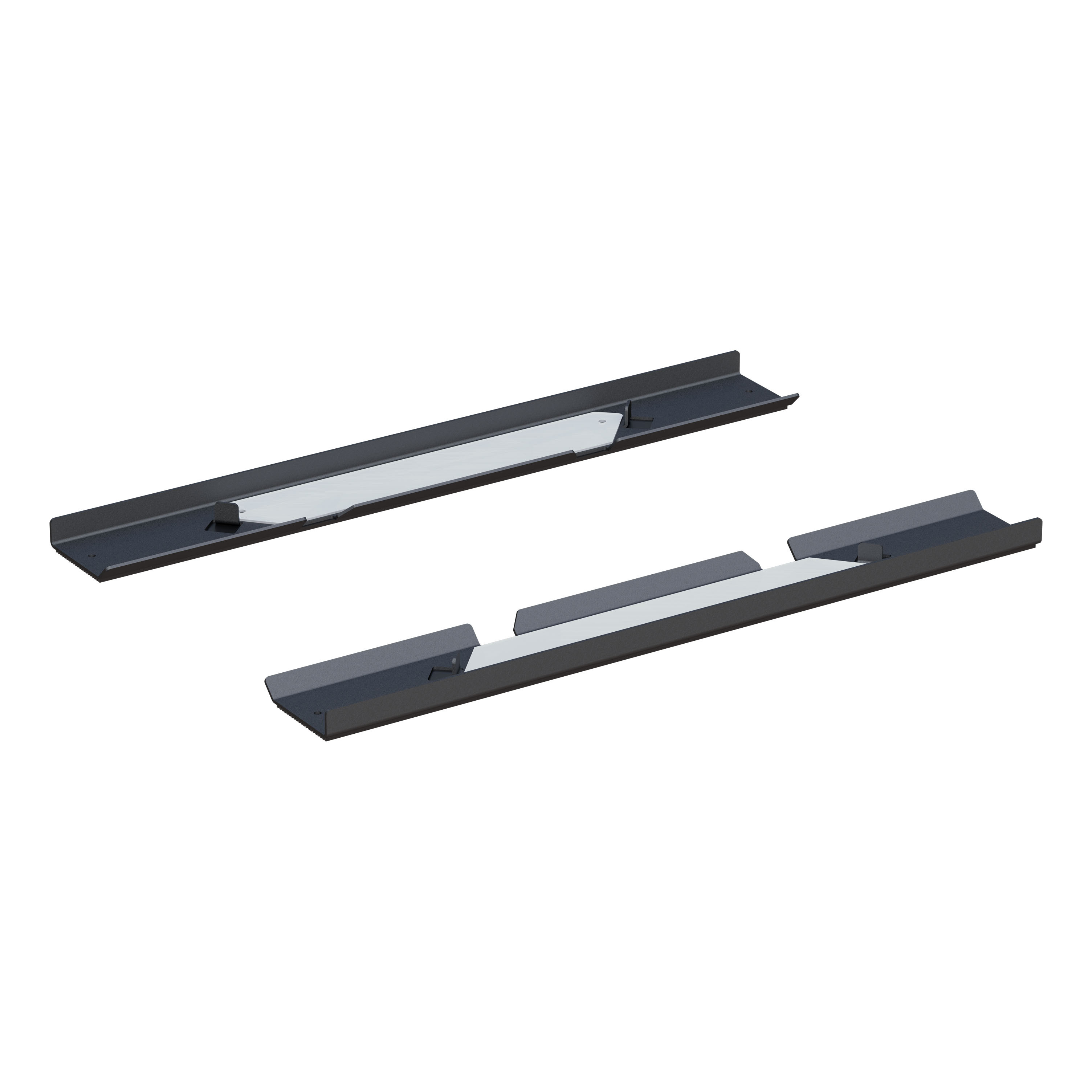
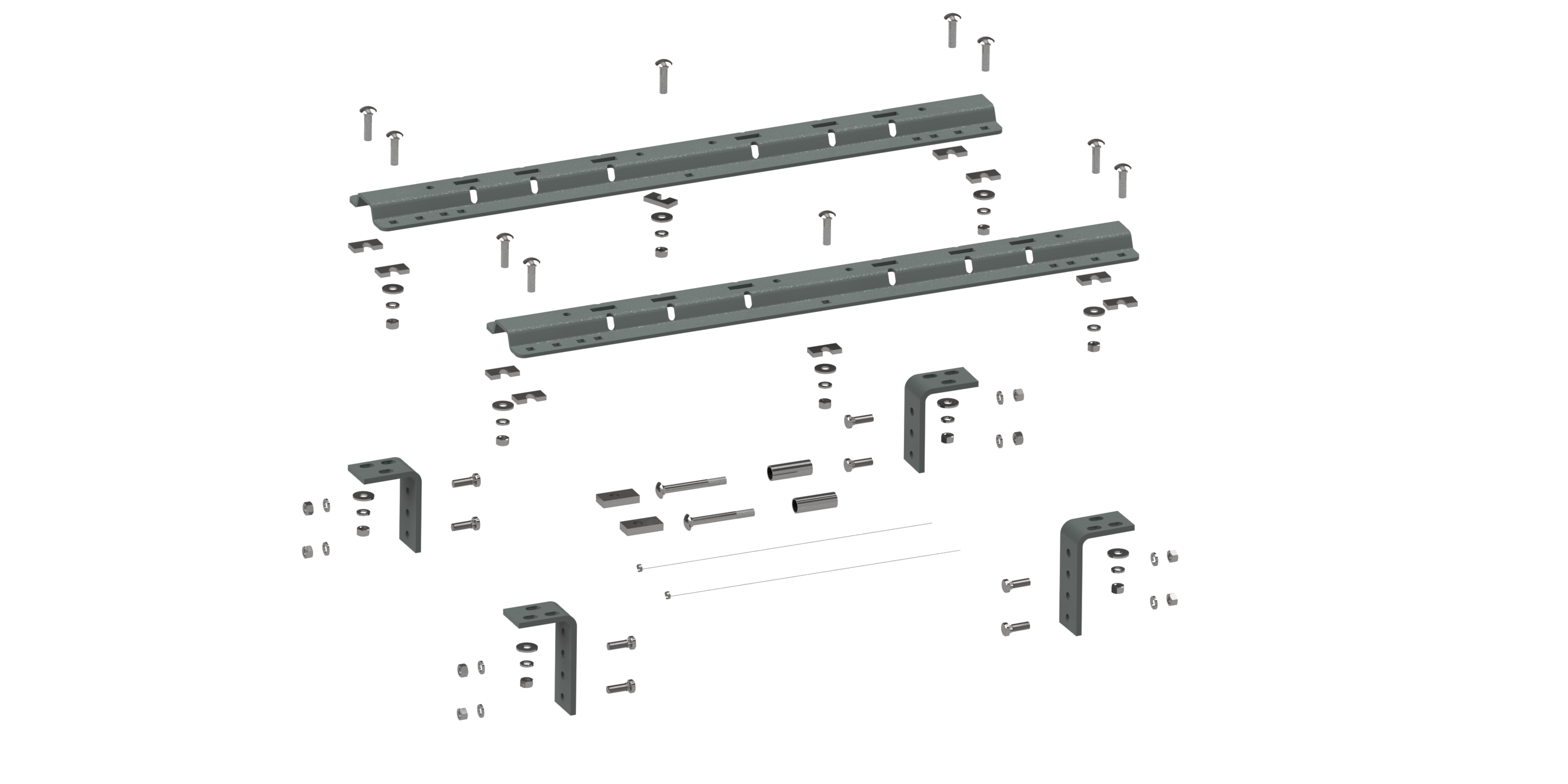
CURT CrossWing 5th Wheel Bed Protector Supports Fifth Wheel Trailer Hitch Rail KitCURTOriginal price was $231.95. Current price is $135.85.In Stock
View productOur in-house experts typically reply within one business day.

CURT




Always the correct part
We know our products
Quality Products
Free Shipping!
Always the correct part
We know our products
Quality Products
Free Shipping!
Lippert trailer chassis approved. Will not void warranty.
Capacity limited to lowest-rated towing component
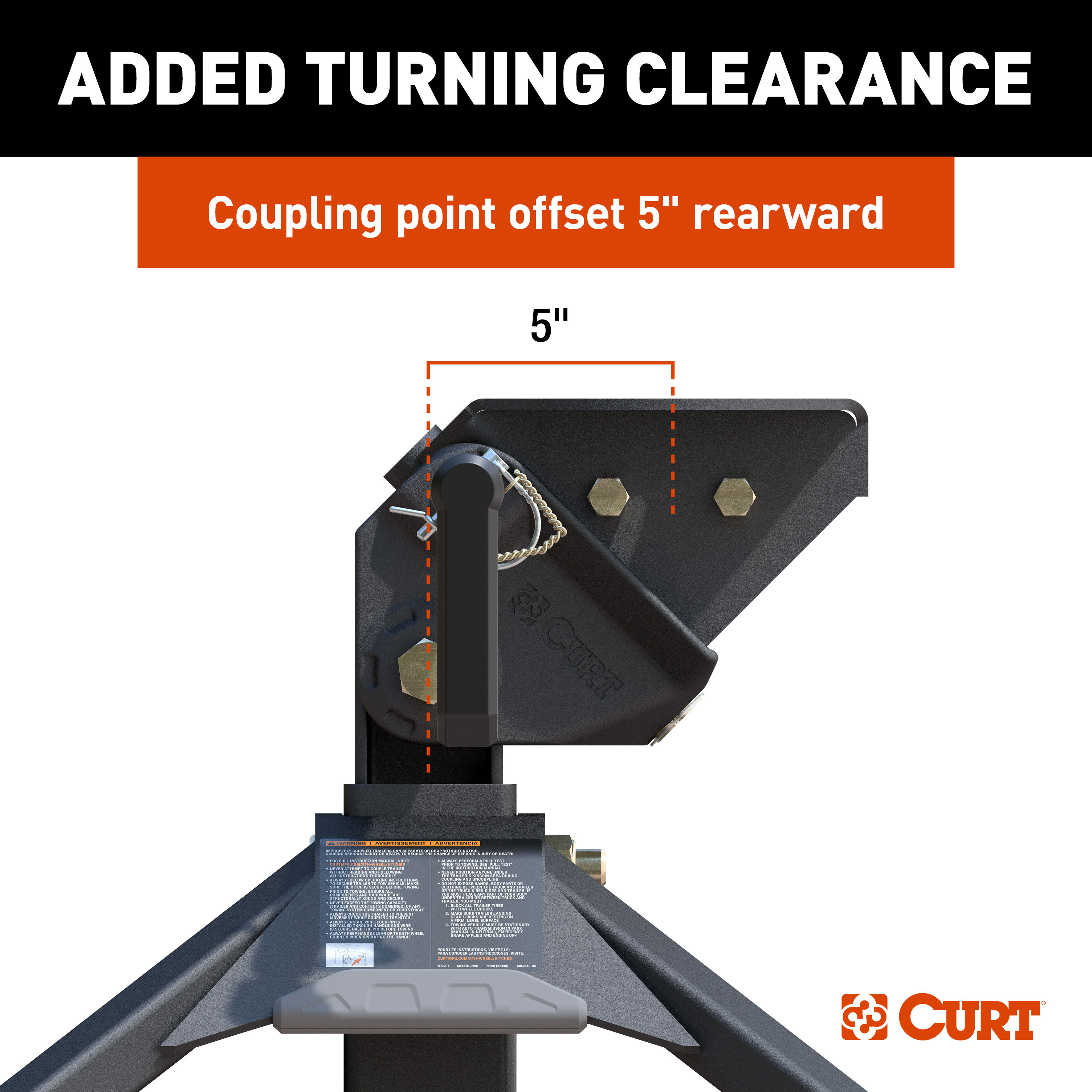
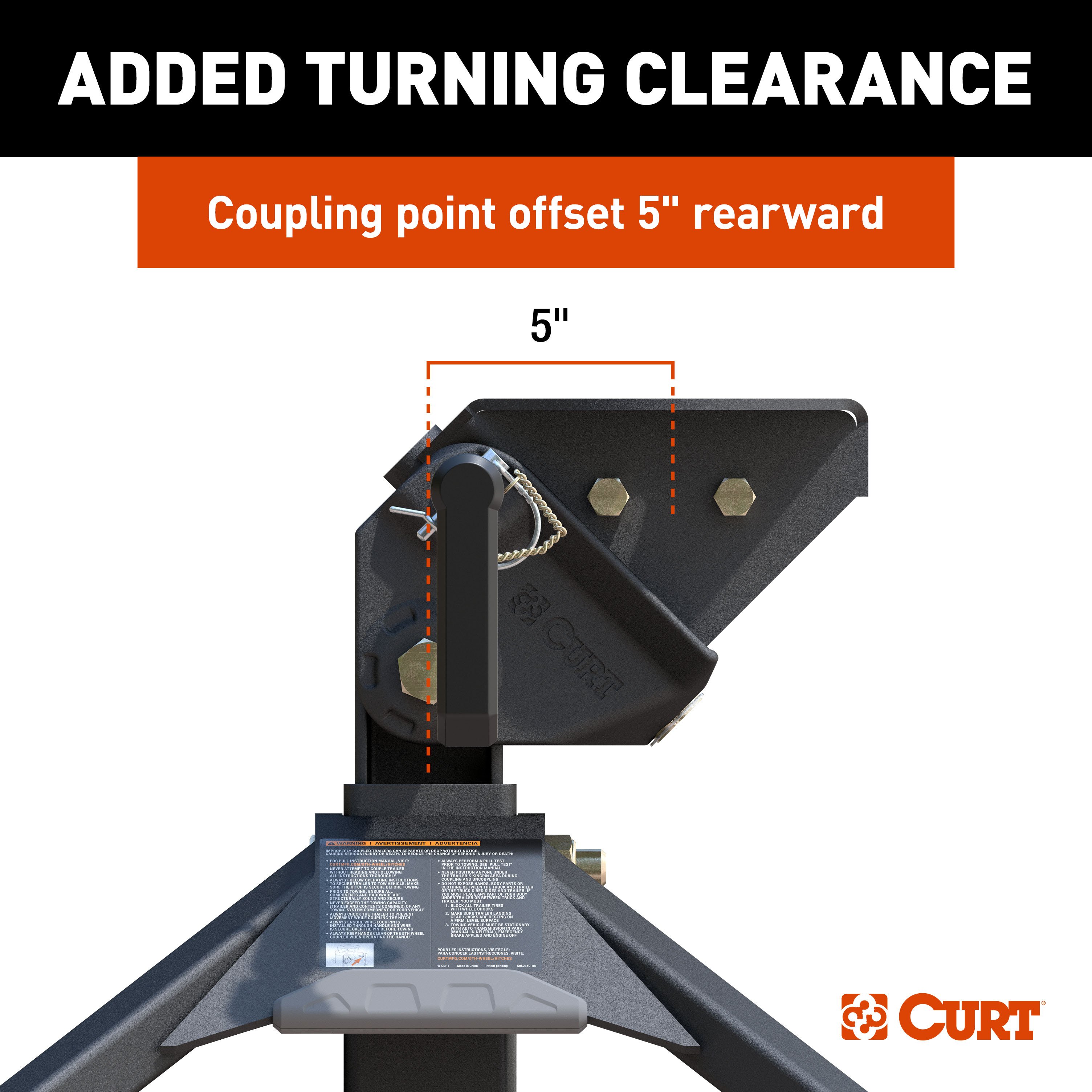
The 5? offset adds more turning clearance than traditional over-axle 5th wheel hitches, which may lessen the need for a slider. However, each truck-trailer configuration is different. Be sure to review each configuration and always ensure adequate trailer-to-cab clearance when maneuvering.

Warranty: Limited Lifetime
Finish: TEXTURED BLACK POWDER COAT
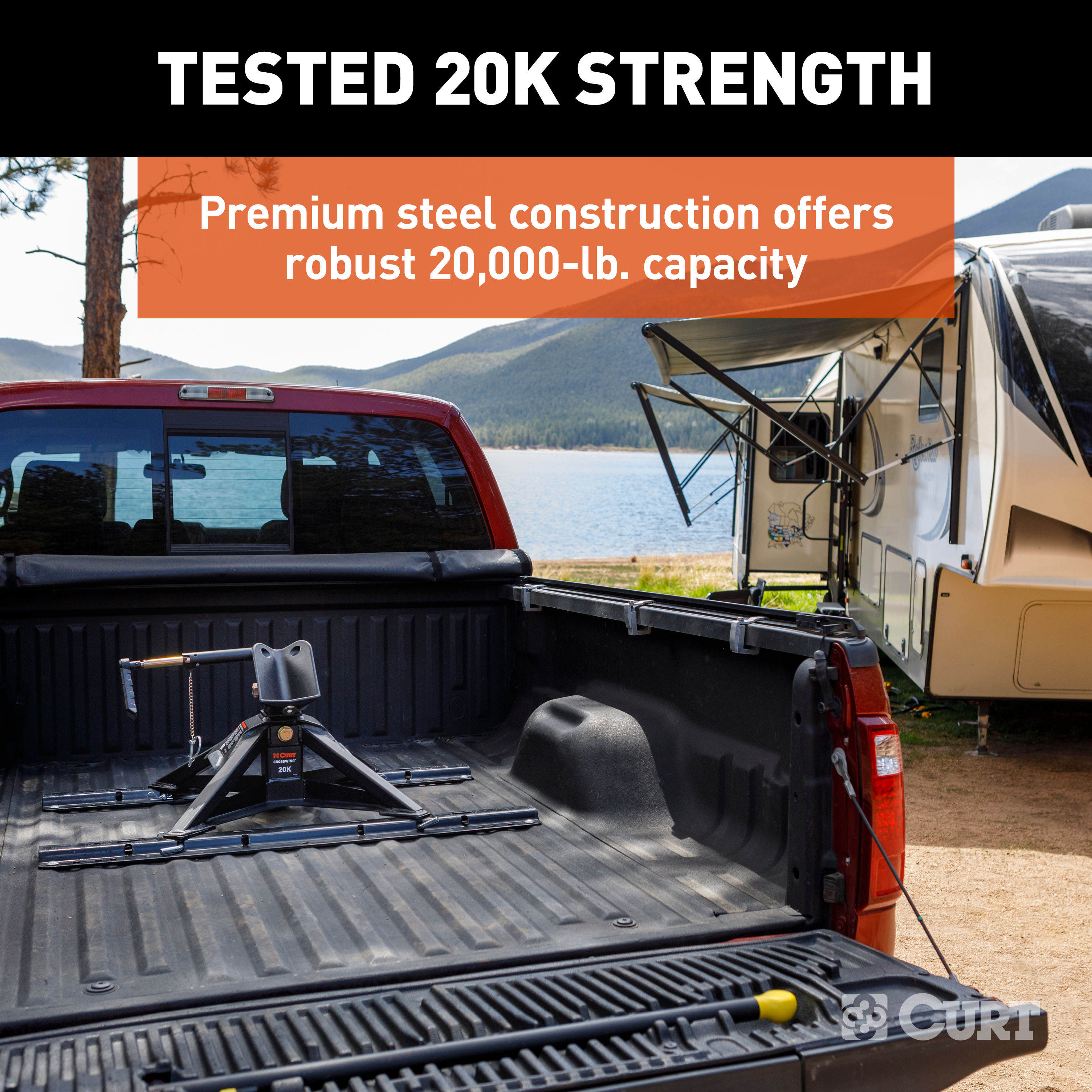
Gross Trailer Weight (Pounds): 20,000 LBS
Installation Time Exact (Minutes): 0
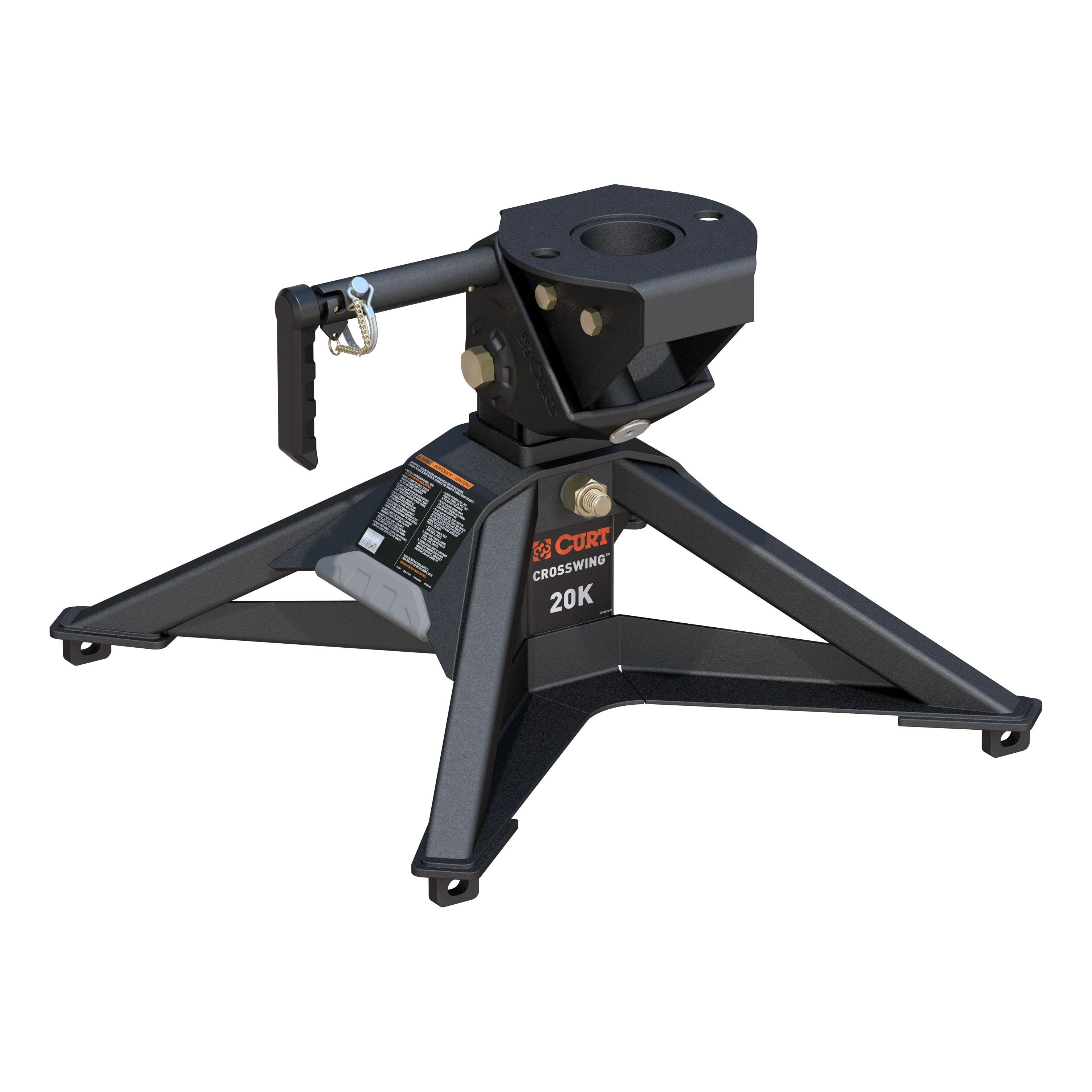
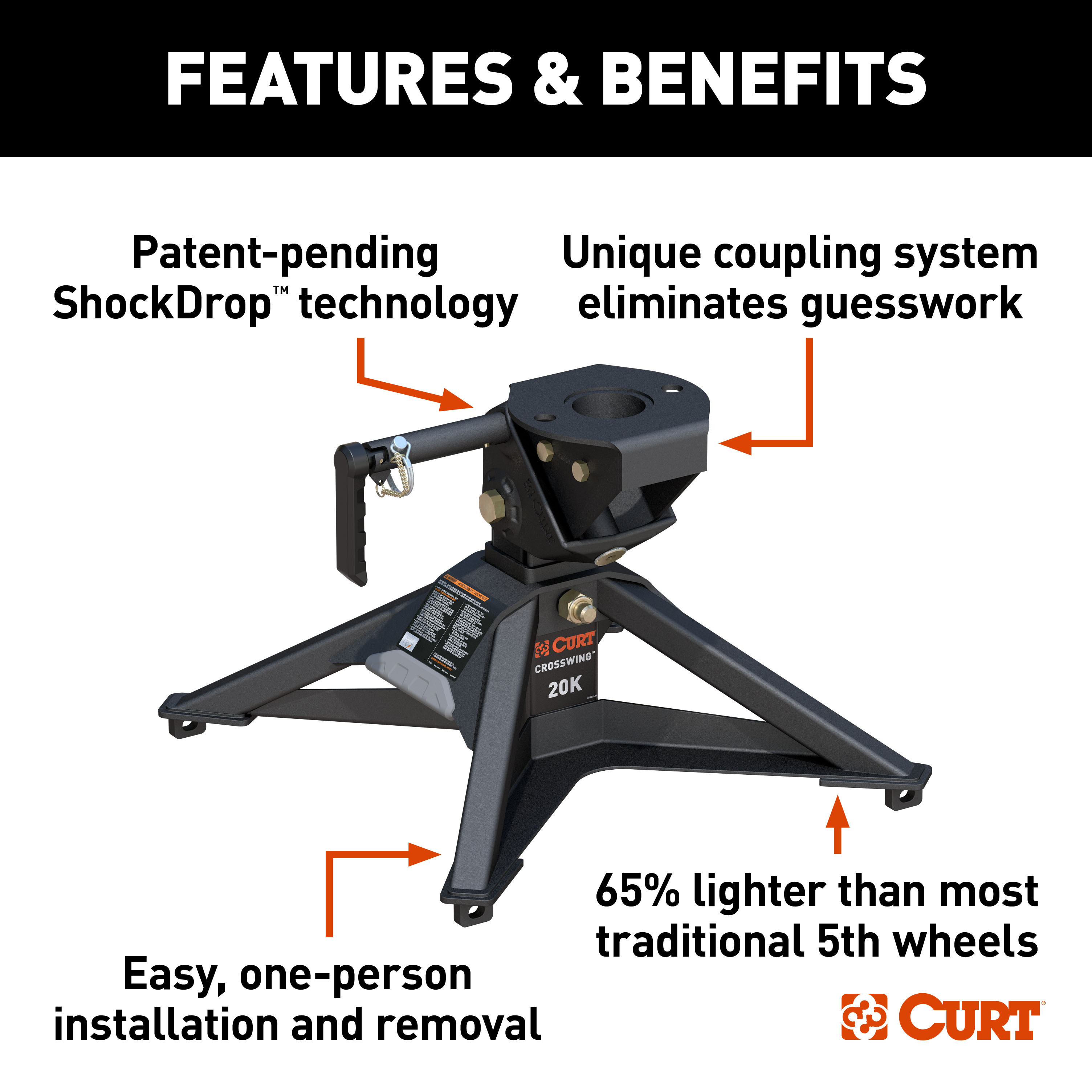
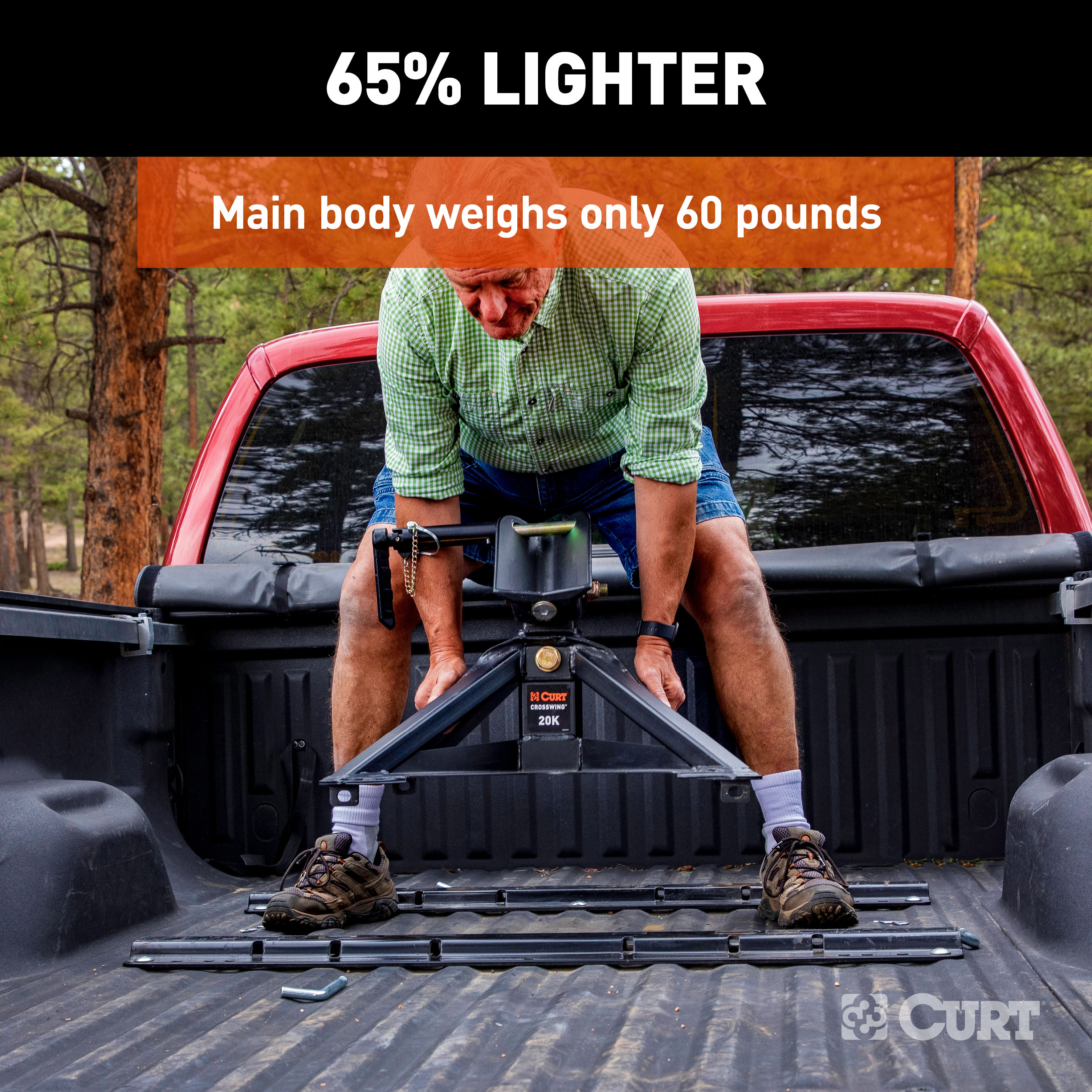
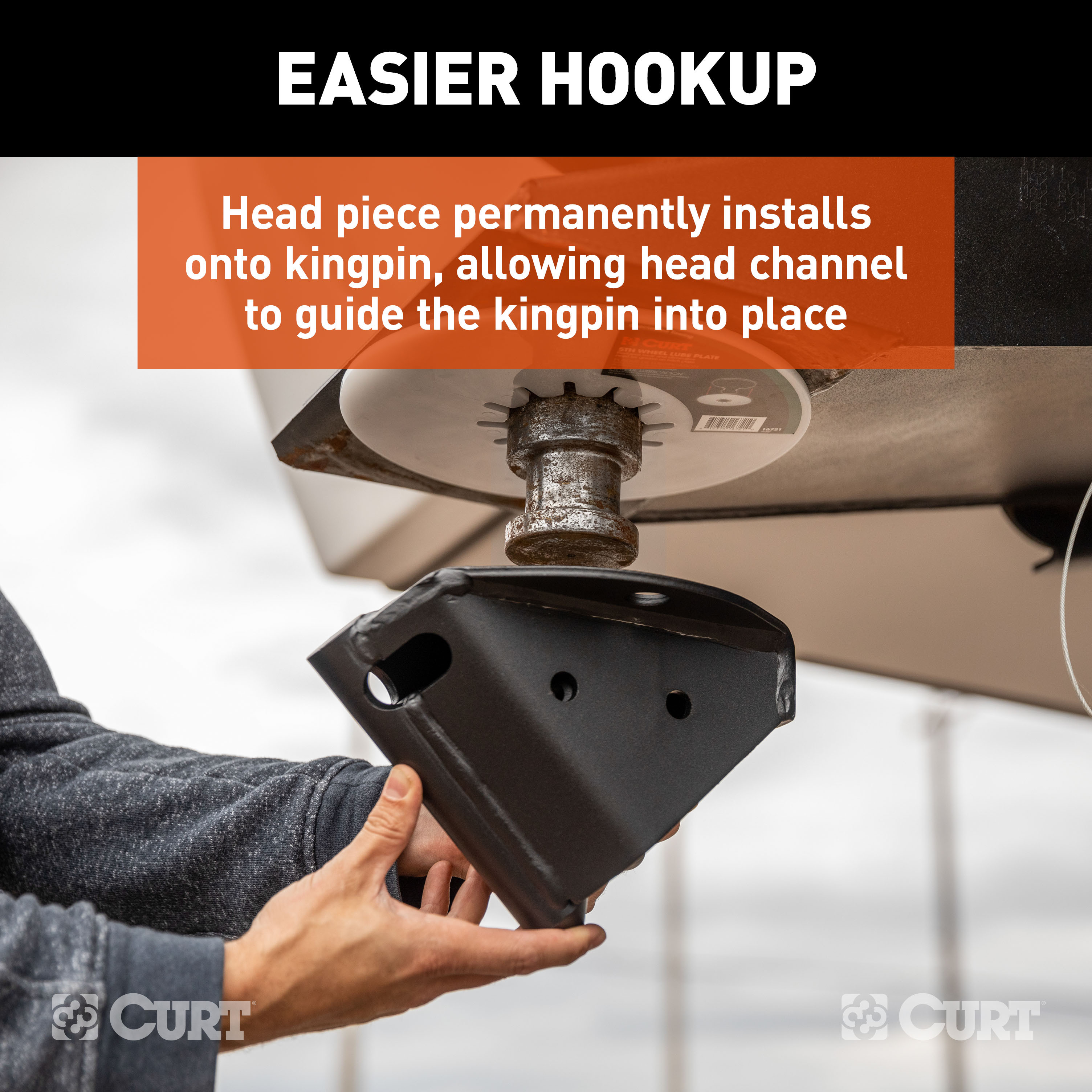
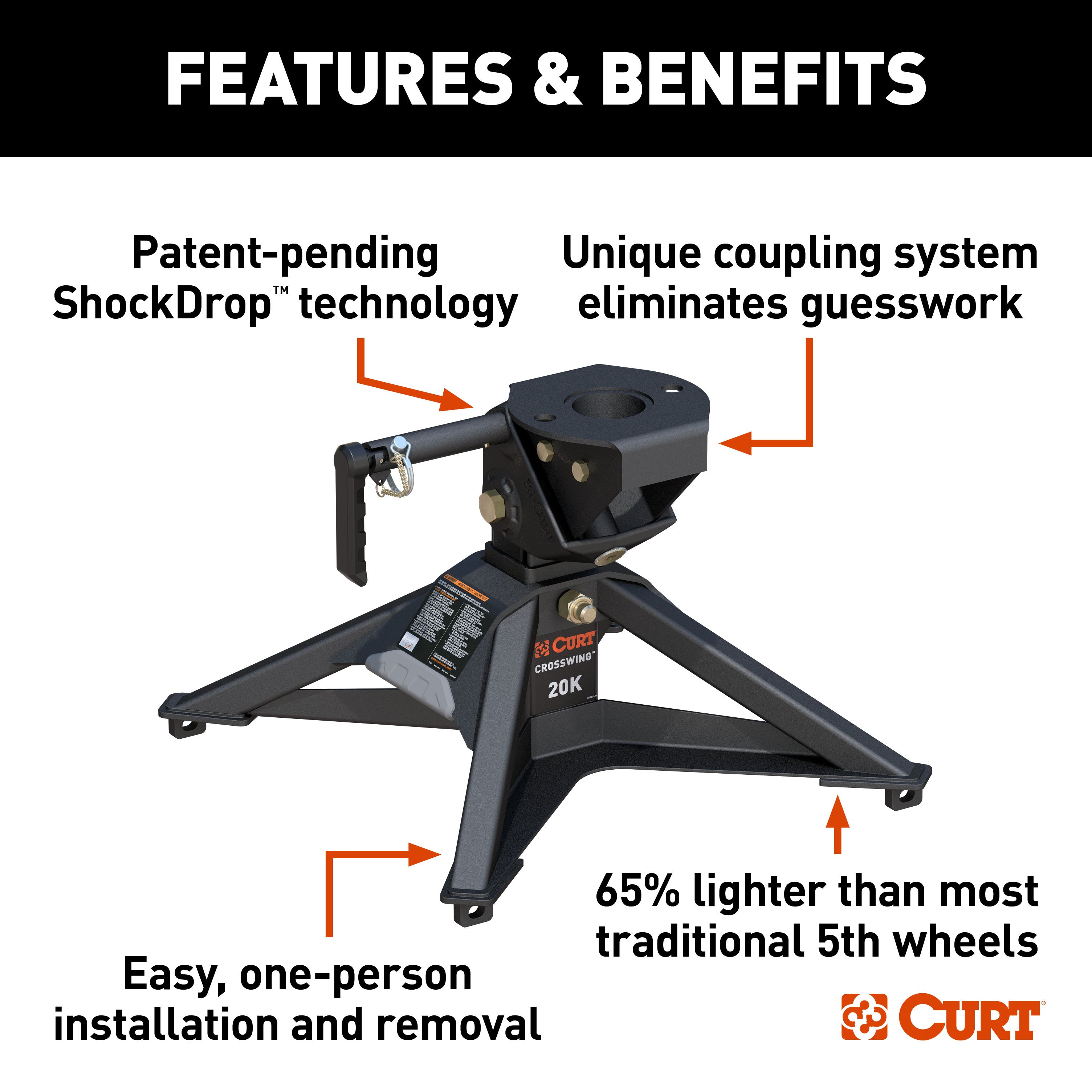
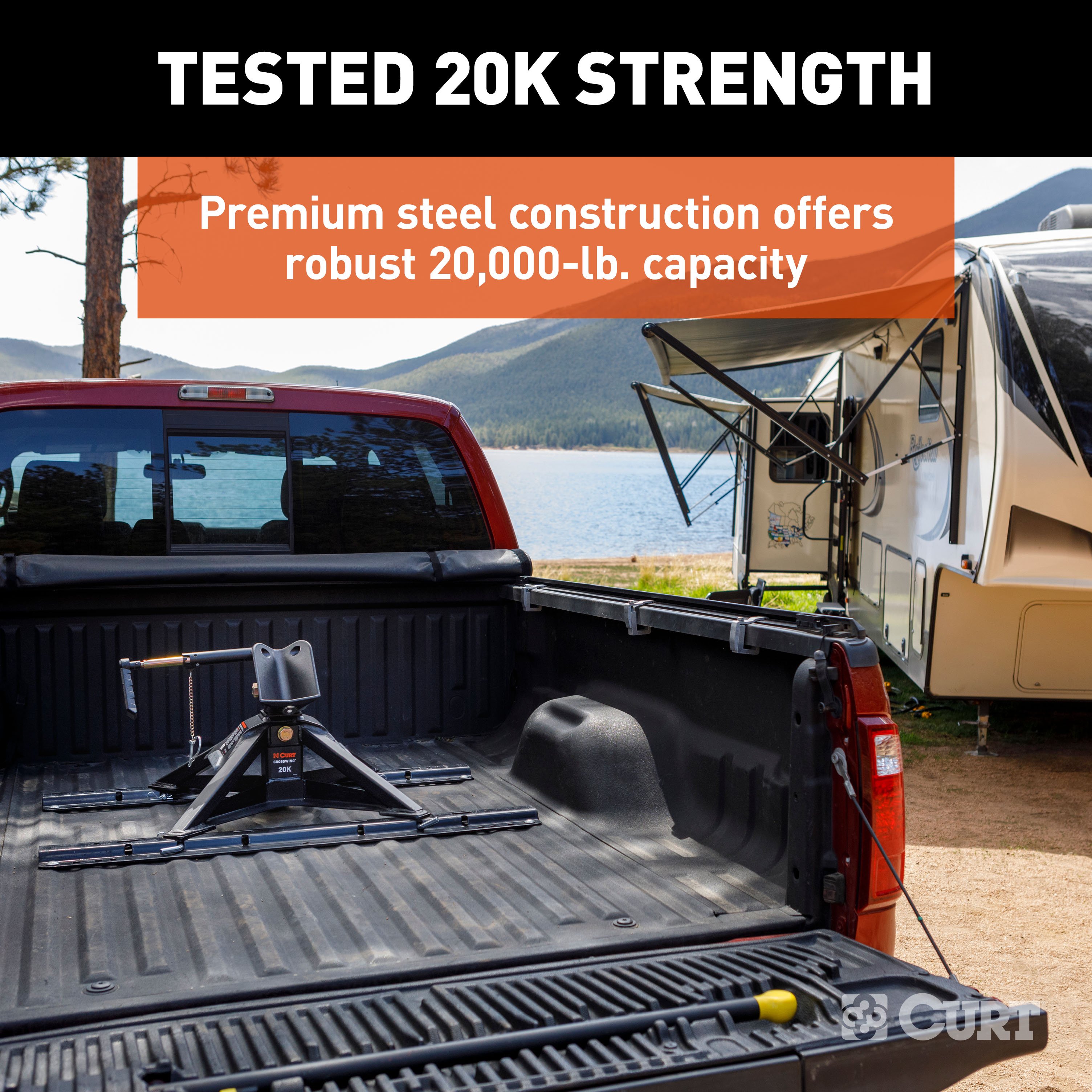
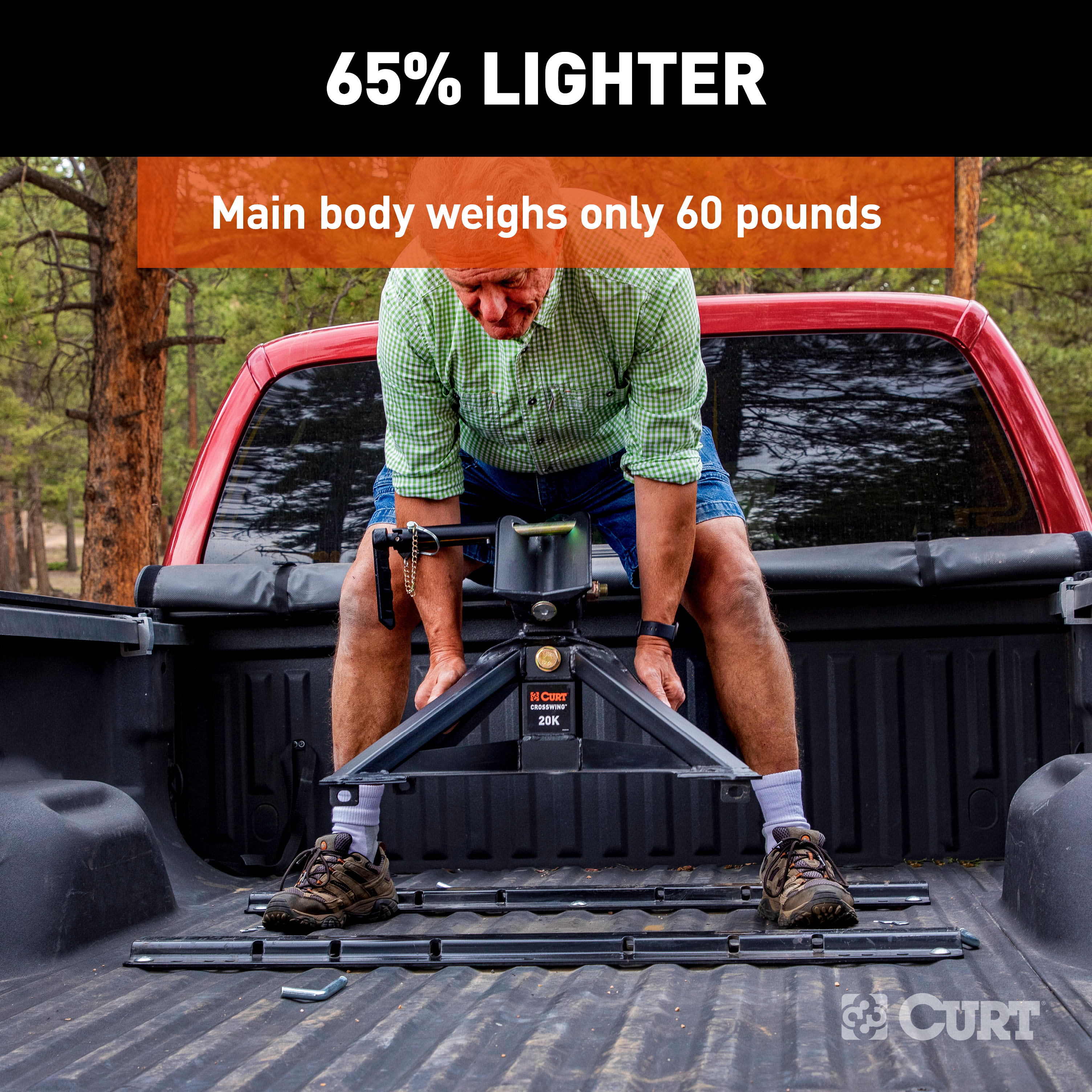
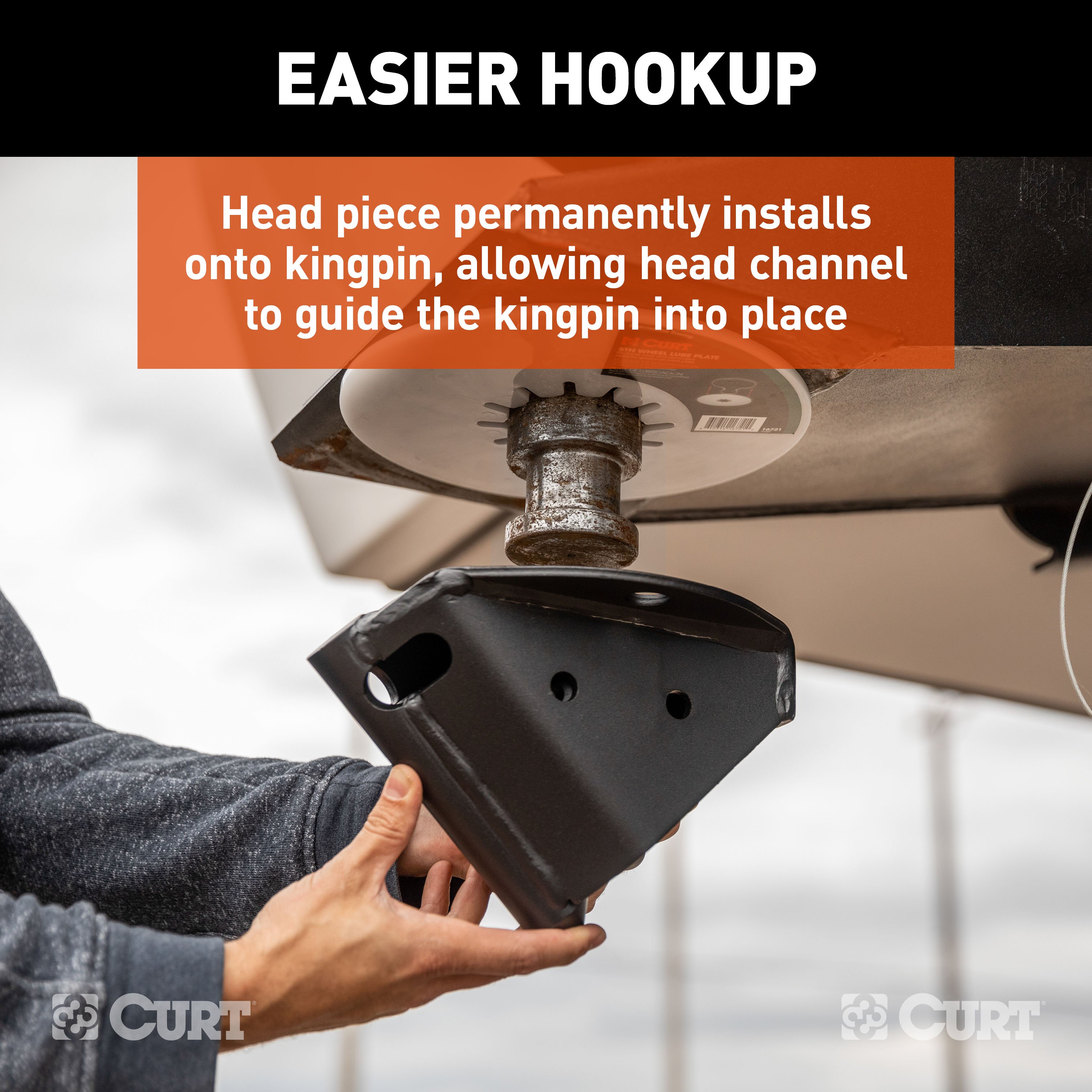
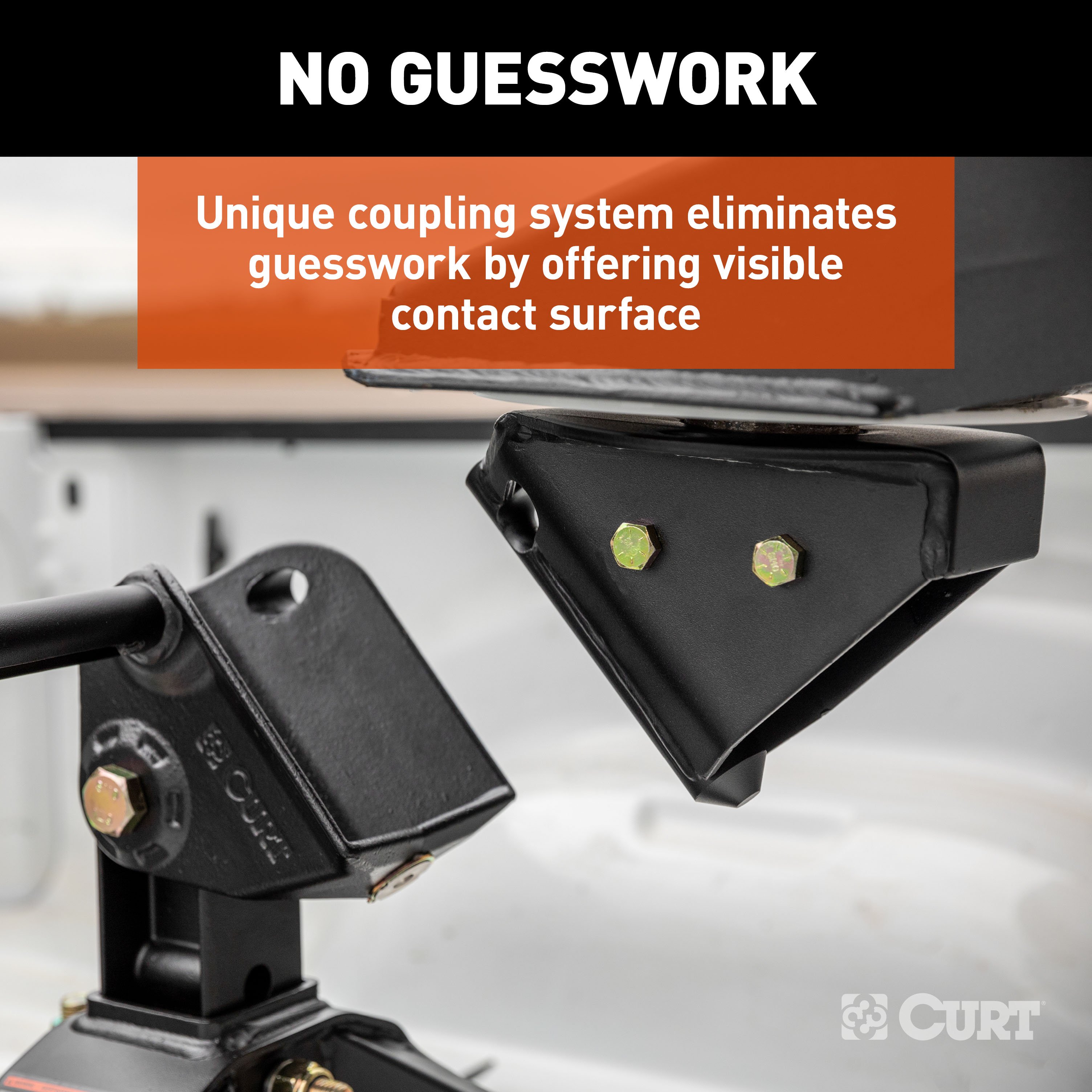
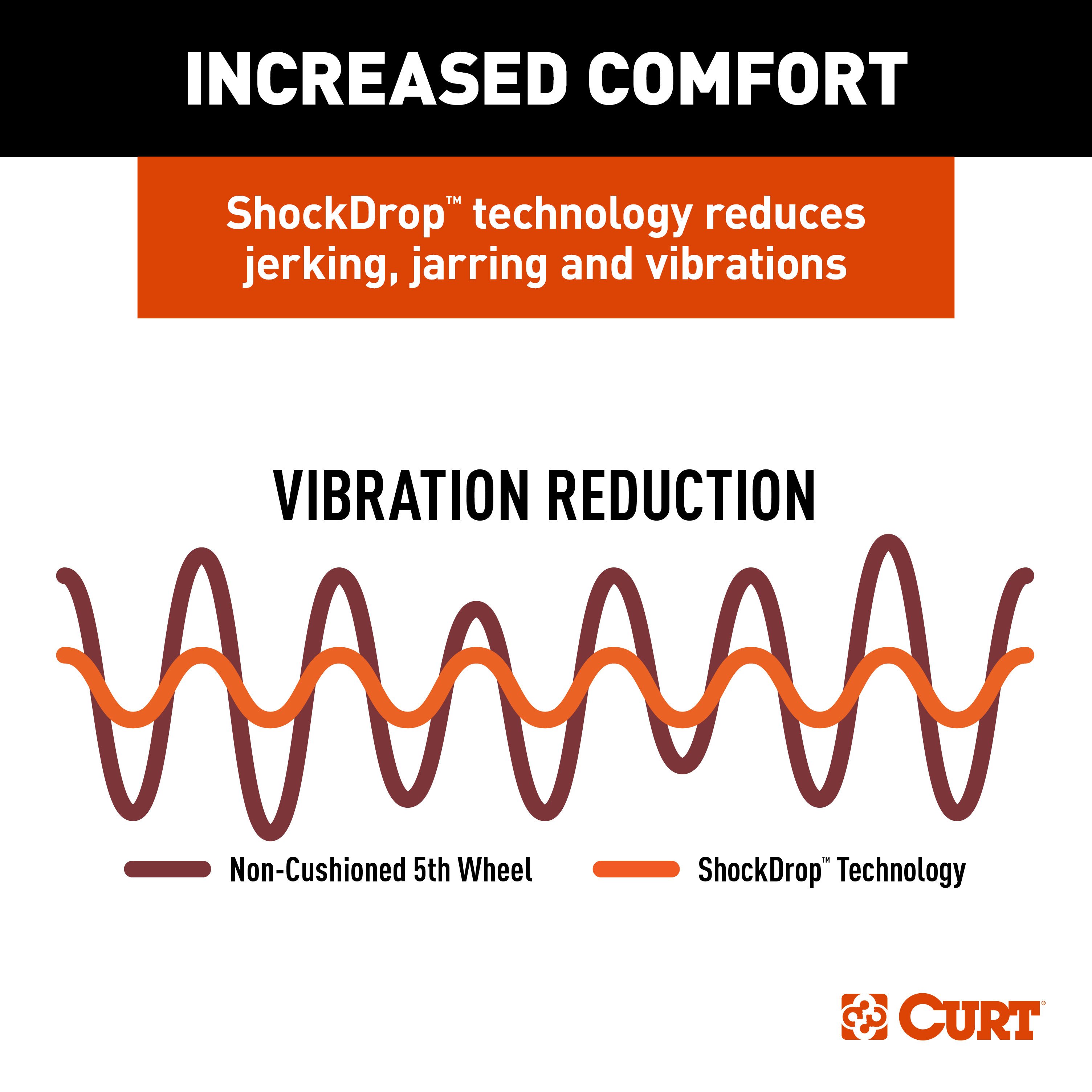
The CrossWing 5th wheel hitch gives you the best of both worlds by packing extraordinary strength into one lightweight hitch. With the main body weight of only 60 pounds, it is 65% lighter than most traditional 5th wheel hitches while still offering a 20,000 lb. weight capacity, so strength and muscle are not sacrificed. To add to its superior strength and integrity, it is made with high-grade steel vs. aluminum to ensure that its durability and solidity are truly uncompromised. The CrossWing combines a solid build with robust strength and state-of-the-art technology. Its patent-pending ShockDrop tech provides a smoother towing experience by reducing jerking and jarring, and its structure allows fore, aft and lateral head articulation when connecting on uneven terrain, so you can be comfortable and confident in your ride no matter what type of rugged roads you encounter. The CrossWing also features a reinforced head connection point that provides exceptional strength, along with a unique coupling system that eliminates guesswork by offering a visible contact surface. Made to create a simpler, smoother experience all around, the CrossWing contains an easy-to-reach release handle for ergonomic operation, and three points of height adjustment ranging from 16-3/8" to 20-3/8". Plus, with its lightweight, three-bolt assembly that is ready right out of the box, and head channel that guides the kingpin into place for an easier hookup, the CrossWing can be installed and removed by one person with ease. It is finished with a premium, carbide textured black powder coating for long-lasting rust resistance, providing an all-around hitch that takes towing up a notch. If you're an adventurer looking for reliable power, stability, and advanced towing technology all in one, the CrossWing 5th wheel hitch is undoubtedly the way to go.

CURT offers a variety of high-quality trailer hitches and accessories for select vehicle models. Find the perfect fit for your towing needs at TowUniverse.
CURT, a Lippert brand, offers a complete line of towing products and is the leading manufacturer of custom-fit trailer hitches. We offer the broadest selection of custom-fit hitches, and each one is designed, welded, and coated in Wisconsin.
CURT is also a leader in flat towing products, as well as 5th wheel, gooseneck, and weight distribution hitches, ball mounts, electrical components, cargo solutions, and other towing accessories.
For everything from passenger cars and vans to full-size pickups and SUVs, CURT is 'The First Name in Towing Products®.'
Experts available to answer your questions
Call 888-634-9494Rediscover "Us" Time | Tested. Proven. Safe. Towing Products
The CURT 16600 is a 5th wheel hitch designed to couple a trailer with a kingpin box to a truck bed. It provides a rotating connection between the tow vehicle and trailer, allowing the trailer to pivot during turns and maneuvers. The hitch is adjustable in height from 16-3/8" to 20-3/8" from the truck bed rails to accommodate different trailer ride heights.
The CURT 16600 has a gross trailer weight (GTW) capacity of 20,000 lbs. and a vertical load capacity of 5,000 lbs. Do not exceed the towing capacity of any component in the towing system or your vehicle.
Yes. The 5th wheel hitch mounts to base rails that must be installed on your truck bed. If you are installing new base rails, follow the instructions provided by the rail manufacturer for proper placement, alignment and spacing for your vehicle's year, make and model. If mounting to existing base rails, ensure they are parallel and properly aligned before installation.
The CURT 16600 couples to trailers equipped with a kingpin box. The upper coupler assembly attaches to the trailer's kingpin with a lube plate. The manual does not specify restrictions on trailer type beyond the kingpin requirement.
Yes. The 5th wheel is adjustable from 16-3/8" to 20-3/8" from the truck bed rails to the top of its skid plate. Adjustment is achieved by attaching the lower coupler assembly to the base weldment at different height positions in 2" increments. Before installation, measure your trailer's kingpin box height and the truck bed rail height to determine the correct position.
The following tools are required: ratchet, torque wrench, and socket set. A torque wrench is essential to properly tighten fasteners to specification (1/2" bolts to 65 ft-lbs., M20 bolts to 300 ft-lbs.).
The kit includes: base weldment, upper weldment, lower coupler assembly, lube plate, two 1/2" hex head cap screws, two 1/2" nylock nuts, one bushing, one M20 hex bolt, one M20 nylock nut, one M20 flat washer, four 0.094" spacers, four base rail mounting clips, and four 1/2" base rail mounting pins.
Follow these steps: (1) Place the trailer on a firm, level surface with chock blocks in front and behind the tires. Extend and adjust the front trailer lifting jacks to set the trailer at or near level. (2) Measure from the ground to under the trailer's kingpin box skid plate or lube plate. (3) Measure from the ground to the surface of the truck bed rails. (4) Subtract the measurement from step 2 from step 3. This value indicates the height requirement for the 5th wheel. The hitch is adjustable from 16-3/8" to 20-3/8", in 2" increments. Typical clearance between truck bed rails and trailer should be a minimum of 5-1/2".
Yes. Before attaching the 5th wheel hitch to the tow vehicle's base rails, check that the base rails are properly installed and parallel with each other. The diagonal dimensions should be the same when measured from the same reference point. If alignment issues arise, loosen the base rail bolts and realign the base rails. It is recommended to replace old lock washers with new lock washers at this time, then torque the base rail bolts to the rail manufacturer's specifications.
Assembly order is: (1) Attach the lower coupler assembly (#3) to the base weldment (#1) using the fasteners at the height position determined by your measurements. Ensure the bushing is installed and facing toward the rear of the vehicle. Torque the M20 bolt and nut to 300 ft-lbs. (2) Check that the base rails are parallel and properly aligned. (3) Lower the 5th wheel into the base rails, aligning the four tabs on the bottom of the hitch legs with the slots in the rails. Secure with four 1/2" rail mount pins and clips. (4) Attach the upper weldment and lube plate to the trailer's kingpin with two 1/2" hex bolts and nylock nuts. Torque to 65 ft-lbs. Verify the upper weldment spins freely around the kingpin.
The bushing (#7) is installed as part of the lower coupler assembly attachment to the base weldment. It must be positioned toward the rear of the vehicle.
Yes. Four neoprene spacers (0.094" thick) are included in the kit. If desired, these spacers can be used between the hitch and the base rails to reduce clanking and rattling.
Place the upper weldment (#2) and lube plate (#4) on the trailer kingpin. While holding the upper weldment tight against the pin box, insert two 1/2" hex bolts (#5) through the upper weldment and secure with 1/2" nylock nuts (#6). Torque the bolts and nuts to 65 ft-lbs. Verify that the upper weldment spins freely around the kingpin.
Torque the two 1/2" hex bolts that attach the upper weldment to the trailer kingpin to 65 ft-lbs.
Torque the M20 hex bolt that attaches the lower coupler assembly to the base weldment to 300 ft-lbs. Do not torque the upper M20 head pivot bolt; the nut is designed to make contact only, not apply clamping force. Torquing the upper bolt can cause it to fail, leading to hitch separation.
Before coupling: (1) Use multiple wheel chocks in front of and behind the trailer tires—do not substitute stones or wood blocks. (2) Ensure the trailer is on a firm and level surface with landing gear/jacks resting on firm ground. (3) Position the tow vehicle with automatic transmission in park (manual in neutral), emergency brake applied, and engine off. (4) Never position yourself or others under the trailer's kingpin area during coupling. (5) Check the locking mechanism for damage before use. (6) Ensure the M20 bolt holding the lower coupler assembly is not loose; re-torque to 300 ft-lbs. if needed. (7) Clean excessive dirt, rust, grease, snow or ice from the locking mechanism.
Coupling procedure: (1) Remove the safety pin on the 5th wheel's handle. Push the handle in and turn counterclockwise until rotation stops, then pull the handle completely out. (2) Back the tow vehicle slowly until the trailer coupler contacts the face of the hitch. (3) Set the parking brake and raise the trailer jacks until the trailer coupler has seated fully into the hitch coupler. If the coupler does not seat fully, move the vehicle slightly forward to relieve tension. (4) Push the hitch handle in and turn clockwise to the locked position. (5) Re-insert the safety pin and check that the handle is fully inserted and the safety pin is in place. (6) Perform a pull test before raising camper jacks or removing wheel chocks.
The pull test must be performed after coupling and before removing trailer wheel blocks or raising front trailer jacks. Set the towing vehicle in a forward gear and lightly tug on the trailer to ensure 100% coupling has taken place. If resistance is felt, the coupling is complete. If resistance is not felt, the trailer may not be coupled correctly. Do not continue applying forward pressure. Immediately stop and back the towing vehicle into its original position. Do not allow the truck and trailer to separate. Review the coupling instructions, apply corrective action, and repeat the coupling steps.
Before towing, confirm: (1) The handle safety latch pin has been installed. (2) All electrical harnesses are attached. (3) Lanyard and electric brake break-away plunger are attached. If hydraulic surge brakes are present, attach the lanyard from the surge brake assembly. (4) Front trailer lifting jacks are fully retracted. (5) Truck tailgate is closed or reinstalled. (6) Tire chock blocks are removed. (7) Running lights, directional signals and brake lights are operating properly. (8) Pull forward a few feet and apply brakes to verify that trailer brakes are activating. Adjust the electric brake controller if necessary.
Uncoupling procedure: (1) Park on a firm and level surface. Set automatic transmission vehicles to park and activate the emergency brake; set standard transmission vehicles to neutral and activate the emergency brake. (2) Chock the trailer wheels with multiple wheel chocks in front and behind the tires—do not substitute stones or wood blocks. (3) Disconnect all harnesses, lanyards, safety devices, etc. as required. Lower or remove the truck tailgate as required. (4) Begin extending the front trailer lifting jacks just enough to remove the weight of the trailer from the 5th wheel skid plate. Do not lift the rear of the vehicle with trailer jacks as this will make it difficult to pull the handle out. (5) Remove the safety pin on the 5th wheel's handle. Push the handle in and turn counterclockwise until rotation stops, then pull the handle completely out. (6) Lower the jacks until the trailer coupler clears the hitch coupler. (7) Remove the parking brake and slowly drive the tow vehicle out from under the trailer. If resistance is encountered, determine the corrective action and repeat uncoupling steps.
Typical clearance between the truck bed rails and the trailer should be a minimum of 5-1/2". The 5" offset of the CURT 16600 adds more turning clearance than traditional over-axle 5th wheel hitches, which may lessen the need for a slider. However, each truck-trailer configuration is different. Be sure to review each configuration and always ensure adequate trailer-to-cab clearance when maneuvering.
After installation, verify: (1) The upper weldment spins freely around the kingpin. (2) The M20 bolt holding the lower coupler assembly to the base is not loose; re-torque to 300 ft-lbs. if needed. (3) All fasteners are torqued to specification: 1/2" bolts to 65 ft-lbs., M20 bolts to 300 ft-lbs. (4) The locking mechanism is free of damage and operates smoothly. (5) The hitch is secure before towing. (6) All components and hardware are structurally sound and secure.
Maintenance schedule: (1) Before each use: inspect the lube plate condition, spray light dry film lubricant on the head pivot point and handle pin, and torque the lower M20 bolt to 300 ft-lbs. (2) Every 1,000 miles: inspect the lube plate, torque the two 1/2" hex bolts to 65 ft-lbs., and torque the lower M20 bolt to 300 ft-lbs. Re-torque the 1/2" bolts after the initial 500 miles and every 1,000 miles thereafter. (3) After each use and before long-term storage: clean the hitch with warm soapy water and dry with towels or compressed air. (4) Before long-term storage: remove the hitch from the vehicle or cover it, and spray exposed surfaces with a light coat of rust inhibitor. (5) If the lube plate is worn, replace it with CURT# 16722.
Torque the two 1/2" hex bolts to 65 ft-lbs. after the initial 500 miles and every 1,000 miles thereafter. Torque the lower M20 bolt to 300 ft-lbs. before each use and every 1,000 miles.
If the lube plate is worn, replace it with CURT# 16722. Inspect the lube plate before each use and every 1,000 miles.
For optimal service life, clean the 5th wheel hitch after each use with warm soapy water and dry with towels or compressed air. It is recommended that the hitch is removed from the vehicle or covered when not in use for extended periods. Before long-term storage, spray exposed surfaces with a light coat of rust inhibitor.
The CURT 16600 requires base rails to be installed on your truck bed per the rail manufacturer's specifications for your vehicle's year, make and model. The hitch couples to trailers with a kingpin box. Consult your base rail kit documentation or contact CURT Product Support at 877.287.8634 for fitment confirmation.
You need a ratchet, torque wrench, and socket set. The torque wrench is essential to properly tighten fasteners to 65 ft-lbs. (1/2" bolts) and 300 ft-lbs. (M20 bolts).
The manual does not specify whether drilling is required. This depends on your truck's base rail installation. If installing new base rails, follow the rail manufacturer's instructions. If mounting to existing base rails, consult the rail manufacturer or contact CURT Product Support at 877.287.8634.
Torque 1/2" bolts to 65 ft-lbs. and M20 bolts to 300 ft-lbs. Do not torque the upper M20 head pivot bolt; it is designed for contact only. Re-torque the 1/2" bolts after 500 miles and every 1,000 miles thereafter.
Perform a pull test after coupling to ensure 100% coupling. Verify the handle safety pin is installed, electrical harnesses are attached, running lights and brake lights work, and trailer brakes activate when you apply the tow vehicle's brakes.
Before each use: inspect the lube plate, lubricate the head pivot point and handle pin, and check the M20 bolt torque. Every 1,000 miles: re-torque the 1/2" bolts to 65 ft-lbs. and the M20 bolt to 300 ft-lbs. After each use: clean with warm soapy water. Before long-term storage: apply rust inhibitor.
If the coupler does not seat fully during coupling, the vehicle might need to be moved slightly forward to relieve tension on the hitch. Move the tow vehicle forward a small amount and attempt to raise the trailer jacks again until the coupler seats fully.
If you feel resistance during the pull test (indicating incomplete coupling), do not continue applying forward pressure. Immediately stop and back the towing vehicle into its original position. Do not allow the truck and trailer to separate. Review the coupling instructions, apply corrective action, and repeat the coupling steps. Ensure the handle is fully pulled out before backing under the trailer, and that the trailer coupler is positioned 1" above the hitch head before final coupling.
Ensure the locking mechanism is free of excessive dirt, rust, grease, snow, ice or other foreign material. Clean excessive dirt, snow or ice with warm soapy water. Lightly lubricate exposed surfaces with a rust inhibitor to restore proper operation. Components with excessive amounts of rust may require replacement to restore proper functionality.
Check that the M20 bolt holding the lower coupler assembly to the base is not loose. If needed, re-torque to 300 ft-lbs. If the hitch head still appears loose, the 20mm bolt can be removed and inspected for damage. If any cracks or damage are visible, immediately discontinue use of the hitch and contact CURT Product Support at 877.287.8634.
After attaching the upper weldment to the trailer kingpin with the 1/2" hex bolts and nylock nuts, verify that the upper weldment spins freely. If it does not spin freely, check that the bolts are not over-torqued. The bolts should be torqued to 65 ft-lbs. only. If the weldment still does not spin freely after re-torquing, there may be an obstruction or damage to the kingpin or weldment.
If alignment issues arise, loosen the base rail bolts and realign the base rails to facilitate installation. It is recommended to replace old lock washers with new lock washers at this time. Torque the base rail bolts to the rail manufacturer's specifications. Verify that the diagonal dimensions are equal when measured from the same reference point.
The four neoprene spacers (0.094" thick) included in the kit can be used between the hitch and the base rails to reduce clanking and rattling. If spacers are not already installed, install them between the hitch and the rails. If noise persists, check that all fasteners are properly torqued: 1/2" bolts to 65 ft-lbs. and M20 bolts to 300 ft-lbs.
On Sale Today
Original price was $988.95. Current price is $749.95.You save $239.00 (24%)
Free Shipping
Ships free on all orders
 Authorized Dealer


Quick Ship
In stock and ready to ship — order now!
Shipping from Lancaster, TXFREE SHIPPING
Estimated delivery Mon, Sep 28 - Wed, Sep 30
Order before 2 PM EST Monday–Friday for same-day processing
Guaranteed safe & secure checkout
No reviews have been added for this product.