
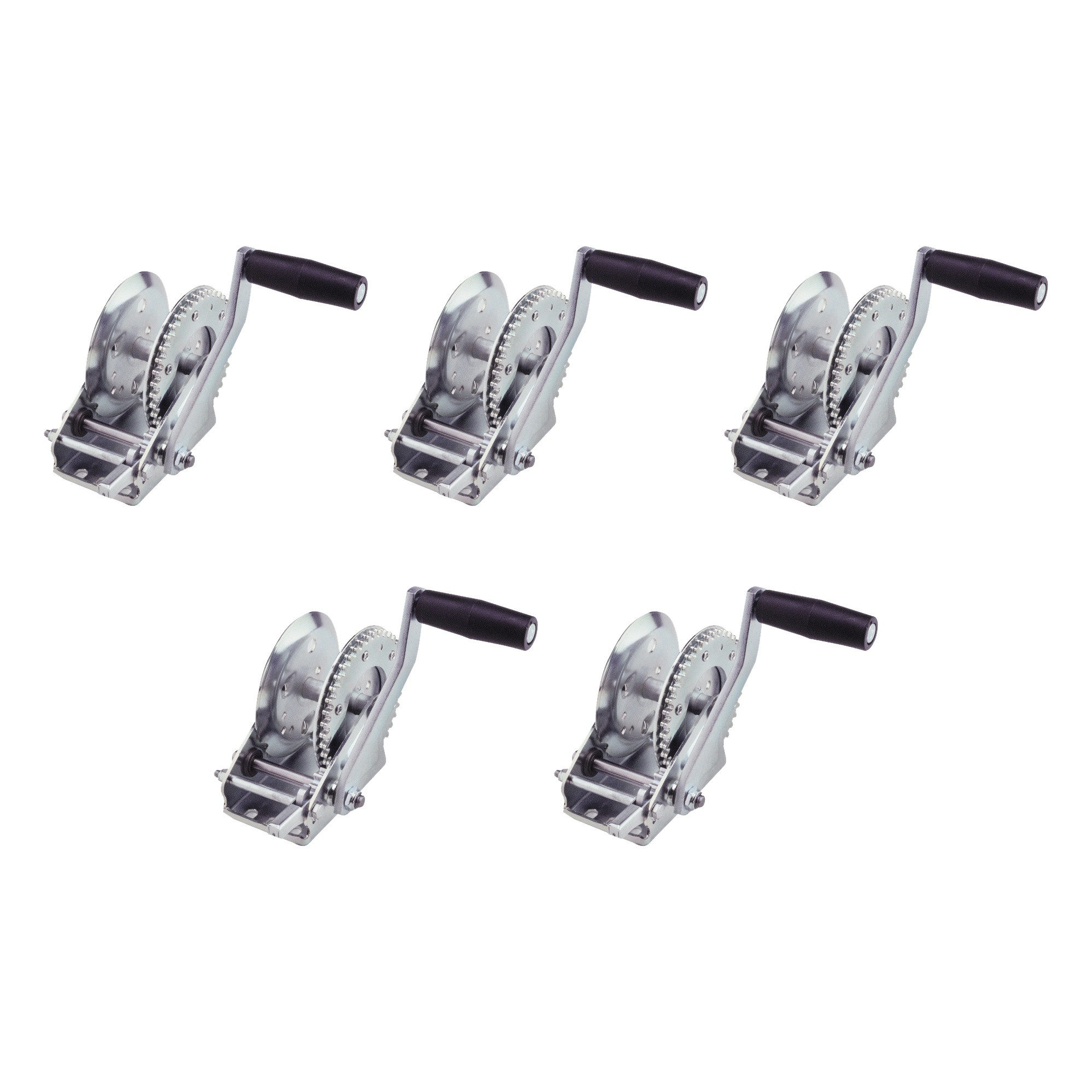
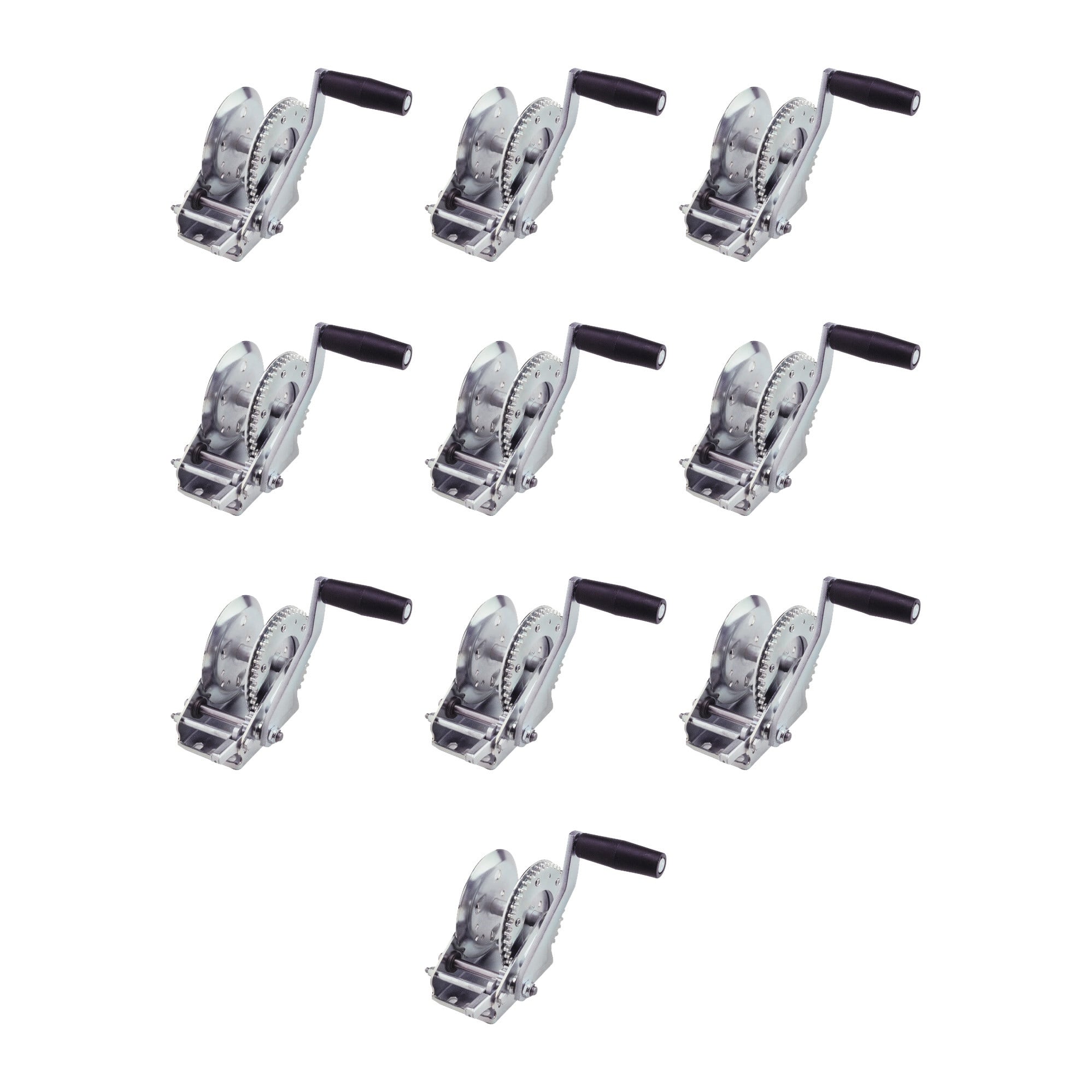
Fulton (20-Pack) Trailer Winch, Single-Speed, 1,100 lbs. Capacity, 20 Foot Strap, 7 Inch Handle, SilverFultonOriginal price was $1,050.00. Current price is $904.20.Out of Stock
View productOur in-house experts typically reply within one business day.

Fulton

Always the correct part
We know our products
Quality Products
Free Shipping!
Always the correct part
We know our products
Quality Products
Free Shipping!
Complete kit bundle containing all necessary components for your project. Professional-grade components designed for reliable performance and long-lasting durability.

Fulton single speed winches are designed to meet your toughest pulling demands. Featuring solid drum gear construction, factory-lubricated drive systems, and industry-leading Z-MAX 600 high performance zinc finish.
| BRAND: | FULTON |
| PART NUMBER: | 142101 |
| WARRANTY: | LIMITED 5 YEAR WARRANTY |
| WEIGHT: | 6.45 LBS |
| CAPACITY: | 1,100 LBS. |
| UNIVERSAL OR SPECIFIC FIT: | UNIVERSAL |
| TYPE: | RATCHET |
| WATERPROOF: | YES |
| HOOK INCLUDED: | NO |
| CABLE LENGTH: | 20 FT. (NOT INCLUDED) |
| GEAR RATIO: | 4.1:1 |
| RATED LINE PULL: | 1,100 LBS. |
| MATERIAL: | STEEL |
| FREE SPOOLING: | YES |
| HARDWARE INCLUDED: | YES |
| TREE SAVER: | NO |
| FRAME MATERIAL: | STEEL |
| COLOR: | SILVER |
Keywords: FL142101-5PK bundle kit, complete kit, professional components, industrial kit, FL142101, Fulton

Fulton has produced marine and utility trailer hardware for more than a century, and its jacks, winches and couplers are a standard for light and medium-duty trailering. The XLT and F2 series cover swivel and fixed jacks, hand and powered winches from 1,500 to 3,200 pounds, and couplers built to keep working in wet, salty conditions.
With more than a hundred years of production behind it, Fulton has become the reference point for light and medium-duty trailer hardware, particularly on the marine side. That environment is the toughest test a trailer component faces. A boat trailer is reversed into fresh or salt water on every launch and left to sit wet, which finds every weakness in plating, sealing and material choice. Fulton's stated position is that the brand performs best when the weather is at its worst, and its product engineering reflects that. It sits within the Horizon Global towing group alongside Reese, Draw-Tite, Bulldog, Tekonsha and Wesbar.
Marine and utility jacks anchor the line. The XLT Series marine jack uses a bolt-through swivel mount built from three-dimensionally formed heavy-gauge steel stampings with a proprietary bushing material, a combination chosen to minimise deflection under tongue load while keeping the swivel action working after years of exposure. The F2 Series takes corrosion resistance further as the industry's only extruded aluminium marine jack with an anodised finish, which removes the rust problem at its source rather than coating over it. The wider trailer jack range covers topwind, sidewind and drop-leg configurations.
Trailer winches pull boats onto bunks and rollers. XLT Series winches use efficient gear ratios, full-length drum bearings, oil-impregnated shaft bushings and a Comfort Grip handle that makes the last few turns under load bearable, in 1,500 and 1,800 pound capacities. F2 Series winches use an enclosed frame for a cleaner look and added protection, in 1,600, 2,000 and 3,200 pound models, including two-speed options that trade line speed for cranking effort.
Couplers complete the range, including A-frame couplers matched to common tongue sizes and load ratings, serving boat owners, utility trailer users and trailer manufacturers.
Experts available to answer your questions
Call 888-634-94945 Years
Cequent trailer winches are available in capacities ranging from 900 lbs to 3700 lbs. The exact capacity of your winch is stamped on the product frame or decals. Refer to the Winch Information Chart in the manual for your specific model's capacity. Never exceed the maximum rated capacity. If uncertain of your winch's capacity, contact Cequent Performance Products at 1-800-632-3290 or www.cequentgroup.com.
Yes. This winch is designed for manual operation only, and the load rating is based on an intermittent duty cycle. The winch requires a maximum of 45 lbs of handle force to pull its rated load. If you cannot crank the winch with one hand, you are potentially overloading it.
No. Only winches with a hub diameter of 1 3/4" can accommodate steel cable. Winches designed for steel cable have a larger drum hub to reduce bending fatigue and extend cable life. Check the Winch Information Chart to confirm your winch model supports steel cable before purchasing or using steel cable. If your winch is not listed as compatible with steel cable, use rope or strap instead.
Three attachment methods are available depending on your winch design: rope (no bolts, nuts, or clamps required—rope weaves through drum outer wall and is secured beneath itself), strap (requires a grade 5 bolt through drum holes, with optional strap anchor), or steel cable (for compatible models only—cable passes through dimpled holes in outer plate and is secured with a clamp). Check your winch specifications to determine which method applies to your model.
Three 3/8" diameter grade-5 bolts are required for mounting. These bolts must be torqued to 28-30 ft-lbs. Mounting bolts vary in length for each application, so verify the correct length for your installation. The winch stand must be capable of supporting at least five times the rated capacity of the winch. The mounting surface must be equal to or greater than the footprint of the winch frame. Note: mounting hardware is not supplied with the winch.
A grade 5 bolt of the largest possible diameter is required for strap mounting. The specific bolt size depends on your winch model and is listed in the Winch Information Chart under 'Strap Bolt Size'. For example, 900-1500 lb winches use M8 x 66mm (metric) or 5/16" x 2-3/4" (standard), while 2000+ lb winches use 3/8" x 2-3/4". Tighten the locknut just to where end play in the bolt is taken up; over-tightening can deform the drum.
Only if you are attaching a strap without a strap anchor. If your winch includes a strap anchor, pass the strap loop under the cross bolt, insert the strap anchor in the strap loop, then pull tight—no cover removal is needed. If attaching a strap without an anchor to a plastic-covered winch, remove the drum bolt and gently separate the plastic cover to allow the winch drum to be removed. Install the strap according to instructions, then re-install the winch drum as it was before.
Assemble the handle onto the flatted input shaft end. Tighten the 1/2" - 13 locknut against the handle and torque to 22-25 ft-lbs. Do not over-torque the locknut.
For single-speed winches, torque the drum locknut to 9-10 ft-lbs. For two-speed winches, torque the drum locknut to 24 ft-lbs. Be sure not to over-tighten, as this may crush the spacer between the frame and keep the drum from turning.
Tighten the clamp nuts to approximately 2 ft-lbs. Pass the cable from the inside of the drum through one of the dimpled holes in the outer plate, loop the cable around the drum bearing and under itself, and leave 1" of cable extending past the clamp location before tightening.
Always maintain a minimum of three complete wraps of rope, strap, or cable on the drum. This is a critical safety requirement. Never allow the line to unwind completely from the drum during operation.
Before use, perform the following: (1) Inspect rope, strap, or cable and replace if damaged. (2) Check mounting hardware for proper tightness and tighten if necessary. (3) Apply a drop or two of #30 weight engine oil to each bushing I.D. and to the ratchet pawl pivot points. (4) Maintain a thin layer of chassis grease on the gear teeth. (5) Verify that a loud clicking sound from the ratchet is heard when lifting the load—if not heard, do not use and replace ratchet components immediately.
Periodically check mounting hardware for proper torque and tighten if necessary. The manual does not specify an exact interval, but regular inspection is recommended, especially after heavy use. Always replace bent, broken, or worn parts before using the product.
Apply a drop or two of #30 weight engine oil to each bushing I.D. and to the ratchet pawl pivot points. Maintain a thin layer of chassis grease on the gear teeth. This lubrication should be applied before initial use and periodically during operation.
Winches require a maximum of 45 lbs of handle force to pull their rated load. If excessive force is needed to turn the winch handle, this may indicate overload. If you cannot crank the winch with one hand, you are potentially overloading the winch and should stop immediately.
A loud clicking sound from the ratchet must be heard when lifting the load. If a loud clicking sound is not heard, do not use the winch and replace the ratchet components immediately. This clicking indicates the ratchet pawl is properly engaged and holding the load.
No. Winches are not designed to secure boats to trailers while towing. Boat tie-downs should be used for this purpose. Using a winch for boat tie-down creates an unsafe condition.
Assure there is adequate safety factor of at least 3 times the maximum load for all components used. This means if your load is 1000 lbs, all components (cable, strap, rope, attachment points, and mounting structure) must be rated for at least 3000 lbs.
No. Do not use winch to move humans. This winch is designed only for lifting and lowering inanimate loads.
Never release the crank handle unless the ratchet pawl is fully engaged and the load is supported. Always ensure the ratchet is holding the load before letting go of the handle.
No. Never leave a weight supported from the winch while the winch is unattended, as another person may attempt to operate the winch, thereby creating an unsafe condition.
Never operate with slippery, wet, or oily hands and always maintain a firm grip on the winch handle. Do not attempt to stop a winch by grabbing the handle while in motion. Wet or oily hands can cause the handle to slip, creating a dangerous situation.
No. Never stand alongside the winch cable, strap, or rope or guide the cable, strap, or rope with your hands. If the cable breaks, it will whip violently, causing property damage, serious bodily injury, and/or death.
Always inspect the cable or strap and its attachment before each use to make sure they are not damaged. Never use them if they are worn, kinked, or frayed. If the cable or attachment breaks, the cable will whip violently, causing property damage, serious bodily injury, and/or death.
No. Do not allow children to play on or around this product or the load being supported.
No. Operator and bystanders should never position any part of body under any portion of this product or the load being supported. This is a critical safety requirement to prevent serious injury or death.
Only if your winch has a hub diameter of 1 3/4". Check the Winch Information Chart for your model. Winches designed for steel cable have a larger drum hub to reduce bending fatigue.
Three 3/8" diameter grade-5 bolts, torqued to 28-30 ft-lbs. Bolt length varies by application. Mounting hardware is not supplied.
Torque the 1/2" - 13 locknut to 22-25 ft-lbs. Do not over-torque.
Single-speed: 9-10 ft-lbs. Two-speed: 24 ft-lbs. Over-tightening can crush the spacer and prevent drum rotation.
Maximum 45 lbs. If you cannot crank with one hand, the winch is overloaded.
At least 3 times the maximum load. All components—cable, strap, rope, attachment points, and mounting structure—must meet this requirement.
Inspect line for damage, check mounting hardware tightness, apply #30 weight engine oil to bushings and ratchet pivot points, apply chassis grease to gear teeth, and verify loud ratchet clicking when lifting.
#30 weight engine oil on bushings and ratchet pivot points; thin layer of chassis grease on gear teeth. Apply before first use and periodically during operation.
Do not use the winch. A loud clicking sound from the ratchet must be heard when lifting the load—this indicates the ratchet pawl is properly engaged. If clicking is not heard, replace the ratchet components immediately before operating the winch again.
Excessive force in turning the winch handle may indicate overload. Winches require a maximum of 45 lbs of handle force to pull their rated load. If you cannot crank the winch with one hand, you are potentially overloading the winch. Stop immediately and reduce the load.
Ensure the ratchet pawl is fully engaged in the forward or loading position before releasing the handle. Gradually release the handle to verify the ratchet pawl is holding the load. If the pawl does not engage or hold, do not use the winch and replace the ratchet components immediately.
No. Never use cable or strap if they are worn, kinked, or frayed. Always inspect the cable or strap and its attachment before each use. If damaged, replace immediately. A broken cable will whip violently, causing property damage, serious bodily injury, and/or death.
You likely over-tightened the drum locknut. Over-tightening can crush the spacer between the frame and prevent the drum from turning. For single-speed winches, torque the drum locknut to 9-10 ft-lbs only. For two-speed winches, torque to 24 ft-lbs only. Loosen the locknut and re-torque to the correct specification.
First, verify that the ratchet pawl is fully engaged in the forward or loading position. Check that a loud clicking sound is heard when lifting—if not, replace ratchet components immediately. Inspect the cable, strap, or rope for damage and replace if worn, kinked, or frayed. Check all mounting hardware for proper tightness and tighten if necessary. If the problem persists, contact Cequent Performance Products at 1-800-632-3290.
On Sale Today
Original price was $262.50. Current price is $226.05.You save $36.45 (14%)
Free Shipping
Ships free on all orders
 Authorized Dealer

FREE ShippingFREE SHIPPING
Estimated delivery Sat, Oct 17 - Tue, Oct 20
Order before 2 PM EST Monday–Friday for same-day processing
Guaranteed safe & secure checkout
No reviews have been added for this product.