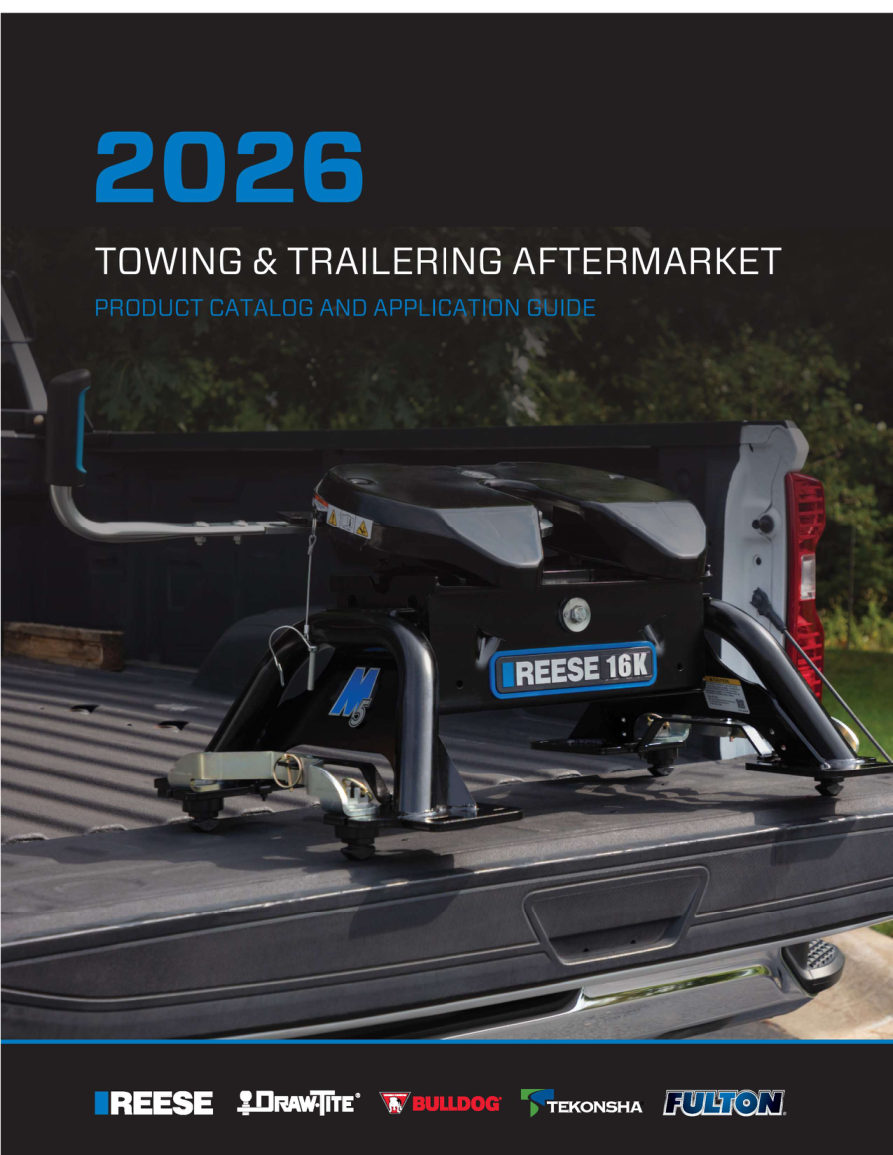
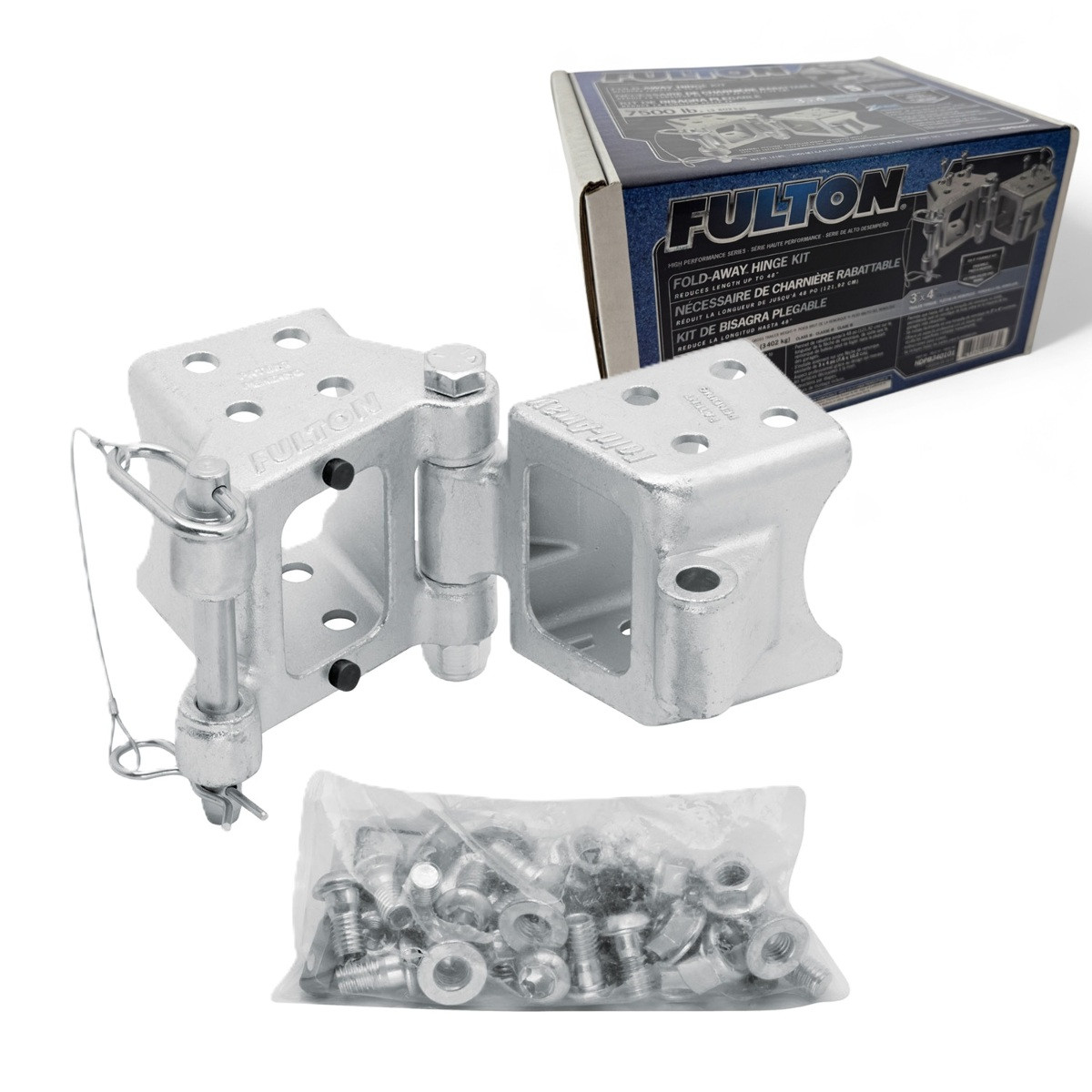
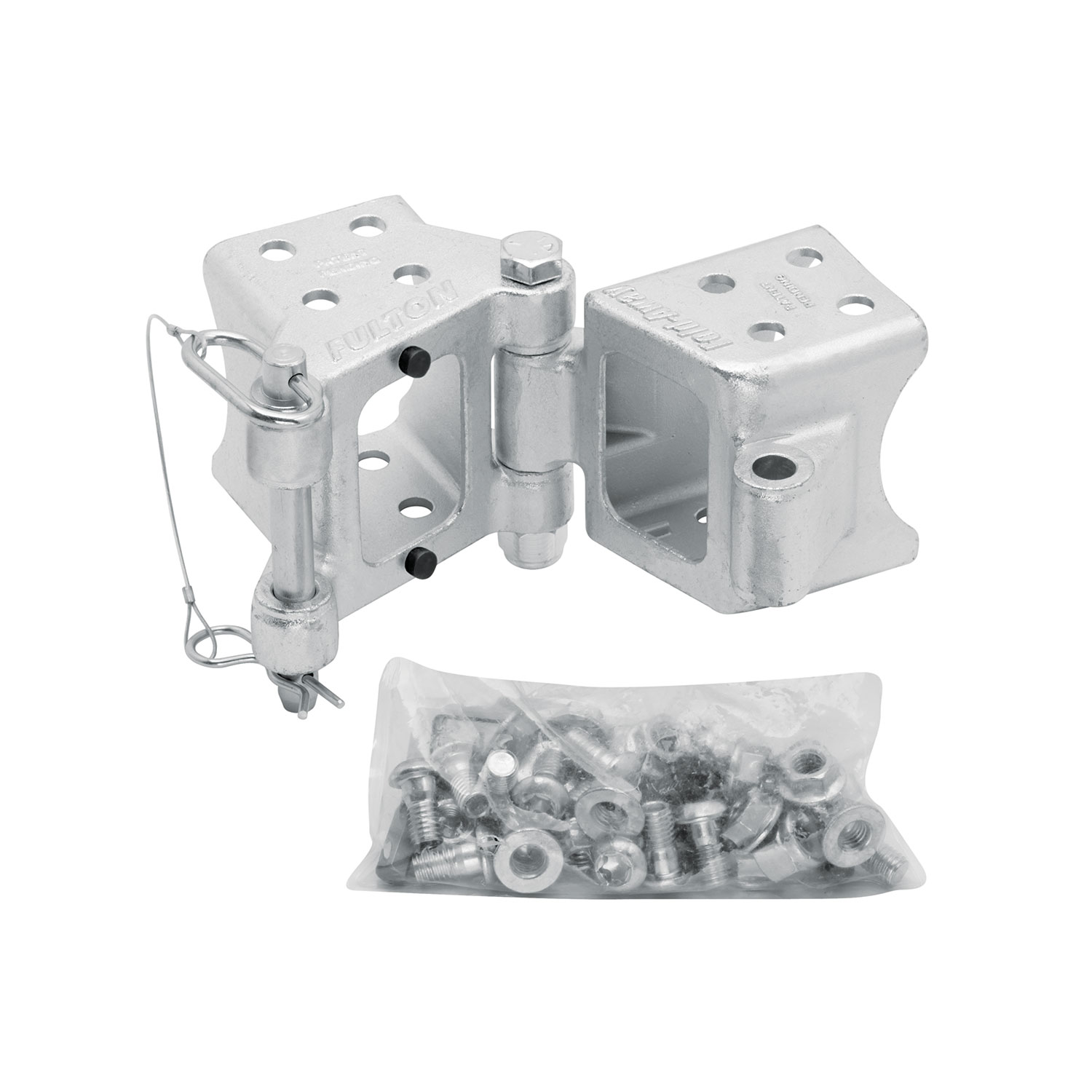
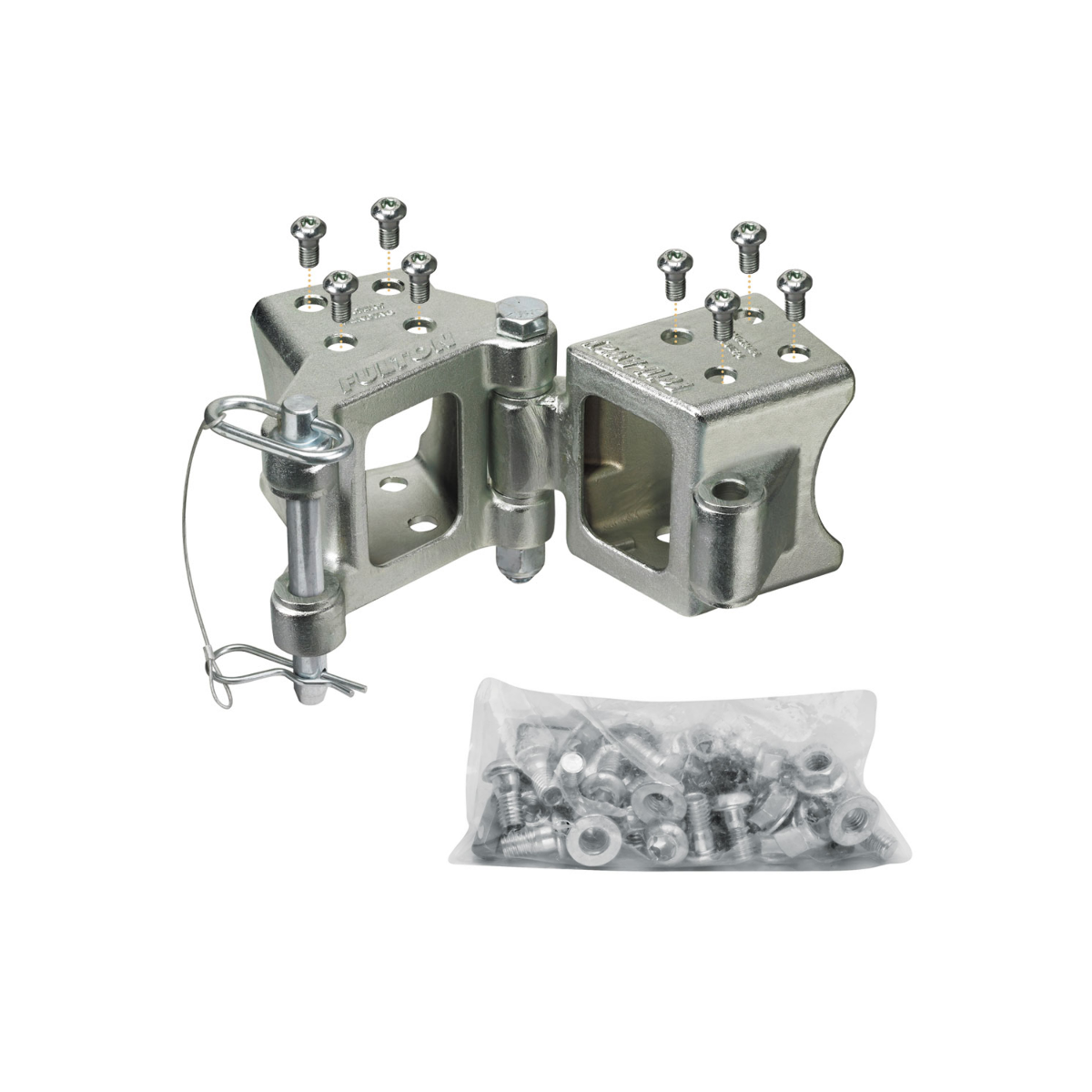
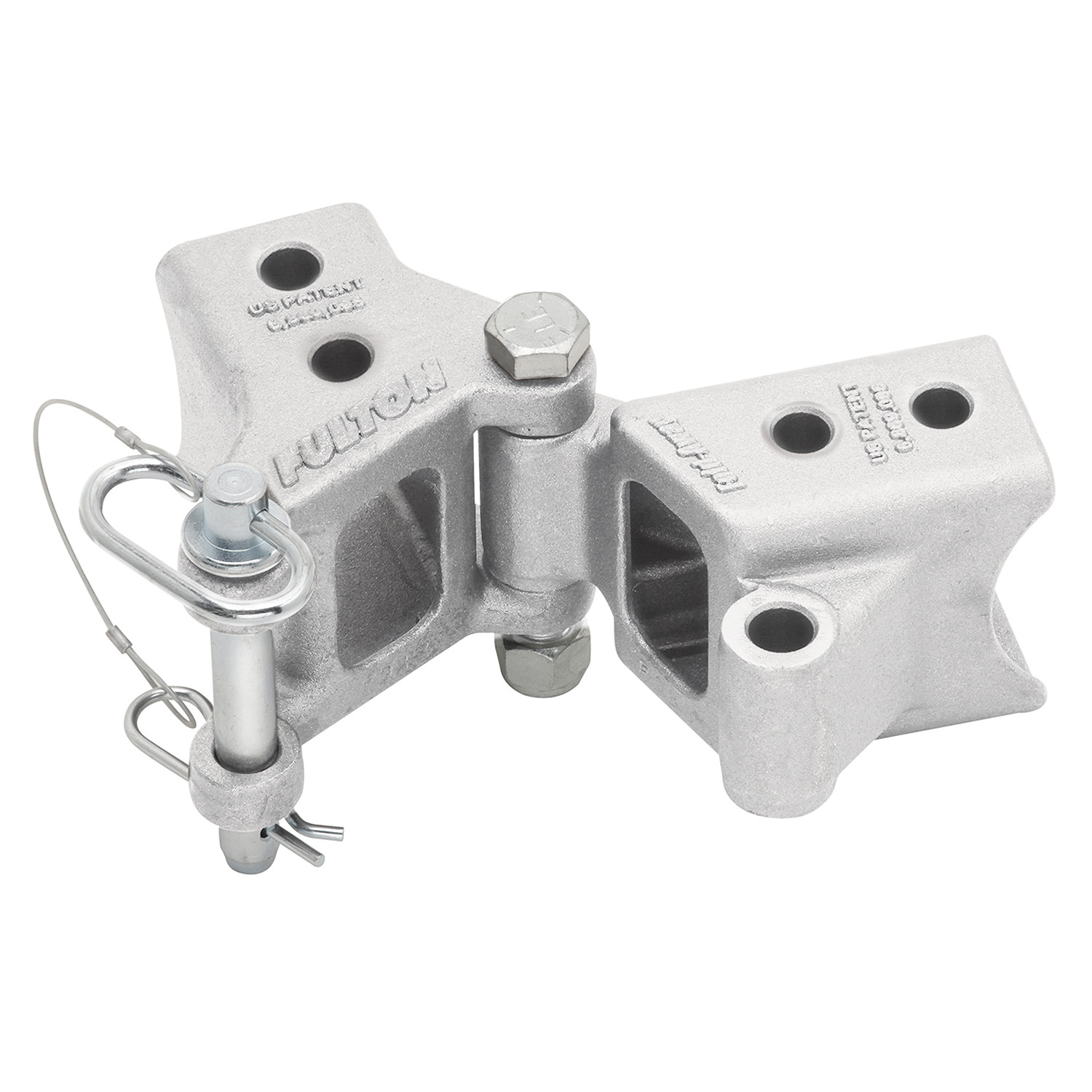
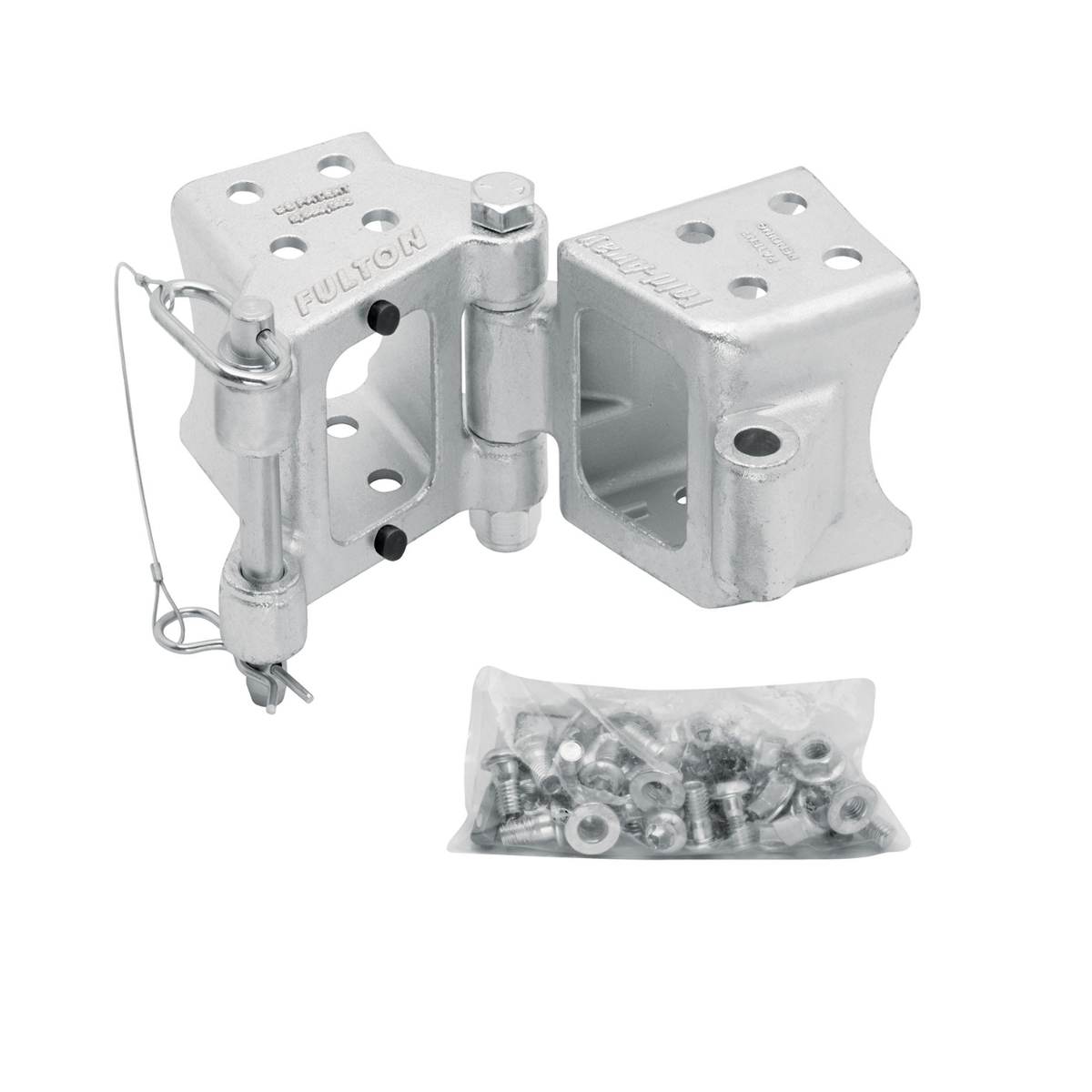
Fulton 3" x 4" 7,500 lbs. Bolt-On Fold-Away Hinge Kit Trailer Tongue Frame HDPB340101Fulton$199.22Out of Stock
View productOur in-house experts typically reply within one business day.

Fulton


Always the correct part
We know our products
Quality Products
Free Shipping!
Always the correct part
We know our products
Quality Products
Free Shipping!


Fulton has produced marine and utility trailer hardware for more than a century, and its jacks, winches and couplers are a standard for light and medium-duty trailering. The XLT and F2 series cover swivel and fixed jacks, hand and powered winches from 1,500 to 3,200 pounds, and couplers built to keep working in wet, salty conditions.
With more than a hundred years of production behind it, Fulton has become the reference point for light and medium-duty trailer hardware, particularly on the marine side. That environment is the toughest test a trailer component faces. A boat trailer is reversed into fresh or salt water on every launch and left to sit wet, which finds every weakness in plating, sealing and material choice. Fulton's stated position is that the brand performs best when the weather is at its worst, and its product engineering reflects that. It sits within the Horizon Global towing group alongside Reese, Draw-Tite, Bulldog, Tekonsha and Wesbar.
Marine and utility jacks anchor the line. The XLT Series marine jack uses a bolt-through swivel mount built from three-dimensionally formed heavy-gauge steel stampings with a proprietary bushing material, a combination chosen to minimise deflection under tongue load while keeping the swivel action working after years of exposure. The F2 Series takes corrosion resistance further as the industry's only extruded aluminium marine jack with an anodised finish, which removes the rust problem at its source rather than coating over it. The wider trailer jack range covers topwind, sidewind and drop-leg configurations.
Trailer winches pull boats onto bunks and rollers. XLT Series winches use efficient gear ratios, full-length drum bearings, oil-impregnated shaft bushings and a Comfort Grip handle that makes the last few turns under load bearable, in 1,500 and 1,800 pound capacities. F2 Series winches use an enclosed frame for a cleaner look and added protection, in 1,600, 2,000 and 3,200 pound models, including two-speed options that trade line speed for cranking effort.
Couplers complete the range, including A-frame couplers matched to common tongue sizes and load ratings, serving boat owners, utility trailer users and trailer manufacturers.
Experts available to answer your questions
Call 888-634-94945 Years
Installing a Fulton® Fold-Away Bolt-on Hinge Kit - HDPB Series
The F3510 is a fold-away coupler and bracket system that allows a trailer tongue to pivot and fold away for storage or maneuvering. It consists of male and female castings that attach to the trailer tongue, connected by a pivot bolt and hinge pin, enabling the coupler to swing to the side. The kit comes in three versions: HDPB (bolt-on pivot brackets only), HDPW (weld-on pivot brackets only), and HPB (coupler and tube pivot kit).
The F3510 fits only steel trailer tongues with outside dimensions of 2"x3", 3"x3", 3"x4", or 3"x5" and material thickness between .188" and .120". Trailer tongues made of materials other than steel are not compatible.
For a 2"x3" trailer tongue with a 5,000 lb Gross Trailer Weight Rating, the maximum pivot length is 24 inches from the center of the coupler ball pocket. The maximum tongue load is 500 lbs.
For a 3"x5" trailer tongue with a 9,000 lb Gross Trailer Weight Rating, the maximum pivot length is 27 inches from the center of the coupler ball pocket. The maximum tongue load is 900 lbs.
Yes, the F3510 is compatible with 3"x4" trailer tongues. For a 3"x4" tongue with a 4,500 lb GTWR, the maximum pivot length is 45 inches and the maximum tongue load is 450 lbs. Always verify your trailer's actual GTWR against the capacity table to ensure safe operation.
Required tools include: 1/2" drive ratchet, 15/16" and 3/4" open end wrenches and sockets, 7/16" socket for Torx bit, metal cutting saw, 1/2" chuck drill, drill bits (1/8", 1/4", 3/8", 1/2"), torque wrench capable of 80 ft-lbs, tape measure, safety glasses, gloves, centerpunch, clamp, square, hammer, jack stand, and wheel chocks.
The manual does not specify whether the battery must be disconnected. However, the manual does require removal of all wiring and brake lines from the trailer tongue before cutting or drilling to prevent damage. Consult the trailer manufacturer or a qualified technician regarding battery disconnection.
Before installation, you must: read and follow all tool manufacturer safety instructions; always wear safety glasses and protective gloves; use a jack stand (not the trailer jack) to support the tongue; chock all tires and wheels to ensure stable working conditions; do not mount any accessories to the Fold-Away tongue (jack, spare tire carrier, winch stand); and remove all wiring and brake lines from the trailer tongue prior to cutting or drilling.
No. The manual explicitly states: "Do not mount any accessories to Fold-Away tongue (i.e. jack, spare tire carrier, winch stand)." Mounting such accessories may interfere with the pivot mechanism or compromise safety.
Measure from the center of the coupler ball pocket the desired swing length back and mark the location. Refer to the capacity table for your tongue size and GTWR to determine the maximum pivot length. Ensure the mark is at least 5 inches from any obstruction (winch stand, jack bracket, etc.). Using a square, scribe a line around the trailer tongue to indicate the cut location. Verify measurements before cutting.
The cut mark must be at least 5 inches from any obstruction such as a winch stand, jack bracket, or other equipment on the trailer tongue.
Yes, drilling is required. You must drill holes for safety chain bolts (1/2" diameter) and for the casting attachment bolts. For bolt-on models (HDPB), you progressively drill holes from 1/8" to 1/4" to 3/8" to 1/2" diameter. For weld-on models (HDPW), welding replaces the drilling and bolt attachment process.
Yes, cutting the trailer tongue is a permanent modification. The manual requires you to cut the tongue along a scribe line to the specified length based on your desired pivot length. This cannot be reversed.
Yes, you must remove all wiring and brake lines from the trailer tongue before any cutting or drilling to prevent them from being cut or damaged during installation. Upon completion of installation, all wiring and lines should be properly re-routed and connected.
Along each side of the trailer tongue, measure 4 inches from the cut end and mark. Measure 1 inch up from the bottom and mark. At the line intersections, use a centerpunch to mark drill locations for safety chain bolts. Drill to 1/2" diameter. Use two separate 1/2" bolts and locknuts for each side.
For bolt-on models (HDPB), the drilling sequence is: 1) drill 1/8" holes at centermarks, drilling square to the trailer tongue and only through one side at a time; 2) increase the 1/8" holes to 1/4"; 3) increase the 1/4" holes to 3/8"; 4) increase to 1/2". Carefully remove metal shavings and burrs after each step.
The safety chain bolts (1/2" bolts and locknuts) must be torqued to 45 ft-lbs.
The special shoulder bolts and flange nuts that attach the castings to the trailer tongue must be torqued to 75 ft-lbs. Use a 3/4" box end wrench and T55 Torx bit to tighten all eight fasteners.
The 5/8" pivot bolt that connects the swing tongue to the trailer tongue must be torqued to 50 ft-lbs. Apply light grease to the bolt before installation and secure it with a 5/8" locknut.
The coupler attachment bolts must be torqued to 75 ft-lbs. Use one 1/2-13 x 4.00" hex bolt through the rear holes of the coupler and 1/2-13 x 1.25" hex bolts for the forward holes, secured with 1/2" locknuts.
The optional actuator end casting uses 1/2" diameter grade-5 bolts and lock washers, torqued to 75 ft-lbs.
Pull the trailer wiring back through the trailer section and into the swing tongue, reattaching any ground wires that may have been removed during installation. Route the wiring through the swing tongue in a way that prevents it from rubbing on sharp edges. A wire grommet is included on HPB models to protect the wiring.
Before towing, ensure that: all trailer lighting is hooked up and working correctly; wiring is properly connected but loose enough to make turns without disconnecting or damage; wiring is not dragging and is clear of safety chains; when pivoting the coupler, wiring and brake lines are not pinched between hinges, as pinching could damage them.
The maximum rated capacity depends on your trailer tongue size and Gross Trailer Weight Rating (GTWR). Refer to the capacity tables in the manual for your specific tongue dimensions (2x3, 3x3, 3x4, or 3x5) and GTWR. Never exceed the lesser of the coupler, hitch, hitch ball, vehicle, or trailer weight ratings. Also check the stamped markings or decals on the coupler and actuator for their rated capacities.
Safety chains must not be attached to the coupler, swing tongue, or their existing hardware. The attachment point must be behind the castings on the trailer tongue. Safety chains should be long enough for tight turns but not dragging, and must be properly connected to the towing vehicle and trailer (crossed, right to left and left to right).
Before towing, check: the swing tongue for signs of wear or damage and verify proper torque on all fasteners; safety chains are long enough for tight turns but not dragging and are properly connected (crossed); all trailer lighting is hooked up and working correctly; wiring is properly connected but loose enough for turns without disconnecting or damage; wiring is not dragging and is clear of safety chains; when pivoting the coupler, wiring and brake lines are not pinched between hinges; the pivot bolt/locknut and hinge pin/hairpin cotter pin are installed and secured with the coupler in the towing position.
Operator and bystanders should never position any part of their body under any portion of this product or the load being supported. Do not allow children to play on or around this product or the load being supported.
Remove the hinge pin and pivot the swing tongue to verify that the system works correctly. If the product is to be primed, painted, or galvanized, remove any excess buildup. Make sure operation has not been impaired. After installation, close the swing tongue and lock it into place with the hinge pin, ensuring the hairpin cotter is in place. Check for proper operation of trailer lighting.
Route safety chains through the guide on the bottom of the swing tongue. Check that safety chains are long enough to reach a tow vehicle and will not bind or drag during normal towing conditions.
Before each towing, check the swing tongue for signs of wear or damage and verify proper torque on all fasteners. Replace any worn or damaged components with Fulton components. Apply light grease to the 5/8" pivot bolt and hinge pin during installation. For replacement components, contact Cequent Trailer Products' Customer Service Department at 1-800-604-9466.
Yes. Apply light grease to the 5/8" pivot bolt before securing it through the castings. Also insert a lightly greased hinge pin through the top of the castings.
The F3510 fits steel trailer tongues sized 2"x3", 3"x3", 3"x4", or 3"x5" with material thickness between .188" and .120". Check the capacity table for your tongue size and GTWR to confirm compatibility and maximum pivot length.
You need: 1/2" drive ratchet, 15/16" and 3/4" wrenches and sockets, 7/16" socket for Torx bit, metal cutting saw, 1/2" drill, drill bits (1/8", 1/4", 3/8", 1/2"), 80 ft-lb torque wrench, tape measure, safety glasses, gloves, centerpunch, clamp, square, hammer, jack stand, and wheel chocks.
Yes. Remove all wiring and brake lines from the trailer tongue before cutting or drilling to prevent damage. Re-route and reconnect them after installation.
Safety chain bolts: 45 ft-lbs. Casting attachment bolts: 75 ft-lbs. Pivot bolt: 50 ft-lbs. Coupler attachment bolts: 75 ft-lbs. Optional actuator bolts: 75 ft-lbs.
Maximum pivot length depends on your trailer tongue size (2x3, 3x3, 3x4, or 3x5) and GTWR. Refer to the capacity tables in the manual. For example, a 2x3 tongue with 5,000 lb GTWR has a maximum pivot length of 24 inches.
Remove the hinge pin and pivot the swing tongue to verify the system works correctly. Ensure operation has not been impaired. Check that all trailer lighting works. Verify the pivot bolt/locknut and hinge pin/cotter pin are secured before towing.
Check the swing tongue for wear or damage. Verify all fastener torque values. Ensure safety chains are properly connected and not dragging. Confirm all trailer lighting works. Verify wiring is not pinched or dragging.
Remove the hinge pin and manually pivot the swing tongue to verify the system works correctly. If the product has been primed, painted, or galvanized, remove any excess buildup that may be impeding movement. Ensure the pivot bolt is torqued to 50 ft-lbs and the hinge pin is properly installed and secured with the hairpin cotter. Check that the male and female castings are properly aligned and fully seated.
Stop pivoting immediately. Pinching could damage wiring and brake lines. Remove the hinge pin and swing the tongue back to the towing position. Re-route the wiring and brake lines to prevent contact with the hinges. Ensure wiring is routed through the swing tongue in a way that prevents rubbing on sharp edges. On HPB models, use the included wire grommet for protection. Test the pivot again before towing.
Verify that all trailer lighting is hooked up and working correctly. Check that wiring is properly connected and that any ground wires removed during installation have been reattached. Ensure wiring is not dragging and is clear of safety chains. Test the lighting with the swing tongue in both the towing position and pivoted position. If lights still do not work, check the trailer's main electrical connections and fuses.
Verify that all eight casting attachment bolts are torqued to 75 ft-lbs using a 3/4" box end wrench and T55 Torx bit. Check before each towing trip. If bolts continue to loosen, the fasteners may be damaged or the holes may be stripped. Contact Cequent Trailer Products' Customer Service Department at 1-800-604-9466 for replacement components.
On Sale Today
Original price was $185.00. Current price is $146.86.You save $38.14 (21%)
Free Shipping
Ships free on all orders
 Authorized Dealer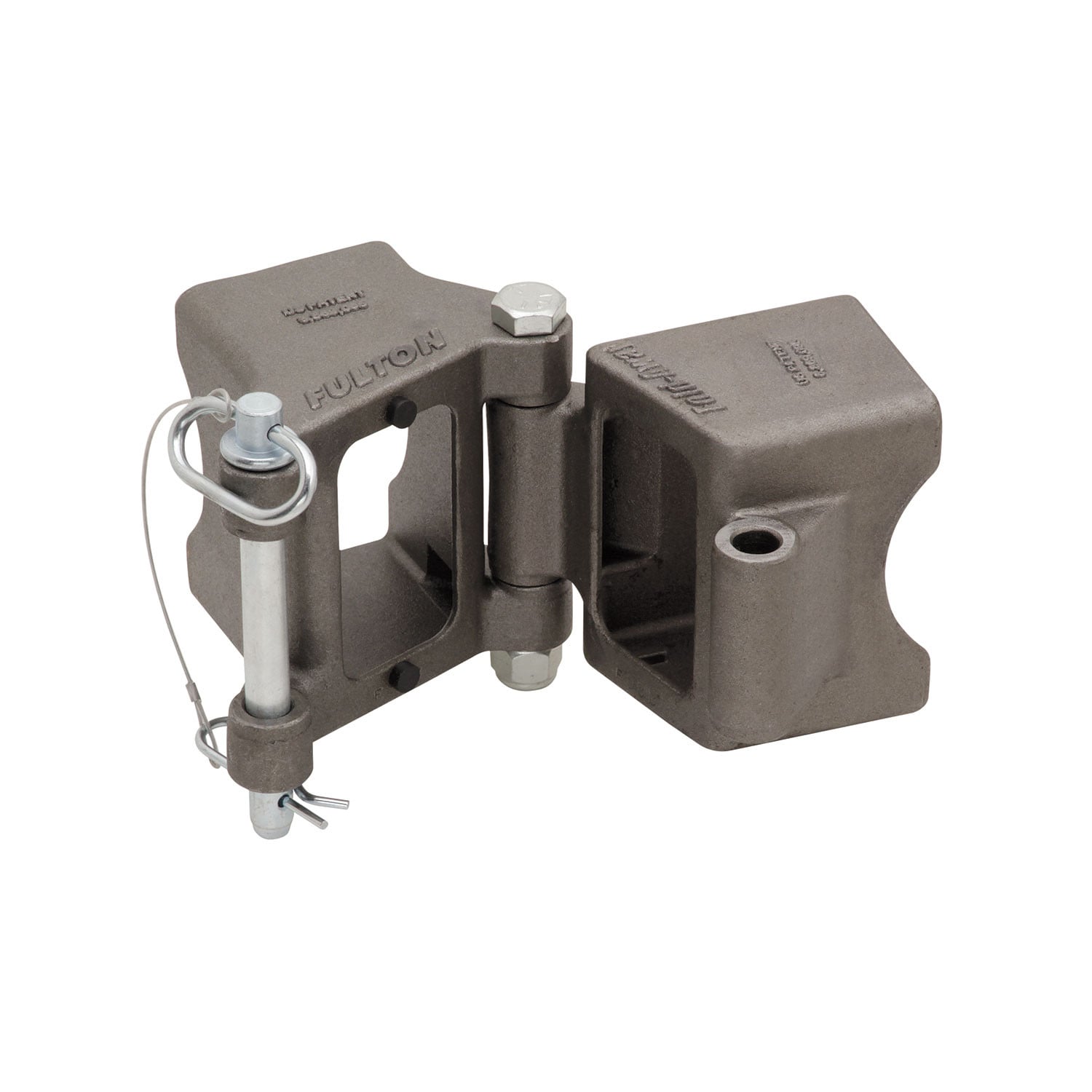
FREE ShippingFREE SHIPPING
Estimated delivery Sat, Sep 26 - Tue, Sep 29
Order before 2 PM EST Monday–Friday for same-day processing
Guaranteed safe & secure checkout
Ann
Ordered online. Shipment arrived on time and with all the correct parts. Great customer service and friendly staff. Also, pricing was great!
May 22, 2023