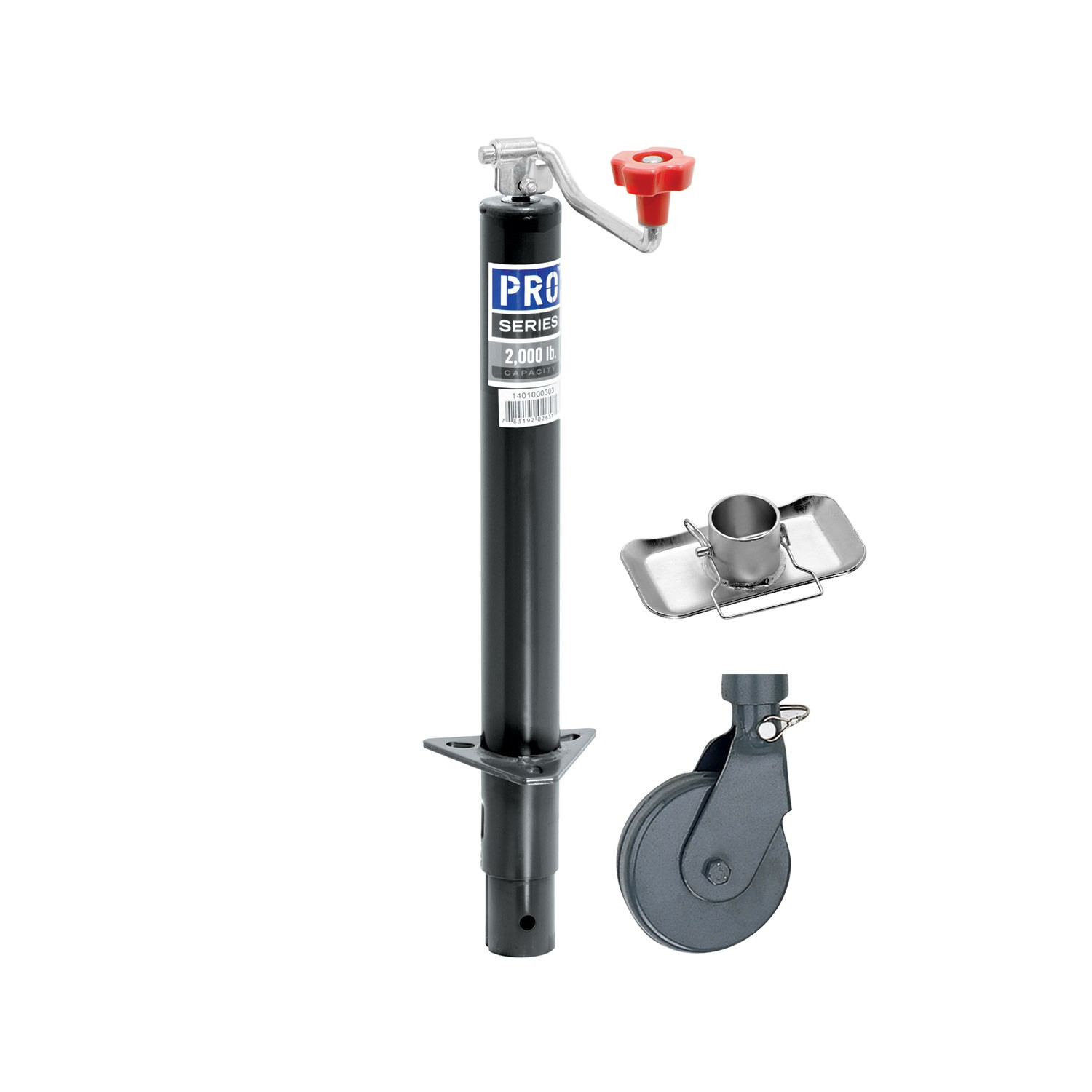
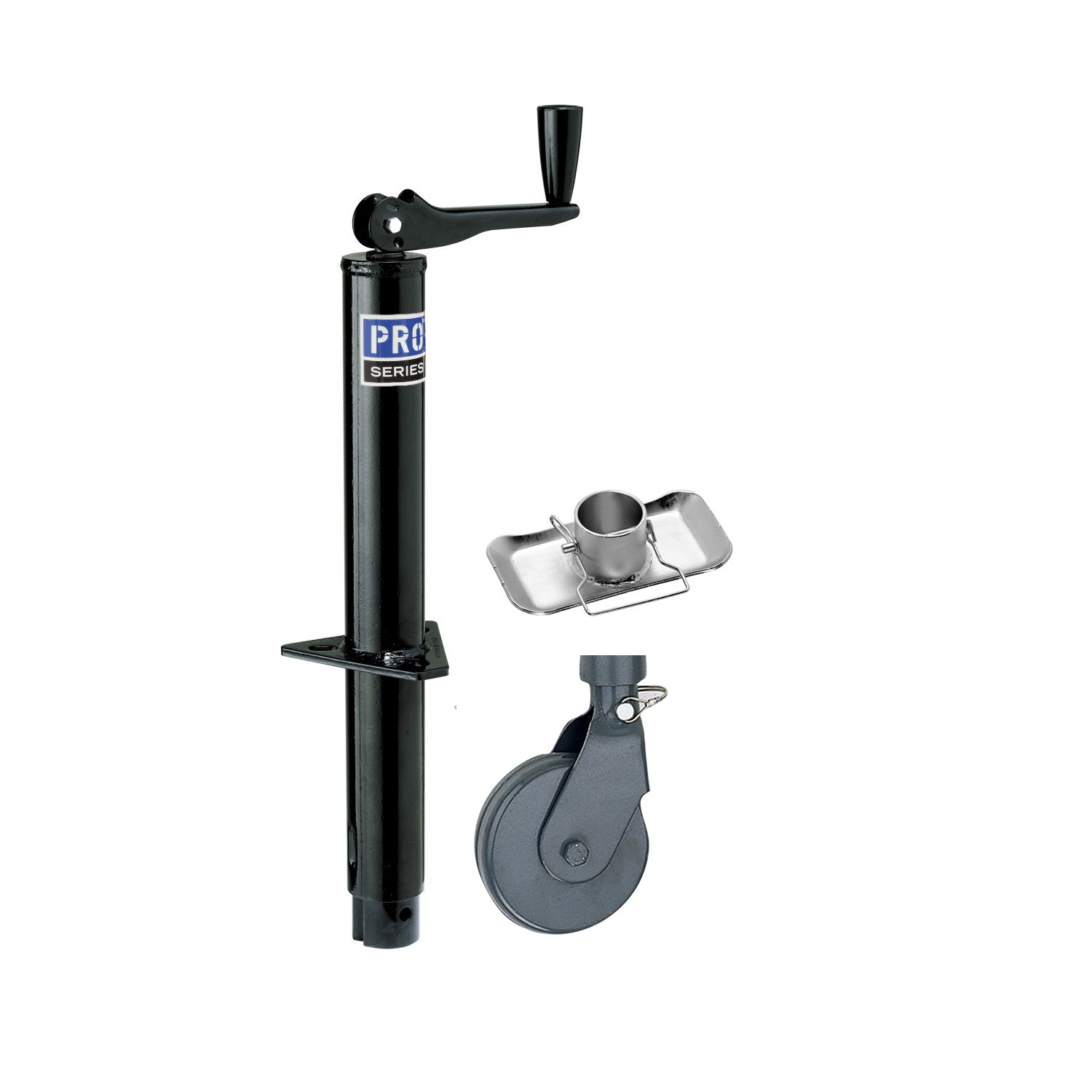
Pro Series Round 2,000 lbs. A-Frame Trailer Jack Topwind 15" Lift w/ 6" Steel Caster Wheel & 2" Footplate StandPro Series$306.36Out of Stock
View productOur in-house experts typically reply within one business day.

Pro Series

Always the correct part
We know our products
Quality Products
Free Shipping!
Always the correct part
We know our products
Quality Products
Free Shipping!

Pro Series delivers dependable towing equipment at an accessible price point, drawing on the same towing engineering as its Horizon Global sister brands. The line covers receiver hitches, ball mounts, hitch balls, weight distribution systems, fifth wheel hitches and wiring, built to the same tested load ratings and aimed at occasional and seasonal towing.
Pro Series sits within the Horizon Global towing family alongside Reese, Draw-Tite, Fulton, Bulldog, Tekonsha, Bargman and Wesbar, and it exists to serve a specific customer: the owner who tows a few times a year and wants equipment that is properly rated and tested without paying for features they will not use. The engineering, testing regime and load rating standards come from the same source as the group's premium lines. What changes is the specification level, not the safety margin.
Receiver trailer hitches form the base of the range, offered in the classes that cover small utility trailers, boats, campers and the mid-weight loads most drivers actually pull. Custom-fit designs bolt to existing frame locations on a given vehicle, and finishes are specified to hold up against road salt and moisture through years of seasonal use.
Ball mounts are available in fixed and adjustable forms across a range of rises and drops, which matters because a trailer towed nose-high or nose-low handles badly regardless of how good the hitch is. Matched hitch balls, pins and clips complete the connection.
For heavier loads, Pro Series weight distribution systems transfer tongue weight forward onto the tow vehicle's front axle, restoring steering feel and levelling the rig. Complete kits bundle spring bars, head assembly and shank matched to a tongue weight range, so buyers are not left assembling a system from parts and guessing at compatibility. Fifth wheel hitches extend the line into RV towing.
The result is a practical range for weekend boaters, seasonal campers, homeowners renting equipment trailers and anyone whose towing needs are real but occasional.
Experts available to answer your questions
Call 888-634-94945 Years
The jack has a rated capacity of 12,000 lb. However, the actual capacity is limited to the lesser of the jack, footplate, or caster wheel capacity. Always refer to the stamped markings or decals on the product to confirm the rated capacity for your specific unit. If uncertain, contact Cequent Performance Products at 1-800-521-0510 or www.cequentgroup.com.
The jack handle moves 5/8" to 3/4" while shifting between high and low gear. This clearance must be accounted for during installation to prevent interference with the tow vehicle, tongue, or other mounted accessories.
High gear is engaged when the shaft is pushed in. Low gear is engaged when the shaft is pulled out. The handle moves 5/8" to 3/4" during the shift between gears.
No. These jacks are designed for mounting to flat surfaces only. Before mounting, confirm there will be no interference from the tow vehicle, tongue, ground, and any other mounted accessories while stationary or in motion. Check for interference in all positions including handle swing in both gears and swivel positions if applicable. Check for interference again after installation is complete.
These jacks are designed for vertical loading only. Excessive side forces may cause jack failure and must be avoided.
All welding must be performed by an AWS certified welder. For direct-mount installation, three 2" long 1/4" fillet welds must be placed on both sides of the jack along the contacting surface. The welds should be as far apart as possible to maximize strength under load. For weld-on pivot tube mounting, the non-beveled side of the pivot tube is welded to the tongue with a 1/4" fillet weld all around.
Yes. All welding must be performed by an AWS certified welder. This applies to both direct-mount and weld-on pivot tube mounting installations.
Before mounting the jack, confirm that there will be no interference from the tow vehicle, tongue, ground, and any other mounted accessories while stationary or in motion. Check for interference in all positions including handle swing in both gears (if applicable) and swivel positions (if applicable). Check for interference again after installation is complete.
1) All welding must be performed by an AWS certified welder. 2) Place the jack at the desired location. 3) Weld 3" in 2 locations on both sides of the jack using a 1/4" fillet weld. The three 2" long 1/4" fillet welds should be placed on both sides of the jack along the contacting surface, as far apart as possible to maximize strength under load.
1) All welding must be performed by an AWS certified welder. 2) The non-beveled side of the pivot tube is welded to the tongue. 3) Place the weld-on pivot tube against the tongue and weld all around with a 1/4" fillet weld. 4) Align one set of pivot mount holes vertically. 5) Mate the jack to the pivot tube and secure with the supplied pin.
If mounting in a tandem application, align the jacks carefully so they raise and lower together and share the load equally.
The supplied pin is used to secure the jack to the pivot tube after the pivot tube has been welded to the tongue. The pin is inserted through the pivot tube and the pivot mount to hold the jack in place.
If this product has a pivot tube mount, make certain the pivot pin is fully inserted through both sides on the pivot tube and the pivot mount.
When using the drop leg, make certain the drop leg pin is fully inserted before using the jack. Verify that the drop leg pin is fully inserted into the jack by checking for no clearance between the drop leg pin and housing. If you see clearance, you must adjust the drop leg to fully seat the pin into the hole location. If you are unable to fully seat the pin, do not use the jack.
Never position any part of your body under any portion of the jack or the load being supported. Secure the load, vehicle and trailer from rolling by blocking wheels when operating the jack or coupling the trailer. Never exceed the maximum rated capacity. Do not allow children to play on or around the product or the load being supported. Always replace bent, broken, or worn parts before using the product.
Fully retract and/or rotate the jack before towing.
Keep clear of the pinch point at the drop leg pin. The drop leg will naturally drop or retract very quickly depending on the model. Also keep clear of holes in the drop leg.
No. If this product has a drop leg, never attempt to adjust the drop leg when the jack is under load.
The following procedures should be performed at least annually: The gears, bushings, and screw of the jack must be kept lubricated. For side-wind models, apply a small amount of automotive grease with a grease gun at the lubrication points found on the side of the jack near the input shaft. Rotate the jack handle to distribute the grease evenly. A lightweight oil must be applied to the input shaft bushings at both sides of the jack or gearbox. For top-wind models, the screw-stem should be lubricated with a lightweight oil. If equipped, the drop leg pin and spring must be kept clean and lubricated with a lightweight oil.
For side-wind models, apply automotive grease with a grease gun at the lubrication points near the input shaft. A lightweight oil must be applied to the input shaft bushings at both sides of the jack or gearbox. For top-wind models, the screw-stem should be lubricated with lightweight oil. If equipped, the drop leg pin and spring must be kept clean and lubricated with lightweight oil.
The lubrication points are found on the side of the jack near the input shaft. Apply a small amount of automotive grease with a grease gun at these points and rotate the jack handle to distribute the grease evenly.
The gears, bushings, and screw of the jack must be kept lubricated. The input shaft bushings at both sides of the jack or gearbox must be lubricated with lightweight oil. If equipped, the drop leg pin and spring must be kept clean and lubricated with lightweight oil.
If equipped, the drop leg pin and spring must be kept clean and lubricated with a lightweight oil. You may need to lubricate the drop leg pin assembly if the pin does not fully seat into the hole location.
Yes. These jacks are designed for mounting to flat surfaces only. Before installation, check for interference from the tow vehicle, tongue, ground, and other accessories in all positions including handle swing and swivel positions.
Yes. All welding must be performed by an AWS certified welder for both direct-mount and weld-on pivot tube installations.
A 1/4" fillet weld is required. For direct-mount, place three 2" long 1/4" fillet welds on both sides of the jack. For weld-on pivot tube mounting, weld all around the pivot tube with a 1/4" fillet weld.
Fully retract and/or rotate the jack before towing.
No. Never attempt to adjust the drop leg when the jack is under load.
At least annually. Apply automotive grease to side-wind models at lubrication points near the input shaft, and lightweight oil to input shaft bushings and drop leg components.
You may need to lubricate the drop leg pin assembly as described in the maintenance section. If you are unable to fully seat the pin after lubrication, do not use the jack. Verify that the drop leg pin is fully inserted into the jack by checking for no clearance between the drop leg pin and housing.
Free Shipping
Ships free on all orders
 Authorized Dealer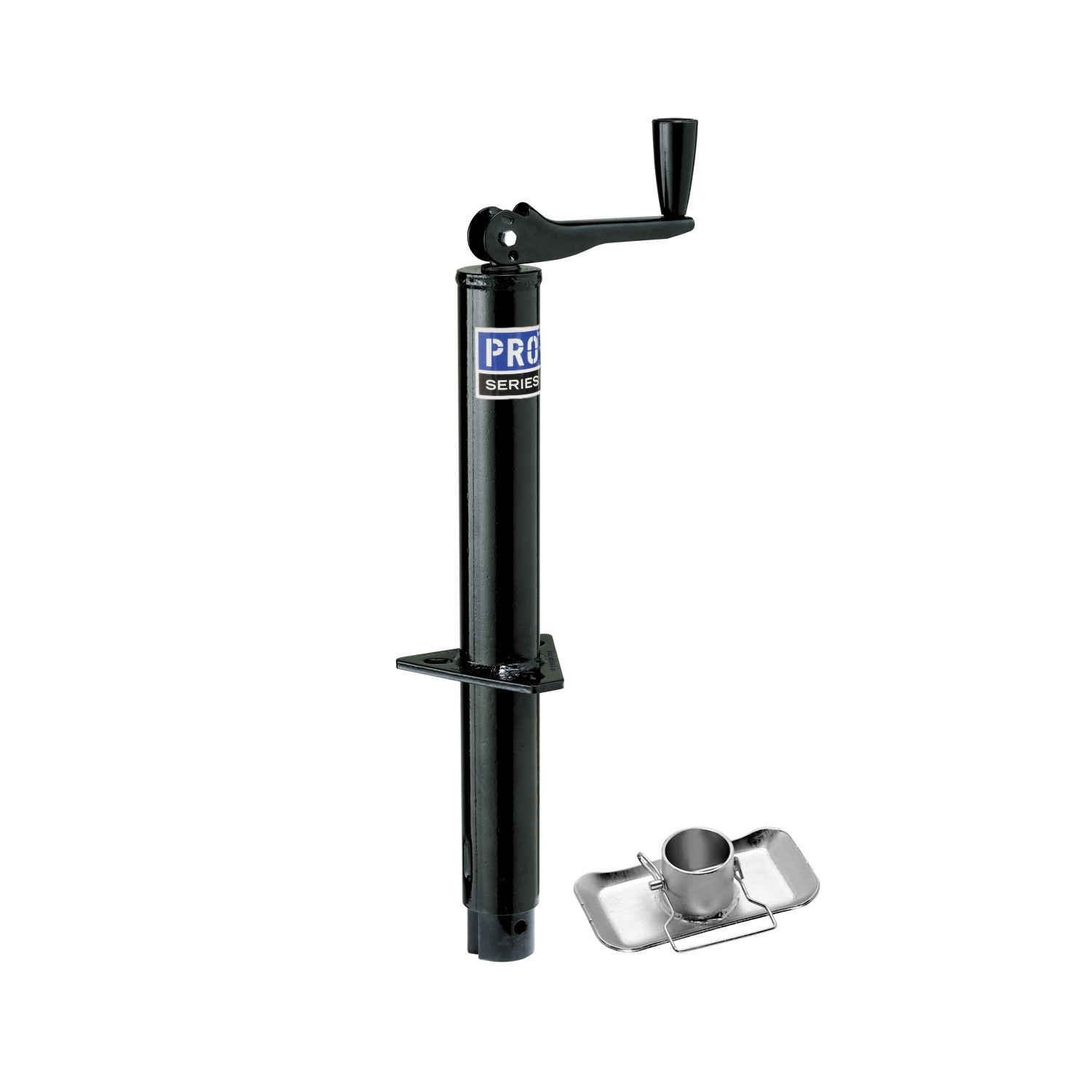


FREE ShippingFREE SHIPPING
Estimated delivery Sun, Sep 27 - Wed, Sep 30
Order before 2 PM EST Monday–Friday for same-day processing
Guaranteed safe & secure checkout
No reviews have been added for this product.