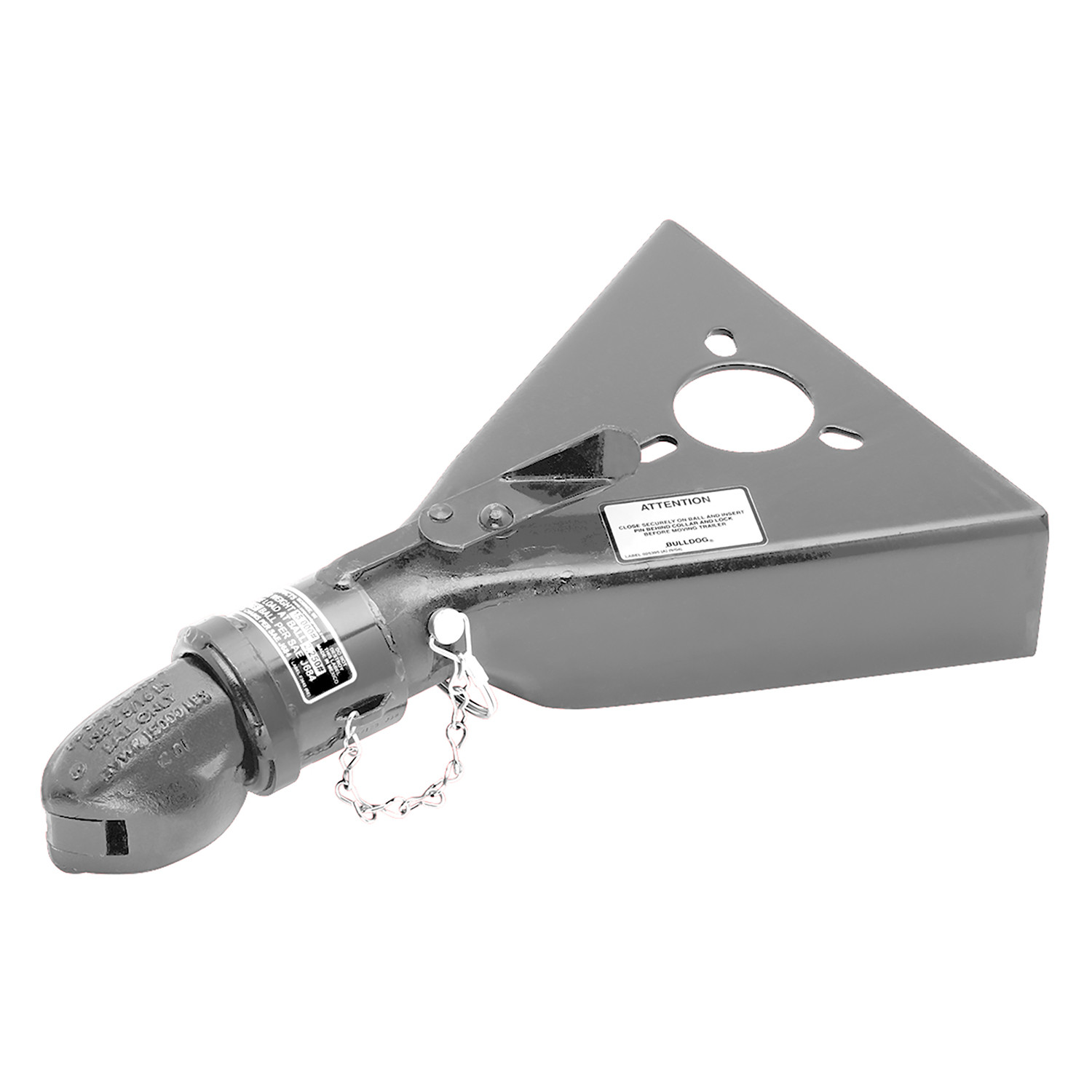
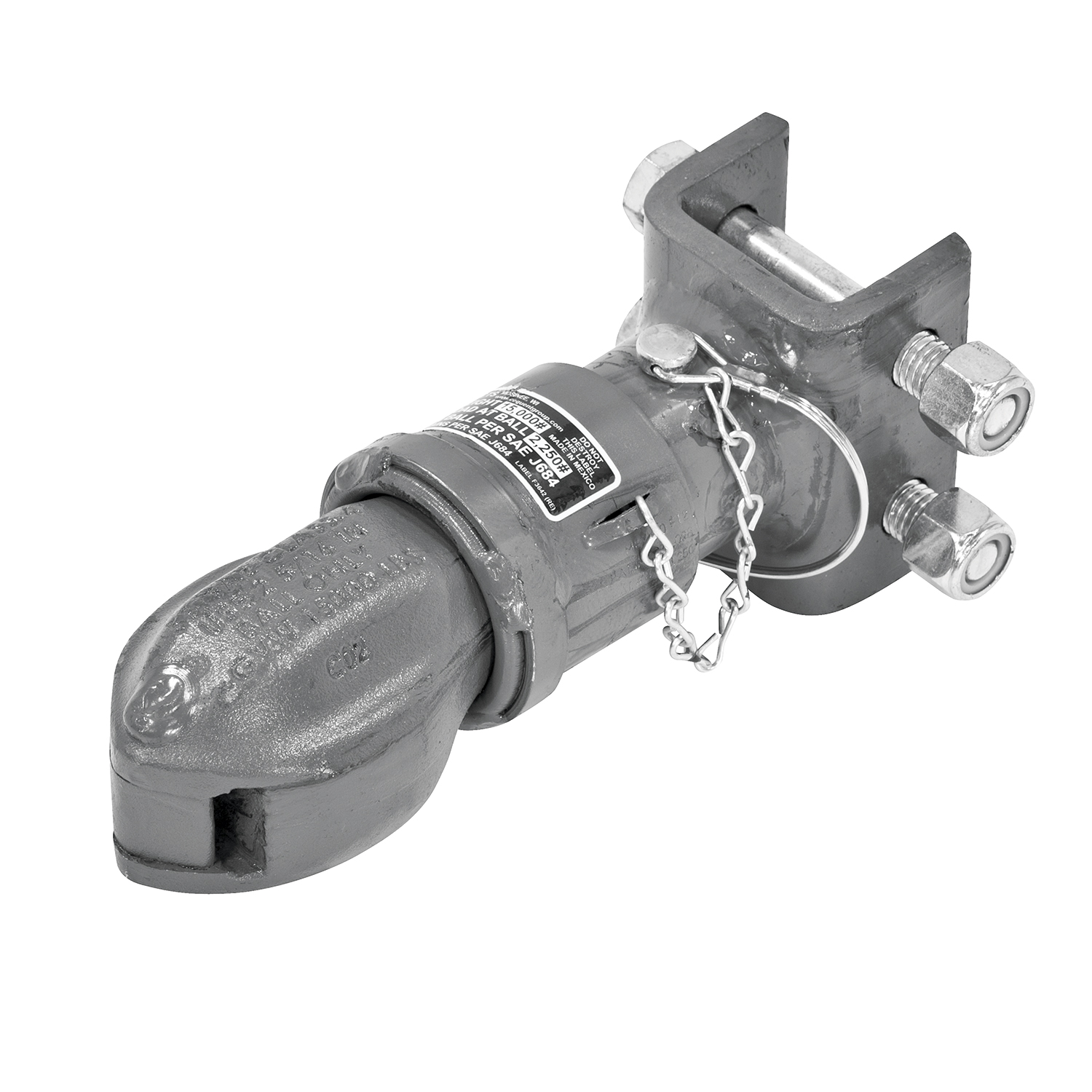
Bulldog 15,000 lbs Collar-Lok A-Frame Coupler, 2-5/16 in. Diameter, BD028655BulldogOriginal price was $212.50. Current price is $152.49.Out of Stock
View productOur in-house experts typically reply within one business day.

Bulldog


Always the correct part
We know our products
Quality Products
Free Shipping!
Always the correct part
We know our products
Quality Products
Free Shipping!

Designed for utility, horse/livestock, cargo, and construction trailer applications, BULLDOG Collar-Lok Heavy Duty Couplers are the strongest in the industry. The BULLDOG design features the only automatic and continuously tight ball fit in the industry. A variety of coupler styles, tongue mounts, and latches allow configurations to match virtually any trailer. Adjustable couplers assure level operation for trailers when pulled by a variety of different vehicles.
| BRAND: | BULLDOG |
| PART NUMBER: | 028657 |
| WARRANTY: | LIMITED 5 YEAR WARRANTY |
| WEIGHT: | 10.55 LBS |
| CAPACITY: | 15,000 LBS. |
| MODEL NUMBER: | 5B6M |
| MATERIAL: | STEEL |
| SAFETY CHAINS INCLUDED: | NO |

Founded in 1920, Bulldog has become the standard for heavy-duty trailer connection hardware in agricultural, military and utility service. The line covers gooseneck hitches and couplers, A-frame and channel-mount trailer couplers with the Wedge-Latch mechanism, and heavy-duty jacks, built for unmatched strength, reliability and safety under demanding loads.
Bulldog was founded in 1920 and has spent more than a century supplying the connection hardware that heavy trailers depend on. Its market has always been the demanding end: agricultural, military and utility applications where a coupler failure is not an inconvenience but a serious incident. The brand summarises its position as Tough and Tested, and it sits within the Horizon Global towing group alongside Reese, Draw-Tite, Fulton, Tekonsha, Bargman and Wesbar.
Gooseneck equipment is the brand's signature. Gooseneck hitches mount in the truck bed over the rear axle, which places the load where the chassis can carry it properly and allows far tighter turning than a receiver hitch permits. Matching gooseneck couplers attach at the trailer end, in round tube and square configurations across the capacity range used by livestock, equipment and flatbed trailers.
The conventional trailer coupler range is built around the Wedge-Latch mechanism, which uses a wedge to take up wear between coupler and ball rather than relying on a fixed clamp that loosens over time. That matters on a trailer accumulating hard miles, where slack in the coupling shows up as noise and shock loading. Couplers are offered in A-frame form for standard tongues and in channel-mount form for straight tongue and fabricated frames, with adjustable channel versions that let a coupler be positioned to suit the tongue height.
Heavy-duty jacks complete the line, sized for the tongue weights that gooseneck and equipment trailers generate. Across the range the emphasis is consistent: forged and heavy-section components, load ratings backed by testing, and hardware specified for agricultural, military and heavy-duty commercial use rather than occasional recreational towing.
Experts available to answer your questions
Call 888-634-94945 Years
Minimum tongue overlap varies by model: 2B, 4B, and 5B models require 8.5"; 3B model requires 6.5"; some configurations allow 7" or 2.5" overlap (tongue may fit over or into coupler). The coupler internal stop must be butted against the end of the trailer tongue for maximum overlap.
No. The 3.0" channel is not included and must be supplied separately. The manual shows it as a required component for bolt-on installation but notes "(Not included)" in the parts diagram.
Both options are available. Weld-on installation requires an AWS certified welder to weld 3/16" around the interface between coupler and tongue with no undercut or washout. Bolt-on installation uses grade 5 bolts with locknuts torqued to SAE proof load specifications. The trailer manufacturer must specify the number and size of fasteners required.
Torque grade 5 bolts with locknuts to these SAE proof load specifications: 3/8" diameter = 23 ft·lbs; 1/2" diameter = 55 ft·lbs; 5/8" diameter = 110 ft·lbs. Channel hardware should be tightened to 75–100 ft·lbs (per Spanish version specifications).
Before towing, verify: (1) vehicle, channel, hitch, ball and coupler show no wear or damage; (2) coupler handle opens and closes freely; (3) hitch ball is fully seated in coupler ball pocket; (4) coupler is closed and pin is inserted; (5) channel hardware is tight and undamaged; (6) safety chains are properly connected per SAE J684; (7) all trailer lighting works. Do not tow if ball is not fully seated or coupler is not closed.
Perform maintenance at least annually: (1) check welds and mounting bolt torque; (2) grease the ball pocket; (3) oil pivot points with SAE 30 weight motor oil; (4) inspect retaining pins and replace if necessary. Keep the ball pocket and mechanism clean at all times, and store the coupler off the ground to prevent dirt buildup.
Before mounting, confirm there will be no interference from the tow vehicle, tongue, ground, or any other mounted accessories while stationary or in motion. Check for interference in both open and closed coupler positions before installation, and verify again after installation is complete.
The Bulldog Collar-Lok coupler is a trailer tongue coupler that connects a trailer to a towing vehicle via a hitch ball. It is available in multiple models (2B, 3B, 4B, 5B) and can be installed by welding or bolting to the trailer tongue. The coupler features a collar mechanism that secures the hitch ball and is held closed by a retaining pin. It is rated according to SAE J684 standard.
The Bulldog Collar-Lok coupler is manufactured by Cequent Performance Products, Inc. For product information, replacement parts, or technical support, contact Cequent Performance Products at 1-800-632-3290 or www.cequentgroup.com.
The correct ball size is indicated on the coupler body itself. Use only the proper ball for your specific coupler as marked. If you are uncertain which ball size is correct, contact Cequent Performance Products at 1-800-632-3290 or www.cequentgroup.com.
The coupler must be installed on a trailer tongue that meets the minimum overlap requirement for your specific model: 2B, 4B, and 5B models require 8.5" minimum overlap; 3B model requires 6.5" minimum overlap; some configurations allow 7" or 2.5" overlap. The coupler internal stop must be butted against the end of the trailer tongue. For bolt-on installation, the trailer manufacturer must specify the number and size of fasteners required.
Weld-on installation: An AWS certified welder welds 3/16" around the interface between coupler and tongue with no undercut or washout. Bolt-on installation: Grade 5 bolts with locknuts are torqued to SAE proof load specifications (3/8"=23 ft·lbs, 1/2"=55 ft·lbs, 5/8"=110 ft·lbs). For bolt-on, a 3.0" channel (not included) is required, and the trailer manufacturer must specify the number and size of fasteners. Both methods require the coupler internal stop to be butted against the trailer tongue end for maximum overlap.
Yes, if you are using weld-on installation. All welding must be performed by an AWS (American Welding Society) certified welder. The welder must weld 3/16" around the interface between coupler and tongue with no undercut or washout. Failure to use a certified welder may result in coupler failure and safety hazards.
Minimum tongue overlap is the minimum length of trailer tongue that must extend into or under the coupler for proper installation. The requirement varies by model: 2B, 4B, and 5B models require 8.5" minimum overlap; 3B model requires 6.5" minimum overlap; some configurations allow 7" or 2.5" overlap (tongue may fit over or into coupler). The coupler internal stop must be butted against the end of the trailer tongue to achieve maximum overlap.
The manual does not specify whether the trailer tongue must be removed for installation. For weld-on installation, the coupler must be positioned so the internal stop is butted against the end of the trailer tongue, and 3/16" of weld is applied around the interface. For bolt-on installation, grade 5 bolts with locknuts are used. Consult the trailer manufacturer or a professional installer for guidance on whether tongue removal is necessary for your specific trailer.
Before installation: (1) Confirm there will be no interference from the tow vehicle, tongue, ground, or other mounted accessories while stationary or in motion. (2) Check for interference in both open and closed coupler positions. (3) Ensure the coupler internal stop will be butted against the end of the trailer tongue for maximum overlap. (4) Verify the trailer tongue meets the minimum overlap requirement for your coupler model (2.5", 6.5", 7", or 8.5" depending on model). (5) For bolt-on installation, confirm the trailer manufacturer has specified the number and size of fasteners required.
The manual does not mention battery disconnection. The Bulldog Collar-Lok coupler is a mechanical device with no electrical components, so battery disconnection is not required.
3/8" diameter grade 5 bolts with locknuts should be torqued to 23 ft·lbs according to SAE proof load specifications.
1/2" diameter grade 5 bolts with locknuts should be torqued to 55 ft·lbs according to SAE proof load specifications.
5/8" diameter grade 5 bolts with locknuts should be torqued to 110 ft·lbs according to SAE proof load specifications.
Use only grade 5 bolts with locknuts. Grade 5 bolts must be torqued to the appropriate SAE proof load specifications: 3/8"=23 ft·lbs, 1/2"=55 ft·lbs, 5/8"=110 ft·lbs. Do not use bolts of lower grade, as they may not provide adequate strength.
No. The Bulldog Collar-Lok coupler is a mechanical device with no electrical components. It operates entirely through manual coupling and uncoupling using the collar mechanism and retaining pin.
No. Do not tow without the retaining pin in place. The pin must be inserted behind the collar (L-style and M-style) or in the latch (H-style) after the hitch ball is fully seated and the coupler cap is closed. Towing without the pin is unsafe and may result in coupler failure.
Before coupling: (1) Block the trailer wheels. (2) Align the hitch ball beneath the coupler. (3) If the coupler is closed, open it by removing the retaining pin and sliding the collar away from the ball pocket (or lifting the latch for H-style). (4) Ensure the coupler cap is open and holds the collar back. (5) Lower the trailer onto the hitch ball. (6) Visually verify the hitch ball is fully seated in the coupler ball pocket.
After the hitch ball is fully seated in the coupler ball pocket: (1) Carefully close the coupler cap. (2) Ensure the collar springs toward the ball pocket and captures the coupler cap. (3) Reinsert the retaining pin behind the collar (L-style and M-style) or in the latch (H-style). (4) Do not tow without the pin in place. (5) Always secure safety chains to the vehicle before towing according to SAE J684.
Before uncoupling: (1) Block the trailer wheels. (2) Open the coupler by removing the retaining pin behind the collar and sliding the collar away from the ball pocket (L-style and M-style) or by removing the pin in the latch and lifting the latch (H-style). (3) Ensure the coupler cap is open and holds the collar back. (4) Raise the trailer from the hitch ball. Use caution as the tongue may rise suddenly due to negative tongue load.
Blocking the trailer wheels prevents the trailer from moving unexpectedly during coupling or uncoupling. This is a critical safety measure to protect you and bystanders. Always secure the load, vehicle, and trailer (by blocking wheels) before latching or unlatching the coupler.
When uncoupling, the tongue may rise suddenly due to negative tongue load. Use caution and be prepared for this movement. Always block the trailer wheels before uncoupling to prevent the trailer from rolling.
Do not exceed the lesser of the mounting bracket, coupler, hitch, vehicle, ball, or trailer weight ratings (including load). The maximum rated capacity is stamped or decaled on the product. Never exceed this maximum rated capacity. If you are uncertain about the weight rating, contact Cequent Performance Products at 1-800-632-3290 or www.cequentgroup.com.
Yes. Weigh your trailer plus any added load before towing. Do not exceed the lesser of the mounting bracket, coupler, hitch, vehicle, ball, or trailer weight ratings (including load). Refer to the stamped markings or decals on the product to obtain the rated capacity. If uncertain, contact Cequent Performance Products at 1-800-632-3290 or www.cequentgroup.com.
No. Do not allow children to play on or around the coupler or the load being supported. The coupler is a heavy mechanical device that can cause serious injury or death if misused.
No. The operator and bystanders should never position any part of their body under any portion of the coupler or the load being supported. This is a critical safety requirement to prevent serious injury or death.
After installation is complete: (1) Check for interference again in both open and closed coupler positions. (2) Verify that coupler operation has not been impaired in any way. (3) Do not use the coupler if its operation has been impaired. (4) Ensure the coupler is rigidly attached to the trailer to support its maximum rated load according to SAE J684. (5) Before towing, perform all pre-towing checks including verifying the hitch ball is fully seated, the coupler is closed, the retaining pin is in place, and all hardware is tight.
Visually check that the hitch ball is fully seated in the coupler ball pocket. This check should be performed after lowering the trailer onto the hitch ball during coupling, and again before towing. If the ball is not fully seated, do not tow.
Keep the ball pocket and mechanism clean at all times. When parking or storing your trailer, keep the coupler off the ground so dirt and other foreign material will not build up in the coupler ball pocket. The manual does not specify a detailed cleaning procedure, but regular inspection and removal of debris is recommended.
Oil the pivot points with SAE 30 weight motor oil. This should be done at least annually as part of regular maintenance.
Grease the ball pocket at least annually as part of regular maintenance. Keep the ball pocket and mechanism clean, and perform this maintenance along with checking welds, mounting bolt torque, and inspecting retaining pins.
Yes. If your coupler was installed using weld-on method, check the welds at least annually as part of regular maintenance. Also check the mounting bolt torque at the same time. If you notice any cracks, damage, or improper welds, contact Cequent Performance Products at 1-800-632-3290 for replacement parts or service.
Check the mounting bolt torque at least annually as part of regular maintenance. Ensure bolts are torqued to the appropriate SAE proof load specifications: 3/8"=23 ft·lbs, 1/2"=55 ft·lbs, 5/8"=110 ft·lbs. Tighten any loose bolts to the correct specification.
Inspect the retaining pin at least annually. If the pin is bent, broken, or worn, replace it. Replacement pins are available through Cequent Performance Products' Customer Service Department at 1-800-632-3290. Specify the product model number when ordering.
If the coupler handle does not open and close freely, do not use the coupler. Check for dirt, debris, or damage in the mechanism. Clean the ball pocket and mechanism thoroughly. If the problem persists, the coupler may be damaged and should be replaced. Contact Cequent Performance Products at 1-800-632-3290 for replacement parts.
No. If the coupler and/or channel is deformed or damaged, replace the complete coupler and bracket. Do not attempt to repair a bent or damaged coupler, as this may compromise its structural integrity and safety. Contact Cequent Performance Products at 1-800-632-3290 for replacement parts.
Always replace bent, broken, or worn channel hardware before using the coupler. Check channel hardware for wear and proper tightness at least before each towing trip. Tighten hardware to the appropriate SAE proof load specifications (3/8"=23 ft·lbs, 1/2"=55 ft·lbs, 5/8"=110 ft·lbs). Use only grade 5 hardware for replacement.
Do not use the coupler if its operation has been impaired in any way. After installing the channel and/or coupler, verify that the coupler handle opens and closes freely and that the collar mechanism functions properly. If operation is impaired, the coupler may be damaged and should be replaced. Contact Cequent Performance Products at 1-800-632-3290 for replacement parts.
Do not tow if the ball is not fully seated in the coupler ball pocket. If the ball does not seat fully: (1) Verify you are using the correct ball size for your coupler (size is marked on the coupler body). (2) Check that the coupler is fully open and the collar is not obstructing the ball pocket. (3) Ensure the hitch ball is clean and free of debris. (4) Align the ball directly beneath the coupler and lower the trailer slowly. (5) If the ball still does not seat, the coupler or ball may be damaged and should be replaced.
If the coupler cap does not close properly: (1) Verify the hitch ball is fully seated in the ball pocket. (2) Check that the collar is not bent or damaged. (3) Ensure the collar springs toward the ball pocket and captures the coupler cap. (4) Clean the ball pocket and mechanism of any dirt or debris. (5) If the cap still does not close, the coupler may be damaged and should be replaced. Contact Cequent Performance Products at 1-800-632-3290.
The Bulldog Collar-Lok coupler is covered by a Limited Five Year Warranty from Cequent Performance Products. The warranty covers material defects in both material and workmanship for five years from the date of purchase, provided the product is installed and used according to the instructions. The warranty does not cover normal wear and tear, damage from abuse, misuse, accidents, overloading, improper installation, improper maintenance, or product alterations. To make a warranty claim, contact Cequent Performance Products at 1-800-632-3290 or 47912 Halyard Dr. Suite 100, Plymouth, MI 48170.
The Limited Five Year Warranty does not cover: (a) normal wear and tear; (b) damage from abuse, neglect, misuse, or accidents; (c) damage from misapplication, overloading, or improper installation including welds; (d) improper maintenance and repair; (e) product alterations by anyone other than Cequent Performance Products, except alterations made pursuant to product instructions in a workmanlike manner.
To make a warranty claim: (1) Contact Cequent Performance Products at 47912 Halyard Dr. Suite 100, Plymouth, MI 48170, or call 1-800-632-3290. (2) Identify the product by model number. (3) Follow the claim instructions provided by Cequent. (4) Retain your purchase receipt to verify the date of purchase and that you are the original consumer purchaser. (5) Provide both the product and purchase receipt to process your claim. (6) You will be responsible for return shipping costs. If approved, Cequent will replace the product without charge within a reasonable time or refund the purchase price at their option.
No. The Limited Five Year Warranty is not transferable. It applies only to the original consumer purchaser. If you sell the trailer or coupler, the warranty does not transfer to the new owner.
No. The purchaser/owner must not alter or modify the product in any way. Product alterations by anyone other than Cequent Performance Products will void the warranty, except for alterations made pursuant to product instructions and in a workmanlike manner. Any modifications not specified in the installation instructions are not permitted.
Replacement parts are available through Cequent Performance Products' Customer Service Department. Contact them at 1-800-632-3290 or visit www.cequentgroup.com. When ordering, specify the product model number. Use only Cequent Performance Products' parts or parts of equal quality for repair.
SAE J684 is a standard established by the Society of Automotive Engineers that specifies safety requirements and performance standards for trailer couplers. The Bulldog Collar-Lok coupler is rated according to SAE J684, which means it meets these safety and performance standards. The coupler must be rigidly attached to the trailer to support its maximum rated load according to SAE J684. Safety chains must also be properly connected according to SAE J684.
Yes. Always secure safety chains to the towing vehicle before towing according to SAE J684. Make sure that the trailer safety chains are properly connected to both the towing vehicle and the trailer. Safety chains are a critical safety feature that prevents the trailer from becoming completely detached if the coupler fails.
Yes. Before towing, make sure that all trailer lighting is hooked up and working properly. This includes brake lights, turn signals, and any other required lighting. Proper lighting is essential for safe towing and is required by law in most jurisdictions.
If the collar does not spring toward the ball pocket: (1) Check that the hitch ball is fully seated in the ball pocket—if not, the collar may not have room to move. (2) Inspect the collar for bending or damage. (3) Clean the ball pocket and collar mechanism of any dirt or debris that may be restricting movement. (4) Check that the coupler cap is fully open and not binding. (5) If the collar is bent or damaged, the coupler must be replaced. Contact Cequent Performance Products at 1-800-632-3290 for replacement parts.
If the retaining pin does not fit: (1) Verify you are using the correct pin for your coupler model (L-style, H-style, or M-style). (2) Check that the collar is fully closed and in the correct position. (3) Inspect the pin holes for damage, bending, or debris. (4) Clean the pin and pin holes of any dirt or corrosion. (5) If the pin holes are damaged or enlarged, the coupler may need to be replaced. Contact Cequent Performance Products at 1-800-632-3290 for replacement pins or coupler assembly.
If the hitch ball is loose or rattles: (1) Verify the ball is fully seated in the ball pocket by visually inspecting it. (2) Check that the coupler cap is fully closed and the collar is capturing the cap. (3) Verify the retaining pin is fully inserted and not bent. (4) If the ball still moves, the ball pocket may be worn or damaged, or the ball size may be incorrect. (5) Do not tow with a loose ball. Contact Cequent Performance Products at 1-800-632-3290 to verify the correct ball size and to order replacement parts if the coupler is damaged.
On Sale Today
Original price was $220.00. Current price is $188.72.You save $31.28 (14%)
Free Shipping
Ships free on all orders
 Authorized Dealer


FREE ShippingFREE SHIPPING
Estimated delivery Sun, Sep 27 - Wed, Sep 30
Order before 2 PM EST Monday–Friday for same-day processing
Guaranteed safe & secure checkout
Ann
The staff was able to quickly assist me with locating the correct product I needed. Shipping was really fast. Item arrived in 2 days. Will be using TowUniverse again!!
May 22, 2023