Ask a Question About This Product
Our in-house experts typically reply within one business day.
CURT
Verify Fitment
Select your vehicle to confirm this part fits.
2011 - 2013, 2015 - 2018 Chevrolet Silverado 3500 HD
Confirmed to Fit
2011 - 2013, 2015 - 2018 GMC Sierra 3500 HD
Confirmed to Fit


Always the correct part
We know our products
Quality Products
Free Shipping!


Always the correct part
We know our products
Quality Products
Free Shipping!
On Sale Today
Original price was $444.95. Current price is $275.99.


Quick Ship
In stock and ready to ship — order now!
Shipping from Eau Claire, WIFREE SHIPPING
Estimated delivery Sun, Sep 27 - Tue, Sep 29
Order before 2 PM EST Monday–Friday for same-day processing
Guaranteed safe & secure checkout
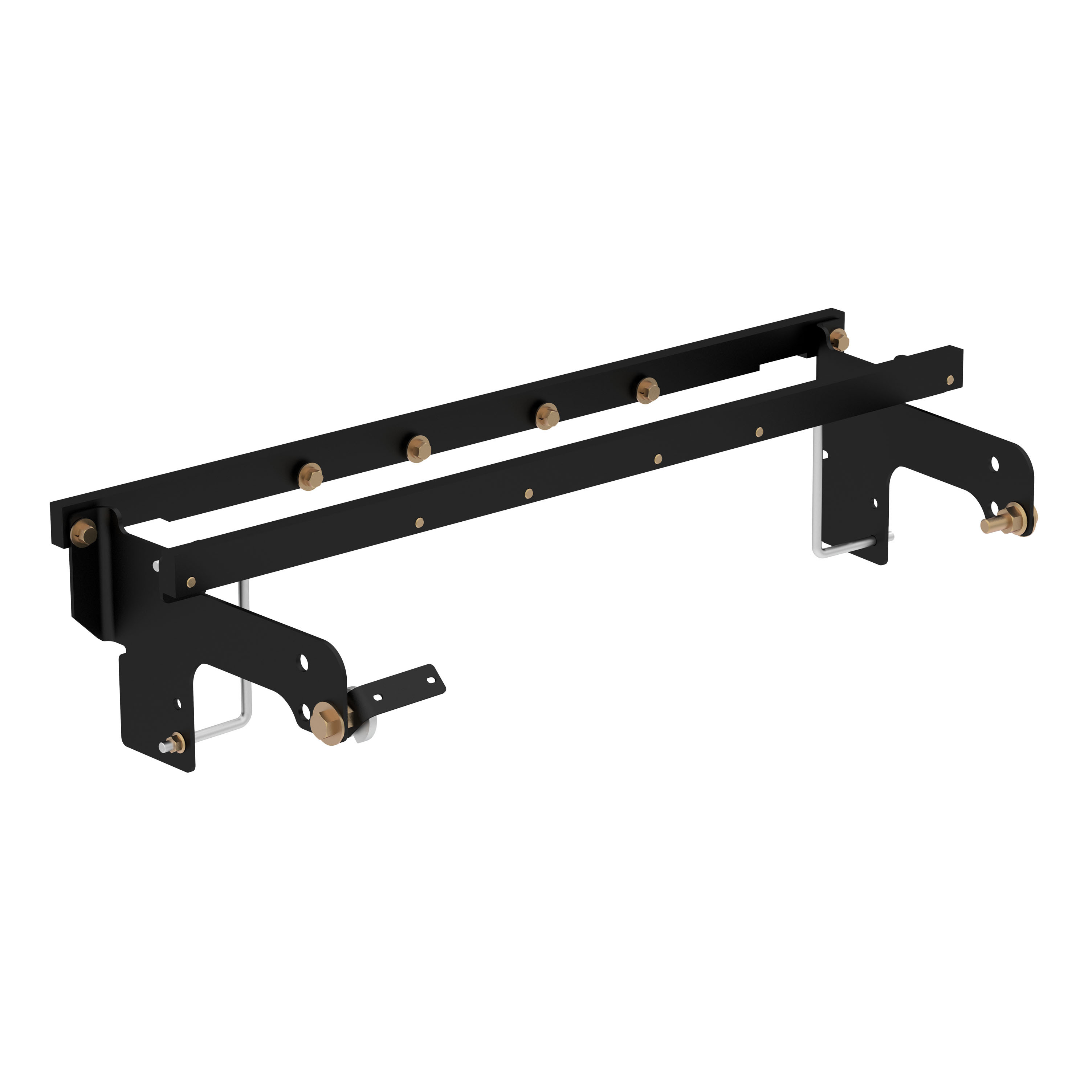
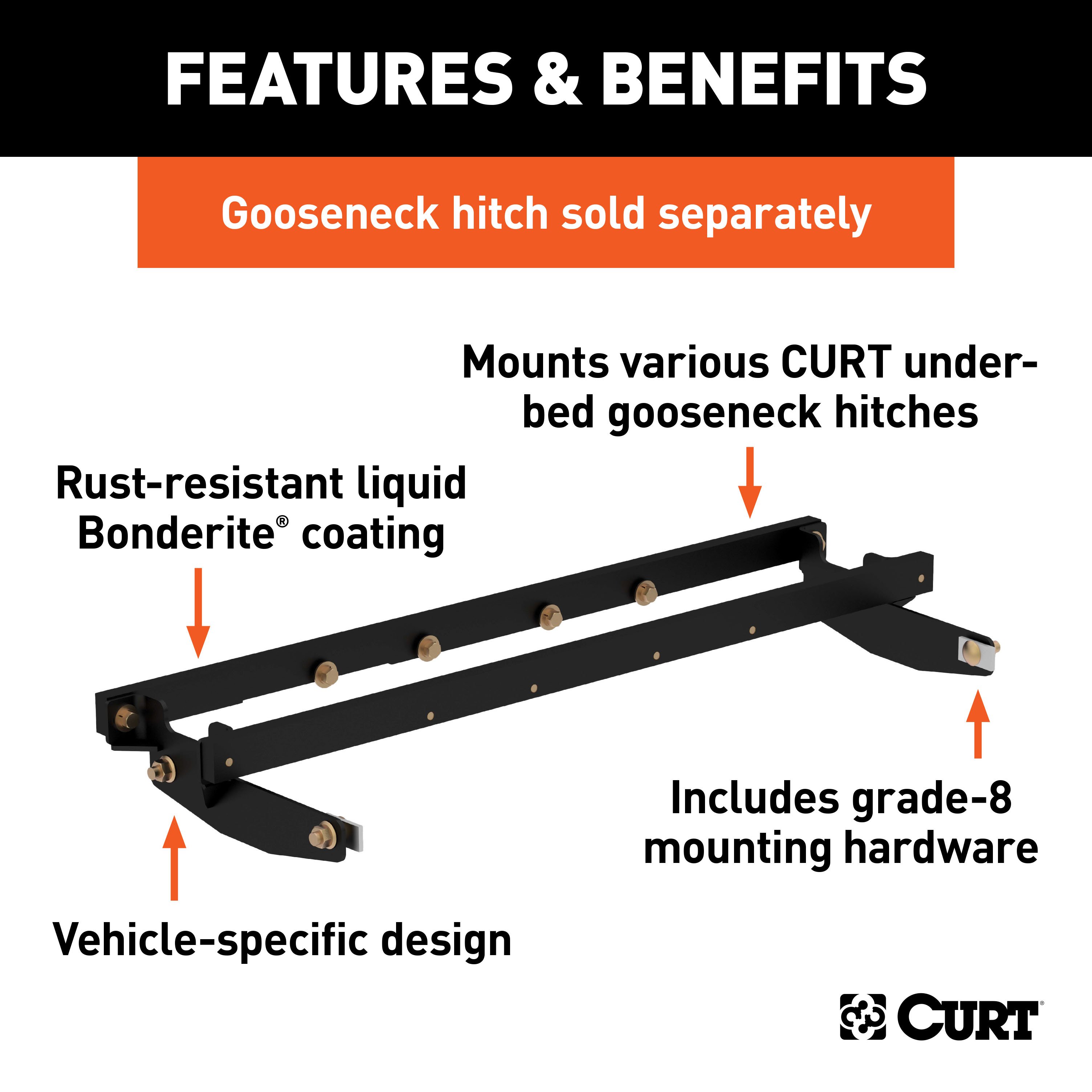
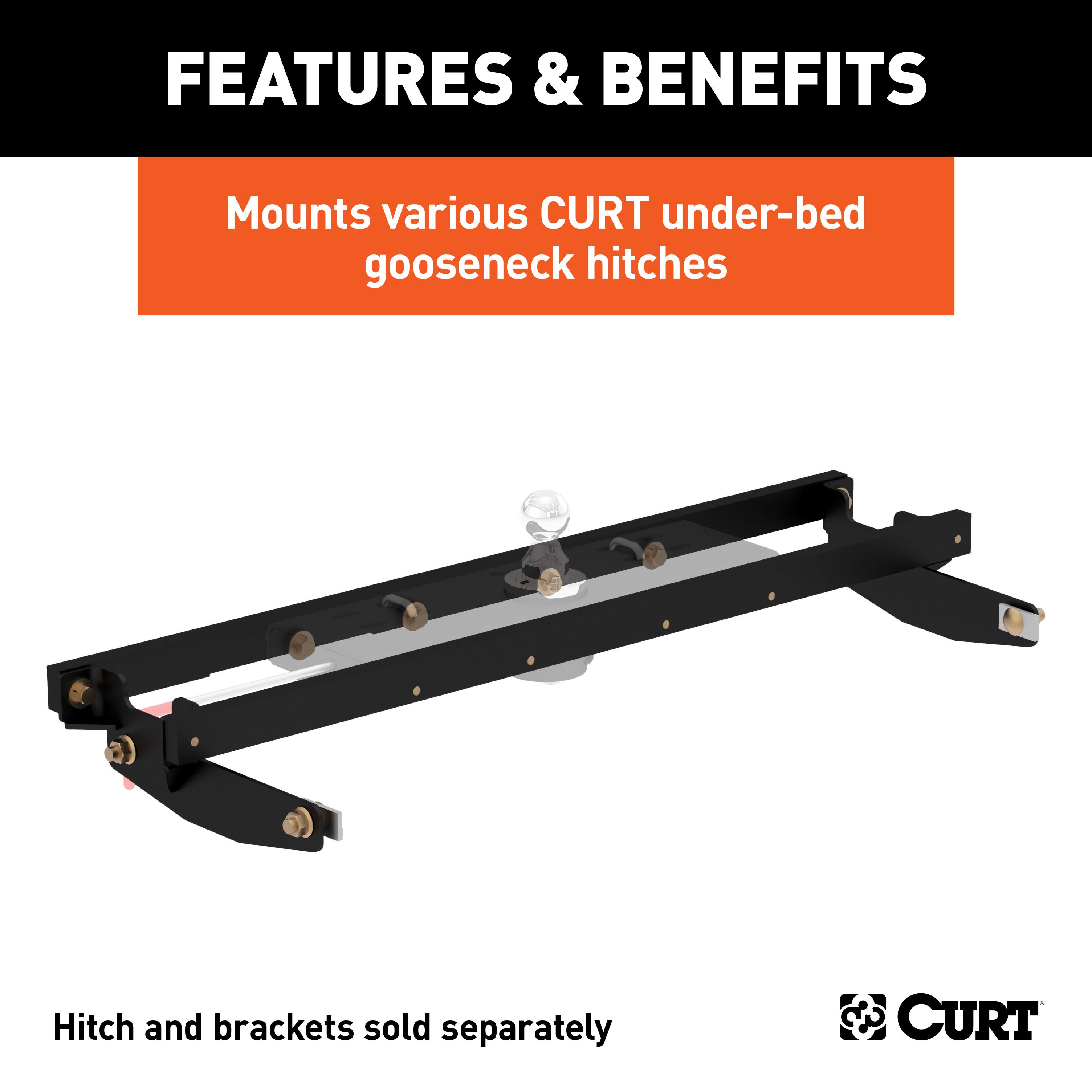
Includes mounting brackets only (gooseneck hitch sold separately)
Capacity limited to lowest-rated towing component
Includes mounting brackets only (gooseneck hitch sold separately)
Warranty: Limited Lifetime Warranty (One-Year Finish, One-Year Parts)
Finish: A-COAT
Installation Time Exact (Minutes): 0
Choosing the right gooseneck hitch is only half the battle in preparing your pickup truck for towing a gooseneck trailer. CURT gooseneck hitches are a premium option in the heavy-duty towing industry, but they are only one of the members in the heavyweight tag team that is CURT gooseneck towing. While a gooseneck hitch gets all the glory above the floor of your truck bed, gooseneck installation brackets provide sure footing and a solid foundation for that oversized gooseneck trailer. Gooseneck installation brackets work by bolting onto the frame of your truck, typically using pre-existing holes. With a set of brackets firmly bolted on, a gooseneck hitch is able to be attached and is given the strength it needs to manage the massive amount of weight of a gooseneck trailer. With so many gooseneck hitch options available from CURT, we wanted to make sure we offered the gooseneck installation products needed to give you a complete towing package. Our installation brackets fit multiple vehicles and hitch heads. This particular set of gooseneck installation brackets is designed to work with CURT Double Lock gooseneck hitches. It is rated to the vehicle's maximum gross trailer weight capacity and provides a custom fit for certain years of the Chevrolet Silverado and GMC Sierra 2500HD or 3500 (see application info to verify fitment). With each gooseneck installation bracket sub kit, we provide the necessary hardware for an easier installation, and we coat our gooseneck brackets in a liquid A-coat to make sure rust and other potential damages are not a problem.

CURT offers a variety of high-quality trailer hitches and accessories for select vehicle models. Find the perfect fit for your towing needs at TowUniverse.
CURT, a Lippert brand, offers a complete line of towing products and is the leading manufacturer of custom-fit trailer hitches. We offer the broadest selection of custom-fit hitches, and each one is designed, welded, and coated in Wisconsin.
CURT is also a leader in flat towing products, as well as 5th wheel, gooseneck, and weight distribution hitches, ball mounts, electrical components, cargo solutions, and other towing accessories.
For everything from passenger cars and vans to full-size pickups and SUVs, CURT is 'The First Name in Towing Products®.'

Experts available to answer your questions
Call 888-634-9494Rediscover "Us" Time | Tested. Proven. Safe. Towing Products
8 compatible vehicles
| Year | Make & Model | Style | Notes |
|---|---|---|---|
| 2011 - 2019 | Chevrolet Silverado 2500 HD | — | Drilling Required |
| 2011 - 2019 | Chevrolet Silverado 3500 HD | Crew Cab Pickup | Drilling Required |
| 2011 - 2013, 2015 - 2018 | Chevrolet Silverado 3500 HD | Extended Cab Pickup | Drilling Required |
| 2011 - 2018 | Chevrolet Silverado 3500 HD | Standard Cab Pickup | Drilling Required |
| 2011 - 2019 | GMC Sierra 2500 HD | — | Drilling Required |
| 2011 - 2019 | GMC Sierra 3500 HD | Crew Cab Pickup | Drilling Required |
| 2011 - 2013, 2015 - 2018 | GMC Sierra 3500 HD | Extended Cab Pickup | Drilling Required |
| 2011 - 2018 | GMC Sierra 3500 HD | Standard Cab Pickup | Drilling Required |
Yes, the CURT Double Lock Gooseneck Installation Brackets, Select Silverado, Sierra 2500, 3500 Gooseneck Trailer Hitch Mount Kit (Part #BKDK60604) is designed to fit the 2011-2019 Chevrolet Silverado 2500 HD.
The CURT Double Lock Gooseneck Installation Brackets, Select Silverado, Sierra 2500, 3500 Gooseneck Trailer Hitch Mount Kit (Part #BKDK60604) fits 2011-2019 Chevrolet Silverado 2500 HD models. The 2019 model year is the last year covered by this part number. For newer models, check for an updated version.
The CURT Double Lock Gooseneck Installation Brackets, Select Silverado, Sierra 2500, 3500 Gooseneck Trailer Hitch Mount Kit (Part #BKDK60604) fits the following vehicles: 2011-2019 Chevrolet Silverado 2500 HD; 2011-2019 Chevrolet Silverado 3500 HD; 2011-2019 GMC Sierra 2500 HD; 2011-2019 GMC Sierra 3500 HD. Always verify your specific year, make, and model before ordering.
The CURT Double Lock Gooseneck Installation Brackets, Select Silverado, Sierra 2500, 3500 Gooseneck Trailer Hitch Mount Kit (Part #BKDK60604) Drilling is required for installation. Basic hand tools are typically all you need.
Yes, the 60604 is designed for Chevy-GMC 2500/3500 trucks with both short bed and long bed configurations. However, fitment varies by bed length: short bed installations require a 44" hole dimension, while long bed installations require a 48 7/8" hole dimension. You must verify your truck's bed length before installation.
On two-wheel drive trucks, a clearance check must be performed both when the truck is loaded and unloaded to verify the inverted ball will not interfere with the top of the differential. This check is critical and must be completed before towing. If interference is found, the installation may not be suitable for your vehicle.
Short bed trucks require a turning clearance check between the front of all trailers and the truck cab. Use the clearance calculation provided in the manual (page 3) to verify your specific trailer will not interfere with the cab. The manual includes an example showing a standard 35-inch cab-to-ball distance with a 36-inch coupler width results in -1 inch clearance, meaning interference occurs. You must calculate your specific measurements before towing.
The kit includes: 4 weldment assemblies (CM-60604-DSW and CM-60604-PSW), 1 front crossarm (CM-60604-FCA), 1 rear crossarm (CM-60604-RCA), 4 square hole spacers (CM-SP9), 4 bolts 5/8-11 UNC 1-3/4" grade 8 (10-10292), 12 hex cap screws 1/2-13 UNC 1-1/2" grade 8 (10-10334), 4 flange nuts 5/8-11 UNC grade 8 (20-00063), 12 lock washers 1/2" (30-00015), 12 flat washers 1/2" (30-00133), 2 pieces of 5/8" fishwire, and 1 template (CM-60604-T).
Required tools include: a 1/4" drill bit (for pilot hole), a 4" hole saw or saber saw with metal cutting blade (to enlarge the hole), a 1/2-13 bolt or 1/2-13 tap (to clean crossarm holes before installation), and standard wrenches or sockets for 1/2" and 5/8" fasteners. An overhead lifting device such as a chain fall, engine hoist, or cable come-a-long is recommended to lift the center section into place.
Before installation: (1) Remove the spare tire. (2) Remove heat shields—specifically the heat shield in front of the rear crossmember and the heat shield behind the crossmember near the front of the wheel well. (3) Remove plastic wheel well covers if equipped. (4) Reposition or loosen brake, fuel, and electrical lines to provide clearance for new hardware. (5) For short bed models, verify adequate turning clearance between the front of all trailers and the truck cab. (6) On two-wheel drive trucks, plan to perform a clearance check when loaded and unloaded to verify the inverted ball will not interfere with the differential.
Yes. Before installing the crossarms, run a 1/2-13 bolt or 1/2-13 tap through the crossarm holes to remove any powder coating or debris. This ensures proper fastener fit and function.
The manual states that an overhead lifting device such as a chain fall, engine hoist, or cable come-a-long "can be used" to lift the center section into place, and that maintaining upward pressure may facilitate fastening, especially if the truck bed floor has been distorted. The manual does not explicitly state whether installation is possible without one, but the lifting device is strongly recommended to safely position the center section.
Both crossarms must be rotated vertically with the holes facing toward the bottom. The front crossarm (CM-60604-FCA) is identified by a notch and is installed by sliding it between the truck frame and the floor of the truck bed above the passenger side rear tire. The rear crossarm (CM-60604-RCA) is installed the same way. After spanning the frame rails, rotate each vertically with holes toward the bottom.
The front crossarm is identified by a notch, as shown in the critical note at the top of the manual. This distinguishes it from the rear crossarm (CM-60604-RCA).
The sideplates must be installed with flanges facing toward the front of the vehicle. Align the holes in the sideplates with the existing holes in the frame.
All fasteners must be installed finger-tight initially, then torqued in a specific three-step sequence: (1) First, torque the center section to the front and rear crossarms. (2) Second, torque the sideplates to the truck frame on both sides. (3) Third, torque the sideplate flanges to the front and rear crossarms. Torque all 1/2" fasteners to 110 ft-lbs and all 5/8" fasteners to 210 ft-lbs.
Yes, drilling is required. Using the supplied template (CM-60604-T), drill a 1/4" pilot hole through the center hole into the truck bed. After removing the template, enlarge the hole using a 4" hole saw or saber saw with a metal cutting blade to allow the center section to pass through. The hole dimensions are 44" for short bed installations and 48 7/8" for long bed installations.
Yes, all models require modification or removal of heat shields. Specifically, remove the heat shield in front of the rear crossmember and the heat shield behind the crossmember located near the front of the wheel well. The heat shield under the bed floor needs to be removed or a section cut out for the hitch assembly to fit.
All 1/2" fasteners must be torqued to 110 ft-lbs. This includes the 1/2" x 1 1/2" hex bolts connecting the sideplate flanges to the crossarms and the 1/2" x 1 1/2" hex bolts connecting the center section to the front and rear crossarms.
All 5/8" fasteners must be torqued to 210 ft-lbs. This includes the 5/8" flange nuts that attach the sideplates to the truck frame.
The center hole dimensions depend on bed length: short bed installation requires a 44" hole dimension, and long bed installation requires a 48 7/8" hole dimension. These dimensions are used to position the template (CM-60604-T) before drilling.
The manual states "Do not exceed recommended vehicle towing weight" but does not specify a maximum towing capacity for the hitch itself. You must not exceed the vehicle manufacturer's recommended towing capacity. Consult your truck's owner manual or manufacturer specifications for the maximum towing weight.
Yes, you must remove all rear window accessories before towing. This is stated as a requirement in the manual.
The round hitch cylinder that protrudes from the top of the center section must be positioned toward the rear of the truck and centered in the hole in the truck bed. The hitch ball is inverted (pointing downward) on this gooseneck hitch design.
After installation: (1) Verify the center section is squared to the frame rails. (2) Check that all fasteners are torqued to specification (1/2" fasteners to 110 ft-lbs, 5/8" fasteners to 210 ft-lbs). (3) On two-wheel drive trucks, perform a clearance check when the truck is both loaded and unloaded to verify the inverted ball will not interfere with the differential. (4) On short bed trucks, verify adequate turning clearance between the front of your trailer and the truck cab using the clearance calculation provided.
Maintenance is required every 30 days or prior to use: (1) Keep the hitch ball lubricated regularly using silicone spray or equivalent to prevent wear and rust. (2) Keep the hitch assembly free of dirt and other foreign debris. (3) Check for proper torque on all nuts and bolts before each use and check for excessive wear. (4) Check ball wear before each use. Do not tow a trailer with worn or damaged parts.
Curt Manufacturing warrants the 60604 to be free of defects in material and/or workmanship at the time of retail purchase by the original purchaser. If the product is found to be defective, Curt may repair or replace it at their option when returned prepaid with proof of purchase. Warranty is voided by alteration, misuse, or improper installation. Curt's liability is limited to repair or replacement of defective products and excludes incidental or consequential loss or damage.
Yes, the 60604 is designed for Chevy-GMC 2500/3500 trucks in both short bed (44" hole) and long bed (48 7/8" hole) configurations. Verify your bed length before installation.
The manual warns that brake, fuel, and electrical lines may need to be loosened or repositioned to provide clearance for new hardware. Additionally, if you install a 60607 safety chain u-bolt kit, you must use the u-bolt slots nearest the 60607 cylinder to prevent contact with the fuel tank. Consult the 60607 instructions if installing that component.
You need a 1/4" drill bit, a 4" hole saw or saber saw with metal cutting blade, a 1/2-13 bolt or tap, and standard wrenches for 1/2" and 5/8" fasteners. An overhead lifting device (chain fall, engine hoist, or come-a-long) is recommended.
Remove the spare tire and heat shields (in front of rear crossmember and behind the front wheel well crossmember). Remove plastic wheel well covers if equipped. Reposition brake, fuel, and electrical lines for clearance. On short bed trucks, verify turning clearance with your trailer. On two-wheel drive trucks, plan a loaded/unloaded clearance check.
Yes. Drill a 1/4" pilot hole using the supplied template, then enlarge it with a 4" hole saw or saber saw. Hole dimensions are 44" for short bed and 48 7/8" for long bed. Heat shield removal or modification is also required.
Torque all 1/2" fasteners to 110 ft-lbs and all 5/8" fasteners to 210 ft-lbs. Tighten in order: (1) center section to crossarms, (2) sideplates to frame, (3) sideplate flanges to crossarms.
Remove all rear window accessories. On short bed trucks, verify turning clearance between trailer and cab. On two-wheel drive trucks, check clearance when loaded and unloaded to ensure the inverted ball does not interfere with the differential. Do not exceed vehicle manufacturer's towing capacity.
Every 30 days or before use: lubricate the hitch ball with silicone spray, keep the assembly clean, check all fastener torque, and inspect the ball for wear. Do not tow with worn or damaged parts.
If the truck bed floor has been distorted downward from heavy use, maintaining upward pressure on the center section may facilitate fastening. Use the overhead lifting device (chain fall, engine hoist, or cable come-a-long) to raise the center section until the round hitch receiver tube protrudes through the hole in the truck bed floor, then maintain upward pressure while fastening the crossmembers to the center section.
Before installing the crossarms, run a 1/2-13 bolt or 1/2-13 tap through the crossarm holes to remove any powder coating or debris. This cleaning step ensures proper fastener fit and prevents threading difficulties.
On short bed trucks, trailer-to-cab interference is a known risk. Use the clearance calculation provided in the manual (page 3) to verify your specific setup. Measure the distance from cab to hitch ball center (X), subtract half the trailer width (Y), and subtract any coupler overhang (W). If the result is negative, the trailer will interfere with the cab. You may need to use a different trailer or verify the hitch is positioned correctly.
On two-wheel drive trucks, the inverted hitch ball can interfere with the top of the differential, especially when the truck is loaded. This is a critical safety issue. Perform clearance checks both when the truck is loaded and unloaded. If interference occurs, the hitch may not be suitable for your vehicle, or the installation may need to be reviewed by a professional installer or the manufacturer.
No reviews have been added for this product.