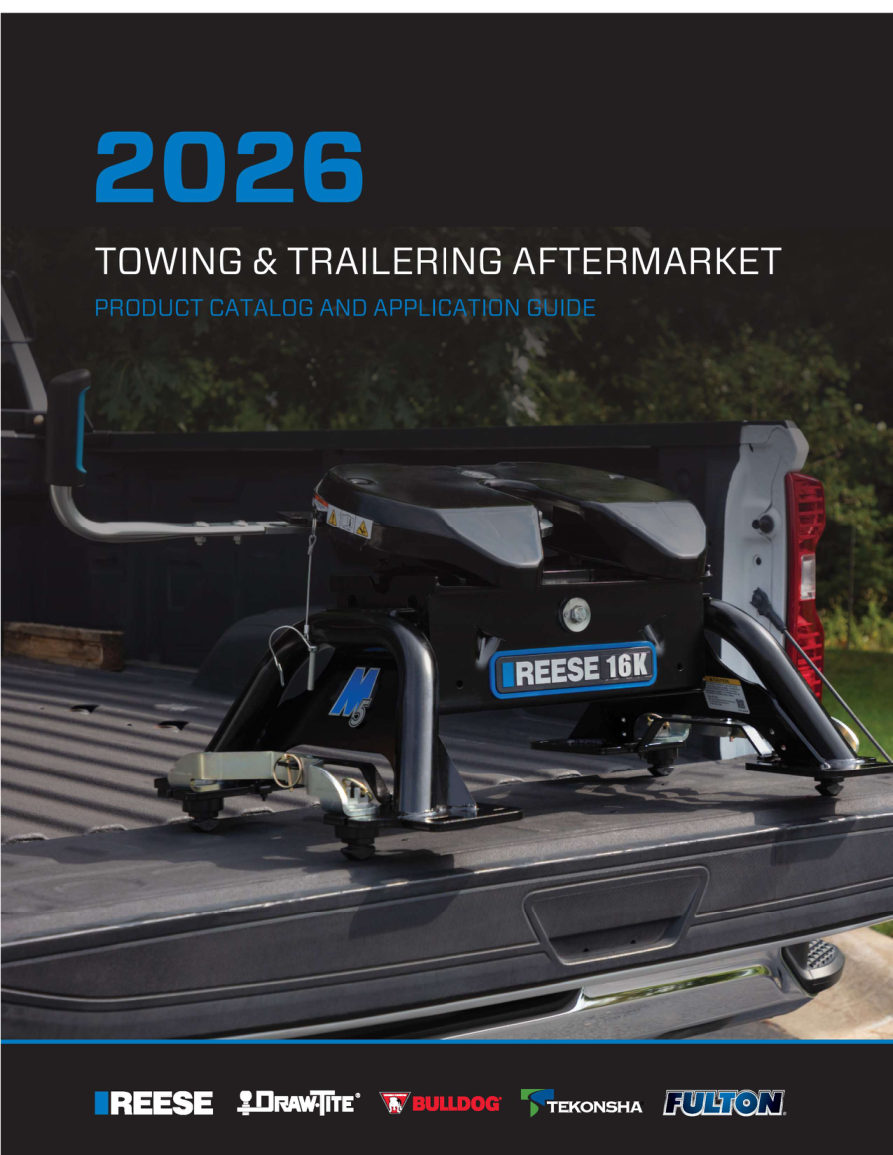

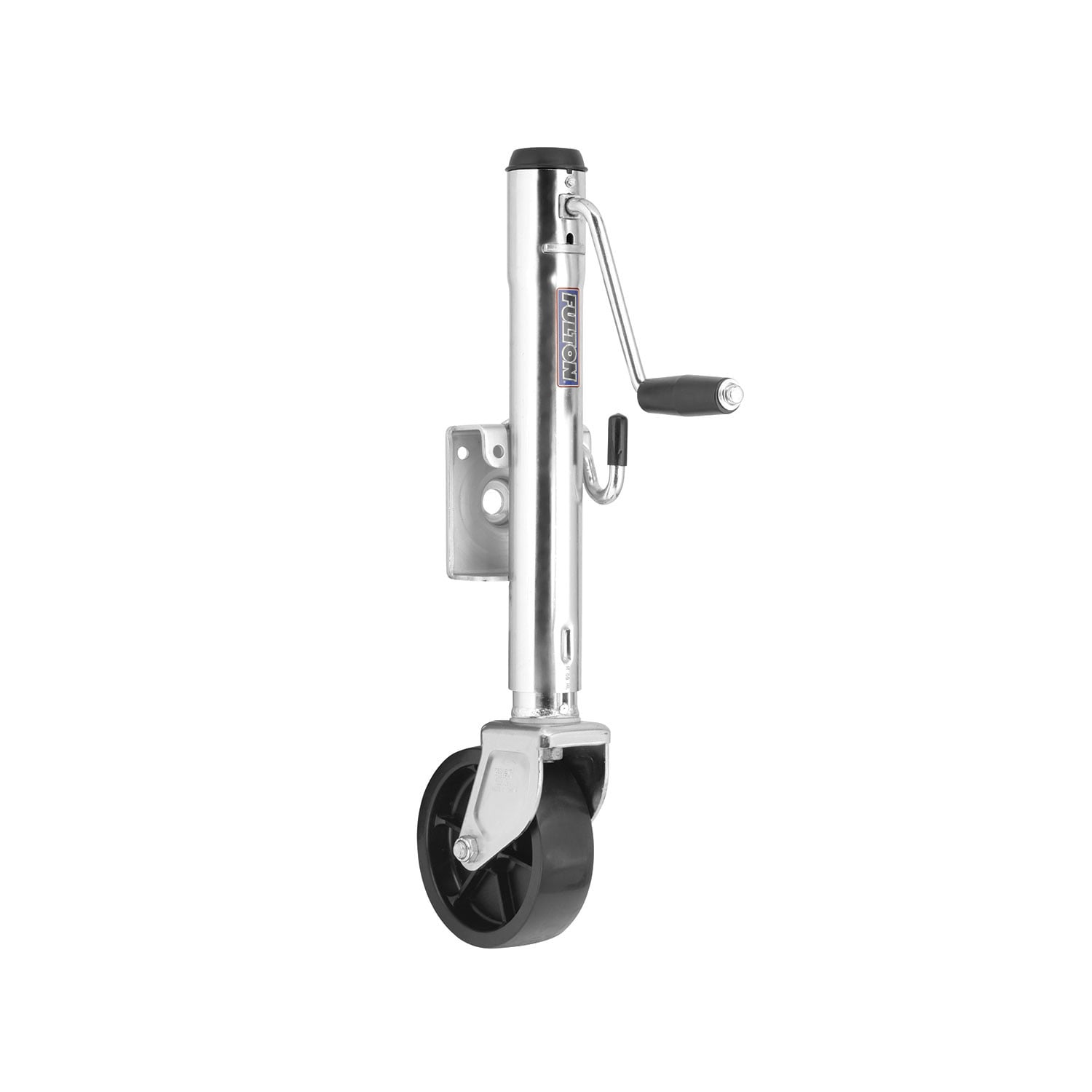
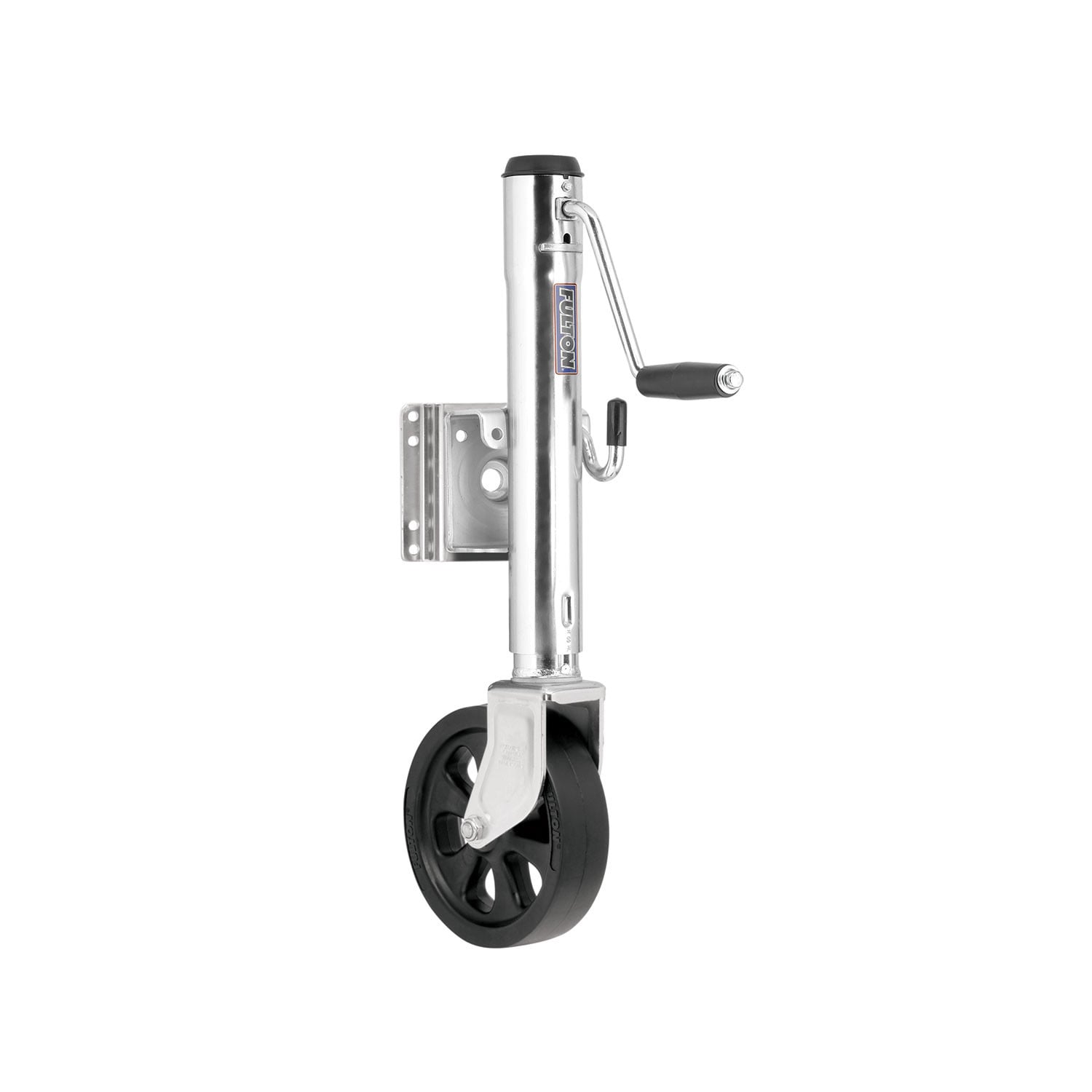
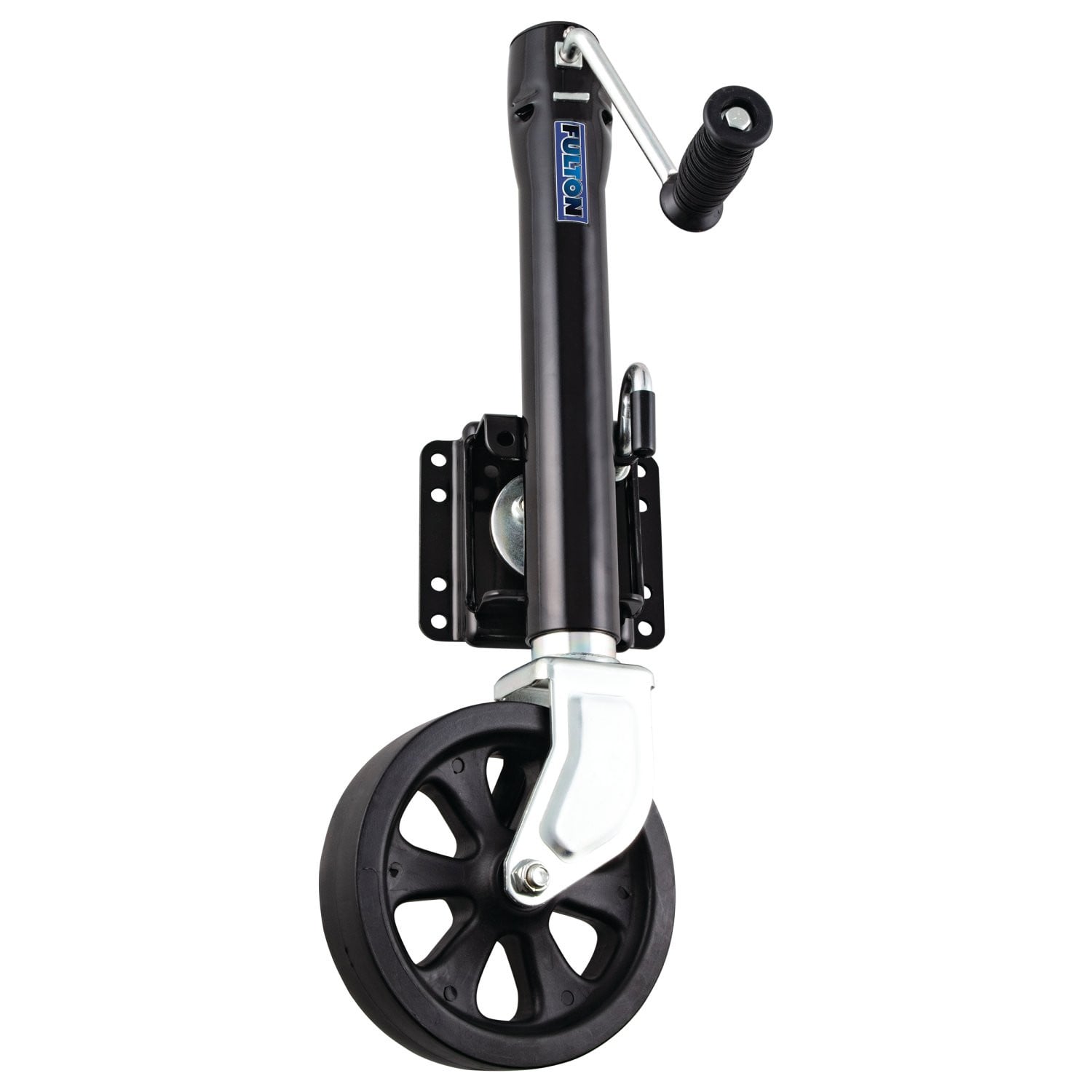
Fulton Marine Trailer Jack, 1,500 lbs. Lift Capacity, Side Wind, Bolt-On Side Mount, 10 in. Travel FLXP15 0301FultonOriginal price was $150.00. Current price is $107.64.Out of Stock
View productOur in-house experts typically reply within one business day.

Fulton


Always the correct part
We know our products
Quality Products
Free Shipping!
Always the correct part
We know our products
Quality Products
Free Shipping!

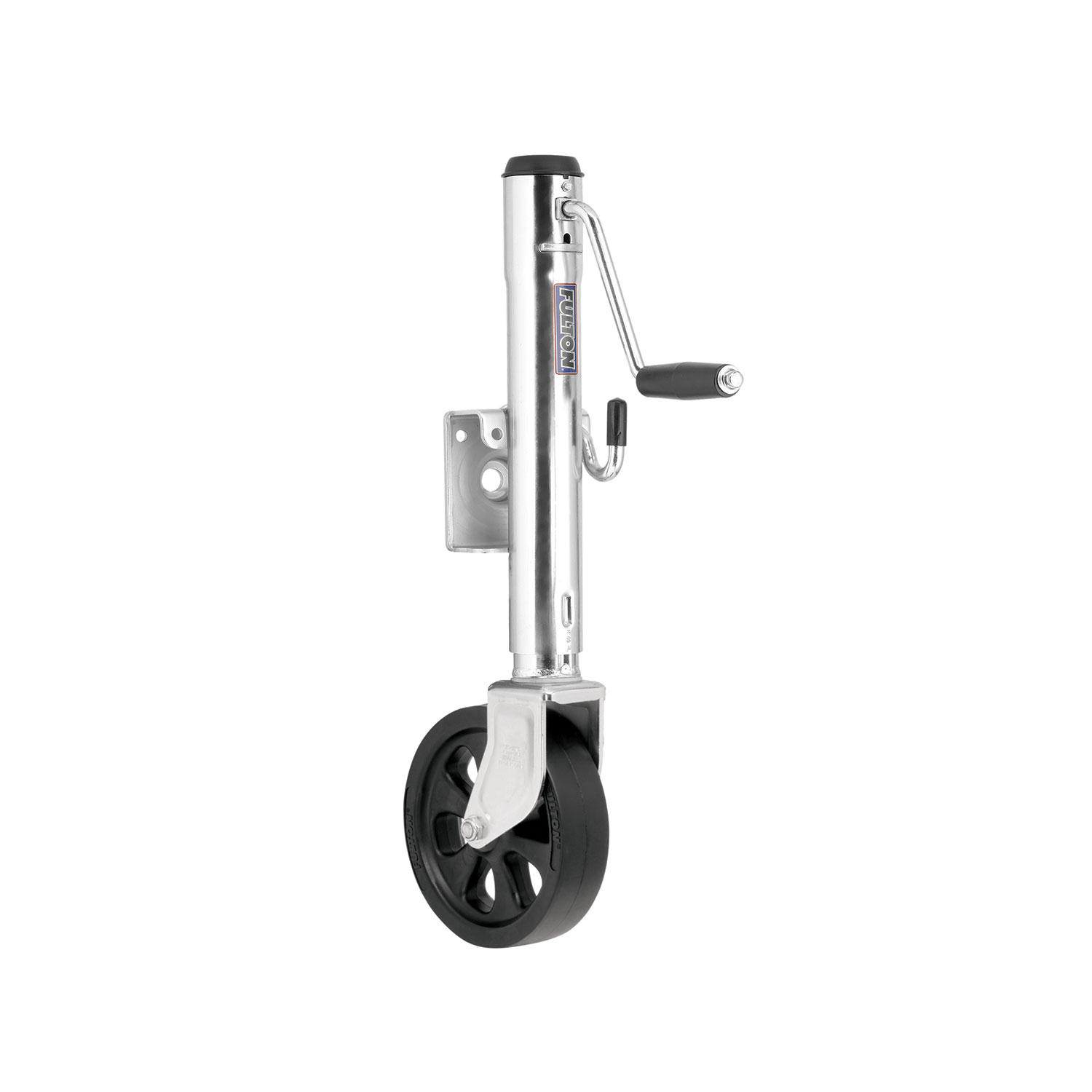

Fulton has produced marine and utility trailer hardware for more than a century, and its jacks, winches and couplers are a standard for light and medium-duty trailering. The XLT and F2 series cover swivel and fixed jacks, hand and powered winches from 1,500 to 3,200 pounds, and couplers built to keep working in wet, salty conditions.
With more than a hundred years of production behind it, Fulton has become the reference point for light and medium-duty trailer hardware, particularly on the marine side. That environment is the toughest test a trailer component faces. A boat trailer is reversed into fresh or salt water on every launch and left to sit wet, which finds every weakness in plating, sealing and material choice. Fulton's stated position is that the brand performs best when the weather is at its worst, and its product engineering reflects that. It sits within the Horizon Global towing group alongside Reese, Draw-Tite, Bulldog, Tekonsha and Wesbar.
Marine and utility jacks anchor the line. The XLT Series marine jack uses a bolt-through swivel mount built from three-dimensionally formed heavy-gauge steel stampings with a proprietary bushing material, a combination chosen to minimise deflection under tongue load while keeping the swivel action working after years of exposure. The F2 Series takes corrosion resistance further as the industry's only extruded aluminium marine jack with an anodised finish, which removes the rust problem at its source rather than coating over it. The wider trailer jack range covers topwind, sidewind and drop-leg configurations.
Trailer winches pull boats onto bunks and rollers. XLT Series winches use efficient gear ratios, full-length drum bearings, oil-impregnated shaft bushings and a Comfort Grip handle that makes the last few turns under load bearable, in 1,500 and 1,800 pound capacities. F2 Series winches use an enclosed frame for a cleaner look and added protection, in 1,600, 2,000 and 3,200 pound models, including two-speed options that trade line speed for cranking effort.
Couplers complete the range, including A-frame couplers matched to common tongue sizes and load ratings, serving boat owners, utility trailer users and trailer manufacturers.
Experts available to answer your questions
Call 888-634-94945 Years
The model number is F3282ML (Rev-D 6077). This manual covers multiple mounting types and handle styles for Cequent Performance Products tongue jacks, including Bulldog®, Fulton®, Pro-Series®, and Reese Towpower® brands.
No. These jacks are not designed for mounting to round tongues. They are designed for flat or rectangular tongues. If you have a round tongue, contact Cequent Performance Products at 1-800-632-3290 or www.cequentgroup.com for alternative solutions.
The manual covers six mounting types: bolt-on rack jack, bolt-on mounting bracket, snap ring/bolt-thru, A-plate (bolt-on or weld-on), direct-mount (weld-on), and weld-on pivot tube mount (round or square). The correct type depends on your trailer coupler and tongue configuration. Verify your specific jack model before installation.
A-plate jacks are specifically designed for trailers with A-plate couplers. If your jack has an A-plate, it can be mounted to an A-plate coupler using the A-plate mounting instructions. However, not all jacks in this product line have A-plates. Check your specific jack model to confirm.
Before mounting, confirm there will be no interference from the tow vehicle, tongue, ground, or any other mounted accessories while stationary or in motion. Check for interference in all positions, including handle swing and swivel positions if applicable. After installation is complete, check for interference again, including clearance of the handle, trailer light cables, and coupler.
For bolt-on mounting, secure all bolts with locknuts and torque to 25 ft. lbs. This applies to both the bolt-on rack jack and bolt-on mounting bracket installations.
The gap between the mounting bolts and the tongue must not exceed 1/16 inch (1.5 mm). This applies to bolt-on mounting types. Ensure the upper bolts rest on the top of the tongue and the lower bolts are less than 1/16 inch from the bottom of the tongue.
No. Do not attempt to weld bolt-on brackets or straps to the tongue. Bolt-on brackets are designed to be secured with bolts and locknuts only. If you need a weld-on solution, special weld-on brackets are available from Cequent Performance Products.
All welding must be performed by an AWS (American Welding Society) certified welder. This applies to all weld-on mounting types, including direct-mount, A-plate, and pivot tube installations.
Use a 3/16 inch (4.8 mm) fillet weld for all weld-on installations, including direct-mount, A-plate, and pivot tube mounts. For direct-mount, weld 1 inch in 2 locations on both sides of the jack.
1) Place the jack bracket over the mount. 2) Place the snap ring in the groove. 3) Seat the snap ring fully into the groove. Before installing the snap ring, inspect the snap ring groove and remove any debris to ensure proper seating.
1) Place the jack bracket into the recessed opening on the mount. 2) Place the small end of the bushing into the jack bracket and onto the bolt. 3) Tighten the locknut until there is little movement in the bushing. The bolt should be installed between the trailer tongue and mount; the jack bracket will be held by the bushing between the locknut and the mount.
When bolting the jack A-plate to the coupler, use three 3/8-16 grade 5 bolts with washers and torque to 15-20 ft. lbs.
Yes. It is recommended to attach a bottom support plate to the bottom of the tongue for A-plate jacks. Weld the support plate to the bottom of the trailer frame using a 3/16 inch fillet weld.
1) All welding must be performed by an AWS certified welder. 2) The non-beveled side of the pivot tube is welded to the tongue unless otherwise specified. 3) Place the weld-on pivot tube against the tongue and weld all around with a 3/16 inch fillet weld. 4) Align one set of pivot mount holes vertically. 5) Mate the jack to the pivot tube and secure with the supplied pin.
1) Insert the long spacer into the roller, followed by the thin spacer and the bolt. 2) Secure to the crank stem with the nut provided.
1) Place the washer over the screw stem and then place the handle over the screw stem. 2) Secure the handle to the screw stem with the bolt and nut provided.
1) Insert the long spacer into the wheel. 2) Set the wheel into the caster body and place the bolt through the caster body and wheel. 3) Secure with the nut provided.
Use 4 bolts of 3/8 inch diameter, washers, and locknuts as shown in the installation diagram. The jack capacity is limited to the lesser of the jack or caster capacity.
Fully retract and rotate the jack before towing. If using an optional drop foot or caster, always remove it before towing to maximize ground clearance.
Before manually moving the trailer, crank the jack to its lowest position.
When using the drop foot or drop leg, make certain the supplied pin is fully inserted through both sides of the inner tube and the drop tube before using the jack. Never attempt to adjust the drop foot or drop leg when there is any load on the jack.
If the product is a swivel jack, lock the plunger pin into a hole in the mounting bracket before raising or lowering the tongue.
If the product has a pivot tube mount, make certain the pivot pin is fully inserted through both sides of the pivot tube and the pivot mount before operating the jack.
The jack capacity is limited to the lesser of the jack, footplate, or caster wheel capacity. Never exceed the maximum rated capacity. Refer to the stamped markings or decals on the product to obtain the rated capacity. If uncertain, contact Cequent Performance Products at 1-800-632-3290 or www.cequentgroup.com.
These jacks are designed for vertical loading only. Excessive side forces may cause jack failure and must be avoided.
Operator and bystanders should never position any part of their body under any portion of the product or the load being supported. Secure the load, vehicle, and trailer from rolling by blocking wheels when operating the jack or coupling the trailer. Do not allow children to play on or around the product or the load being supported.
No. This product is not intended to be used as a transport device for the implement it is attached to. Minimize movement of the implement while the jack is under load.
If the product is a rack jack, do not raise the gear housing above the inner tube. Doing so may cause damage or failure.
The following procedures should be performed at least annually: For side-wind models, apply automotive grease to the internal gearing and lightweight oil to the handle unit at both sides of the tube. For top-wind models, apply lightweight oil to the screw stem. If equipped, lubricate the caster wheel axle bolt and nut assembly with lightweight oil. If used in a marine environment, flush the jack assembly and bushings with fresh water and apply fresh lubricant.
Apply a small amount of automotive grease to the internal gearing by removing the jack cover, or if equipped, use a needle nose applicator or standard grease gun on the lubrication point found on the side of the jack near the crank. Rotate the jack handle to distribute the grease evenly.
A lightweight oil must be applied to the handle unit at both sides of the tube for side-wind models.
For top-wind models, apply a lightweight oil to the screw stem.
If the product is used in a marine environment, flush the jack assembly and bushings with fresh water, and apply fresh lubricant.
Always replace bent, broken, or worn parts before using the product. Use only Cequent Performance Products' parts or parts of equal quality for repair. Replacement parts are available through Cequent Performance Products' Customer Service Department at 1-800-632-3290. Please specify the product model number.
No. These jacks are not designed for round tongues. They are designed for flat or rectangular tongues only.
Torque all bolts to 25 ft. lbs. using locknuts.
Yes. All welding must be performed by an AWS certified welder. Use a 3/16 inch fillet weld.
Fully retract and rotate the jack before towing. Remove any optional drop foot or caster to maximize ground clearance.
No. These jacks are designed for vertical loading only. Excessive side forces may cause failure.
Perform maintenance at least annually. Apply automotive grease to internal gearing and lightweight oil to handle and screw stem components. Flush with fresh water and relubricate if used in marine environments.
Before installing the snap ring, inspect the snap ring groove and remove any debris. Seat the snap ring fully into the groove. If debris is present, clean the groove thoroughly before attempting to install the snap ring again.
Tighten the locknut until there is little movement in the bushing. The bolt should be installed between the trailer tongue and mount, with the jack bracket held by the bushing between the locknut and the mount. If movement persists after tightening, check that the bolt is correctly positioned and the bushing is properly seated.
For side-wind models, the internal gearing and bushings must be kept lubricated. Apply a small amount of automotive grease to the internal gearing by removing the jack cover or using a needle nose applicator or standard grease gun on the lubrication point on the side of the jack near the crank. Rotate the jack handle to distribute the grease evenly. Also apply lightweight oil to the handle unit at both sides of the tube. For top-wind models, apply lightweight oil to the screw stem. Perform this maintenance at least annually.
The jack likely needs lubrication. For side-wind models, apply automotive grease to the internal gearing and lightweight oil to the handle unit. For top-wind models, apply lightweight oil to the screw stem. If the jack has a caster wheel, lubricate the axle bolt and nut assembly with lightweight oil. If the problem persists after lubrication, the jack may have damaged internal components and should be inspected by a qualified technician or replaced.
First, ensure the load does not exceed the maximum rated capacity of the jack. Refer to the stamped markings or decals on the product. If the load is within capacity, check that the jack is fully extended and all pins are fully inserted (for pivot tube and drop foot/drop leg models). For swivel jacks, ensure the plunger pin is locked into a hole in the mounting bracket. If the jack continues to slip, it may have internal damage and should be replaced. Contact Cequent Performance Products at 1-800-632-3290.
Matt
The staff was able to quickly assist me with locating the correct product I needed. Shipping was really fast. Item arrived in 2 days. Will be using TowUniverse again!!
May 22, 2023
On Sale Today
Original price was $146.25. Current price is $113.76.You save $32.49 (22%)
Free Shipping
Ships free on all orders
 Authorized Dealer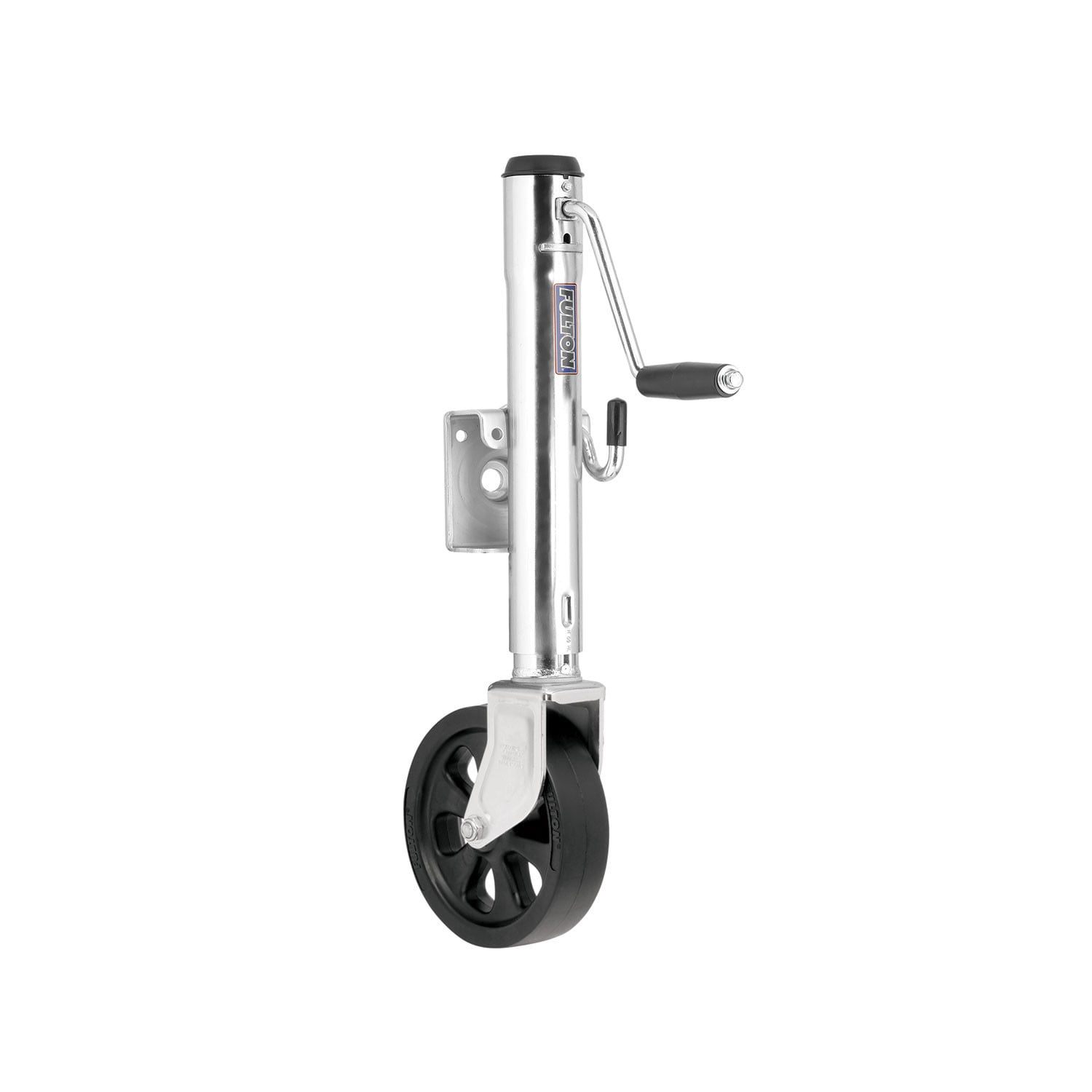
FREE ShippingFREE SHIPPING
Estimated delivery Thu, Sep 17 - Sun, Sep 20
Order before 2 PM EST Monday–Friday for same-day processing
Guaranteed safe & secure checkout