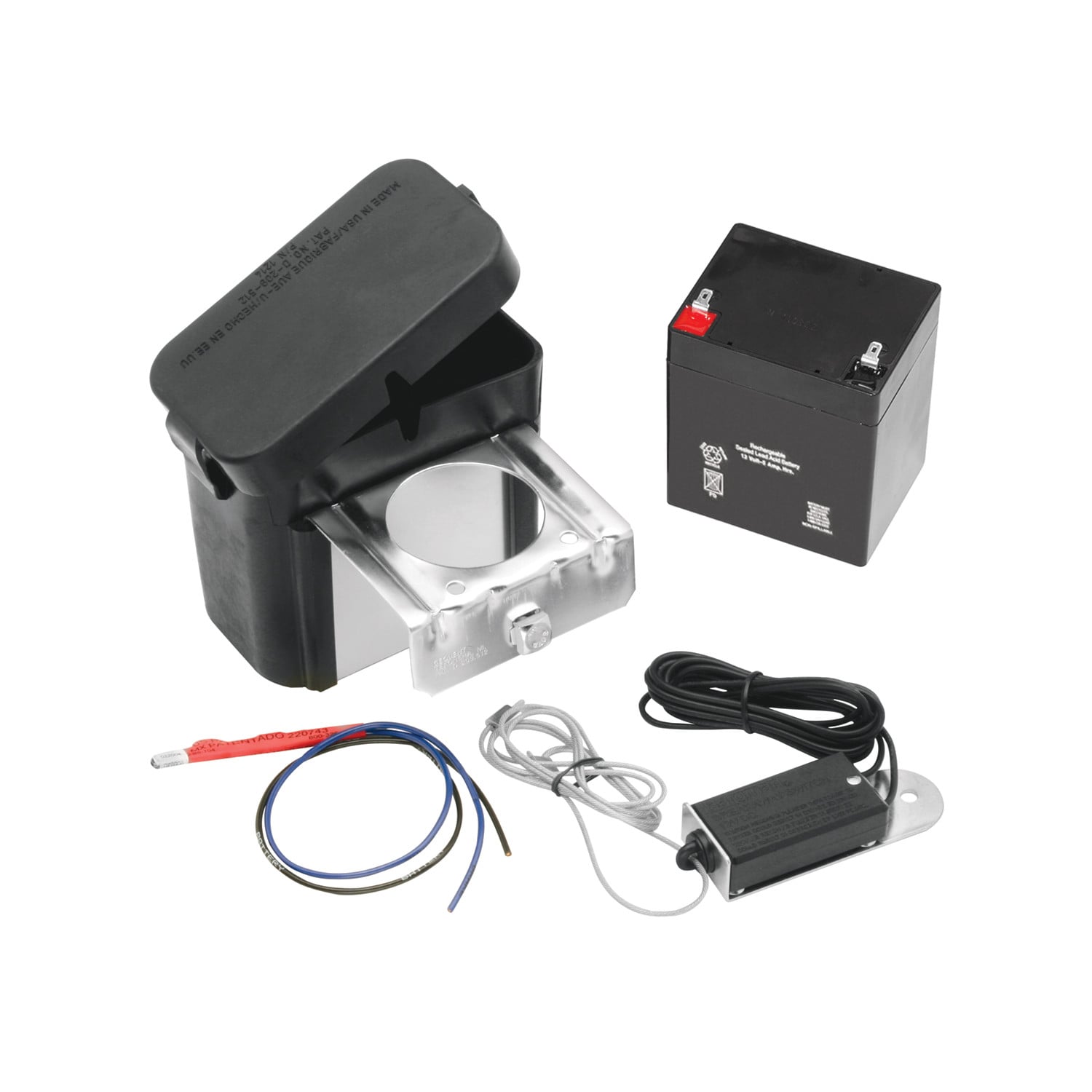
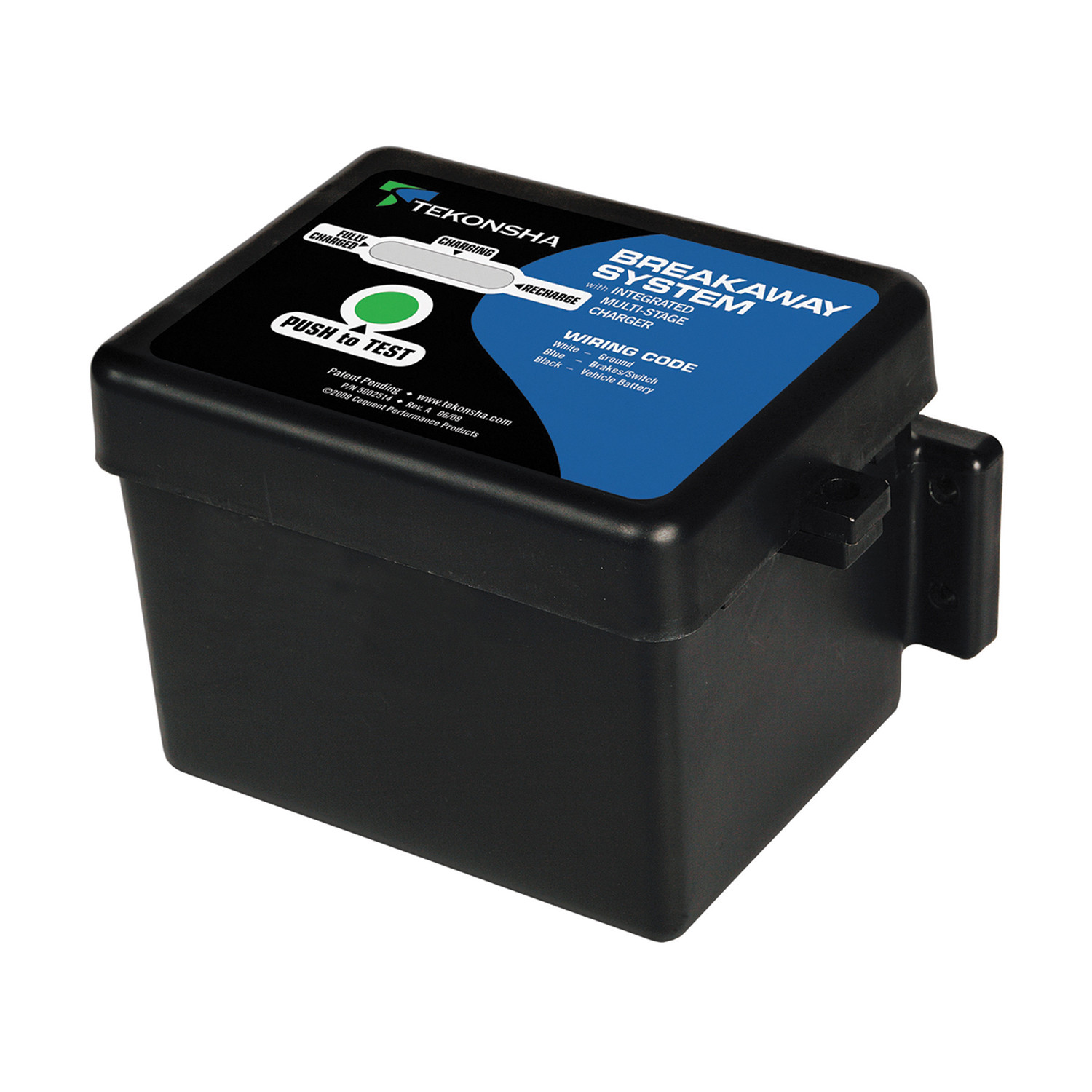
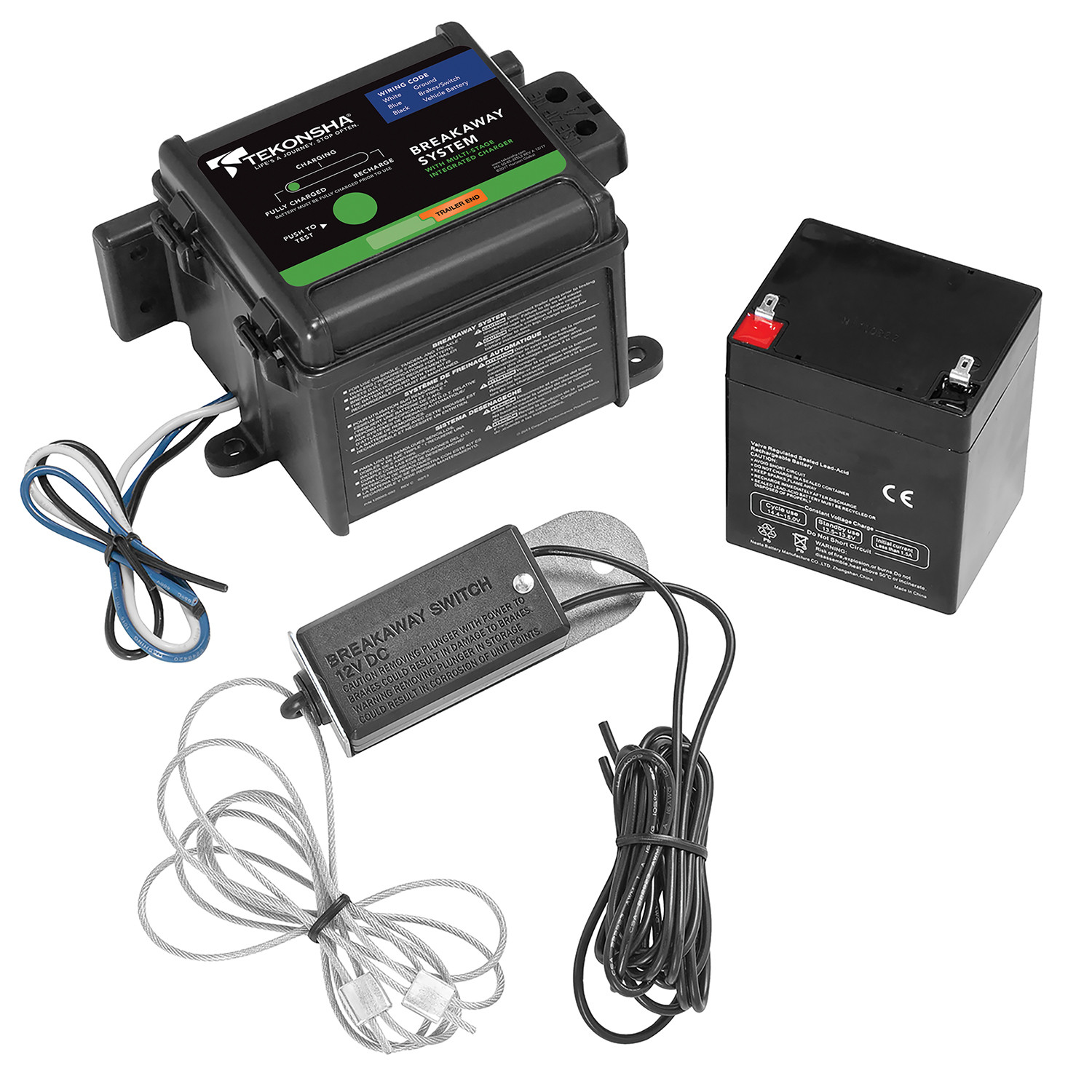
Tekonsha Breakaway System, 1 to 3 Axle Trailers, Push to Test LED, Integrated Multi-Stage Charger TK50-85-313Tekonsha$113.00Out of Stock
View productOur in-house experts typically reply within one business day.

Tekonsha



Always the correct part
We know our products
Quality Products
Free Shipping!
Always the correct part
We know our products
Quality Products
Free Shipping!

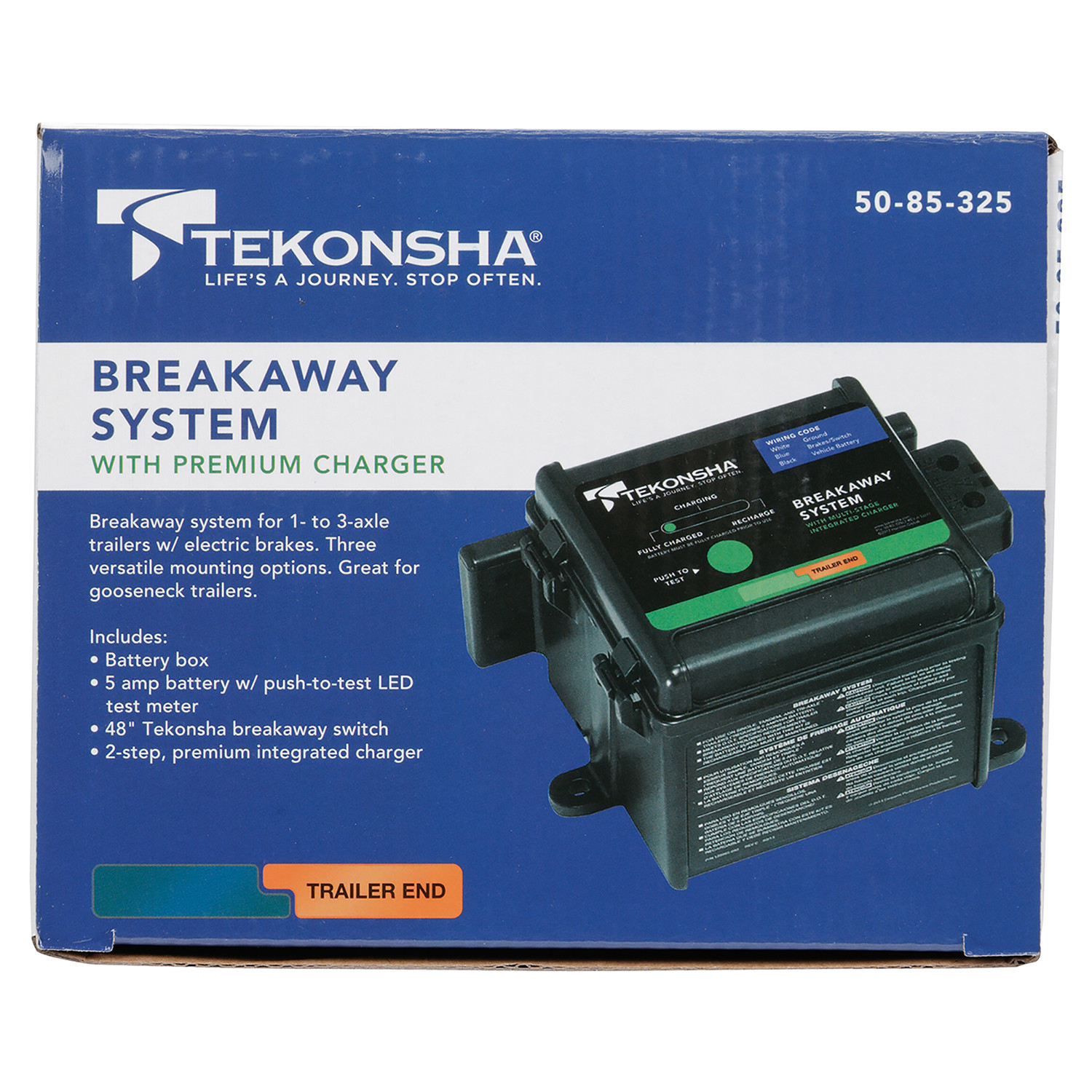
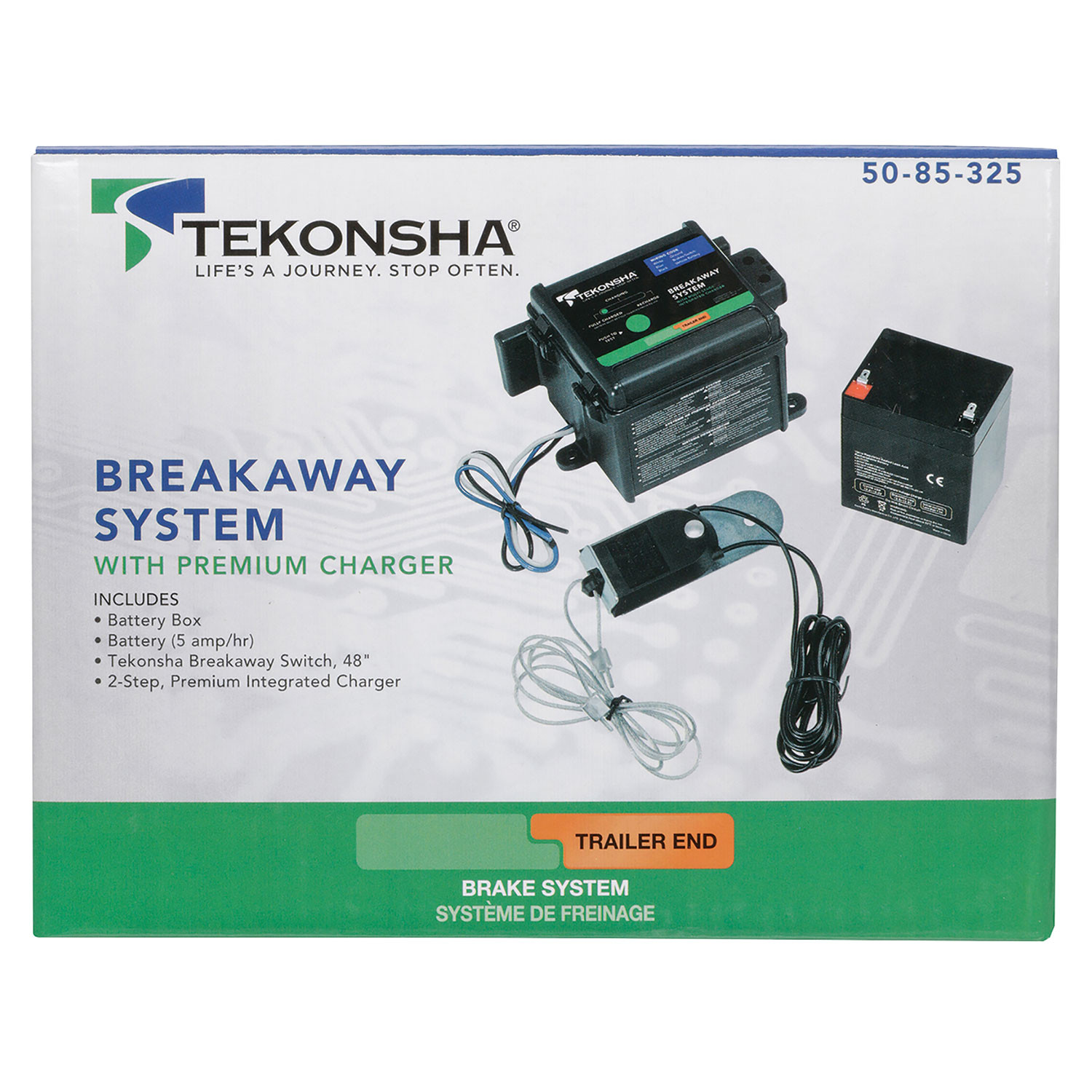
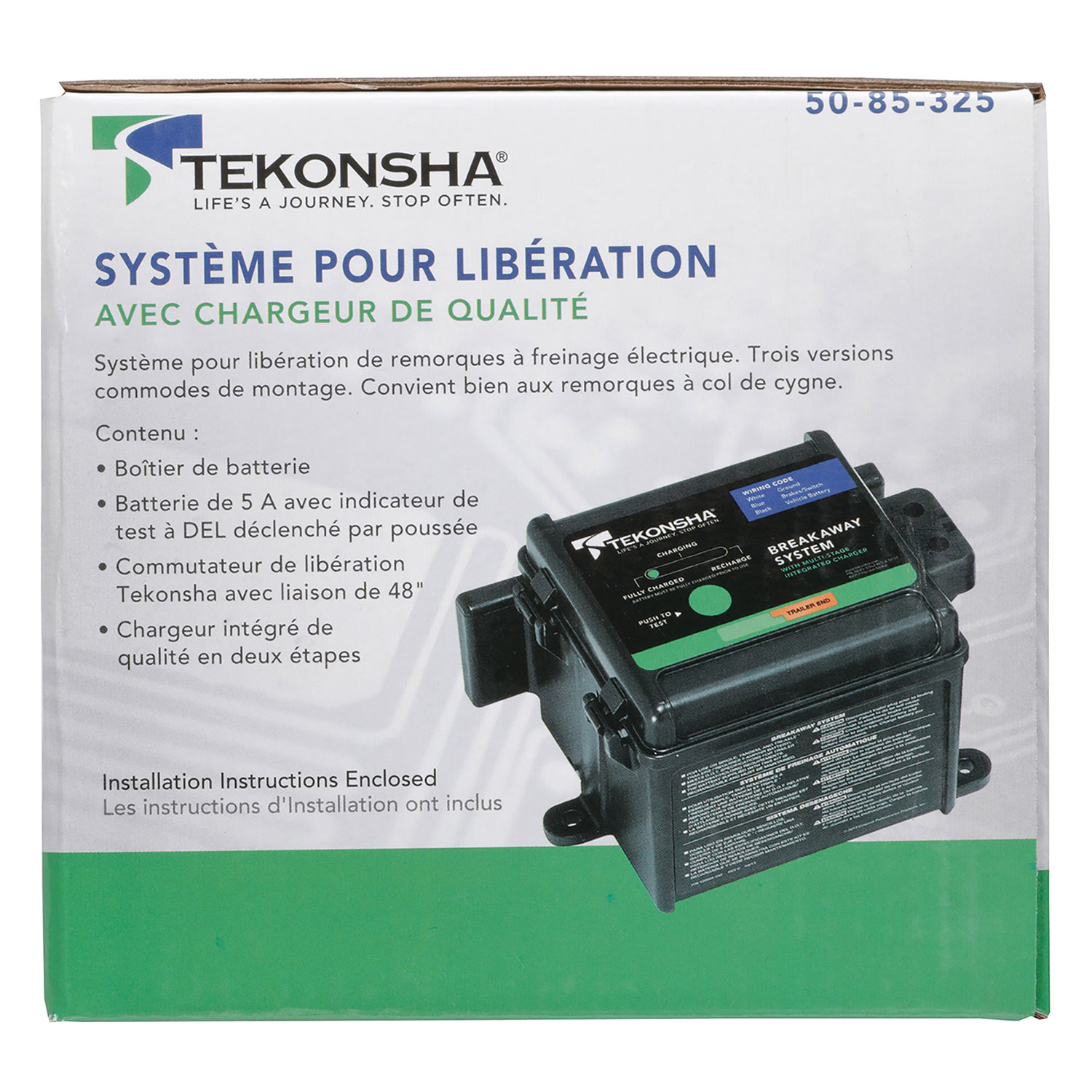
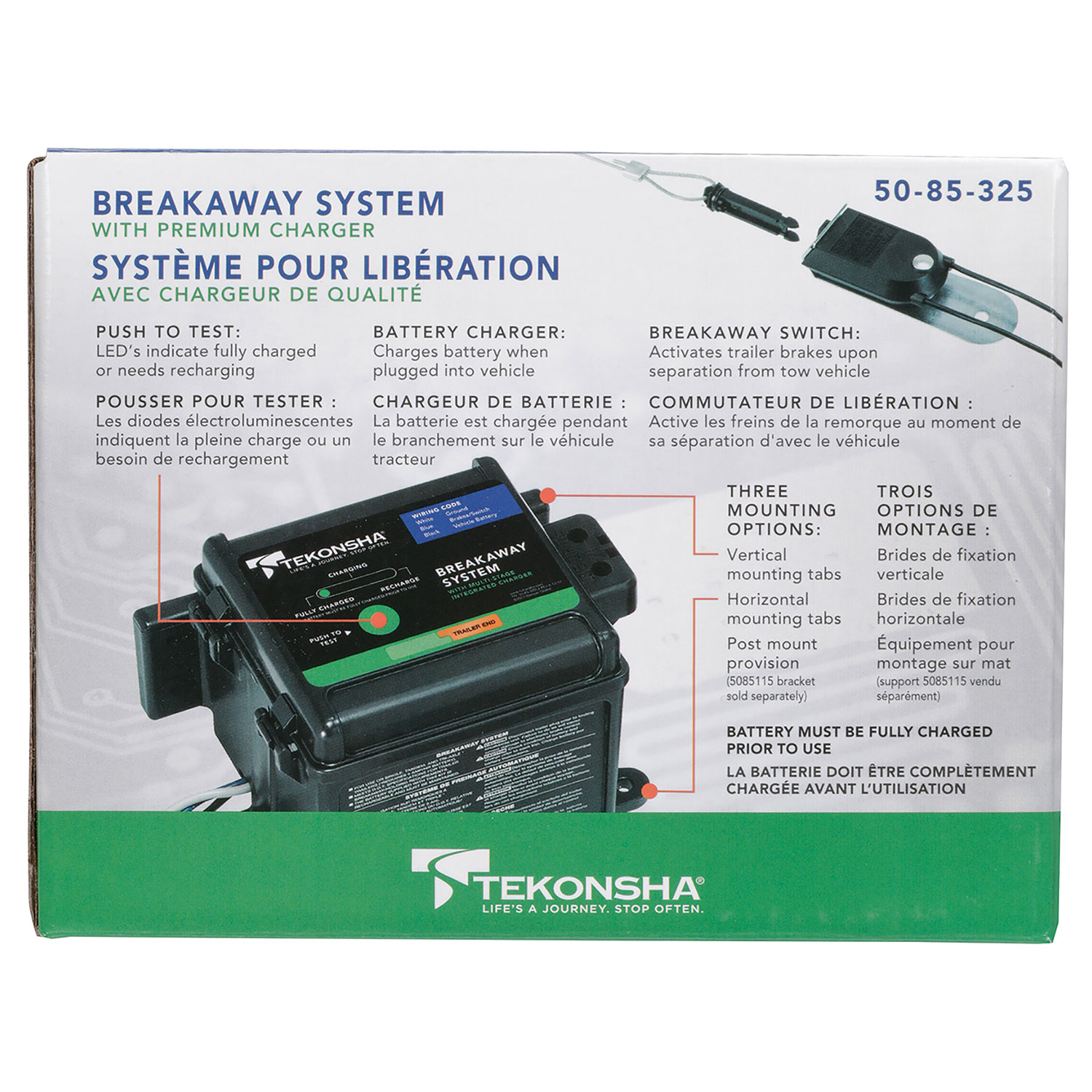
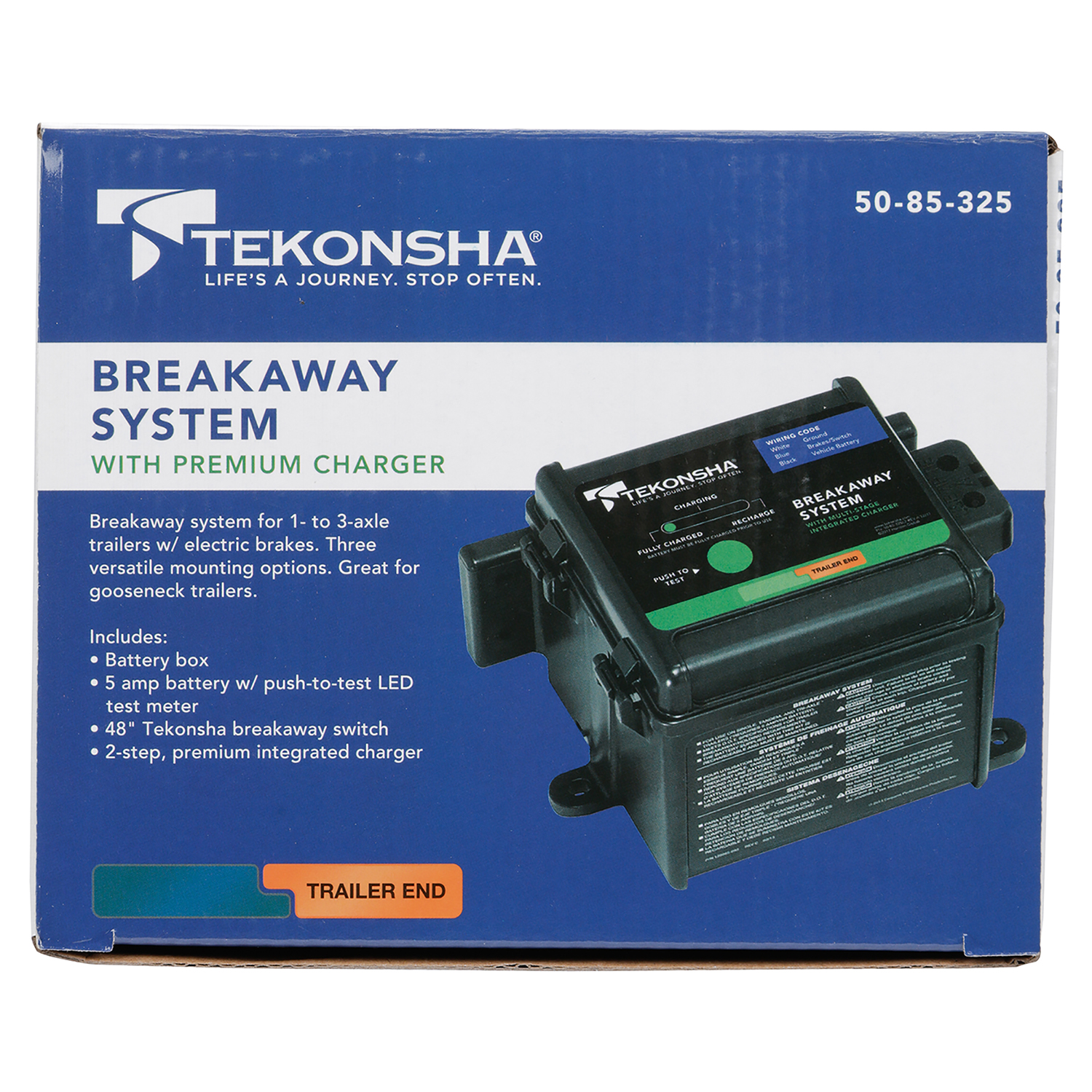
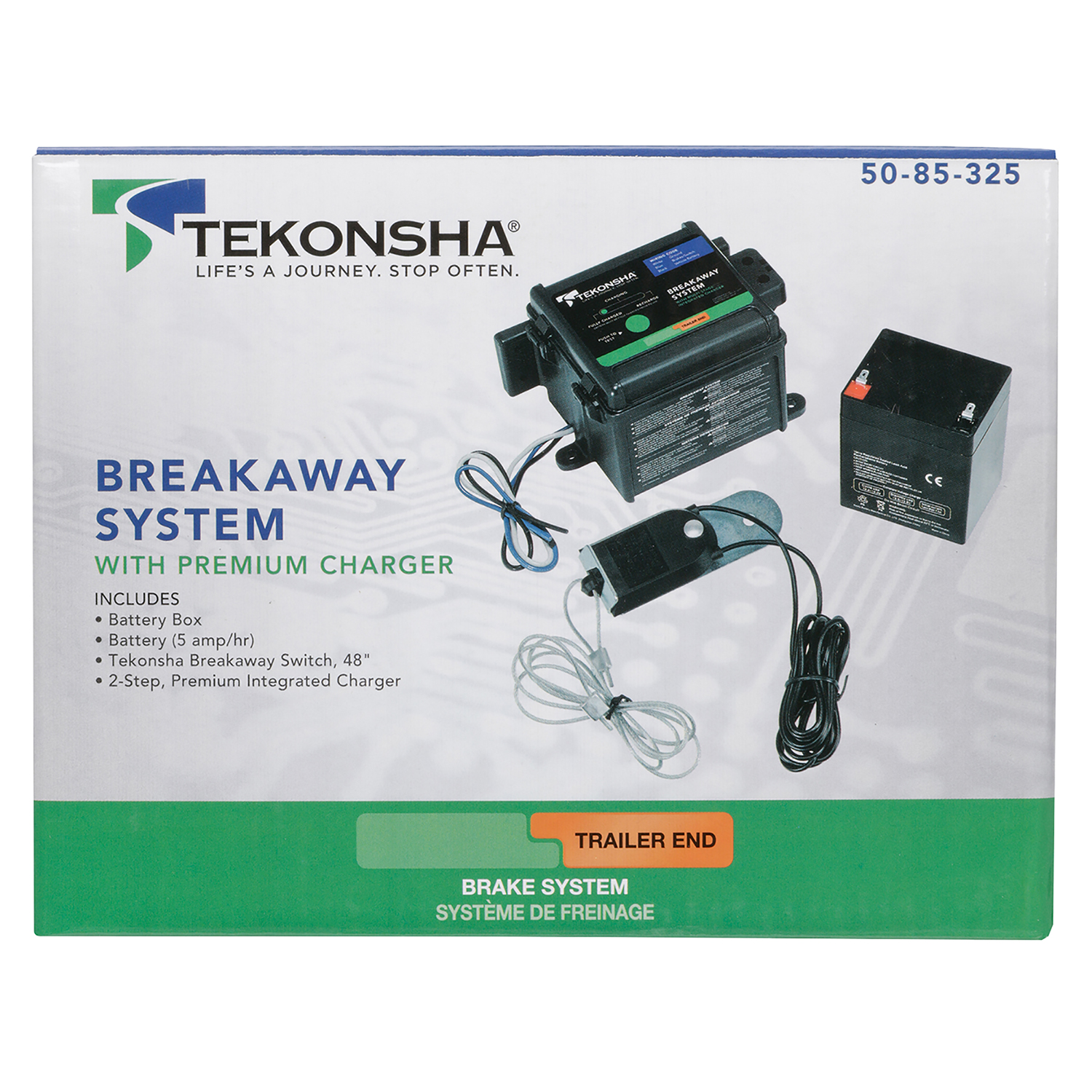
Now with 3 versatile mounting options! Great for gooseneck trailers.
| BRAND: | TEKONSHA |
| PART NUMBER: | 50-85-325 |
| WARRANTY: | LIMITED 1 YEAR WARRANTY |
| WEIGHT: | 4.8 LBS |
| TERMINAL GENDER: | MALE |
| TERMINAL TYPE: | BLADE |
| VOLTAGE: | 12.8 V |
| NUMBER OF TERMINALS: | 2 |
| LENGTH: | 48 IN. |
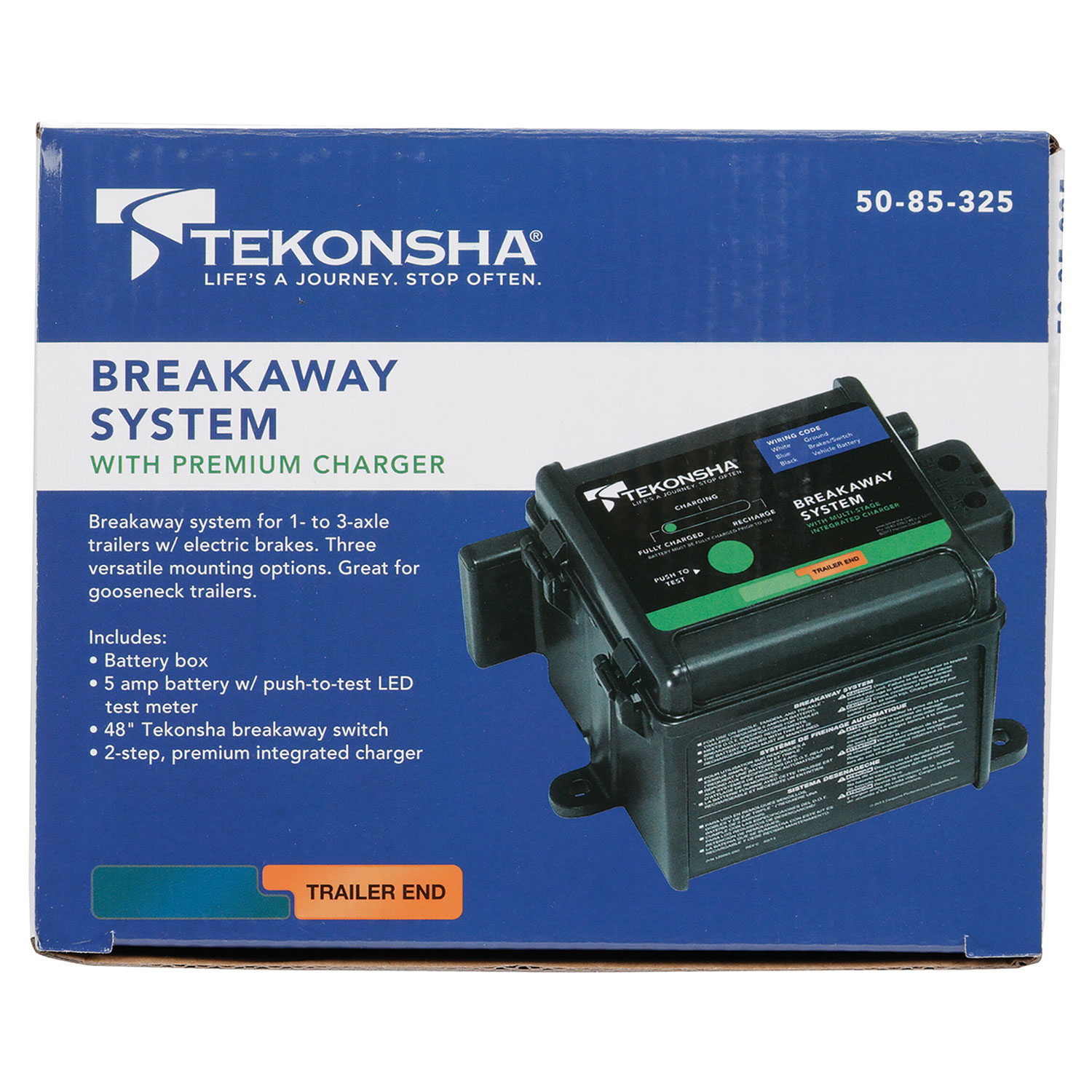

Tekonsha is a leading manufacturer of electronic trailer brake controllers, pioneering the category in the 1970s. The lineup spans proportional units such as the Prodigy P3 and Prodigy iD, time-delayed controllers, the wireless Prodigy RF, plus vehicle-specific wiring harnesses, adapters and trailer brake components engineered for smooth, predictable stopping at any speed.
Tekonsha Engineering Company began in 1964 building RV steps and mirrors. Within a few years it had found its real calling, and by the 1970s Tekonsha was pioneering the manufacture of electronic trailer brake controllers, the product category that still defines the brand. More than half a century later it remains the reference name in trailer braking and is part of the Horizon Global group alongside Reese, Draw-Tite, Fulton, Bulldog and Wesbar.
A brake controller is the component that tells a trailer's electric brakes how hard to work and when, and getting that right is the difference between a controlled stop and a shove from behind. Tekonsha builds both major types. Proportional controllers use an internal accelerometer to sense how quickly the tow vehicle is slowing and apply trailer braking to match, so light braking stays light and hard braking is immediate. Time-delayed controllers ramp to a preset output over a fixed interval, a simpler and more economical approach that suits occasional towing.
The current brake controller range covers most of that ground. The Prodigy iD pairs with a phone through Tekonsha's EDGE technology for setup and monitoring, the P3 offers storable settings for multiple trailers and a trilingual colour LED display, the Prodigy P2 adds a dimmable display and boost mode for heavier loads, and the Voyager keeps operation simple and dependable. The Prodigy RF mounts to the trailer itself and controls wirelessly, which suits rental fleets and drivers who swap tow vehicles.
Installation is supported by vehicle-specific brake control harnesses that plug into a factory connector rather than requiring cut-and-splice wiring, along with mounting brackets and adapters. Matched controller bundles pair a unit with the correct harness. Products are tested to meet and often exceed published industry standards.
Experts available to answer your questions
Call 888-634-94941 Year
Tekonsha® Brand
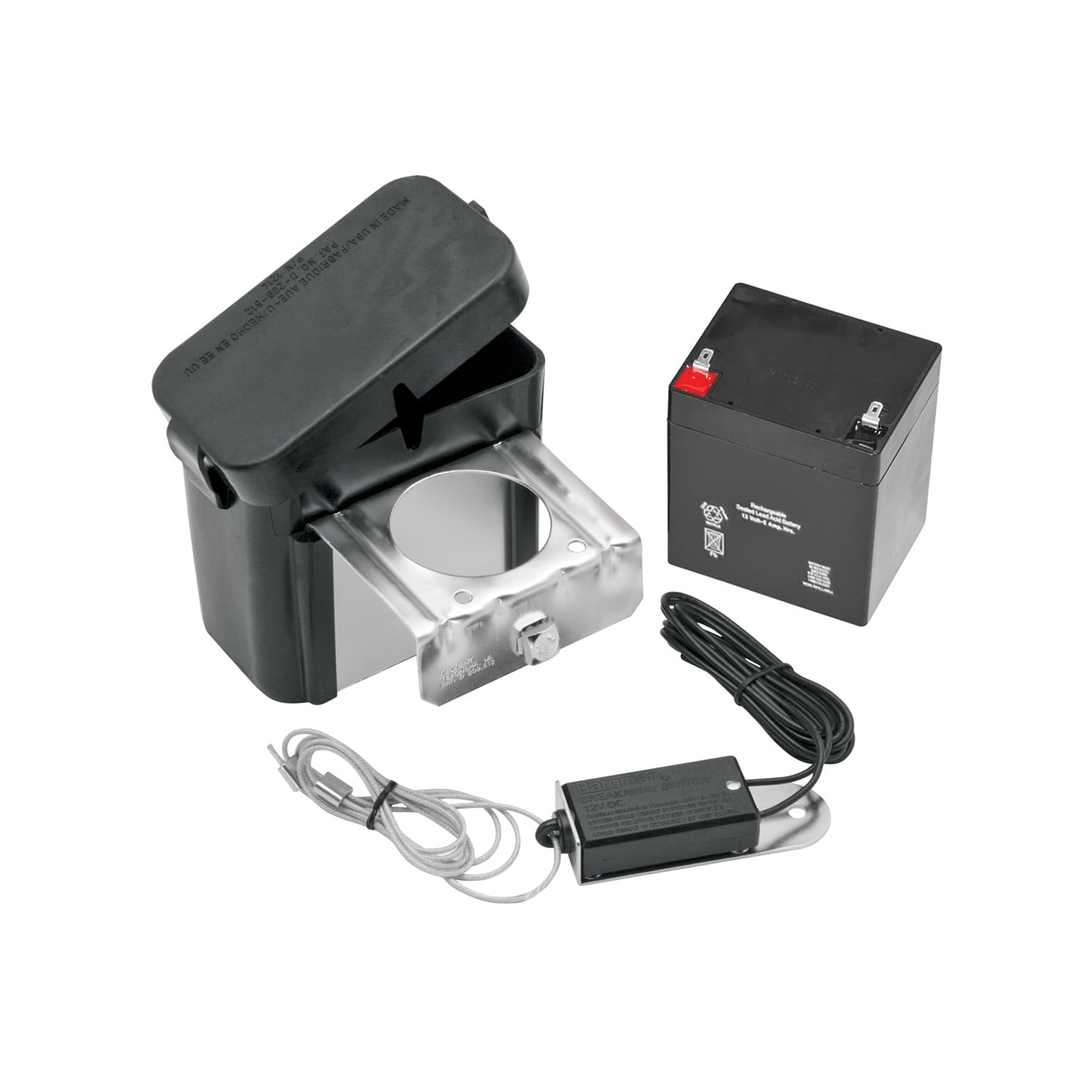
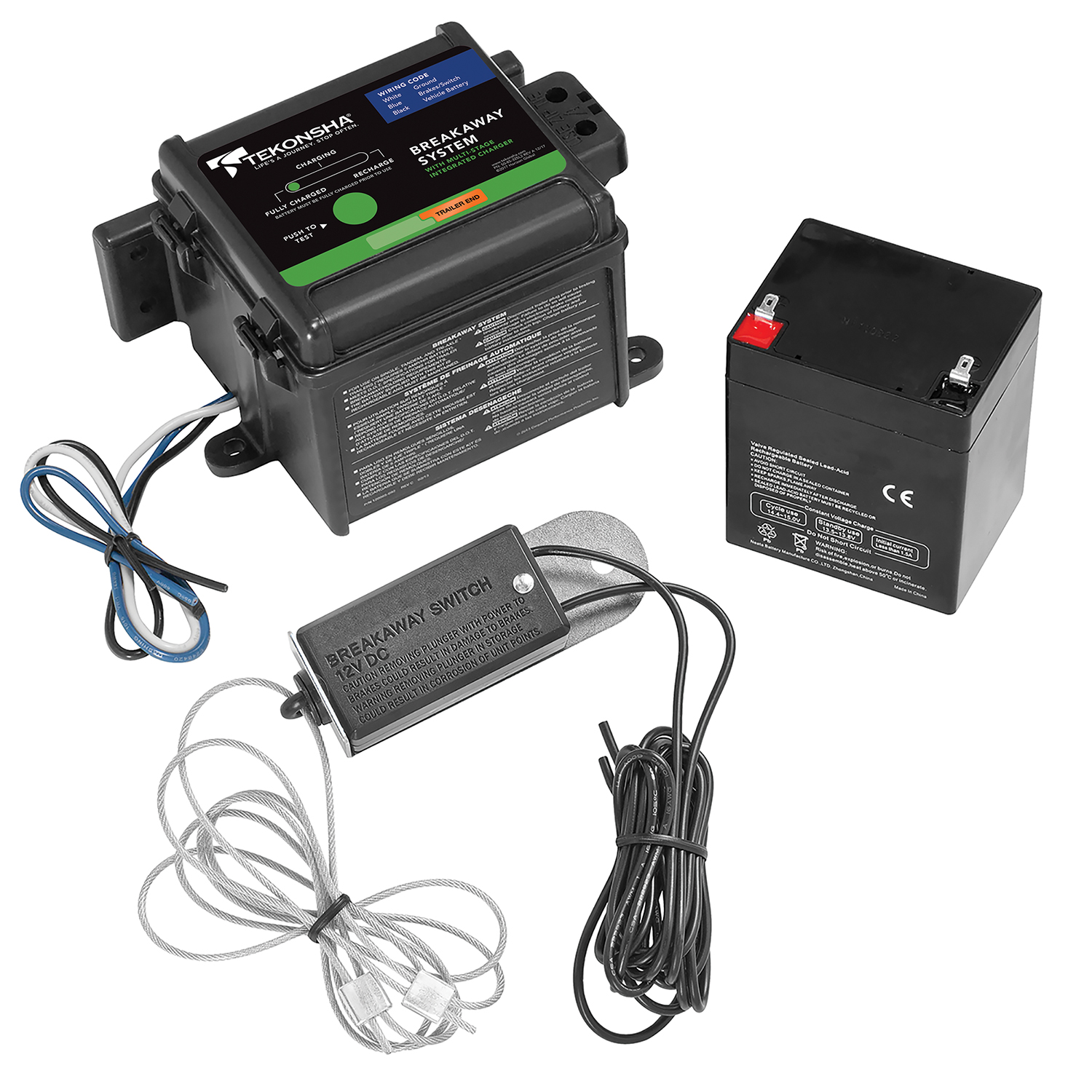
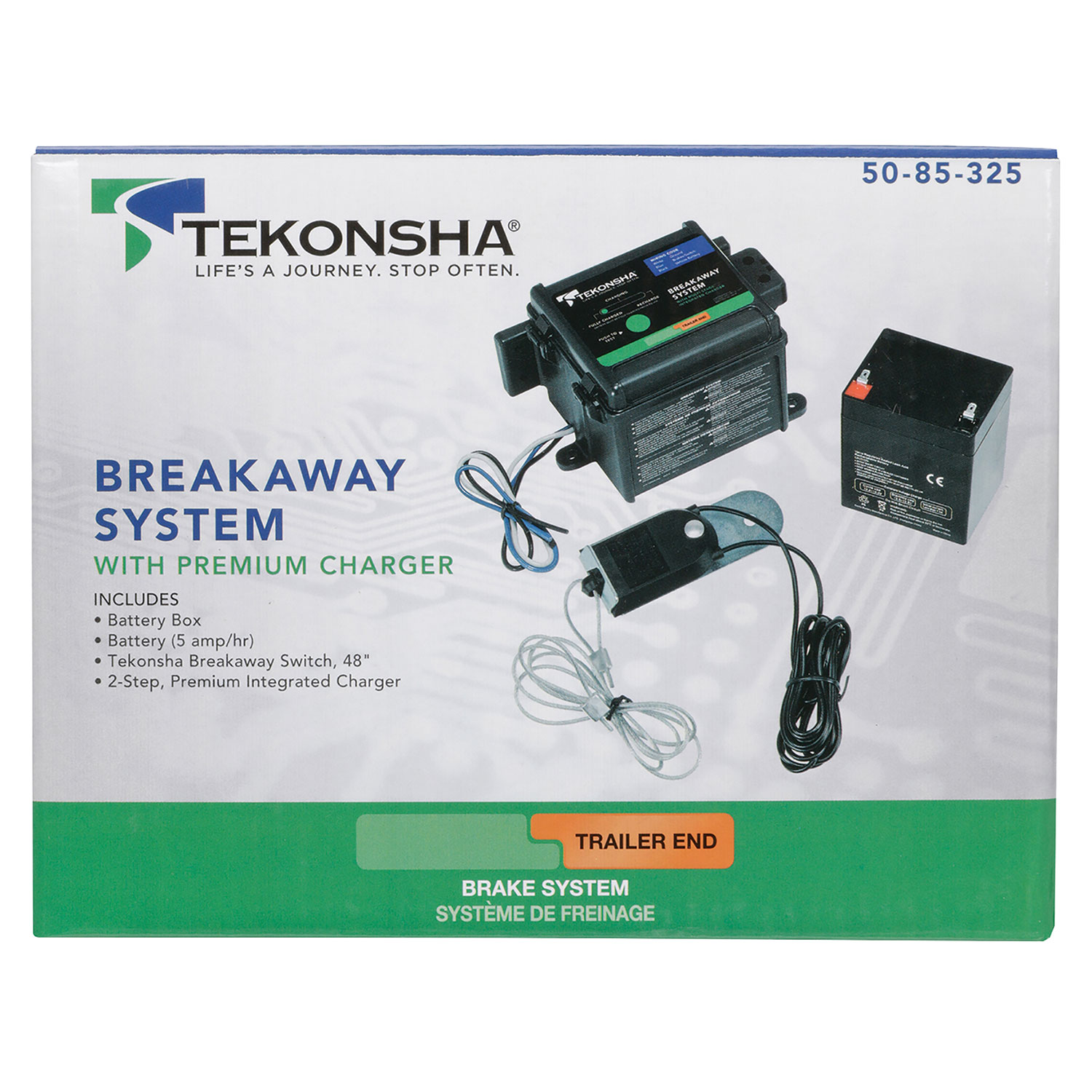
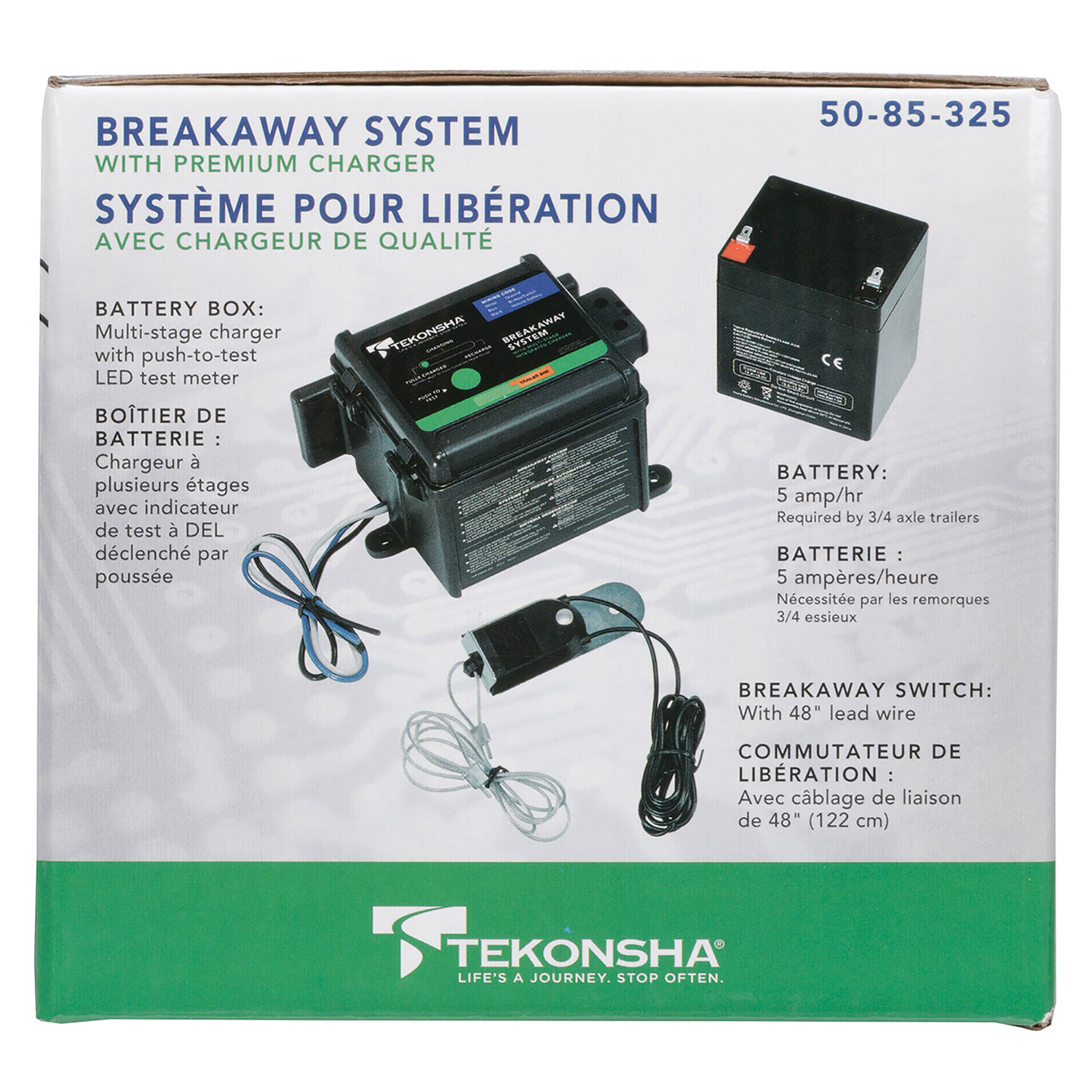
The Tekonsha breakaway battery system (part number 2218-OS) is a 12-volt sealed lead-acid battery installation designed to power trailer brakes in the event the trailer separates from the tow vehicle. The system includes a breakaway switch that automatically activates the brakes when the trailer becomes detached, a battery case for secure mounting, and optional charging capability. It is available in models with and without a tow charger, and with push-to-test LED indicators to verify battery charge status.
The 12-volt sealed lead-acid battery measures: Length 3.54", Width 2.76", Height 4.13". Terminals are fasten tab type measuring 0.187" x 0.032". Maximum charge current must be limited to 1.2 amps. The battery is rated for 4–5 years service life in standby applications or 200–1000 charge/discharge cycles depending on depth of discharge and rate of charge.
The manual does not specify trailer type, size, or model compatibility. The system is designed for trailers with electric brakes that require a 12-volt power source. Contact Tekonsha at 1-888-785-5832 or www.tekonsha.com to confirm compatibility with your specific trailer.
The system connects to the tow vehicle's 12-volt system and chassis ground. The manual does not specify vehicle type, make, model, or year restrictions. The breakaway switch cable must attach to the tow vehicle frame and must not drag on the ground or experience strain or restriction. For fitment confirmation with your specific tow vehicle, contact Tekonsha at 1-888-785-5832 or www.tekonsha.com.
The manual does not provide a complete list of included hardware. It confirms that the kit includes the battery, charger (in charger models), battery case, breakaway switch, and switch cable. The manual explicitly states that the 1/4" bolt and lock nuts (or 2 jam nuts) required to bolt the breakaway switch bracket to the trailer frame are NOT included in the kit and must be supplied separately.
The manual does not specify required tools. However, installation involves mounting the battery case, bolting the breakaway switch bracket using a 1/4" bolt and lock nut or jam nuts, and soldering all wire connections. You will need tools suitable for these tasks, including a wrench or socket for the 1/4" fasteners and a soldering iron for electrical connections.
Yes. The manual explicitly requires that you disconnect the trailer from the tow vehicle before installing the battery and charger into the battery case. This is stated in step 4 of the battery installation instructions and step 5 of the breakaway switch installation guide.
Yes. The manual states "Check condition of battery prior to installation and prior to each trip." This is listed as a critical first step before beginning any installation work.
Mount the battery case securely to the trailer frame, jack post, or other suitable location on the trailer. The breakaway switch cable should be oriented toward the tow vehicle. The switch location must be selected to ensure an unobstructed line of pull in the event of vehicle separation.
Bolt the breakaway switch bracket to the frame of the trailer or battery case bracket using one 1/4" bolt and lock nut, or two 1/4" jam nuts. The bolt and nuts are not included in the kit. Do not over-tighten the bolt; the switch must be able to pivot freely.
Attach the breakaway switch cable to the tow vehicle frame, ensuring the cable does not drag on the ground and no strain or restriction is placed on it. Do not hook the cable to the safety chain loop or hitch ball.
The manual includes multiple schematic diagrams showing wiring configurations for models with and without chargers, and with and without push-to-test functionality. All diagrams show connections between the tow vehicle's 12-volt system, stop light switch, chassis ground, breakaway battery, automatic reset circuit breaker, breakaway switch, and brake control. Wire colors are specified: Red for positive (+12V), Black for negative/ground, Blue for brake output, and White for negative return. Refer to the specific schematic that matches your model configuration.
Wire colors vary by model configuration. For models with charger: Red/Blue = Breakaway Battery Positive, White = Breakaway Battery Negative, Black = Battery Input from Tow Vehicle, Red = +12V from tow vehicle system. For models without charger: Black = Breakaway Battery Positive, White = Breakaway Battery Negative. Blue wires connect to brake output from trailer brakes. All connections must be properly insulated and soldered.
The negative (–) terminal must attach to ground (chassis ground of the tow vehicle). The positive (+) terminal must attach to the breakaway switch. Improper polarity installation will destroy the brake control. This is a critical safety requirement.
Yes. The manual states "SAFETY ITEM: Solder all wire connections." This is a required safety measure for all electrical connections in the system.
Press the test button on the breakaway switch. For models without charger: if the RED LED illuminates, the battery voltage is low and requires charging before use; if the GREEN LED illuminates, the battery is charged. For models with charger: the YELLOW LED illuminates when the battery is being charged; RED LED indicates low voltage requiring charge; GREEN LED indicates the battery is charged. Note: the lower the battery voltage, the dimmer the LED illumination.
Disconnect the trailer plug before testing the breakaway unit. Failure to do so will result in severe damage to the electronic brake control.
Batteries should not be stored in a discharged state or at elevated ambient temperatures. Avoid exposing batteries to heat; service life is shortened considerably at ambient temperatures above 30°C (86°F). After six to nine months of storage, the battery should be recharged. Do not store batteries in close proximity to objects that can produce sparks or flames.
Maximum charge current must be limited to 1.2 amps or less. Charging at higher rates can damage the battery.
Charge the battery at the proper rate with current limited to 1.2 amps or less. Provide adequate air circulation when charging. Do not charge the battery in any container besides the supplied battery box. The Tekonsha charger 2024-07 is recommended for proper charging. Charge per battery manufacturer's instructions if using a different charger.
Do not attempt to disassemble the battery; contact with sulfuric acid may cause harm. Do not expose the battery case to organic solvents or adhesives. Do not place batteries in close proximity to objects that can produce sparks or flames. Do not throw batteries into fire; batteries so disposed may rupture or explode. Fasten batteries tightly and make provisions for shock absorption if exposure to shock or vibration is likely.
Use a UV-resistant zip tie to secure the cover to the battery box using one or both of the holes provided. This prevents accidental opening of the battery box.
Check the condition of the battery prior to each trip. Verify that all wiring and connections are secure. Check that the breakaway switch cable does not drag on the ground and is not under strain or restriction. Ensure the switch can pivot freely. Verify proper polarity: negative terminal to ground, positive terminal to breakaway switch.
Check your breakaway system periodically to ensure that wiring and connections are secure. Check the battery condition prior to each trip. A short or open circuit can result in a no-brake condition.
For optimal performance, it is recommended that breakaway devices be replaced every 3–5 years.
Check the battery and recharge it using a Heavy Duty Multi Stage/Maintenance Charger. The Tekonsha charger 2024-07 is recommended for proper charging.
Yes. If the secondary battery needs charging, current will be drawn from the tow vehicle's battery at any time the tow vehicle is connected to the trailer. The Tekonsha charger 2024-07 is recommended for proper charging. To charge the breakaway battery only when the vehicle is running, a battery isolator may be installed in the 12-volt supply line (RED wire for tow charger).
A red LED indicates the battery voltage is low and requires charging before use. Charge the battery per the battery manufacturer's instructions or using the Tekonsha charger 2024-07.
A green LED indicates the battery is fully charged and ready for use.
A yellow LED illuminates only on models with charger and indicates the battery is currently being charged.
The lower the battery voltage, the dimmer the LED illumination. Dim LEDs may indicate low battery charge. Press the test button to confirm the charge status: red LED = low voltage requiring charge; green LED = battery charged.
The system is designed for trailers with electric brakes requiring 12-volt power. The manual does not specify trailer type or model compatibility. Contact Tekonsha at 1-888-785-5832 or www.tekonsha.com to confirm fitment with your specific trailer.
The 1/4" bolt and lock nuts (or 2 jam nuts) required to bolt the breakaway switch bracket to the trailer frame are not included and must be supplied separately.
Yes. Soldering all wire connections is a required safety measure.
Negative (–) terminal must attach to ground; positive (+) terminal must attach to the breakaway switch. Incorrect polarity will destroy the brake control.
Maximum charge current must be limited to 1.2 amps or less.
Yes. Disconnect the trailer plug before testing the breakaway unit to avoid severe damage to the electronic brake control.
For optimal performance, replace breakaway devices every 3–5 years.
A red LED indicates low battery voltage. Charge the battery before use. If the LED is also dim, the battery voltage is particularly low. Use the Tekonsha charger 2024-07 or charge per battery manufacturer's instructions with current limited to 1.2 amps maximum. Provide adequate air circulation and charge only in the supplied battery box.
Excessive discharge may indicate a battery fault or charging system issue. Check the battery condition and recharge using the Tekonsha charger 2024-07 (Heavy Duty Multi Stage/Maintenance Charger) with current limited to 1.2 amps. If the battery continues to discharge excessively, the battery may be defective and require replacement. Contact Tekonsha at 1-888-785-5832 for technical assistance.
Verify the following: 1. Battery charge status using the push-to-test button (green LED = charged). 2. All wiring and connections are secure and properly soldered. 3. Polarity is correct: negative terminal to ground, positive terminal to breakaway switch. 4. Breakaway switch cable is attached to tow vehicle frame without dragging or strain. 5. Trailer plug is connected to tow vehicle. If all checks pass and the system still does not function, contact Tekonsha at 1-888-785-5832 for technical assistance.
Free Shipping
Ships free on all orders
 Authorized Dealer
FREE ShippingFREE SHIPPING
Estimated delivery Sat, Sep 26 - Tue, Sep 29
Order before 2 PM EST Monday–Friday for same-day processing
Guaranteed safe & secure checkout
Jennifer
The staff was able to quickly assist me with locating the correct product I needed. Shipping was really fast. Item arrived in 2 days. Will be using TowUniverse again!!
May 22, 2023