
B&W Trailer Hitches 4" Hitch Extender For Turnoverball Trailer Hitch Adapter GNXA4085B&W Trailer Hitches$165.00In Stock
View productOur in-house experts typically reply within one business day.

B&W Trailer Hitches

Always the correct part
We know our products
Quality Products
Free Shipping!
Always the correct part
We know our products
Quality Products
Free Shipping!

| GTW | 24,000 lbs |
| PROP 65 WARNING: | WARNING: This product may expose you to chemicals including Nickel (Metallic), which is known to the state of California to cause cancer. For more information, go to www.P54Warnings.ca.gov. |
| VTW | 6,000 lbs |

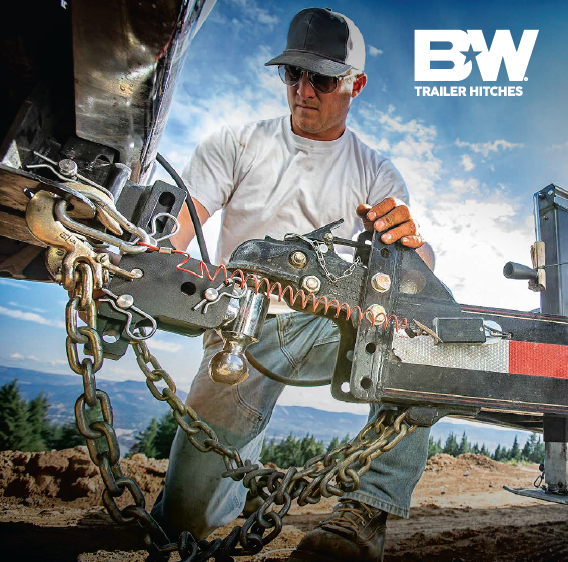
B&W Trailer Hitches is an American manufacturer known for durable, innovative towing products, including gooseneck hitches, fifth-wheel hitches, receiver hitches, and ball mounts. Built in Kansas by employee-owners, B&W products are engineered for dependable performance, easy installation, and long-lasting quality.
B&W Trailer Hitches is an American manufacturer known for building innovative, dependable towing products designed to make hitching easier and towing more comfortable. The company began in 1987 in Humboldt, Kansas, when founders Roger Baker and Joe Works combined their fabrication experience to build custom truck beds and solve common problems faced by truck owners.
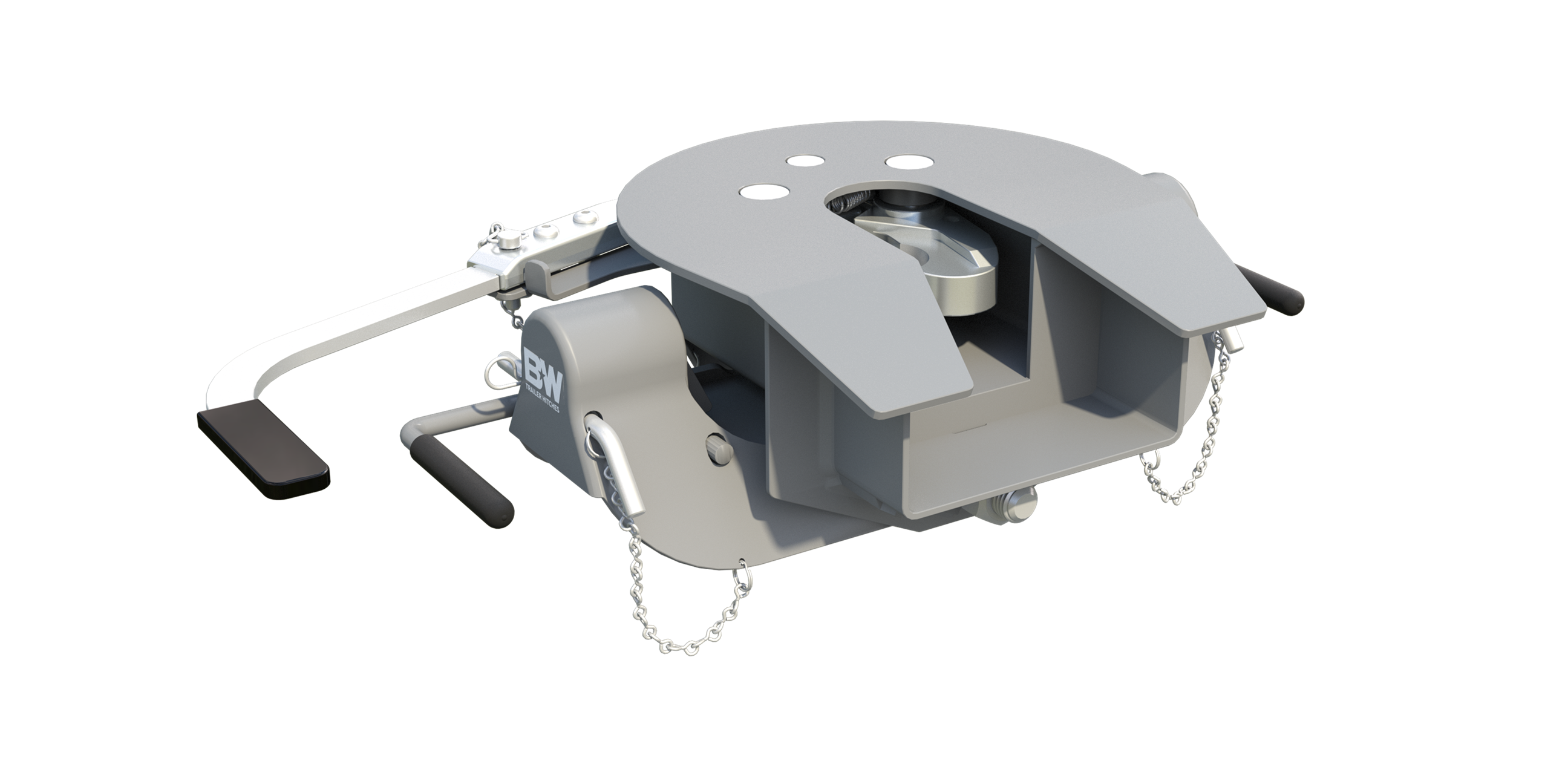
B&W changed the gooseneck hitch industry with the introduction of the Turnoverball Gooseneck Hitch. Its under-bed mounting system and reversible hitch ball allowed truck owners to quickly store the ball beneath the bed, leaving a clean and unobstructed surface when the hitch was not in use. B&W later applied the same practical approach to the Companion Fifth Wheel Hitch, creating a removable fifth-wheel hitch engineered for a quiet, smooth, and secure towing experience.
Today, B&W manufactures gooseneck hitches, fifth-wheel hitches, receiver hitches, ball mounts, and towing accessories at its nearly 600,000-square-foot facility. The company is owned by approximately 500 employee-owners who remain committed to American manufacturing, trusted materials, skilled craftsmanship, and long-lasting product quality.
Whether you are towing a work trailer, livestock trailer, camper, or fifth wheel, B&W Trailer Hitches offers thoughtfully engineered towing equipment built to perform mile after mile.
Experts available to answer your questions
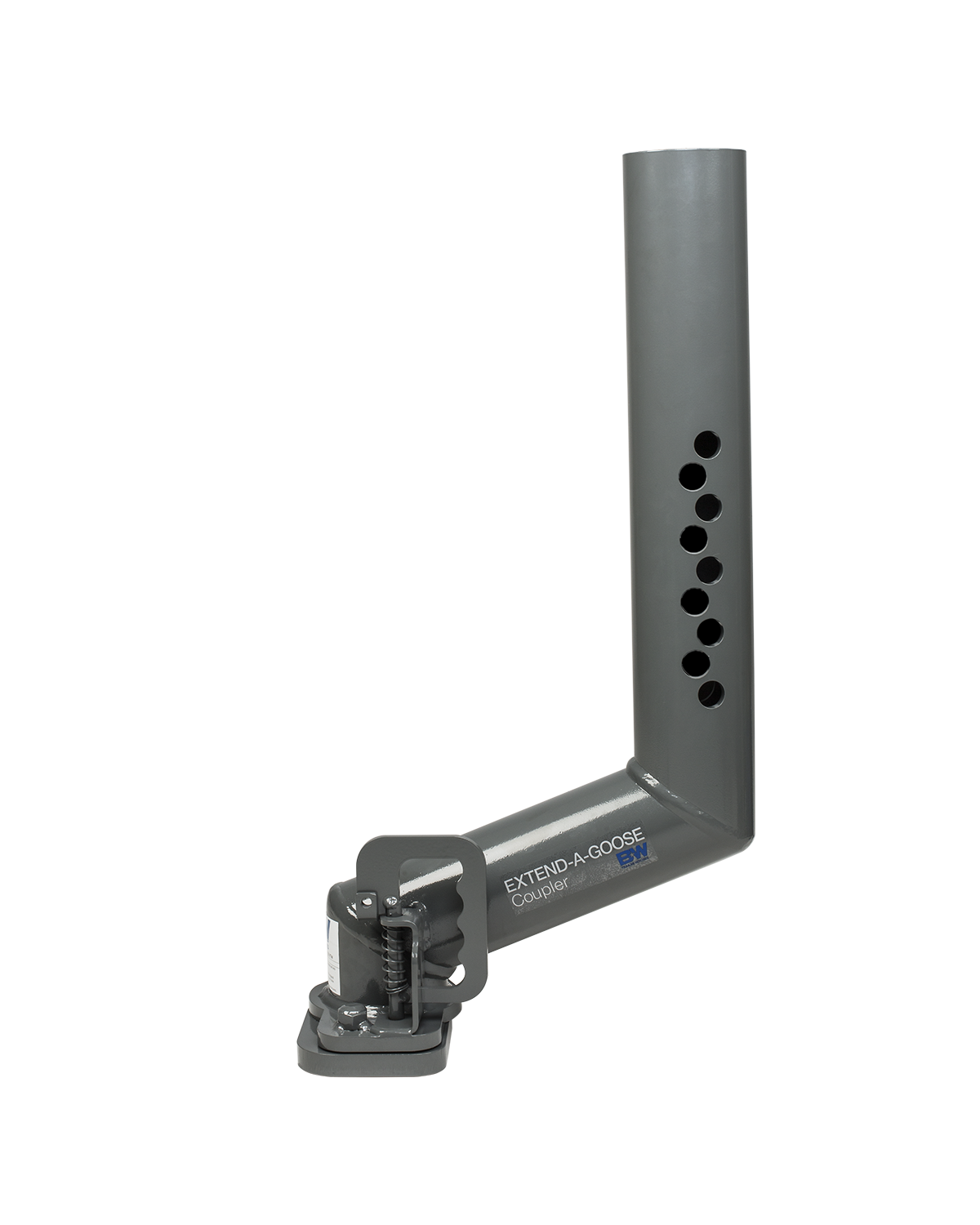
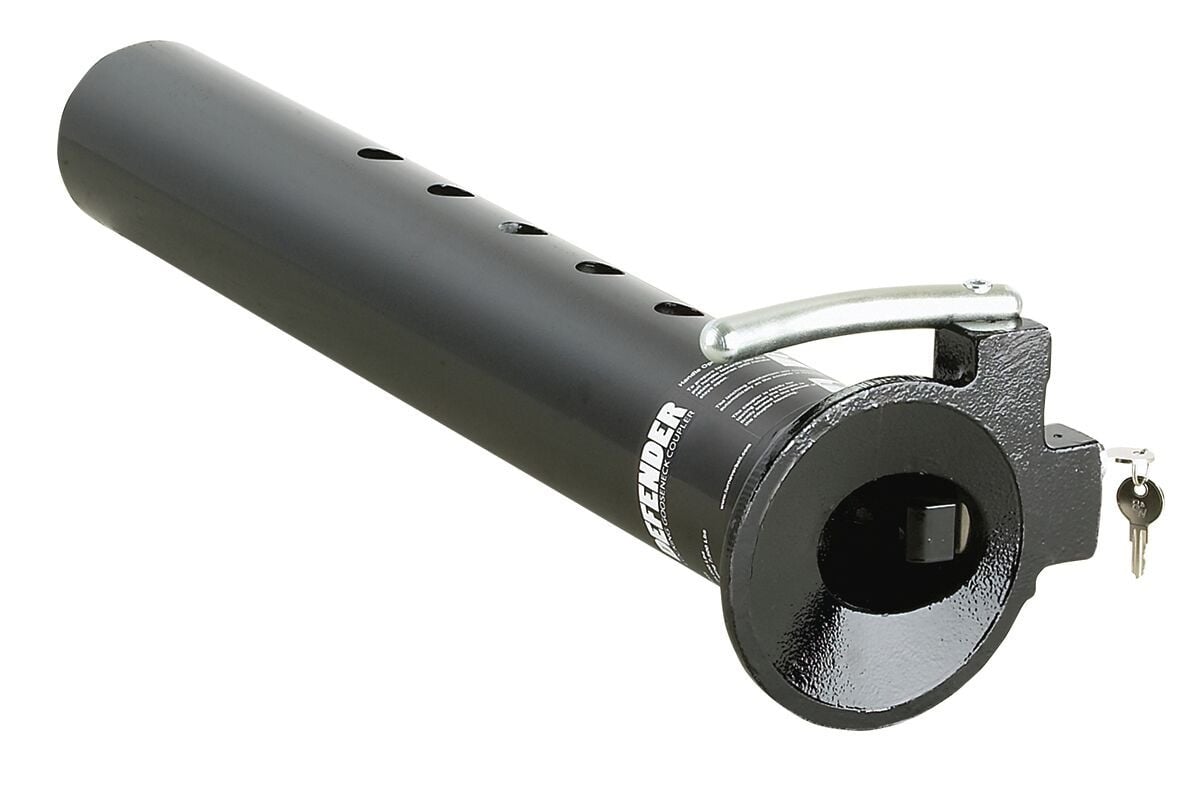
Call 888-634-9494The Extend-A-Goose is a gooseneck coupler designed to extend the reach of a gooseneck ball on a tow vehicle. It allows you to couple a gooseneck trailer to your truck by inserting the coupler tube into the trailer's 4" diameter sleeve. The coupler features a handle-operated latch mechanism that secures the ball when closed and releases it when opened.
The coupler requires an SAE 2-5/16" gooseneck ball with a diameter of 2.283 to 2.313 inches. The ball must be mounted on your tow vehicle and positioned so that its center is within 1-1/2" of the center of the coupler base when coupling.
Your trailer tongue must be equipped with a conventional 4" inside diameter round sleeve. At a minimum, the sleeve must have either one set bolt with jam nut and a through pin, or two set bolts with jam nuts. B&W recommends using a through pin if possible to prevent the coupler tube from rotating.
The coupler is designed to align with the trailer sleeve through hole at either a 75° or 90° angle with the centerline of the trailer. The coupler must be installed so that it is aligned with the centerline of the trailer and in line with the direction of travel. Do not reverse the coupler so that the trailer sleeve is forward of the ball; the ball coupler must always be closer to the truck cab than the coupler sleeve.
Two people are required for installation. One person must hold the coupler in place while the other secures it to the trailer. Failure to support the coupler properly during installation may result in minor injury or damage to the coupler.
The manual specifies that you will need a torque wrench to torque the trailer sleeve set bolts to 125 ft-lbs. If your trailer sleeve does not have a through pin hole, you will need a drill with a 7/8" bit. The manual does not list other specific tools required.
With the trailer jacks adjusted so the trailer is in its optimum towing position and the truck on level ground with the tailgate down, measure the distance between the bottom of the trailer sleeve and where the bottom of the coupler will be when coupled to the ball. Mark this position on the coupler. See Figure A5 in the manual for the measurement diagram.
B&W recommends two clearance checks: (1) Compare the measurement from the center of the 2-5/16" ball to the truck cab with the measurement from the center of the coupler to the farthest forward corner point of the trailer to determine clearance while towing and turning. (2) Check clearance between the truck bed side and the underside of the front of the trailer to allow adequate clearance for the pitch and roll of the trailer while towing.
Drilling may be required. If your trailer sleeve is not equipped with a through pin hole, you must drill a 7/8" through hole in the coupler sleeve. The manual states this should be done "if necessary," suggesting it depends on your specific trailer configuration.
No. The manual explicitly states: "Do not modify this product in any manner. Doing so could alter its integrity and lead to a loss of attachment between the trailer and the tow vehicle." The only drilling mentioned is drilling the trailer sleeve, not the coupler itself.
Torque the trailer sleeve set bolts to 125 ft-lbs. The manual warns that failure to torque set bolts to this specification could result in serious injury or death.
No more than 6" of the coupler tube should be exposed past the end of the coupler sleeve. Installing the Extend-A-Goose with more than 6" of coupler tube exposed could result in serious injury or death. See Figure A2 in the manual.
The center of the ball must be within 1-1/2" of the center of the base of the coupler when positioning the truck for coupling.
To set the coupler to the open position: (1) Grip the handle and pull straight up about 1". (2) Rotate the handle clockwise until it stops, then release. (3) Rotate the coupler bottom plate counter-clockwise until it stops. See Figure B1 in the manual.
To set the coupler to the closed position: (1) Grip the handle and rotate it counter-clockwise. (2) Rotate the coupler bottom plate clockwise until the latch pin is through the coupler bottom plate and the handle is flat against the bottom of the handle guide. See Figure B2 in the manual.
Yes. With the coupler handle in the closed position, you can use a padlock in the lock area noted in Figure B2 of the manual for added security.
Ensure the ball is fully in the coupler cavity and the handle of the coupler is in the closed position before towing. Failure to do so could result in a loss of attachment between the truck and trailer, serious injury or death.
Keep at least 6" around the coupler free from obstructions and loose objects during towing. Failure to do so could result in a loss of attachment between the truck and trailer, serious injury or death.
Yes. Always use safety chains. Failure to use safety chains could result in serious injury or death.
Do not exceed the tow or tongue rating of the coupler, the tow or tongue rating of the hitch, or the tow or weight ratings of the truck or trailer. See your vehicle and trailer manufacturer information for specific ratings. Exceeding these ratings may cause damage to towing components or loss of attachment between the trailer and truck.
Perform a visual inspection of the hitch before each time you tow. Regularly check that all pinned connections are secure and that all bolted connections are at the correct torque specification (125 ft-lbs for set bolts). Check for cracks or damage to the coupler. Do not tow with the hitch if cracks or damage outside of normal wear are found, as this could result in damage to the tow vehicle, trailer, towing components and loss of attachment.
Inspect all towing components before towing, including the hitch, coupler, trailer, and safety chain system for structural damage. Towing with damaged equipment could result in serious injury or death.
Keep the coupler clean and store it out of the weather to avoid corrosive environments and maintain peak performance. Keep your coupler operating freely by occasionally applying lubricant to the coupler and latch assembly. The Extend-A-Goose should not require extensive maintenance. If a problem persists, contact B&W Trailer Hitches for support.
Do not attempt to couple with the coupler in the closed position. Attempting to couple will prevent the coupler from accepting the ball. If coupling is attempted, the ball may appear to be coupled when it is not, and could result in serious injury or death. Always set the coupler to the open position before coupling.
Attempting to uncouple with the coupler in the closed position will prevent the coupler from releasing the ball. If uncoupling is attempted, the trailer jacks may begin to "lift" the truck, which could result in significant property damage. Always set the coupler to the open position before uncoupling.
Apply lubricant to the coupler and latch assembly to keep it operating freely. If a problem with the coupler persists after lubrication, contact B&W Trailer Hitches for support at 800.248.6564 or hitches@turnoverball.com.
The TEXA4200 requires a 4" inside diameter round trailer sleeve with at least one set bolt with jam nut and through pin, or two set bolts with jam nuts. Your tow vehicle must have an SAE 2-5/16" gooseneck ball (2.283 to 2.313" diameter). Contact B&W at 800.248.6564 to confirm compatibility with your specific trailer and truck.
You need a torque wrench to torque set bolts to 125 ft-lbs. If your trailer sleeve lacks a through pin hole, you will need a drill with a 7/8" bit. Two people are required for installation.
Drilling may be required. If your trailer sleeve does not have a through pin hole, you must drill a 7/8" hole in the coupler sleeve. This is a one-time installation step.
Torque the trailer sleeve set bolts to 125 ft-lbs. This must be done during installation and checked regularly before towing.
Ensure the ball is fully in the coupler cavity and the handle is in the closed position. Inspect the coupler, hitch, trailer and safety chains for damage. Verify all bolted connections are torqued to 125 ft-lbs and pinned connections are secure.
Keep the coupler clean and out of the weather. Occasionally apply lubricant to the coupler and latch assembly. Check all connections before each tow and retorque set bolts to 125 ft-lbs if needed.
The coupler is likely in the closed position. The coupler must be in the open position to accept the ball. To open: (1) grip the handle and pull straight up about 1", (2) rotate the handle clockwise until it stops, then release, (3) rotate the coupler bottom plate counter-clockwise until it stops. If the coupler is already open and still not accepting the ball, the ball center may not be within 1-1/2" of the coupler base center. Reposition the truck accordingly.
The coupler is likely in the closed position. The coupler must be in the open position to release the ball. To open: (1) grip the handle and pull straight up about 1", (2) rotate the handle clockwise until it stops, then release, (3) rotate the coupler bottom plate counter-clockwise until it stops. If you attempt to uncouple with the coupler in the closed position, the trailer jacks may begin to lift the truck, causing property damage.
Apply lubricant to the coupler and latch assembly to keep it operating freely. If the handle remains difficult to move after lubrication, or if any other problem with the coupler persists, contact B&W Trailer Hitches for support at 800.248.6564 or hitches@turnoverball.com.
Free Shipping
Ships free on all orders
 Authorized Dealer
Quick Ship
In stock and ready to ship — order now!
FREE ShippingFREE SHIPPING
Estimated delivery Mon, Oct 12 - Thu, Oct 15
Order before 2 PM EST Monday–Friday for same-day processing
Guaranteed safe & secure checkout
No reviews have been added for this product.