BlueOx Cover, Bx4330 Acclaim BX88156Blue OxOriginal price was $699.99. Current price is $69.04.In Stock
View productOur in-house experts typically reply within one business day.

Blue Ox

Always the correct part
We know our products
Quality Products
Free Shipping!
Always the correct part
We know our products
Quality Products
Free Shipping!

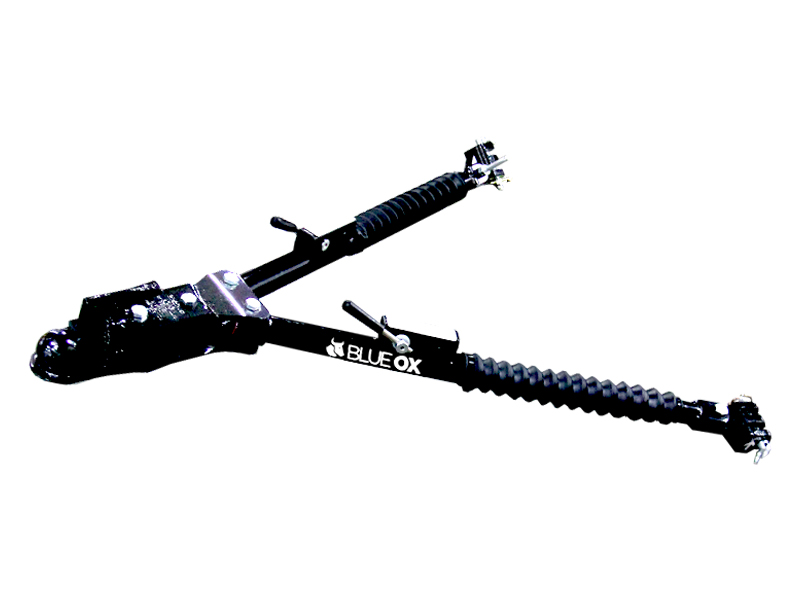
1. Superior Towing Capacity: The Blue Ox BX4330 Tow Bar has a maximum towing capacity of 5,000lbs, making it suitable for most vehicles.
Finish: Powder Coat
7340: Yes
1765: Yes
1764: 23
1763: 30
1761: 5000
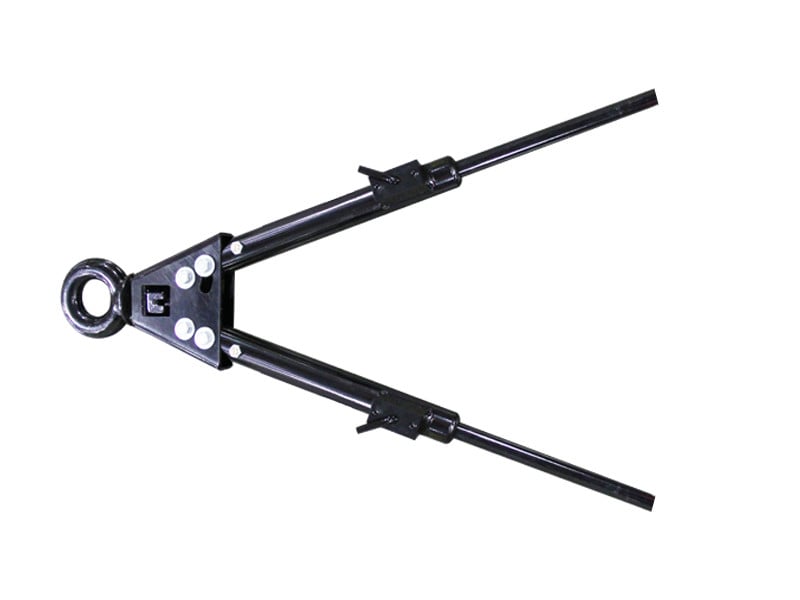
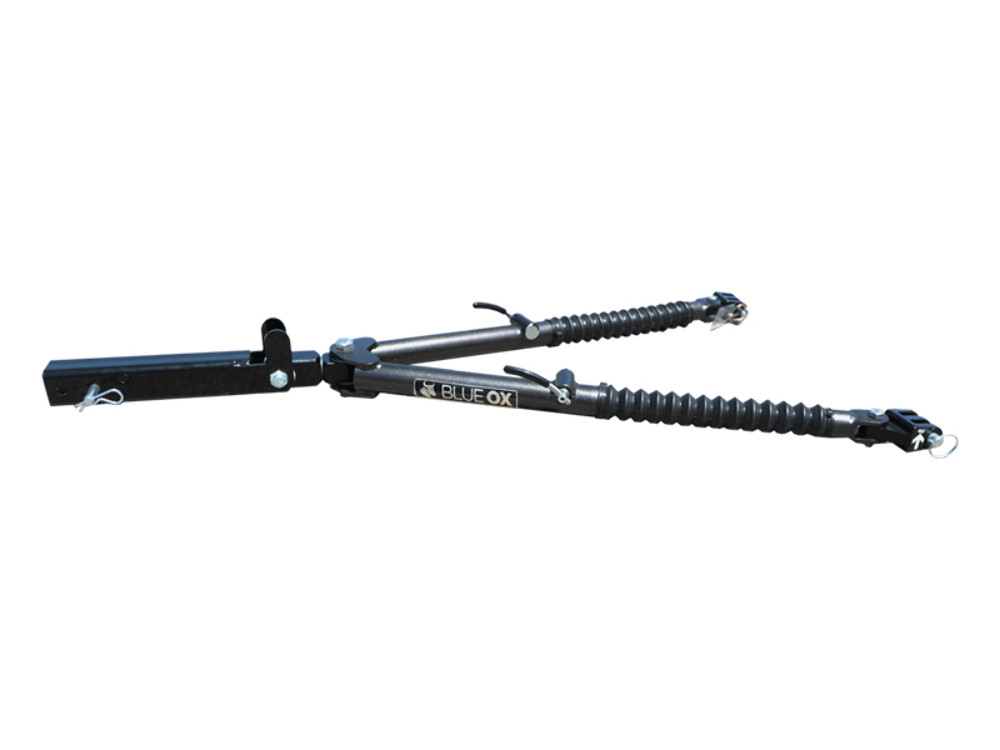
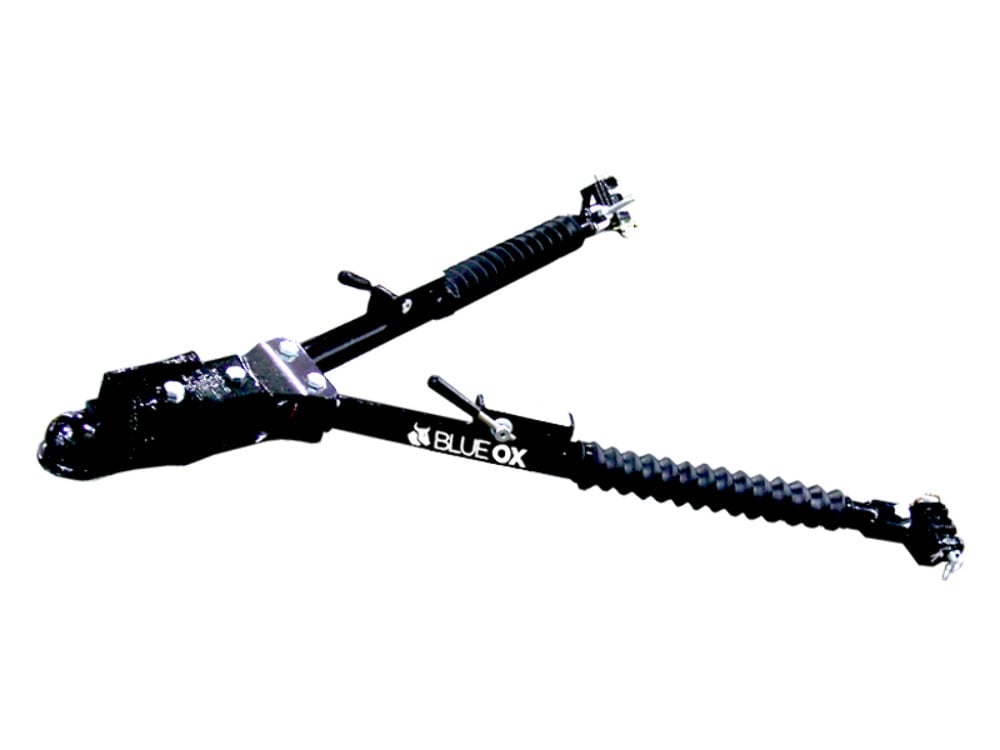
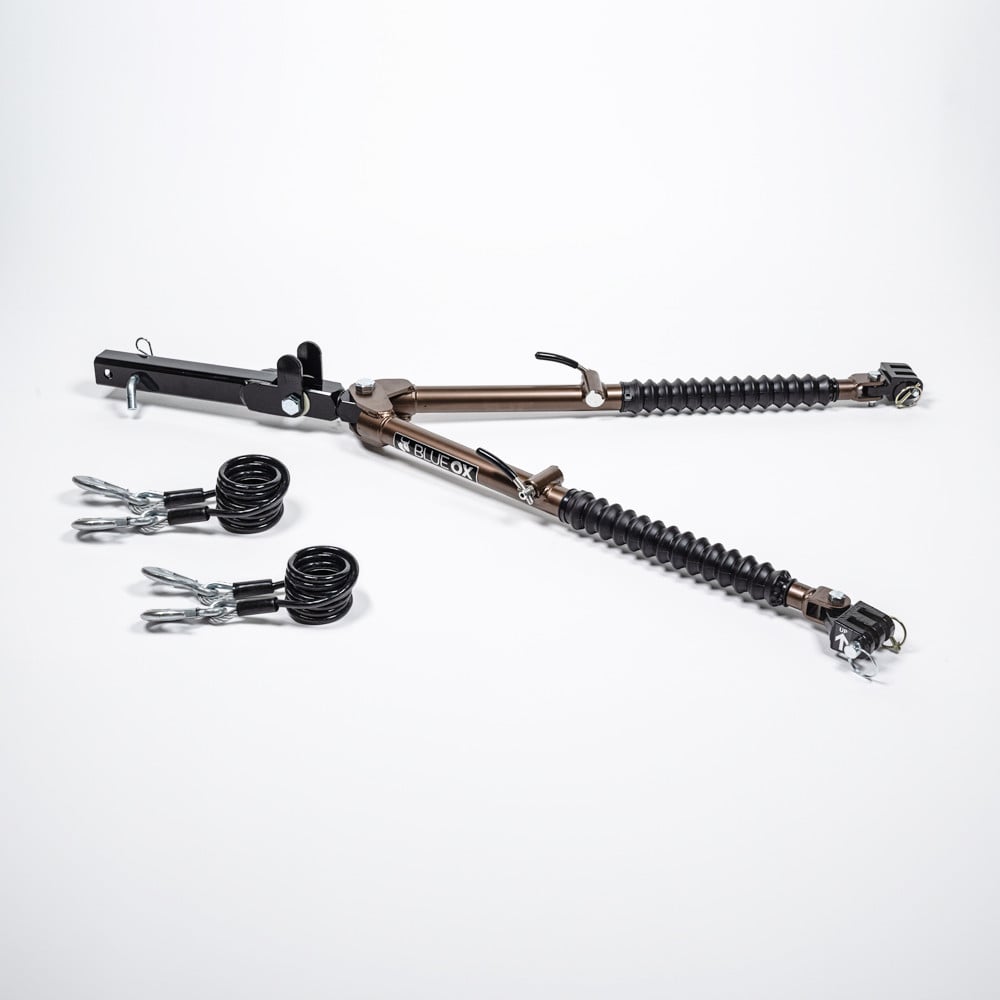
Experience worry-free towing with the Blue Ox BX4330 Tow Bar. This Class III Acclaim™ tow bar is designed to deliver superior performance and reliability. It is engineered with solid steel and finished with a durable powder coat to ensure longevity and resist corrosion. The tow bar is virtually maintenance-free, featuring Signature Series easy-release locking handles and protective rubber boots. With a towing capacity of 5,000lbs, this tow bar can handle most vehicles on the road. It requires a 2" ball for hitching. To further ensure your safety while towing, this tow bar comes with safety cables included.

Blue Ox is known internationally for recreational and commercial towing products, manufacturing in Pender, Nebraska since 1925. The line covers tow bars and vehicle-specific baseplates for flat towing behind a motorhome, sway control and weight distributing hitches, supplemental braking accessories and towing wiring, backed by patented designs and long-standing customer service.
Blue Ox has manufactured since 1925 and is recognised internationally for towing products and customer service. The company operates from Pender, Nebraska, where it grew out of Automatic Manufacturing Co., a business that started with cattle oilers and developed into agricultural equipment, tractor accessories and trailer towing hardware. That agricultural engineering heritage still shows in how the towing products are built, and the company holds patents across weight distribution, fifth wheel and tow bar designs.
Flat towing is the discipline Blue Ox is best known for. Towing a car with all four wheels on the ground behind a motorhome demands a system that stays rigid under braking, articulates properly over uneven ground, and connects to the towed vehicle at points strong enough to take the load. Blue Ox tow bars handle the first two, with self-aligning arms that latch under tension and release without a struggle when the load is off them. Vehicle-specific baseplates handle the third, engineered per make and model to tie into structural mounting points behind the fascia.
The wider flat towing range covers supplemental braking systems, safety cables and the accessories that make a complete legal setup, along with baseplate wiring and dinghy towing harnesses that pass lighting signals to the towed vehicle without back-feeding its electrical system.
For conventional trailer towing, Blue Ox weight distributing hitches with integrated sway control transfer tongue load onto the tow vehicle's front axle and resist the yaw that crosswinds and passing trucks induce.
The company describes its foundation as customer service, designing around what owners actually ask for, and it runs an RV park adjacent to the factory where customers can stay. Sister operations at the same Nebraska site include Automatic grain roller mills and MAD-RAMPS pivoting ramp systems.
Experts available to answer your questions
Call 888-634-94943 Years
The BX4330 Acclaim tow bar has a 5,000 lb towing capacity and is designed for use with a 2 inch or 50MM coupler on the towing vehicle receiver hitch.
The Acclaim tow bar will only fit on baseplates with a tab width between 23" and 30". This applies both during towing and when the tow bar is in storage position.
Yes. The BX4330 coupler couples to a 2 inch or 50MM ball on the towing vehicle receiver hitch.
Yes. The steering wheel on the towed vehicle must be unlocked at all times while being towed. Failure to do so will create hazardous driving conditions.
Yes. Safety cables or chains are required by law in most states of the United States as well as Canadian territories and provinces. Blue Ox strongly recommends using safety cables (BX88196 Class III, BX88197 Class IV) or permanent safety cables (BX88207 Class III, BX88208 Class IV) with all towing applications. Refer to the specific installation instructions for those cables for more information.
No. Do not back up while vehicles are connected. Damage to both vehicles and the towing system may occur. The towed vehicle may jackknife, causing abnormal stress to the tow bar, car chassis, baseplate, and/or pintle hitch of the towing vehicle. Disconnect the towed vehicle from the towing vehicle before backing up.
If the tow bar is in an accident, it must be replaced. Do not use it again. An accident can cause unseen damage, and using it again could result in more damage or serious injury. Do not use the tow bar if it is damaged or missing parts.
The tow bar coupler must be parallel to the ground. The height from the center of the ball to the center line of the attachment tabs should be approximately 7". If the tow bar coupler is at an angle, an accident or damage can occur. The use of a drop/rise receiver is recommended to ensure the coupler stays parallel to the ground.
1. Position the towing vehicle on a level surface with a straight driveway ahead and engage the parking brake. Position the towed vehicle behind in the approximate towing position. 2. Couple the tow bar to the 2" or 50MM ball on the towing vehicle receiver hitch. Install the coupler pin or padlock through the coupler lever to secure in place. Adjust the coupler if needed to ensure firm contact between ball and coupler ball clamp. 3. Partially extend one leg. Place the triple lug between the attachment tabs on the baseplate and secure with the 1/2" pin and quick pin. Ensure the 1/2" pin is installed correctly through the attachment tab with the nose towards the middle of the baseplate. Repeat for both legs. 4. On the towed vehicle, disengage the parking brake and set up the transmission for towing and unlock the steering wheel. Pull forward with the towing vehicle until one or both locking handles are engaged and locked (they will "pop" up). If only one locking handle is locked, turn the towed vehicle's steering wheel towards the unlocked tow bar leg approximately 1/2 to 3/4 turn before continuing forward. Drive the towing vehicle forward until the second leg locks into place.
Both legs must be latched properly and pins must be secured properly before towing. When properly installed, the quick pin ring will snap back onto itself, and the chamfered side will be facing outwards. Both locking handles should be locked (they will "pop" up when engaged).
Each leg is secured to the baseplate attachment tabs using a 1/2" pin (part 229-0520) and a quick pin (part 62-3213). The 1/2" pin must be installed correctly through the attachment tab with the nose towards the middle of the baseplate.
1. Using the hooks, attach the cables to a solid part of the chassis on the towed vehicle or the convenience links of the baseplate in a crossing pattern underneath the tow bar. 2. Verify the safety snap clicks back against the hook to prevent disconnection. 3. Adjust slack if needed. Cables should not come in contact with the ground, pintle coupler, or the locking handles, as damage could occur. Route cables away from the locking handles. Safety cable contact with a locking handle could cause the leg to become unlatched and collapse, leading to major damage to one or both vehicles and towing equipment. Do not wrap safety cables around the legs. 4. Verify the load capacity of cables or chains used meets the needs of the towing setup.
1. Park the towing vehicle with vehicle in tow in a straight line on a level surface to ensure minimum pressure is exerted on the tow bar legs. Engage the towing vehicle parking brake. Place the towed vehicle either in park for automatic transmissions or securely in first gear for manual transmissions. Unhook the lighting and safety cables. 2. Disengage the leg latches by pushing down on the locking handles. Uncouple the tow bar from the receiver ball. On the driver side, remove the quick pin and 1/2" pin attaching the triple lug to the attachment tab. You may need to tap the 1/2" pin out if there is still pressure on it. Rotate the driver side leg over onto the passenger side leg. 3. Align the driver side triple lug onto the holding pin of the passenger side leg. Secure the lug to the pin with the provided hair pin clip. 4. Swing the coupler head towards the driver side attachment tab of the baseplate. 5. Attach the coupler head bracket to the baseplate attachment tab with the 1/2" pin and quick pin.
Using a 3/4" socket, tighten or loosen the lock nut until there is firm contact between the ball and ball clamp. Periodically check the tension between the ball and coupler housing and tighten if needed. Lightly grease the ball.
The tow bar requires periodic maintenance. Keep it covered when not in use to reduce dust and dirt buildup. Periodically clean the entire surface with a mild soap and water solution and wipe dry. Check and replace any loose, worn, or damaged bolts, rubber boots, or cap plugs. Check for cracked welds and loose bolts on the baseplate of the towed vehicle and the hitch on the towing vehicle. Approximately once per year, or if it is difficult to move the legs in and out, remove the small cable ties holding the rubber boots on the legs, slide the boots back, wipe clean each inside leg, apply a light coat of multipurpose grease to ensure smooth operation, and secure each boot back in place with an 8" nylon cable tie.
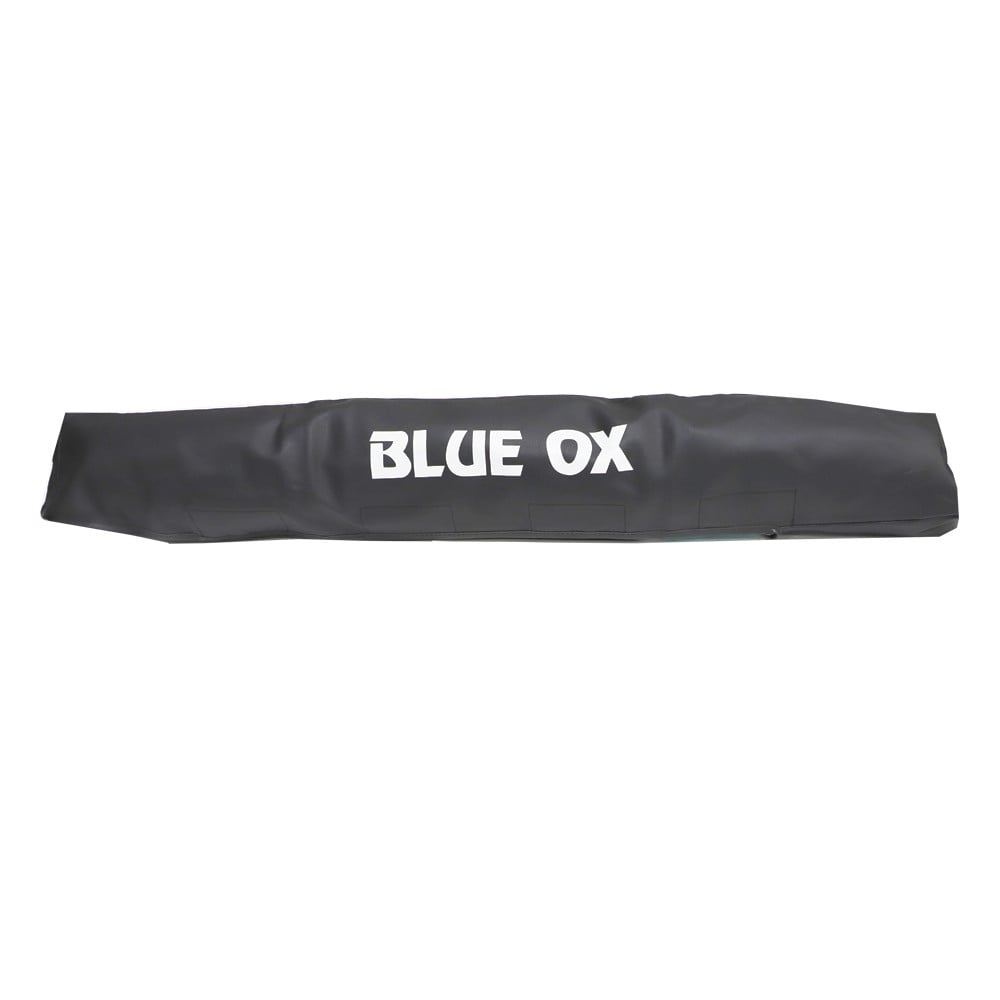
A BX88156 tow bar cover is recommended to keep the tow bar covered when not in use, on or off the towing vehicle. This will cut down on dust and dirt buildup on the legs and latches.
Apply a light coat of multipurpose grease to the inside legs to ensure smooth operation. This should be done approximately once per year or if it is difficult to move the legs in and out.
Replacement parts include: Leg Assembly Driver Side (84-0236), Leg Assembly Passenger Side (84-0237), Offset Triple Lug (299-0736, qty 2), 1/2" Pin (229-0520, qty 2), Quick Pin (62-3213, qty 2), 1/2"-13 x 2" Hex Head Bolt (201-0645, qty 2), 1/2"-13 Essna Jam Nut ZP (202-0143, qty 2). Additional kits available: Tow Bar Washer Replacement Kit (BX88382), Tow Bar Rubber Boot Kit (BX88384, qty 2). Use only genuine factory replacement parts. If a bolt is lost or needs replacement, use a replacement bolt of the same grade (typically Grade 5).
A 3/4" socket is required to tighten or loosen the lock nut for coupler fit adjustment.
Yes. Optional adjustable ball mounts are available: BXH10141 (2" Receiver, 4" Drop/Rise, 10K Rated), BXH10171 (2" Receiver, 7" Drop/Rise, 10K Rated), BXH12241 (2-1/2" Receiver, 4" Drop/Rise, 12K Rated), BXH12271 (2-1/2" Receiver, 7" Drop/Rise, 12K Rated). These are recommended to ensure the coupler stays parallel to the ground.
Prior to usage, inspect all towing equipment for cracked welds, missing or worn parts, and loose bolts. Check clearance between vehicles in all turning situations. Check the height difference in your towing setup and make appropriate adjustments by following the recommendations of the tow bar instruction manual. Ensure that your towing vehicle is of adequate size to properly control your towed vehicle. The weight and braking capacity should be large enough to handle both vehicles in an emergency situation. Check your towing vehicle manufacturer's recommendations for towing, hitch load, and braking capacities. The hitch, ball, motorhome chassis, and safety cables (each individual cable) need to be rated at a minimum for the weight of the vehicle being towed.
Be sure the front end of the towed vehicle is properly aligned. Misaligned vehicles may cause poor tracking or abnormal wear on the tires.
Yes. Rear lighting is required on the towed vehicle. Blue Ox offers lighting kits to cover all of your lighting needs. Contact your Blue Ox representative for more information.
Do not use the tow bar if it is damaged or missing parts. If the tow bar is in an accident, it must be replaced. Do not use it again, as an accident can cause unseen damage and using it again could result in more damage or serious injury.
No. Do not use the towed vehicle for storing luggage or other items, which may cause you to exceed the towing capacity of the tow bar, baseplate, and its accessories.
Check your towing setup after any emergency situation and/or periodically on a long trip. Avoid sharp turns and rough terrain.
The BX4330 only fits baseplates with tab widths between 23" and 30". Measure your baseplate attachment tabs to confirm compatibility.
The BX4330 couples to a 2 inch or 50MM ball on the towing vehicle receiver hitch.
Yes. Safety cables or chains are required by law in most US states and Canadian territories/provinces. Blue Ox recommends Class III (BX88196, BX88207) or Class IV (BX88197, BX88208) safety cables.
The coupler must be parallel to the ground with approximately 7" height from the center of the ball to the center line of the attachment tabs. Use a drop/rise receiver if needed to maintain this height.
A 3/4" socket is required to tighten or loosen the lock nut for coupler fit adjustment.
Approximately once per year, or if it is difficult to move the legs in and out, apply a light coat of multipurpose grease to the inside legs after removing and sliding back the rubber boots.
Yes. The steering wheel must remain unlocked at all times while towing. Failure to do so will create hazardous driving conditions.
You may need to tap the 1/2" pin out if there is still pressure on it. This is normal when the tow bar is under load. Park the towing vehicle with vehicle in tow in a straight line on a level surface to ensure minimum pressure is exerted on the tow bar legs, which will aid in the removal of the 1/2" pins.
Using a 3/4" socket, tighten the lock nut until there is firm contact between the ball and ball clamp. If needed, adjust the coupler to ensure the ball and the coupler ball clamp are making firm contact. Periodically check the tension between the ball and coupler housing and tighten if needed.
Approximately once per year, or if it is difficult to move the legs in and out, remove the small cable ties holding the rubber boots on the legs and slide the boots back. Wipe clean each inside leg and apply a light coat of multipurpose grease to ensure smooth operation. Secure each boot back in place with an 8" nylon cable tie.
If the tow bar coupler is at an angle, an accident or damage can occur. The coupler must be parallel to the ground with approximately 7" height from the center of the ball to the center line of the attachment tabs. The use of a drop/rise receiver is recommended to ensure the coupler stays parallel to the ground.
On Sale Today
Original price was $699.99. Current price is $660.11.You save $39.88 (6%)
Free Shipping
Ships free on all orders
 Authorized Dealer
Quick Ship
In stock and ready to ship — order now!
FREE ShippingFREE SHIPPING
Estimated delivery Tue, Sep 22 - Fri, Sep 25
Order before 2 PM EST Monday–Friday for same-day processing
Guaranteed safe & secure checkout
Total for 1 item:
$660.11$699.99
No reviews have been added for this product.