

BlueOx Tow Bar Base Plate, Front Mount, RV Flat Towing for Select, NISSAN PICKUP (4WD) E13Blue OxOriginal price was $699.99. Current price is $639.00.In Stock
View productOur in-house experts typically reply within one business day.

Blue Ox
Verify Fitment
Select your vehicle to confirm this part fits.
1996 Chevrolet Blazer
Confirmed to Fit
1995, 1997 Chevrolet Blazer
Confirmed to Fit
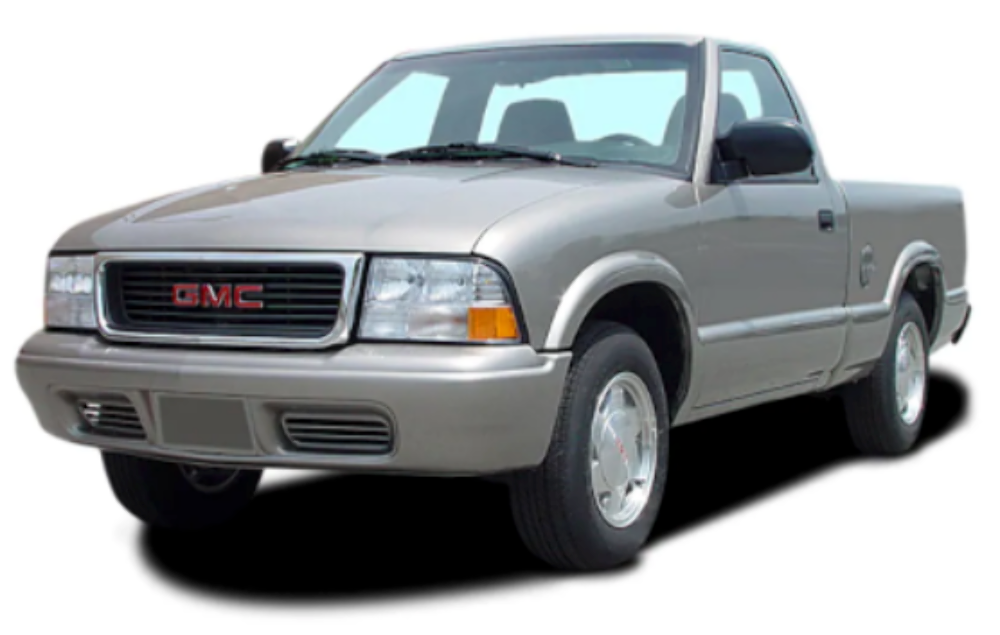
1995 - 2004 Chevrolet S10
Confirmed to Fit
1997, 2000 - 2001 GMC Jimmy
Confirmed to Fit
1995 - 2001 GMC Jimmy
Confirmed to Fit
1996 - 1997, 2000, 2002 - 2004 GMC Sonoma
Confirmed to Fit
1998 GMC Sonoma
Confirmed to Fit
1994 - 1995, 1999, 2001 GMC Sonoma
Confirmed to Fit
1996 - 1997 Oldsmobile Bravada
Confirmed to Fit

Always the correct part
We know our products
Quality Products
Free Shipping!
Always the correct part
We know our products
Quality Products
Free Shipping!

{'feature': 'Custom Design', 'description': 'Each Blue Ox BX1616 Tow Bar Bracket is specifically designed for each individual vehicle model, ensuring a perfect fit and flawless performance.
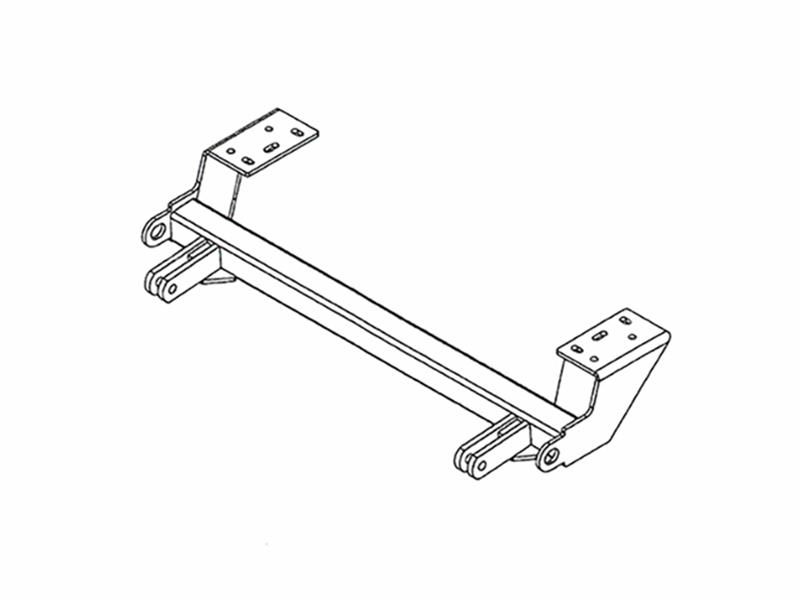
Material: Steel
Color: Black
Finish: Powder Coat
Mounting Type: Bolt On
Mounting Hardware Included Yes/No: Yes
The Blue Ox BX1616 Tow Bar Bracket is a custom-designed towing solution that ensures a perfect fit for your specific vehicle. Expertly engineered from robust steel material for enhanced durability, this tow bar bracket boasts a sleek black finish achieved through a resilient powder coating process. This ensures superior resistance against wear and tear, enhancing its lifespan. This bracket is easy to mount, thanks to its bolt-on design, and comes complete with all necessary mounting hardware for a hassle-free, do-it-yourself installation.

Blue Ox is known internationally for recreational and commercial towing products, manufacturing in Pender, Nebraska since 1925. The line covers tow bars and vehicle-specific baseplates for flat towing behind a motorhome, sway control and weight distributing hitches, supplemental braking accessories and towing wiring, backed by patented designs and long-standing customer service.
Blue Ox has manufactured since 1925 and is recognised internationally for towing products and customer service. The company operates from Pender, Nebraska, where it grew out of Automatic Manufacturing Co., a business that started with cattle oilers and developed into agricultural equipment, tractor accessories and trailer towing hardware. That agricultural engineering heritage still shows in how the towing products are built, and the company holds patents across weight distribution, fifth wheel and tow bar designs.
Flat towing is the discipline Blue Ox is best known for. Towing a car with all four wheels on the ground behind a motorhome demands a system that stays rigid under braking, articulates properly over uneven ground, and connects to the towed vehicle at points strong enough to take the load. Blue Ox tow bars handle the first two, with self-aligning arms that latch under tension and release without a struggle when the load is off them. Vehicle-specific baseplates handle the third, engineered per make and model to tie into structural mounting points behind the fascia.
The wider flat towing range covers supplemental braking systems, safety cables and the accessories that make a complete legal setup, along with baseplate wiring and dinghy towing harnesses that pass lighting signals to the towed vehicle without back-feeding its electrical system.
For conventional trailer towing, Blue Ox weight distributing hitches with integrated sway control transfer tongue load onto the tow vehicle's front axle and resist the yaw that crosswinds and passing trucks induce.
The company describes its foundation as customer service, designing around what owners actually ask for, and it runs an RV park adjacent to the factory where customers can stay. Sister operations at the same Nebraska site include Automatic grain roller mills and MAD-RAMPS pivoting ramp systems.
Experts available to answer your questions
Call 888-634-94943 Years
9 compatible vehicles
| Year | Make & Model | Notes |
|---|---|---|
| 1996 | Chevrolet Blazer | Belly Pan and Tow Hooks Must be Removed and Remain off the Vehicle After Installation Install Rating 2 Comes with Standard Attachment Tabs |
| 1995, 1997 | Chevrolet Blazer | Comes with Standard Attachment Tabs Install Rating 2 Belly Pan and Tow Hooks Must be Removed and Remain off the Vehicle After Installation |
| 1995 - 2004 | Chevrolet S10 | Comes with Standard Attachment Tabs Install Rating 2 Belly Pan and Tow Hooks Must be Removed and Remain off the Vehicle After Installation |
| 1997, 2000 - 2001 | GMC Jimmy | Belly Pan and Tow Hooks Must be Removed and Remain off the Vehicle After Installation Install Rating 2 Comes with Standard Attachment Tabs |
| 1995 - 2001 | GMC Jimmy | Comes with Standard Attachment Tabs Install Rating 2 Belly Pan and Tow Hooks Must be Removed and Remain off the Vehicle After Installation |
| 1996 - 1997, 2000, 2002 - 2004 | GMC Sonoma | Belly Pan and Tow Hooks Must be Removed and Remain off the Vehicle After Installation Install Rating 2 Comes with Standard Attachment Tabs |
| 1998 | GMC Sonoma | Comes with Standard Attachment Tabs Belly Pan and Tow Hooks Must be Removed and Remain off the Vehicle After Installation Install Rating 2 |
| 1994 - 1995, 1999, 2001 | GMC Sonoma | Comes with Standard Attachment Tabs Install Rating 2 Belly Pan and Tow Hooks Must be Removed and Remain off the Vehicle After Installation |
| 1996 - 1997 | Oldsmobile Bravada | Comes with Standard Attachment Tabs Install Rating 2 Belly Pan and Tow Hooks Must be Removed and Remain off the Vehicle After Installation |
Yes, the BX1616 baseplate is designed for 1994–04 Chevrolet S-10 Pickup 4WD models. It is also compatible with 1995–97 Chevrolet S-10 Blazer 4WD, 1994–03 GMC Sonoma Pickup 4WD, 1995–01 GMC S-15 Jimmy 4WD, and 1998–01 GMC Envoy. Confirm your vehicle's year and model before purchasing.
No. The BX1616 is designed exclusively for 4WD models. The manual specifies 1994–04 Chevrolet S-10 Pickup 4WD, 1995–97 Chevrolet S-10 Blazer 4WD, 1994–03 GMC Sonoma Pickup 4WD, 1995–01 GMC S-15 Jimmy 4WD, and 1998–01 GMC Envoy. Two-wheel-drive variants are not listed as compatible.
You will need: 17mm socket, 15mm socket, drill, 1/2" drill bit, Locktite Blue, and a 6" extension for metric sockets. A socket wrench or ratchet to drive the sockets is also required but not explicitly listed.
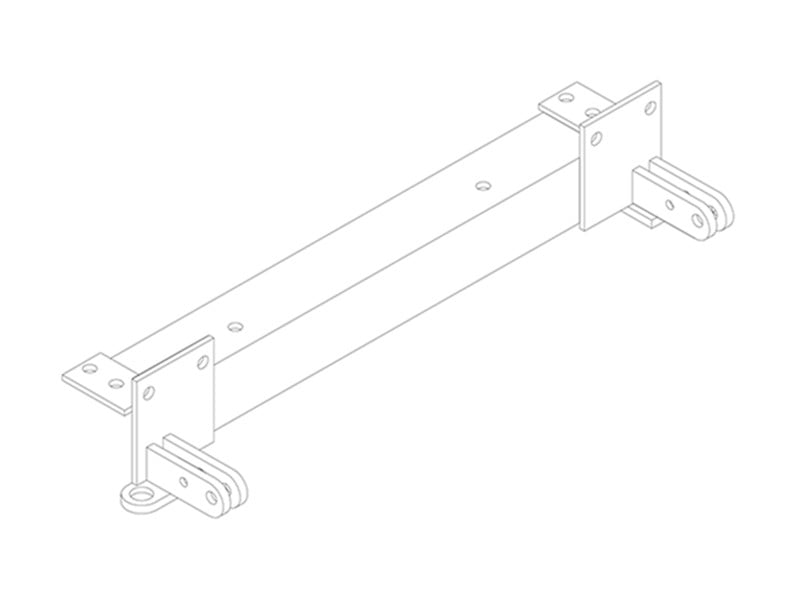
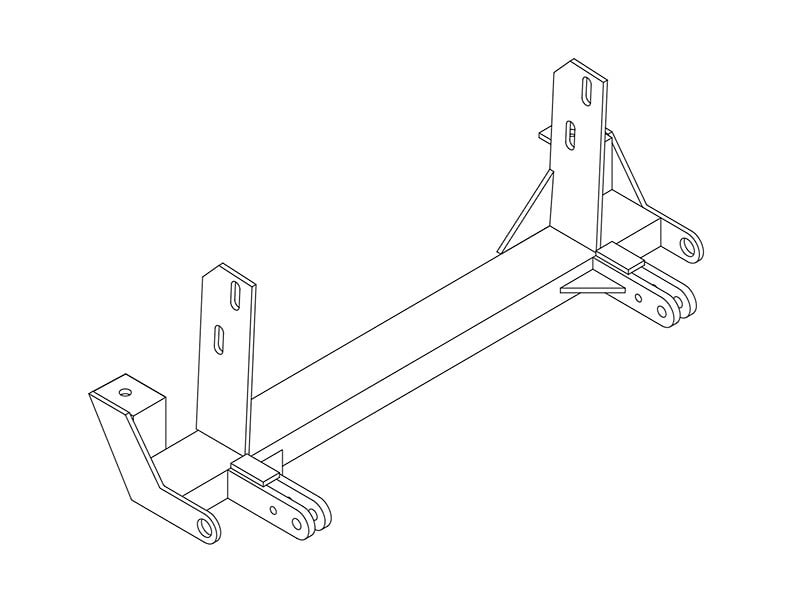
The baseplate package includes: one baseplate weldment (61-4358), two 10mm-1.5 bolt plates (61-4363), four 10mm-1.5 × 50mm hex bolts Grade 8.8 (201-0428), eight 10mm-1.5 hex nuts (202-0111), sixteen 10mm flat washers (203-0103), and twelve 10mm lock washers (203-0104). All fasteners needed for baseplate installation are provided.
Yes. The installation requires removing the plastic belly pan and the vehicle's tow hooks. The belly pan is reattached after the baseplate is secured. Six bolts hold the belly pan to the frame; only the two rear bolts are reused.
Yes. Four bolts attach the two tow hooks to the frame and must be removed. After the baseplate is installed, the tow hooks are reattached using new 10mm-1.5 × 50mm hex bolts provided with the baseplate package.
Yes. You must drill out four threaded holes using a 1/2" drill bit. These are the front two inside sets of holes that originally held the plastic belly pan. The holes are drilled to accept the welded bolts from the bolt plates inserted into the frame tubing.
You need a 1/2" drill bit. This is used to drill out the four threaded holes in the frame that originally held the plastic belly pan.
Insert the welded bolt plate from the front of the vehicle into the same frame tubing where the tow hooks were removed. Ensure the bolts are pointing downward before insertion. The two welded bolts should fall into the two drilled holes. Install one bolt plate on each side of the vehicle.
No. After positioning the baseplate over the four bolts and starting a flat washer, lock washer, and hex nut on each bolt, do not tighten the nuts at this time. Tighten only after all four bolts and all four nuts have been started and the tow hooks have been reattached.
1. Drill the four threaded holes. 2. Insert the welded bolt plates into the frame tubing from the front, bolts pointing down. 3. Position the baseplate over the four bolts. 4. Start a flat washer, lock washer, and hex nut on each bolt (do not tighten). 5. Reattach the tow hooks using the new 10mm-1.5 × 50mm hex bolts. 6. Tighten all four baseplate bolts and all four nuts. 7. Reattach the belly pan.
Use the 10mm-1.5 × 50mm hex bolts provided with the baseplate package. Include a lock washer and a flat washer against the head of each bolt. Apply Locktite Blue to the bolt before installing. The bolts pass through the outside holes on the baseplate end mounts, through the frame, and screw into the tow hook. Reattach in the same position as before.
Place a flat washer over the four front holes on the top side of the belly pan. Position the pan over the bolts so that the four flat washers are below the four nuts used to secure the baseplate. Secure the belly pan using four additional flat washers, lock washers, and hex nuts, plus the two original bolts. Locktite is not necessary for the belly pan.
Yes. Apply Locktite Blue to the welded bolts before starting the flat washer, lock washer, and hex nut on each bolt. Also apply Locktite Blue to the 10mm-1.5 × 50mm hex bolts used to reattach the tow hooks. Locktite is not necessary when reattaching the belly pan.
The manual notes that dimensional variations between otherwise identical vehicles can be considerable. If necessary, file a hole slightly to allow a bolt to clear. This is a normal part of the installation process.
Permanent baseplate safety cables are strongly recommended when towing a vehicle with a tow bar. They prevent the towed vehicle from breaking loose if the connection between the frame and baseplate fails. The cables must connect from the baseplate to the frame rail or cross member. Safety cables are not a replacement for legally required safety cables attaching the towed vehicle to the towing vehicle.
The cables must be connected from the baseplate to the frame rail or cross member of the vehicle's frame. Do not mount the permanent baseplate safety cables against wires, hoses or brake lines. The manual references illustrations showing possible recommended arrangements, but specific routing details are not provided in the text.
Inspect all towing equipment for cracked welds, missing or worn parts, and loose bolts before each towing trip. Ensure all bolts are tightened to the recommended specifications and use Loctite Red on all bolts. Hook up all towing equipment per manufacturer's instructions.
Each permanent baseplate safety cable must have an adequate weight rating for the towing system. The manual does not specify the weight rating; consult the safety cable documentation or contact the manufacturer for the correct rating for your towing application.
No. Permanent baseplate safety cables are to be used in conjunction with, and not as a replacement for, legally required safety cables attaching the towed vehicle to the towing vehicle.
If the baseplate is improperly installed and is against a wire or hose, it could cause fluid leaks or electrical shorts some time after the actual baseplate installation. The installer must watch for oil cooler and air conditioner lines, electrical wires and hoses, and ensure the baseplate does not contact them.
Yes. Register your product online at www.blueox.com. Registration is crucial so you may be alerted of product offerings, updates, upgrades, maintenance and safety bulletins, and/or recalls.
Remove the attachment tabs when not in use, if applicable. The manual does not provide further detail on which tabs or how to remove them.
Do not substitute other devices if the tow bar pin and clip are lost. Obtain replacement parts from the manufacturer or an authorized dealer.
The BX1616 fits 1994–04 Chevrolet S-10 Pickup 4WD, 1995–97 S-10 Blazer 4WD, 1994–03 GMC Sonoma Pickup 4WD, 1995–01 GMC S-15 Jimmy 4WD, and 1998–01 GMC Envoy. It is not compatible with 2WD models.
Tools: 17mm socket, 15mm socket, drill, 1/2" bit, Locktite Blue, and 6" metric socket extension. All fasteners are included: baseplate, two bolt plates, four hex bolts, eight hex nuts, sixteen flat washers, and twelve lock washers.
Yes. Both must be removed. The belly pan is reattached after baseplate installation using the original rear bolts plus new hardware. Tow hooks are reattached using new 10mm-1.5 × 50mm bolts provided.
Yes. You must drill out four threaded holes using a 1/2" drill bit. These holes originally held the plastic belly pan.
No. Start all bolts first, then tighten only after all four baseplate bolts and all four tow hook bolts have been started.
Permanent baseplate safety cables are strongly recommended. They must connect from the baseplate to the frame rail or cross member and must not contact wires, hoses, or brake lines.
Inspect all towing equipment for cracked welds, missing or worn parts, and loose bolts. Ensure all bolts are tightened to recommended specifications.
No reviews have been added for this product.
On Sale Today
Original price was $699.99. Current price is $609.00.You save $90.99 (13%)
Free Shipping
Ships free on all orders
 Authorized Dealer

Quick Ship
In stock and ready to ship — order now!
FREE ShippingFREE SHIPPING
Estimated delivery Wed, Sep 23 - Sat, Sep 26
Order before 2 PM EST Monday–Friday for same-day processing
Guaranteed safe & secure checkout