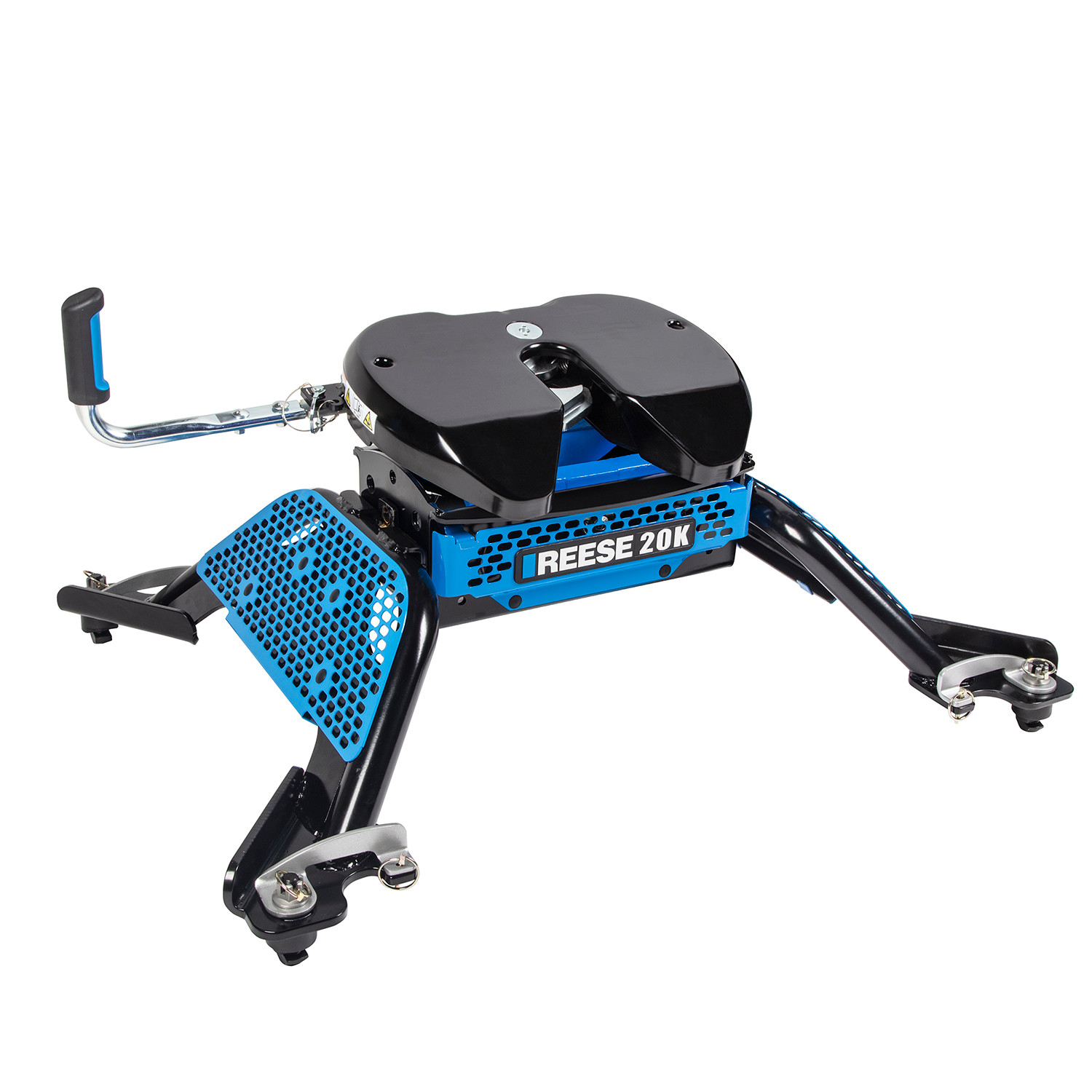
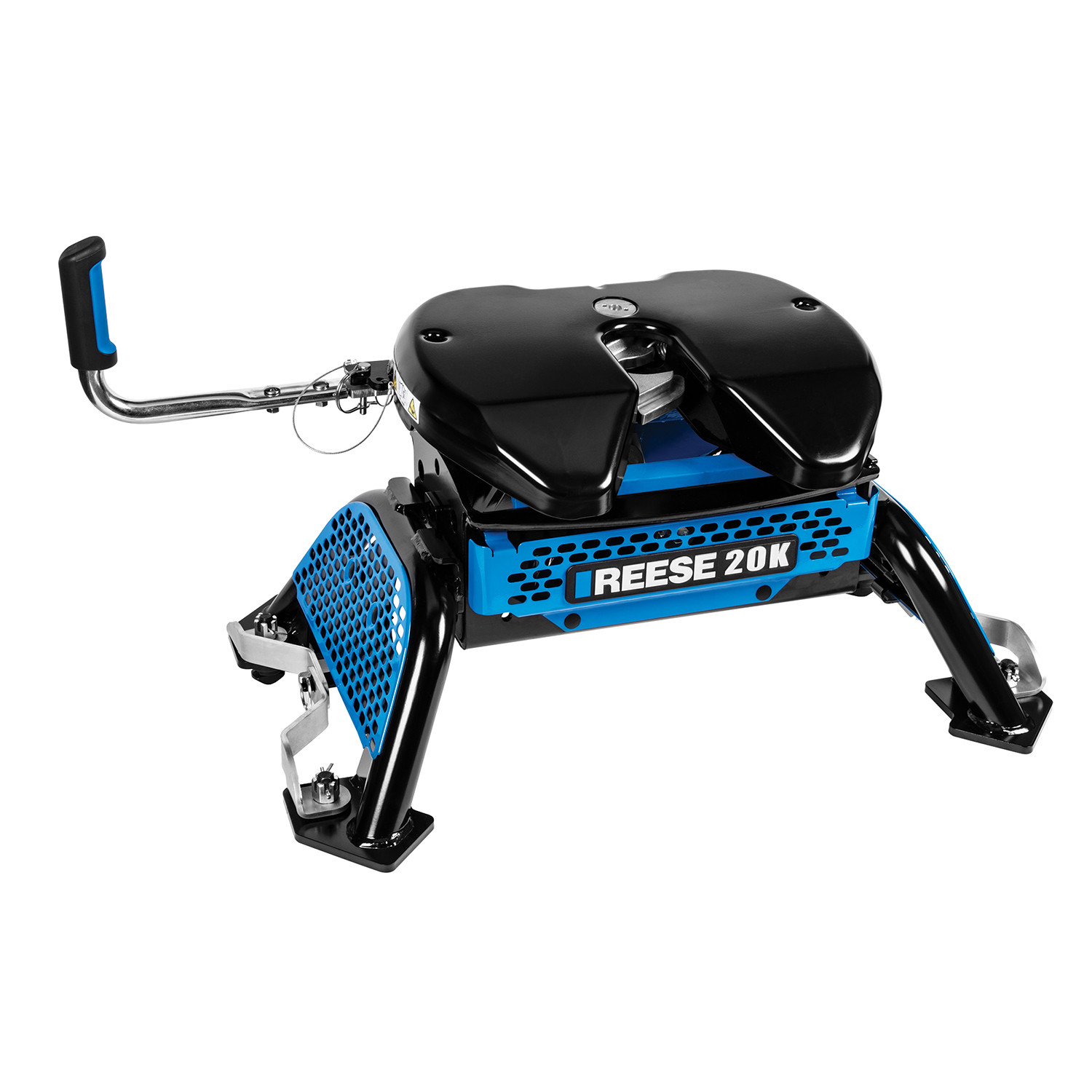
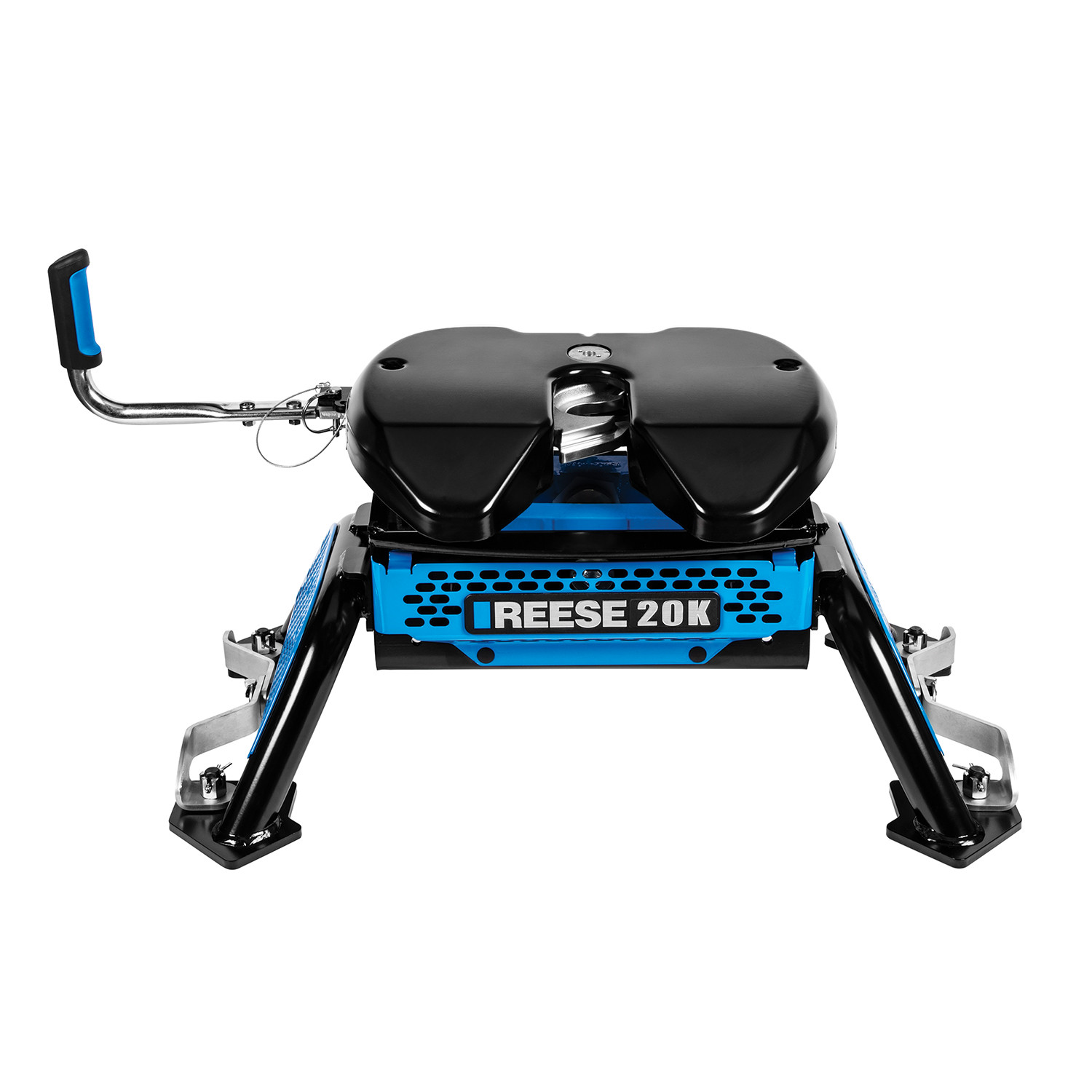
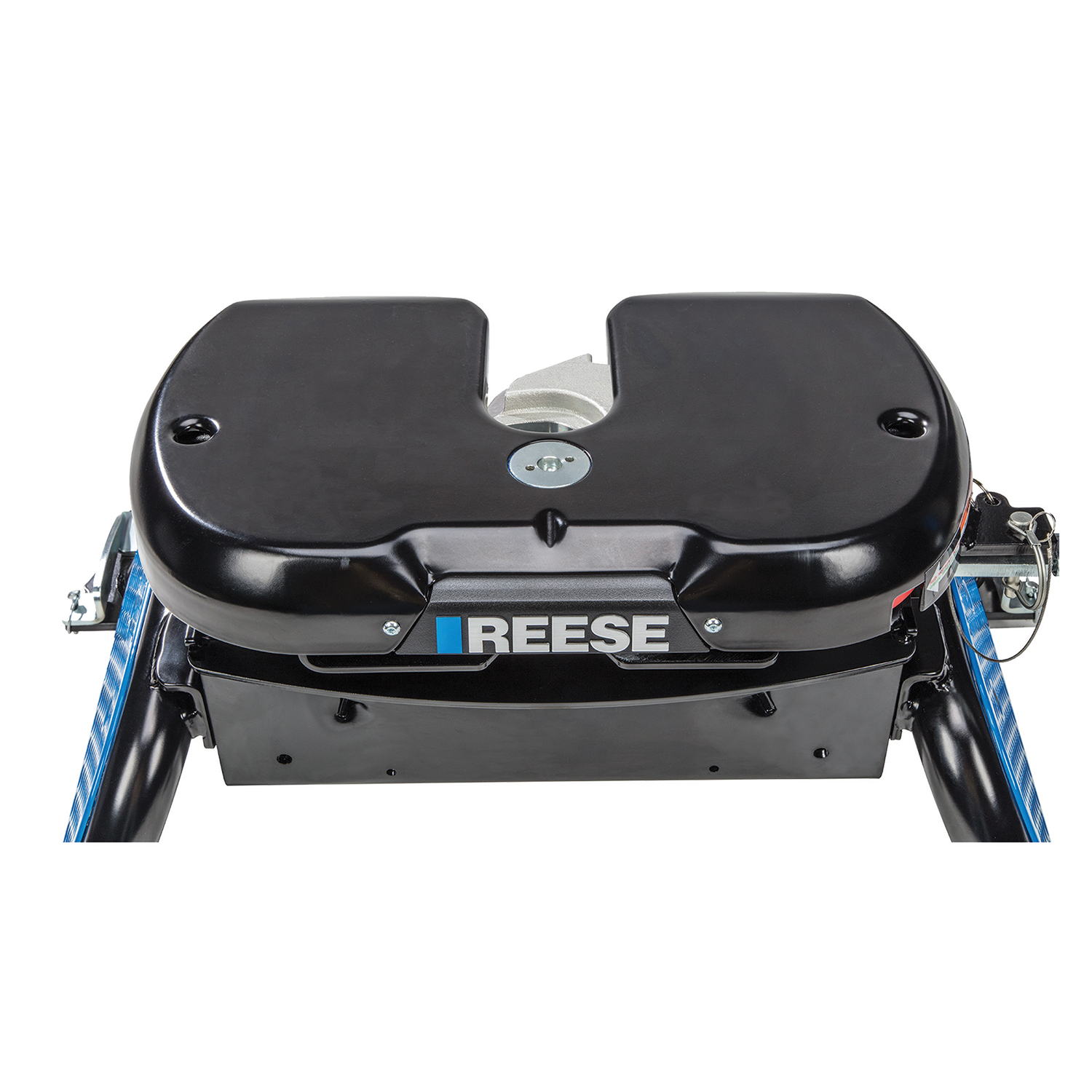
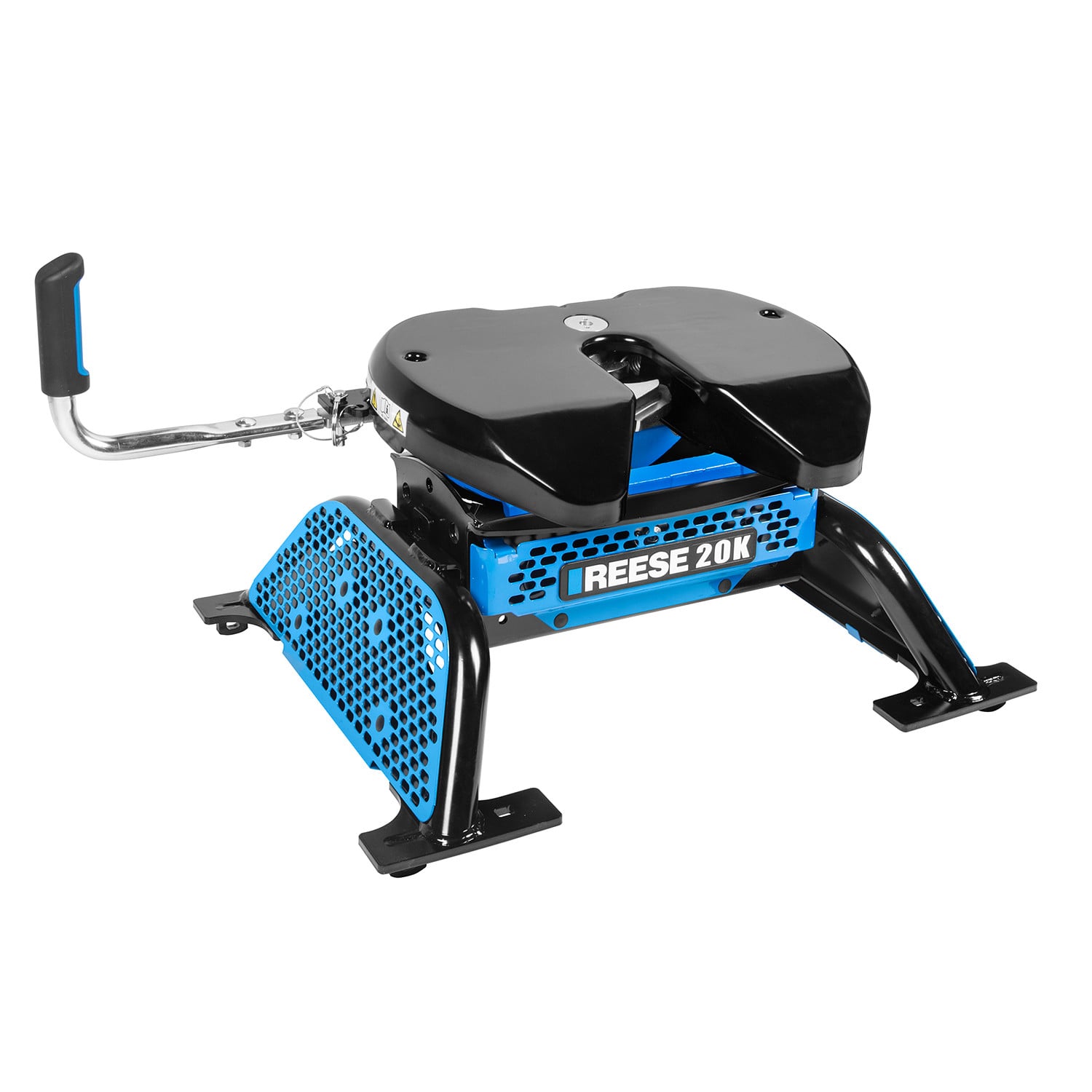
Reese M5 Fifth Wheel Hitch 20,000 lbs. Capacity, Talon Jaw, Complete System, RAMReeseOriginal price was $1,718.75. Current price is $1,378.69.Out of Stock
View productOur in-house experts typically reply within one business day.

Reese
Verify Fitment
Select your vehicle to confirm this part fits.
2011 - 2016 Ford F-250 Super Duty
Confirmed to Fit
2017 - 2024 Ford F-250 Super Duty
Confirmed to Fit
2011 - 2016 Ford F-350 Super Duty
Confirmed to Fit
2017 - 2024 Ford F-350 Super Duty
Confirmed to Fit
2011 - 2016 Ford F-450 Super Duty
Confirmed to Fit
2017 - 2024 Ford F-450 Super Duty
Confirmed to Fit



Always the correct part
We know our products
Quality Products
Free Shipping!
Always the correct part
We know our products
Quality Products
Free Shipping!

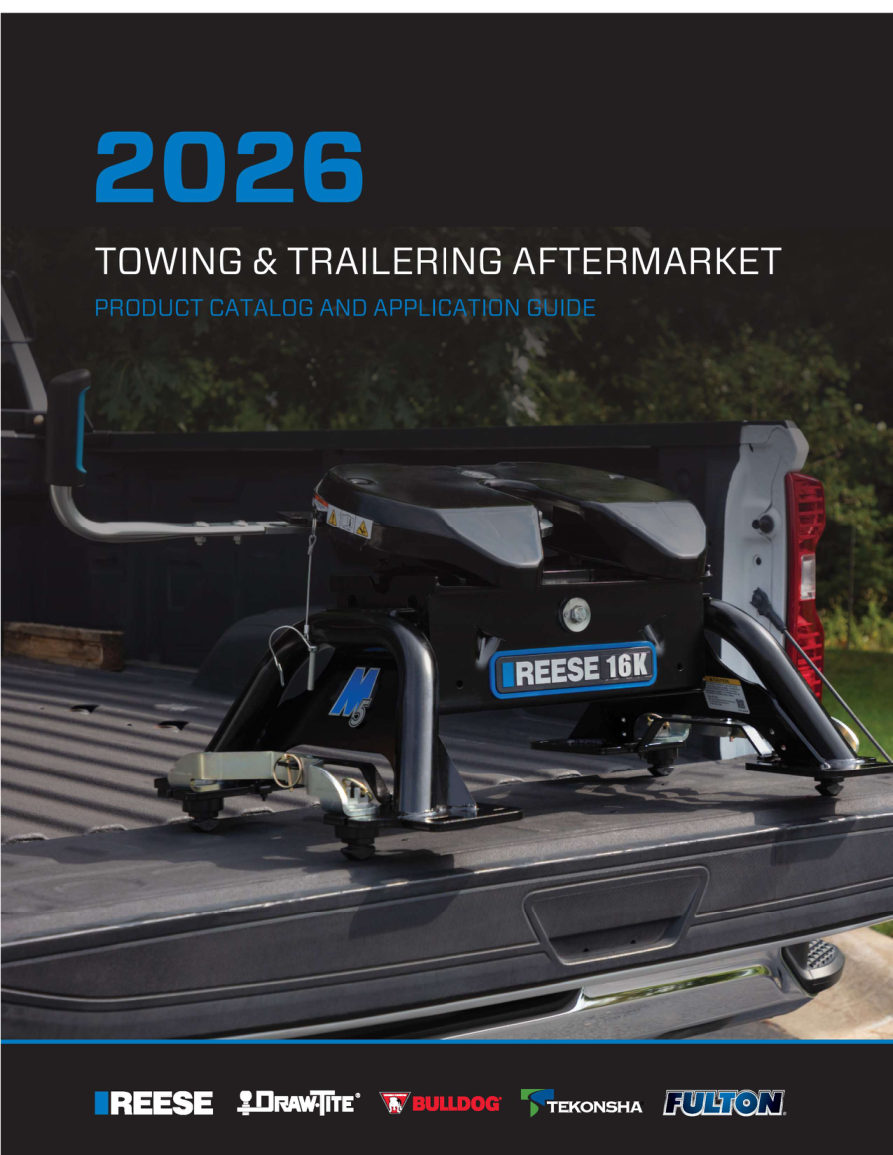
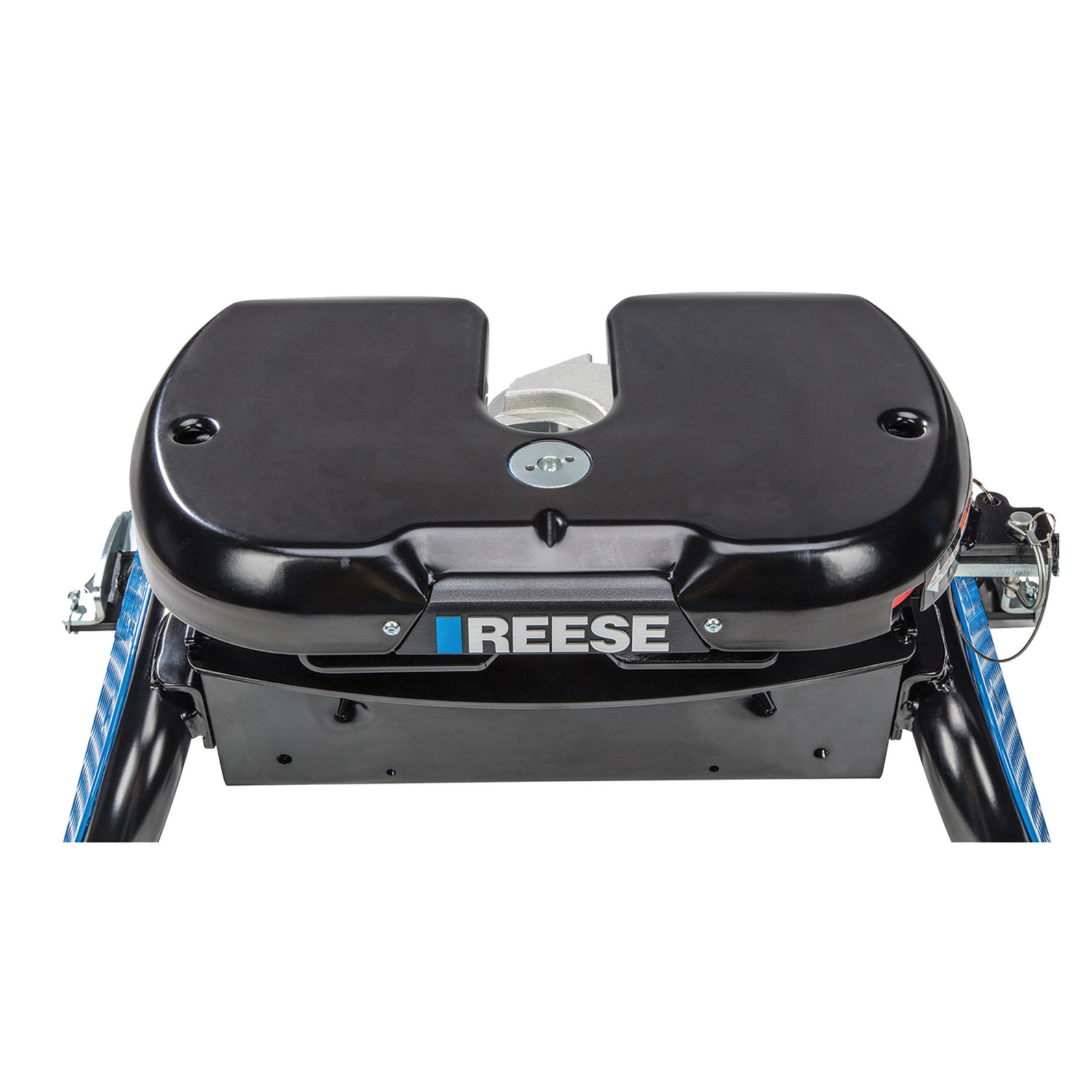
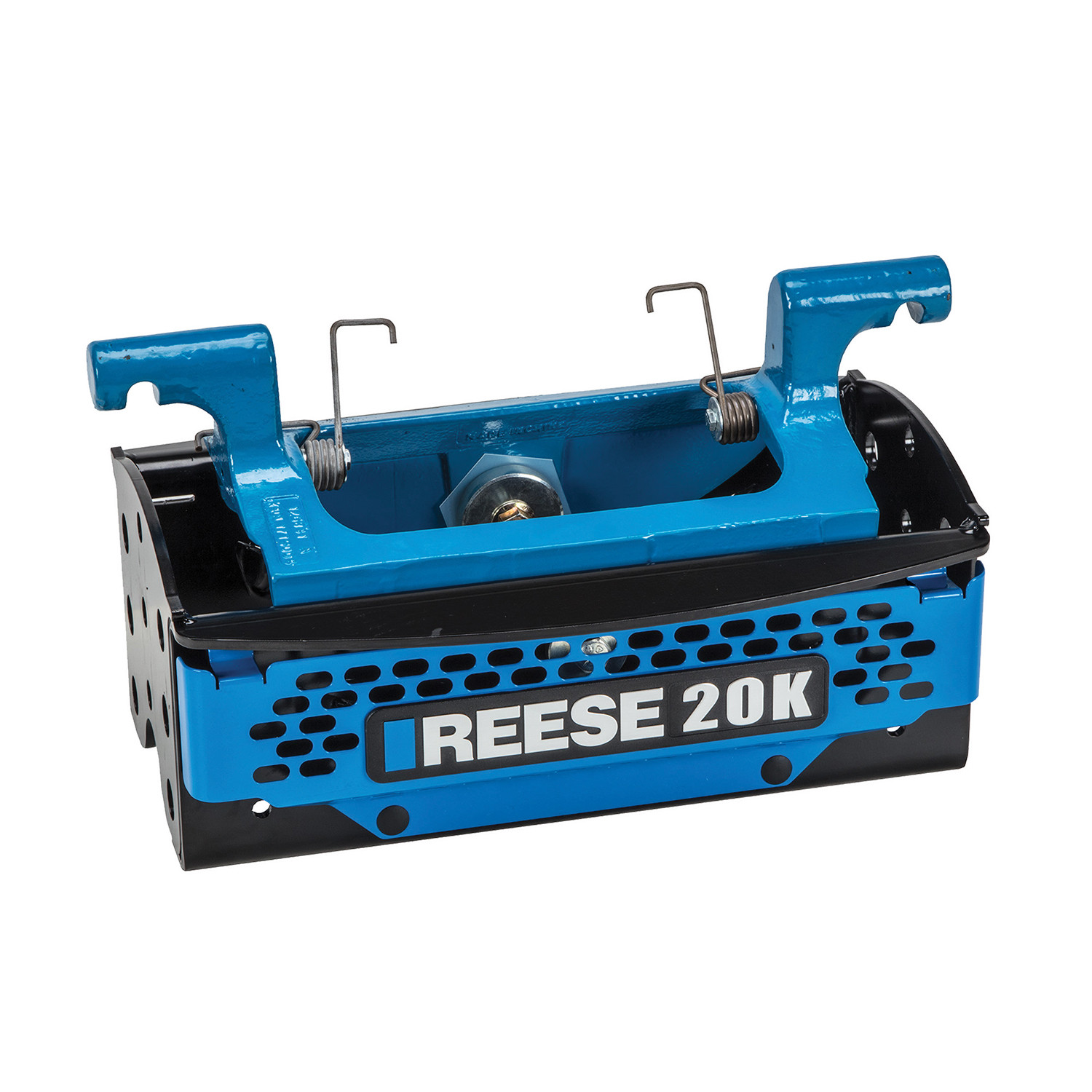
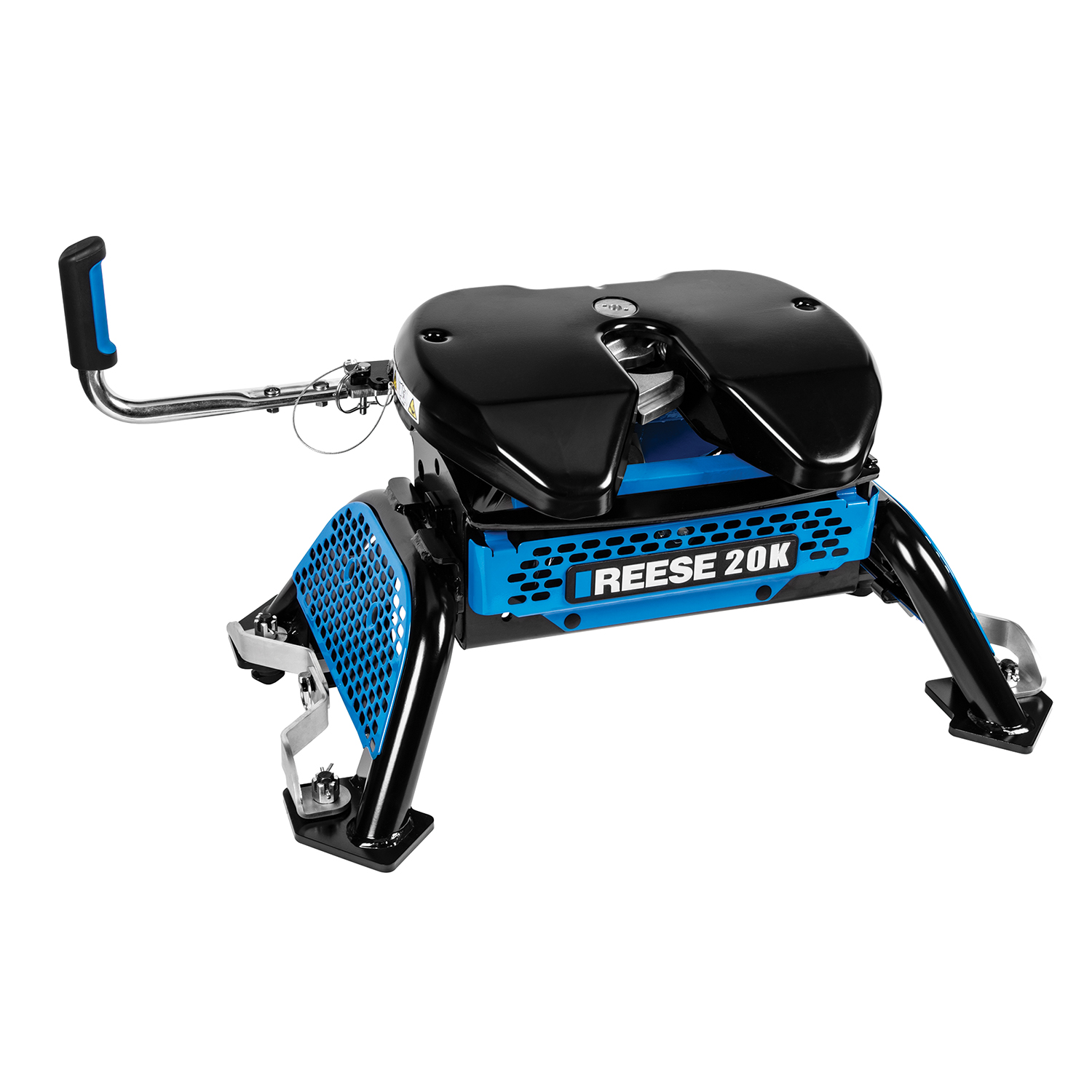
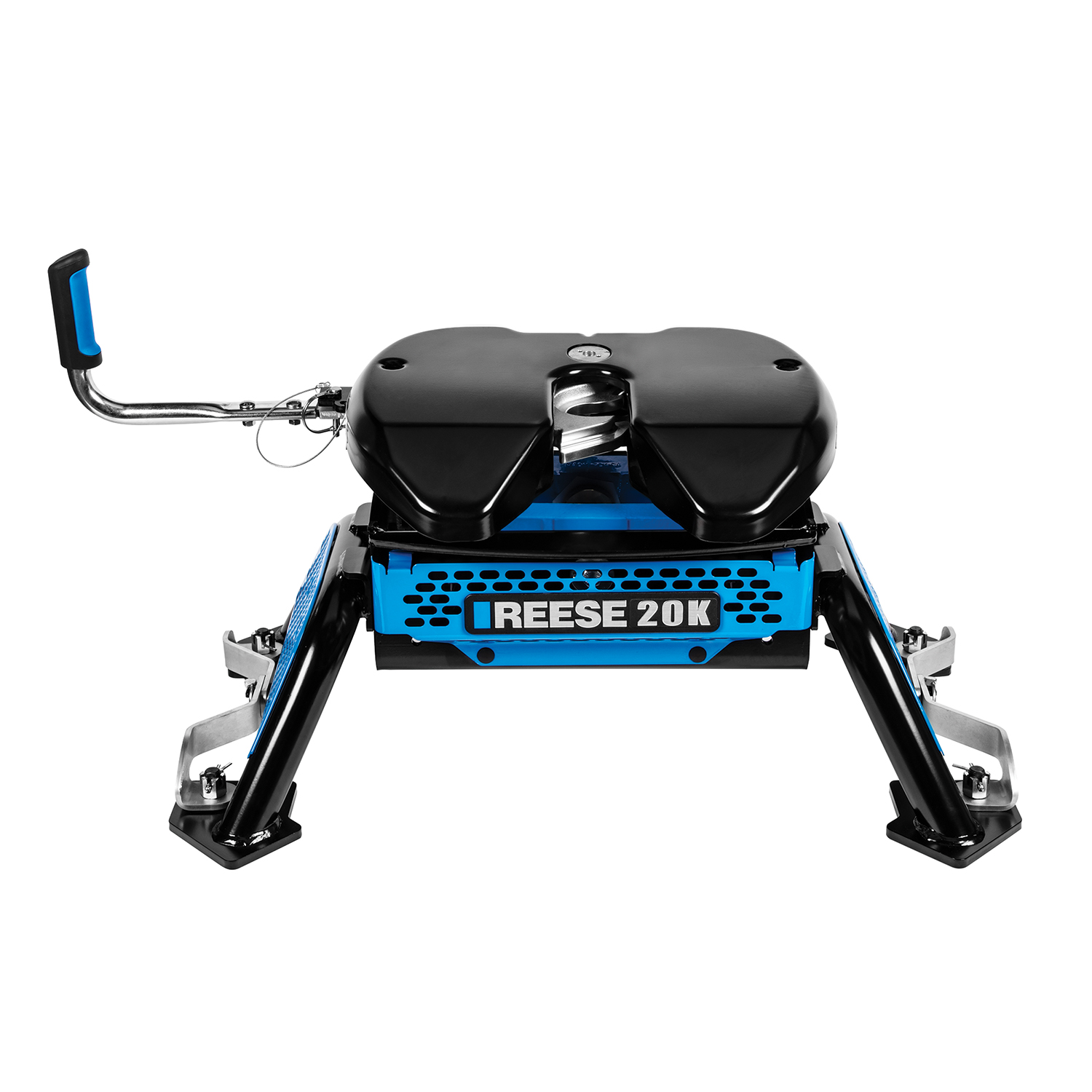
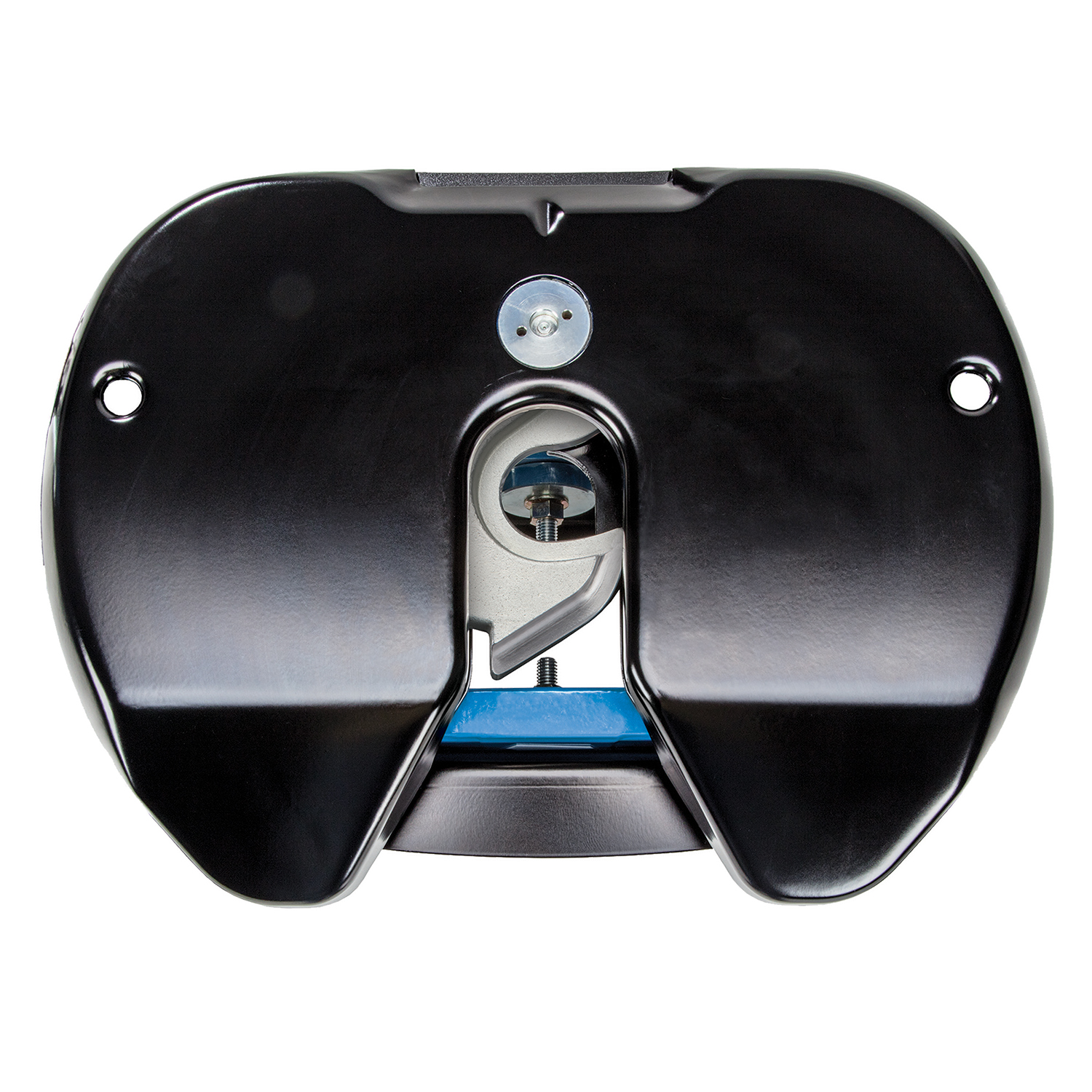
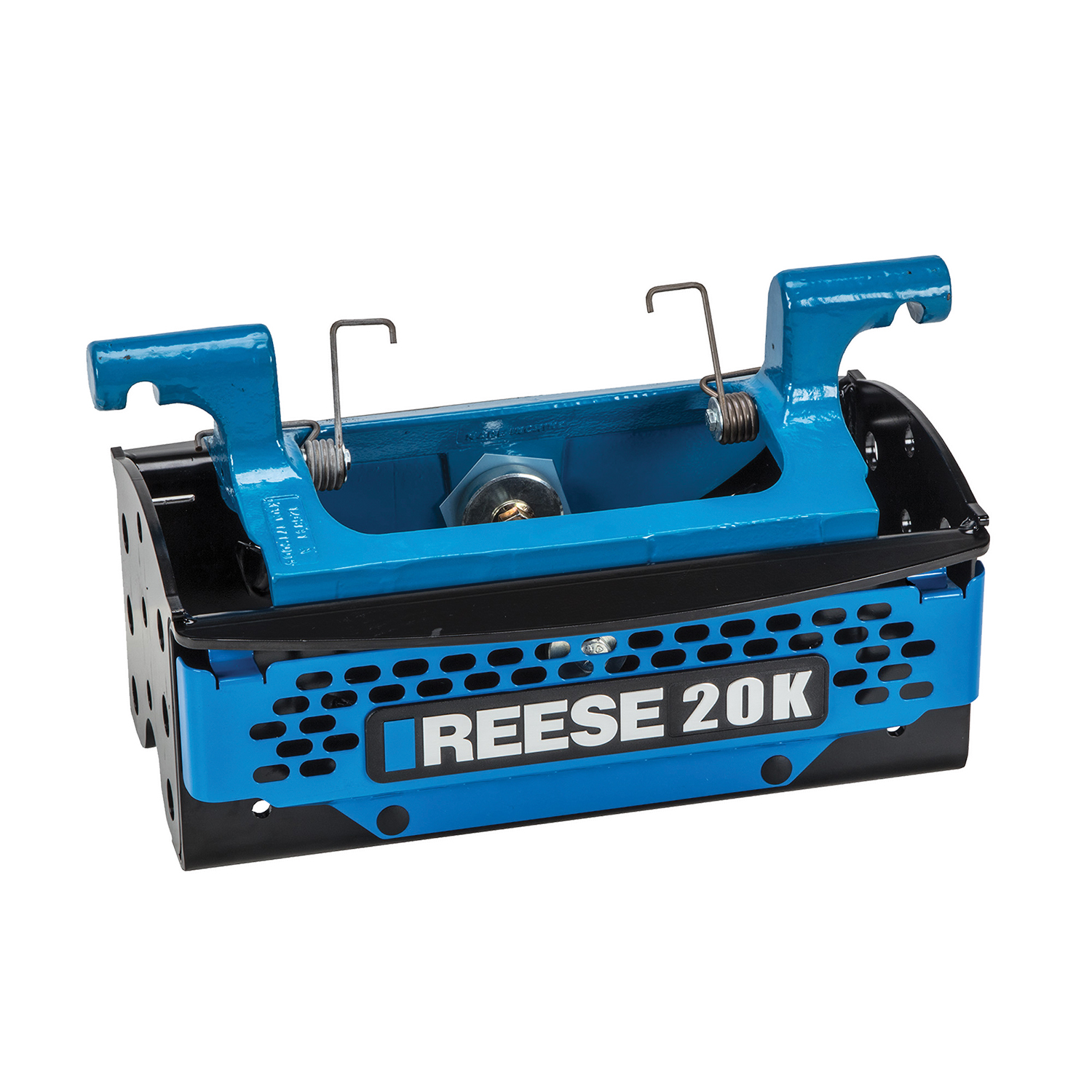
The name you know and the brand you trust brings you the latest in fifth wheel towing: the REESE M5. Whether youre a novice or youve been towing for years, REESE has the hitch you need to connect your truck and trailer safely and securely. Designed with state-of-the-art equipment by top-of-the-line engineers, REESEs complete line of M5 fifth wheel hitches is built to last! Featuring a three-part modular design, with wider stance legs, tighter tolerances, and the industrys best shock absorption system! Plus, an exclusive Talon Jaw that is always ready to receive, gripping the pin to eliminate lateral chucking and reduce sway and noise.
The REESE M5 fifth wheel hitch line combines the latest in technology, rugged endurance, and a sleek design for a quick hook-up and strong performance while on the road, with a clear tow/no tow indicator so you know when your connection is secure, and an ergonomic, easy-reach handle that requires less force to operate. When youre done towing, REESEs fifth wheel hitches are easy to remove, giving you access to the bed of your truck in no time. So tow with the confidence that only REESE can provide and make the journey as enjoyable as the destination.
| BRAND: | REESE |
| PART NUMBER: | 30921 |
| WARRANTY: | LIMITED LIFETIME WARRANTY |
| WEIGHT: | 148 LBS |
| CAPACITY: | 20,000 LBS. |
| PIN WEIGHT CAPACITY: | 5,000 LBS. |
| GROSS TOWING WEIGHT: | 20,000 LBS. |
| BASE LENGTH: | 32.53 IN. |
| BASE WIDTH: | 25.06 IN. |
| BASE HEIGHT: | 17.56 IN. |
| VERTICAL ADJUSTMENT: | 14 IN. TO 18 IN. |
| WELDING REQUIRED: | NO |
| LOCKABLE: | YES |
| WIRING HARNESS INCLUDED: | NO |
| JAW TYPE: | SINGLE |
| FORE AND AFT PIVOT: | 15 DEGREE |
| DRILLING REQUIRED: | NO |
| MOUNTING HARDWARE INCLUDED: | NO |
| MOUNTING HOLE QUANTITY: | 4 |
| HITCH TYPE: | STATIONARY |
| MATERIAL: | STEEL |
| SIDE TO SIDE PIVOT: | 15 DEGREES |
| BOLT GRADE: | METRIC 10.9 |
| COLOR: | BLACK/BLUE |

Reese has designed towing equipment since 1952 and remains a benchmark for heavy-duty towing. The line covers fifth wheel hitches such as the modular M5, gooseneck couplers including the Goose Box, air-ride and short-bed pin boxes, weight distribution systems with active sway control, and the accessories that connect them, all built to exceed published industry standards.
Reese has been pioneering towing performance since 1952, when Margaret Reese asked her husband TJ to stop travel trailers rocking every time somebody walked through them. His answer, the first pair of stabilising jacks, was simple and effective enough to change the RV industry. From that starting point Reese grew into a designer and manufacturer of complete towing systems, and today it anchors the heavy-duty end of the Horizon Global towing portfolio.
Fifth wheel towing is where the brand's engineering is most visible. The M5 fifth wheel hitch uses a modular design that breaks into manageable sections for assembly, with a wider stance, tighter tolerances and a shock absorption system aimed at the jolts that travel up through a truck bed. For owners who would rather tow from a gooseneck coupler and keep the bed clear, the Goose Box 20K replaces the trailer's king pin with a gooseneck connection carrying its own air-ride cushioning.
Pin boxes are a Reese speciality. The 5th Airborne uses air-ride technology to dampen road shock and reduce the chucking motion that makes fifth wheel towing tiring, while the Sidewinder was designed for short-bed pickups, pivoting the connection point so the trailer can turn sharply without the front cap meeting the cab.
For conventional towing, Reese weight distribution systems restore load to the tow vehicle's front axle and control sway. The Pro Round Bar distributes weight evenly while damping sway, and the Pro Dual Cam II uses active cam-based sway control that works harder the stronger the sway force becomes. Complete kits pair bars, head and shank to a rated tongue weight, and dedicated sway control kits can be added to existing setups. The products suit RV owners, horse and livestock haulers and anyone towing near the upper end of a vehicle's rating.
Experts available to answer your questions
Call 888-634-9494Lifetime
On The Ball | REESE M5 fifth wheel hitch
6 compatible vehicles
| Year | Make & Model | Notes |
|---|---|---|
| 2011 - 2016 | Ford F-250 Super Duty | Fifth Wheel Trailer Hitch: 20K 20,000/5,000 lbs. when used with a Weight Distribution Kit (tongue weight/gross trailer weight) Drilling Required Install Time is 0 minutes Rated 20k Capacity |
| 2017 - 2024 | Ford F-250 Super Duty | Fifth Wheel Trailer Hitch: 20K 20,000/5,000 lbs. when used with a Weight Distribution Kit (tongue weight/gross trailer weight) Drilling Required Install Time is 0 minutes With Factory HD Towing Option Rated 20k Capacity |
| 2011 - 2016 | Ford F-350 Super Duty | Fifth Wheel Trailer Hitch: 20K 20,000/5,000 lbs. when used with a Weight Distribution Kit (tongue weight/gross trailer weight) Drilling Required Install Time is 0 minutes Rated 20k Capacity |
| 2017 - 2024 | Ford F-350 Super Duty | Fifth Wheel Trailer Hitch: 20K 20,000/5,000 lbs. when used with a Weight Distribution Kit (tongue weight/gross trailer weight) Drilling Required Install Time is 0 minutes With Factory HD Towing Option Rated 20k Capacity |
| 2011 - 2016 | Ford F-450 Super Duty | Fifth Wheel Trailer Hitch: 20K 20,000/5,000 lbs. when used with a Weight Distribution Kit (tongue weight/gross trailer weight) Drilling Required Install Time is 0 minutes Rated 20k Capacity |
| 2017 - 2024 | Ford F-450 Super Duty | Fifth Wheel Trailer Hitch: 20K 20,000/5,000 lbs. when used with a Weight Distribution Kit (tongue weight/gross trailer weight) Drilling Required Install Time is 0 minutes With Factory HD Towing Option Rated 20k Capacity |
The Reese M5 Fifth Wheel Hitch 20,000 lbs. Capacity, Talon Jaw, Complete System, Ford (Part #RE30921) fits the following vehicles: 2011-2024 Ford F-250 Super Duty; 2011-2024 Ford F-350 Super Duty; 2011-2024 Ford F-450 Super Duty. Always verify your specific year, make, and model before ordering.
Yes, the Reese M5 Fifth Wheel Hitch 20,000 lbs. Capacity, Talon Jaw, Complete System, Ford (Part #RE30921) is designed to fit the 2011-2024 Ford F-250 Super Duty.
The Reese M5 Fifth Wheel Hitch 20,000 lbs. Capacity, Talon Jaw, Complete System, Ford (Part #RE30921) fits 2011-2024 Ford F-250 Super Duty models. The 2024 model year is the last year covered by this part number. For newer models, check for an updated version.
The Reese M5 Fifth Wheel Hitch 20,000 lbs. Capacity, Talon Jaw, Complete System, Ford (Part #RE30921) Drilling is required for installation. Basic hand tools are typically all you need.
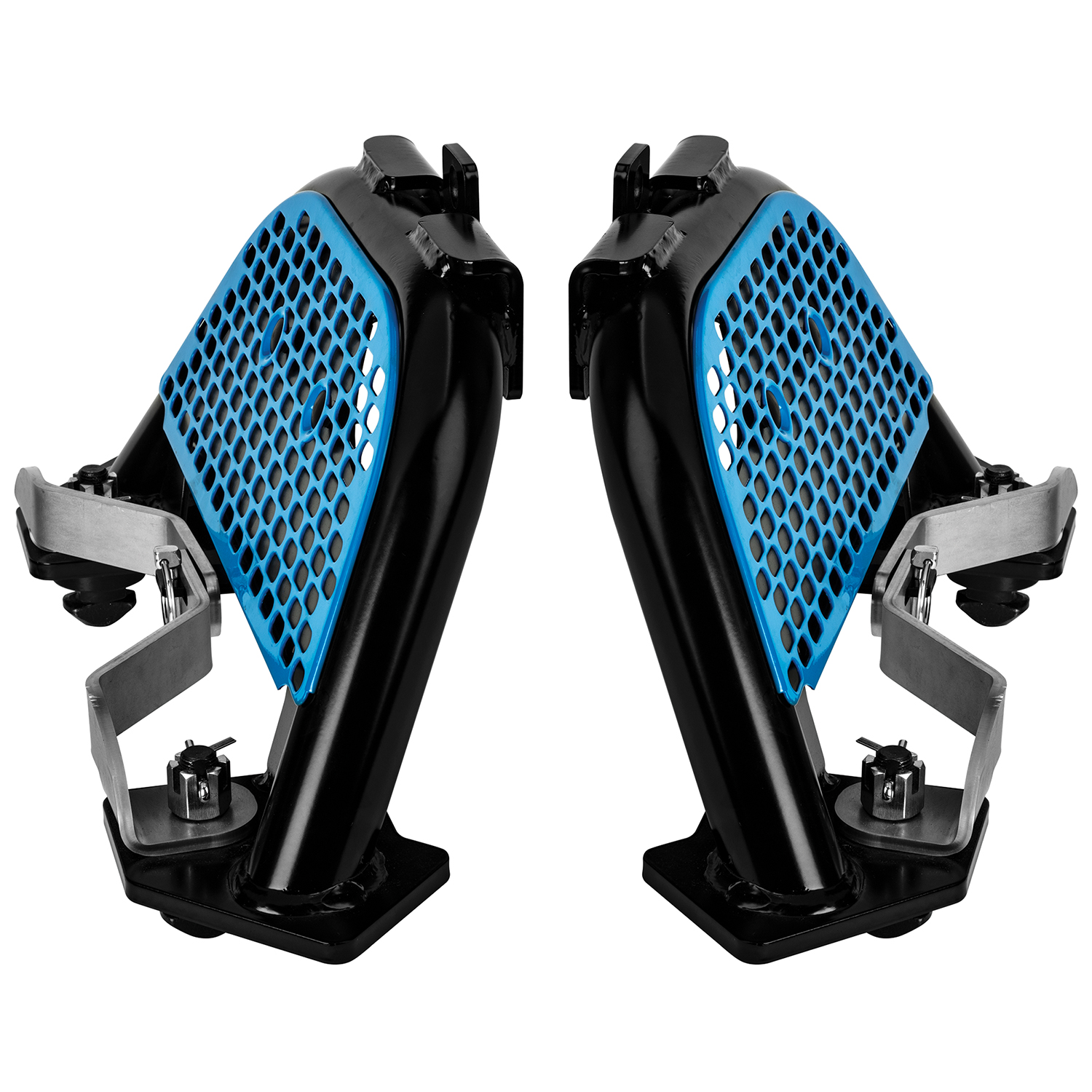
Yes, the M5 Ford Leg (part 30923) is designed for Ford trucks. The hitch is rated for 20,000 lbs towing capacity with a maximum pin weight of 5,000 lbs. The M5 head (30892) and center section (30884) are sold separately and must be used together with the Ford leg. Consult your truck's owner manual to confirm your vehicle's towing capacity does not exceed 20,000 lbs.
For the head and center section assembly, you need an M13 wrench. For the Ford leg installation, you need an M24 wrench, pliers, and a torque wrench. A grease gun with needle adapter is required for maintenance.
The M5 Ford Leg (30923) comes pre-assembled, adjusted, and ready to install. You do not need to assemble the leg itself; you only need to attach it to the center section using the four M16 bolts provided.
A minimum of 6 inches of clearance is required between the truck bed rail and the bottom of the trailer. The M5 Ford Leg has 4 inches of vertical adjustment to help achieve this. You must select the correct center section mounting holes during installation to ensure this clearance.
Each M16 hex-head bolt must be tightened to 220 ft-lb of torque. Bolts should be finger-tightened initially until final adjustments are made, then torqued to specification once the hitch is positioned correctly.
The manual does not mention disconnecting the battery. The M5 hitch is a mechanical 5th wheel assembly with no electrical components requiring battery disconnection during installation.
The maximum pin weight is 5,000 lbs. Do not exceed this limit or the towing vehicle manufacturer's recommended towing capacity.
Every 1,000 miles, check the M16 hex bolts that connect the center section to the legs to ensure they are still torqued to 220 ft-lb of torque.
The M5 hitch is rated for 20,000 lbs towing capacity with a maximum pin weight of 5,000 lbs. However, you must not exceed your towing vehicle manufacturer's recommended towing capacity, even if it is lower than 20,000 lbs.
The M5 head (part 30892), center section (part 30884), and Ford leg (part 30923) are sold separately. You must purchase all three components to complete the hitch assembly. The head and center section instructions note that legs are sold separately, and the Ford leg instructions note that the head and center section are sold separately.
The head and center section assembly includes: 2 M8 carriage bolts, 2 M8 lock washers, 2 M8 nuts, 2 ½-inch pull pins, 2 spring clips, and 1 handle assembly. Additional bolts and washers (4 total) are supplied with the leg unit.
The M5 Ford Leg (30923) includes: 4 M16 x 2 x 40mm CL10.9 bolts, 4 5/8-inch conical washers, 4 T-pin locking handles, 2 lynch pin handle locks, 4 castle nuts, 8 lynch pins, 4 T-pins, and 4 T-bushings.
Slide the handle tube over the bar as shown in the manual. Securely tighten the handle with M8 carriage bolts, M8 lock washers, and M8 nuts using an M13 wrench. The handle should be snug when fully tightened.
1. Apply grease to the pivot assemblies on the center section before installing the head. 2. Place the head unit on top of the center section, avoiding pinch points. 3. Insert the ½-inch pull pins through both sides of the head and center section. 4. Secure each pull pin with a spring clip. 5. Inspect through the sight holes on top of the head pan to confirm the clips are assembled correctly.
1. Determine which center section mounting holes to use to ensure minimum 6-inch clearance between truck bed rail and trailer bottom. 2. Using the four M16 x 2 x 40mm bolts, attach the legs to the center section by threading the bolts from inside the center section into the threaded portion of the legs. 3. Finger-tighten bolts initially. 4. Ensure the collars on the leg are completely seated in the corresponding holes in the center section. 5. Once positioned, tighten each M16 bolt to 220 ft-lb of torque.
1. Remove the two lynch pins from the leg. 2. Position the legs over the truck bed pucks with the handles in the OPEN position. 3. Once the unit is placed in the pucks, rotate the handles back to the CLOSED position. 4. Insert the lynch pins back into the leg to prevent the handles from opening during operation.
Due to variations in truck underbeds, some handles may be loose and rattle, while others may be too tight to lock. If a handle is loose or cannot close fully, remove the lynch pin and adjust the castle nut by hand to a position where the handle does not rattle and can close properly. Once adjustment is satisfactory, re-insert the lynch pin and close the loop over the nut to hold it in place.
After tightening all M16 bolts to 220 ft-lb of torque, lift each side of the hitch to verify it is tight to the truck bed. There should be no movement or play.
Apply grease to the following areas before first use and periodically: (A) skid plate surface to provide a lubricated surface for trailer attachment; (B) 5th wheel jaw and/or kingpin on the trailer; (C) grease fitting on top of the head unit using a grease needle (head comes pre-greased); (D) internal mechanisms using spray-on white lithium grease, then rotate the handle a few times to distribute the lubricant. Plastic lube plates up to 3/16 inch thick can be used instead of grease on the skid plate; REESE 5th Wheel Lube Plate #83001 is recommended.
Use a grease gun with a needle adapter to apply grease via the grease fitting on the top of the center section. The fitting is accessible through the logo/load rating slot. A typical grease needle is generally available at auto parts stores.
If noise is noticed during operation, investigate the cause and correct it. Grease points are the obvious starting point. If the head pivots and makes noise when the trailer is not attached, adjust the pivot assembly resistance by tightening the pivot bolt 1/2 turn at a time, up to a maximum of 2 full turns. The pivot assembly can be rebuilt if necessary using a rebuild kit with included instructions.
Before any trip, verify that: (1) lynch pins are undamaged and securely locked with little to no vertical play; (2) foot bracket is undamaged and securely locked; (3) castle nut is undamaged and securely locked. Ensure the lynch pins are in the correct orientation relative to the foot.
The head must be in the Ready-to-Receive position before coupling. In this position: the handle is pulled out fully until an audible click is heard and the holes do NOT align for the bail pin; the handle is easily movable towards the cab and returns to the default position upon release; the indicator shows RED. Do not attempt to couple if the head is in any other position.
When the trailer is coupled and the hitch is locked, the head is in the Locked position. In this position: the handle is in a position where the holes align for bail pin insertion; the indicator shows ONLY GREEN. The bail pin must be inserted into the lock hole to secure the connection.
When uncoupling, the head must be moved to the Unhitching position. In this position: the handle is pulled out fully until an audible click is heard, then rotated towards the cab; the indicator shows RED. If there is tension between the truck and trailer, the handle may start to return to the ready-to-receive position, but the trailer will still uncouple.
Before hitching: (1) Lower the truck tailgate if necessary; (2) Place blocks or chocks firmly against each trailer wheel to prevent forward or rearward motion; (3) Ensure the pin box is at the correct height for hitching (bottom of pin box aligned with top of skid plate ramp ±1 inch); (4) Ensure the head is in Ready-to-Receive position by pulling the handle out fully until an audible click is heard.
After backing the truck into the trailer and confirming the indicator shows green: (1) Ensure trailer wheels are still firmly blocked, trailer landing gears are firmly on the ground supporting trailer weight, and trailer brake is on; (2) Make sure no one is between the truck and trailer; (3) Try to pull the trailer slowly forward. If the trailer is properly hitched, it will not move. If the trailer separates from the hitch and the truck moves forward, the hitch is not properly engaged—repeat the hitching procedure.
If the jaw does not fully latch after backing fully into the trailer, the jaw may be under compression. Pull the truck slowly forward to remove the load on the jaw. The handle will then fully latch and the jaw will close.
1. Ensure trailer is secure: place blocks/chocks firmly against each trailer wheel and lower trailer jacks firmly to the ground. 2. Prepare truck: lower tailgate if necessary and disconnect electrical and breakaway switch cables. 3. Remove the bail pin. 4. Move the handle to the unhitching position by pulling it out fully until an audible click is heard, then rotating it towards the cab. 5. Drive the truck slowly away from the trailer. If there is tension between truck and trailer, the handle may start to return to ready-to-receive position, but the trailer will still uncouple.
If the handle will not move to the unhitching position with ease, STOP and DO NOT FORCE THE HANDLE. The jaw may not open if under tension. Slowly reverse the truck to remove the load on the jaw before attempting to unhitch the trailer.
Yes. The center section can be rotated 180 degrees to increase the gap between the trailer front and the truck cab by 1-1/2 inches. This requires removing the head, removing the bolts holding the legs to the center section, rotating the center section, and re-installing the head. The head springs must also be flipped from right to left and tightened to 7-8 ft-lbs. Consult the manual for detailed step-by-step instructions, as the process involves multiple components and pinch points.
The center section can be rotated on all vehicles by removing the bolts holding the legs to the center section. However, on RAM vehicles, the center section and leg assembly cannot be rotated together by disconnecting the feet from the bed. RAM vehicles require the bolts to be removed and the center section rotated separately.
If using a plastic lube plate instead of grease on the skid plate, the plate must not exceed 3/16 inch in thickness to ensure the hitch works properly. REESE 5th Wheel Lube Plate #83001 is recommended.
The bottom of the pin box must be aligned with the top of the skid plate ramp ±1 inch. This is the contact zone for proper hitching. If the pin box height is incorrect, adjust the center section mounting holes to achieve the correct height, ensuring a minimum of 6 inches clearance between the truck bed rail and trailer bottom.
The manual does not mention drilling as a required installation step for the M5 head, center section, or Ford leg. The hitch uses existing truck bed pucks and mounting holes. However, consult the Ford leg installation instructions for your specific truck model, as some vehicles may require additional preparation.
The manual does not describe any permanent modifications such as welding, cutting, or grinding as required for M5 hitch installation. The hitch is designed to attach to existing truck bed structures using bolts and existing pucks.
When rotating the center section to increase cab clearance, the head springs must be tightened to 7-8 ft-lbs after flipping them from right to left.
The M5 hitch itself is a mechanical 5th wheel assembly with no electrical components. However, the hitching procedure requires connecting electrical cable and breakaway switch cable between the truck and trailer. These cables must be disconnected before unhitching.
After installation: (1) Verify the hitch is tight to the truck bed by lifting each side; (2) Confirm all M16 bolts are torqued to 220 ft-lb; (3) Ensure all lynch pins are securely locked with little to no vertical play; (4) Verify the foot bracket is undamaged and securely locked; (5) Confirm the castle nut is undamaged and securely locked; (6) Assemble the head to the center section per the included instructions.
If the head pivots and makes noise when the trailer is not attached, adjust the pivot assembly resistance by tightening the pivot bolt 1/2 turn at a time. Do not exceed 2 full turns maximum. The pivot bolt is accessible through the logo/load rating slot on the center section using an open-end wrench. If noise persists, the pivot assembly may need to be rebuilt using a rebuild kit with included instructions.
Due to variations in truck underbeds, some handles may be loose. Remove the lynch pin and adjust the castle nut by hand to a position where the handle does not rattle and can close fully. Once adjustment is satisfactory, re-insert the lynch pin and close the loop over the nut to hold it in place. Additional cotter pins are provided in the hardware kit if needed.
Due to variations in truck underbeds, some handles may be too tight to lock. Remove the lynch pin and adjust the castle nut by hand to a position where the handle can close fully. Once adjustment is satisfactory, re-insert the lynch pin and close the loop over the nut to hold it in place.
If the jaw does not fully latch after backing fully into the trailer, the jaw may be under compression. Pull the truck slowly forward to remove the load on the jaw. The handle will then fully latch and the jaw will close. If the jaw still does not latch, repeat the hitching procedure from the beginning, ensuring the head is in the Ready-to-Receive position and the pin box height is correct (bottom of pin box aligned with top of skid plate ramp ±1 inch).
If the trailer separates from the hitch during the pull test and the truck moves forward, the hitch is not properly engaged. Repeat the hitching procedure from the beginning: (1) Ensure the head is in Ready-to-Receive position; (2) Back the truck slowly into the trailer so the king pin and 5th wheel funnel align; (3) Confirm the indicator turns completely green; (4) Perform the pull test again. If the problem persists, check that the pin box height is correct (bottom of pin box aligned with top of skid plate ramp ±1 inch).
If the handle will not move to the unhitching position with ease, STOP and DO NOT FORCE THE HANDLE. The jaw may not open if under tension. Slowly reverse the truck to remove the load on the jaw, then attempt to move the handle to the unhitching position again. Once the handle moves freely, proceed with unhitching.
If the hitch moves when you lift each side, verify that all four M16 hex-head bolts connecting the Ford leg to the center section are tightened to 220 ft-lb of torque. Use a torque wrench to confirm each bolt is at the correct specification. Also verify that the collars on the legs are completely seated in the corresponding holes in the center section.
Ann
Ordered online. Shipment arrived on time and with all the correct parts. Great customer service and friendly staff. Also, pricing was great!
May 22, 2023
On Sale Today
Original price was $1,593.75. Current price is $1,137.40.You save $456.35 (29%)
Free Shipping
Ships free on all orders
 Authorized Dealer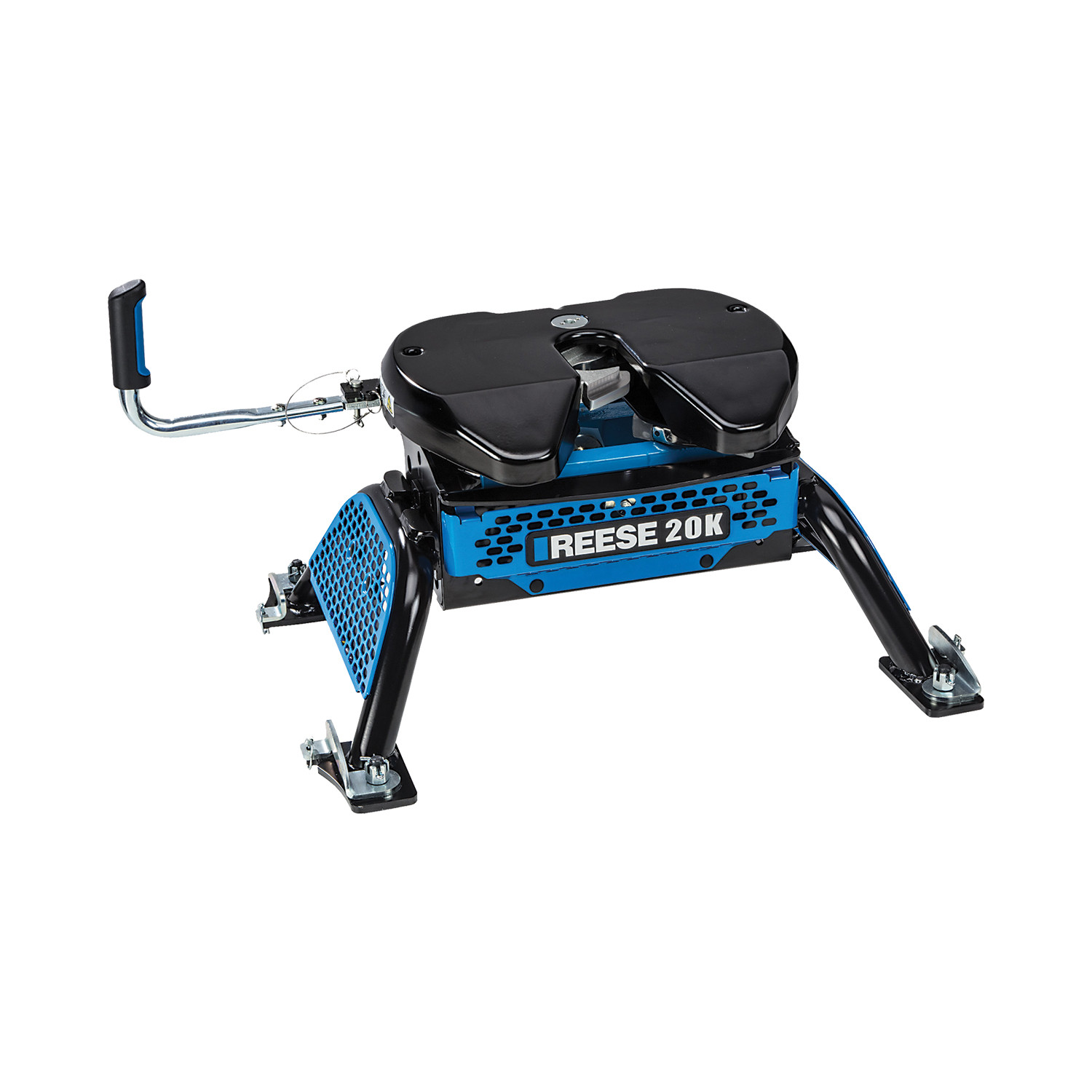


FREE ShippingFREE SHIPPING
Estimated delivery Tue, Sep 22 - Fri, Sep 25
Order before 2 PM EST Monday–Friday for same-day processing
Guaranteed safe & secure checkout