Ask a Question About This Product
Our in-house experts typically reply within one business day.
Our in-house experts typically reply within one business day.

Reese


Always the correct part
We know our products
Quality Products
Free Shipping!
Always the correct part
We know our products
Quality Products
Free Shipping!


Reese has designed towing equipment since 1952 and remains a benchmark for heavy-duty towing. The line covers fifth wheel hitches such as the modular M5, gooseneck couplers including the Goose Box, air-ride and short-bed pin boxes, weight distribution systems with active sway control, and the accessories that connect them, all built to exceed published industry standards.
Reese has been pioneering towing performance since 1952, when Margaret Reese asked her husband TJ to stop travel trailers rocking every time somebody walked through them. His answer, the first pair of stabilising jacks, was simple and effective enough to change the RV industry. From that starting point Reese grew into a designer and manufacturer of complete towing systems, and today it anchors the heavy-duty end of the Horizon Global towing portfolio.
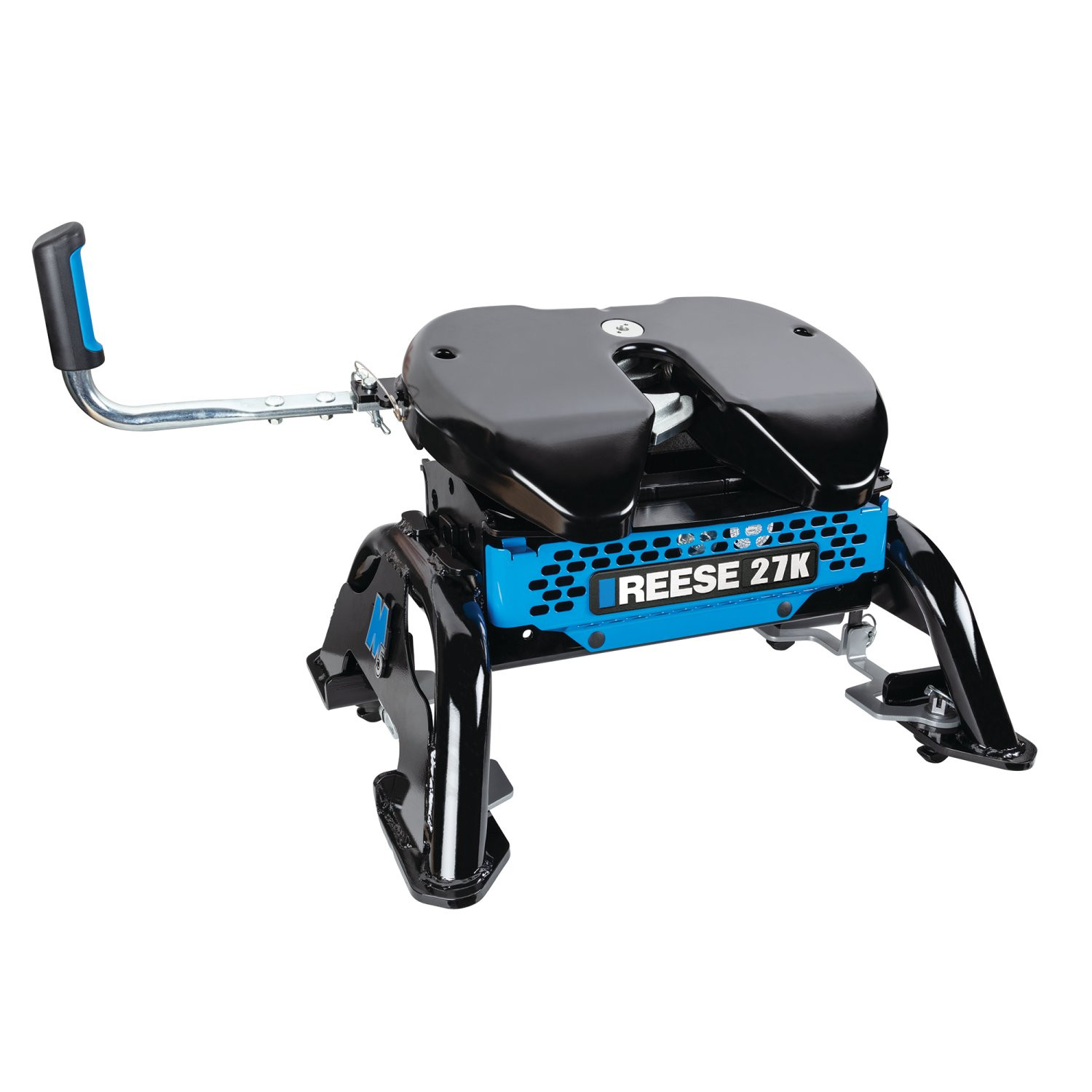
Fifth wheel towing is where the brand's engineering is most visible. The M5 fifth wheel hitch uses a modular design that breaks into manageable sections for assembly, with a wider stance, tighter tolerances and a shock absorption system aimed at the jolts that travel up through a truck bed. For owners who would rather tow from a gooseneck coupler and keep the bed clear, the Goose Box 20K replaces the trailer's king pin with a gooseneck connection carrying its own air-ride cushioning.
Pin boxes are a Reese speciality. The 5th Airborne uses air-ride technology to dampen road shock and reduce the chucking motion that makes fifth wheel towing tiring, while the Sidewinder was designed for short-bed pickups, pivoting the connection point so the trailer can turn sharply without the front cap meeting the cab.
For conventional towing, Reese weight distribution systems restore load to the tow vehicle's front axle and control sway. The Pro Round Bar distributes weight evenly while damping sway, and the Pro Dual Cam II uses active cam-based sway control that works harder the stronger the sway force becomes. Complete kits pair bars, head and shank to a rated tongue weight, and dedicated sway control kits can be added to existing setups. The products suit RV owners, horse and livestock haulers and anyone towing near the upper end of a vehicle's rating.
Experts available to answer your questions
Call 888-634-9494Lifetime
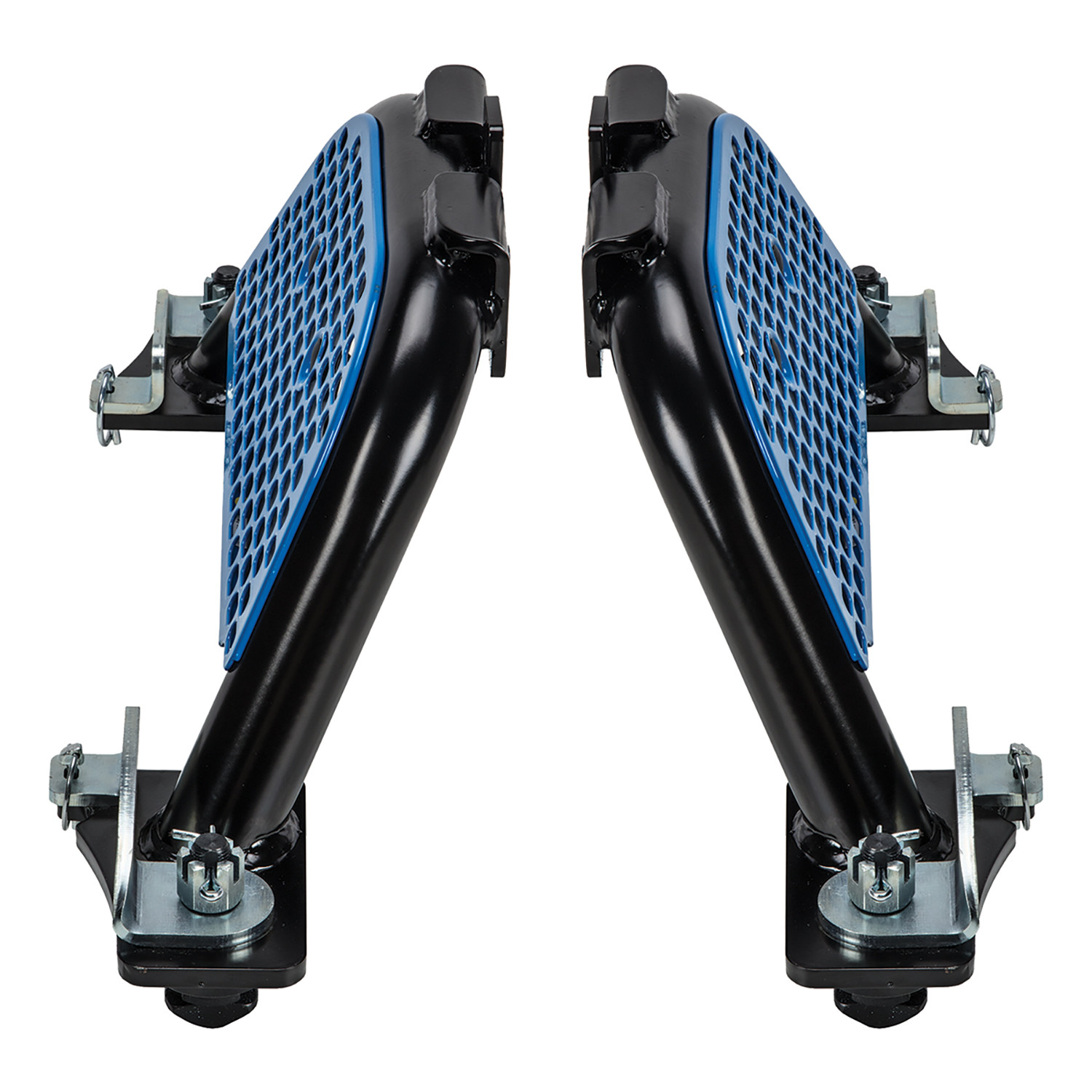
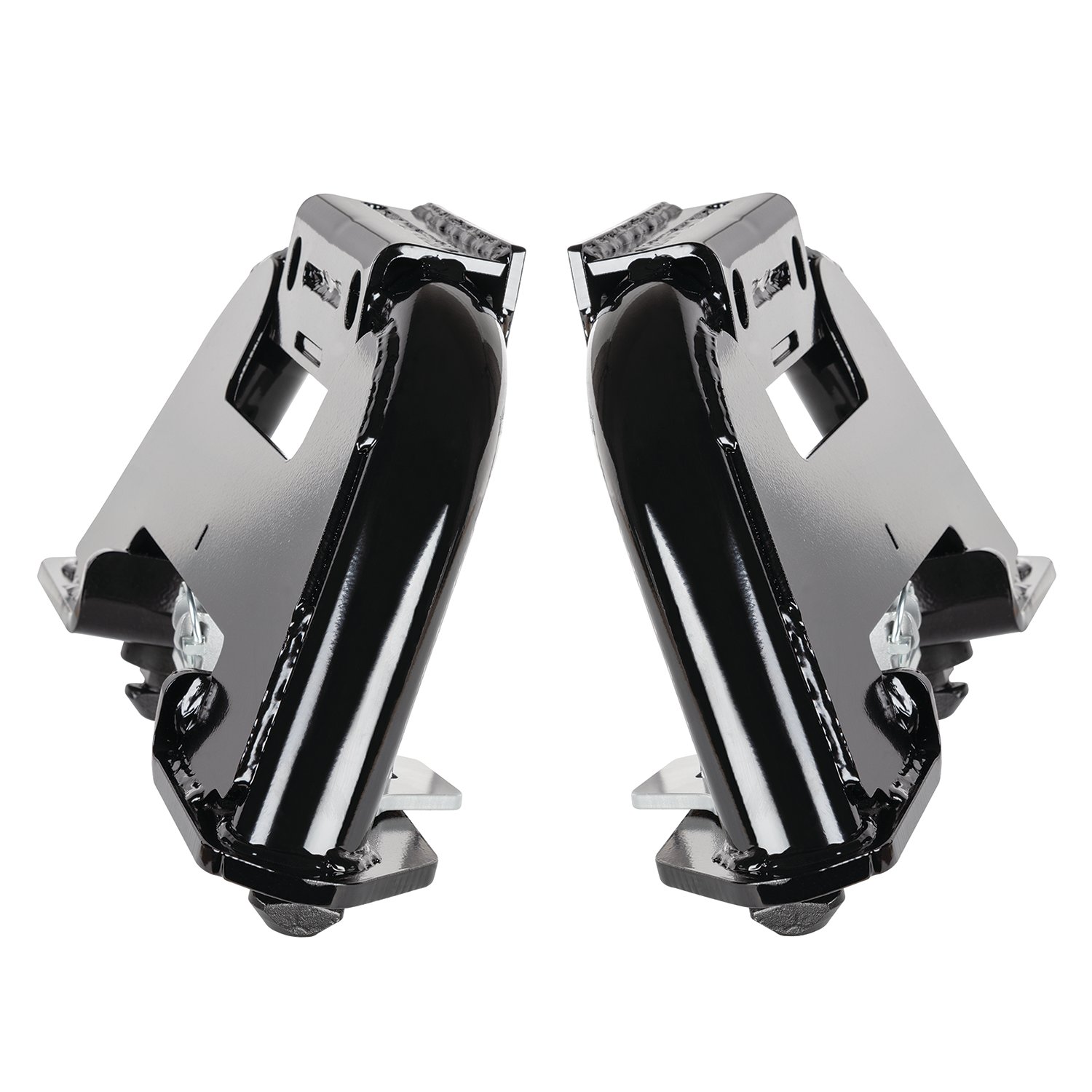
The M5 GM Leg is a support leg assembly for GM 5th wheel hitch systems. It connects the M5 Center Section to the truck bed and provides vertical adjustment to ensure proper clearance between the truck bed rail and trailer. The leg comes pre-assembled, adjusted, and ready to install.
The M5 Head and M5 32K Center Section are sold separately and are required for installation. The leg is designed to work only with these components as part of a complete M5 5th wheel hitch system.
A minimum of 6 inches of clearance is required between the truck bed rail and the bottom of the trailer. The M5 GM Leg provides 4 inches of vertical adjustment to help achieve this clearance. Refer to the GUIDELINES FOR MATCHING HITCH, TRUCK, AND TRAILER section in the M5 Head and Center Section instruction sheet for detailed fitment guidance.
You will need: 15/16" wrenches, pliers, and a torque wrench. The torque wrench is essential because the 5/8" hex-head bolts must be tightened to exactly 210 ft-lb of torque.
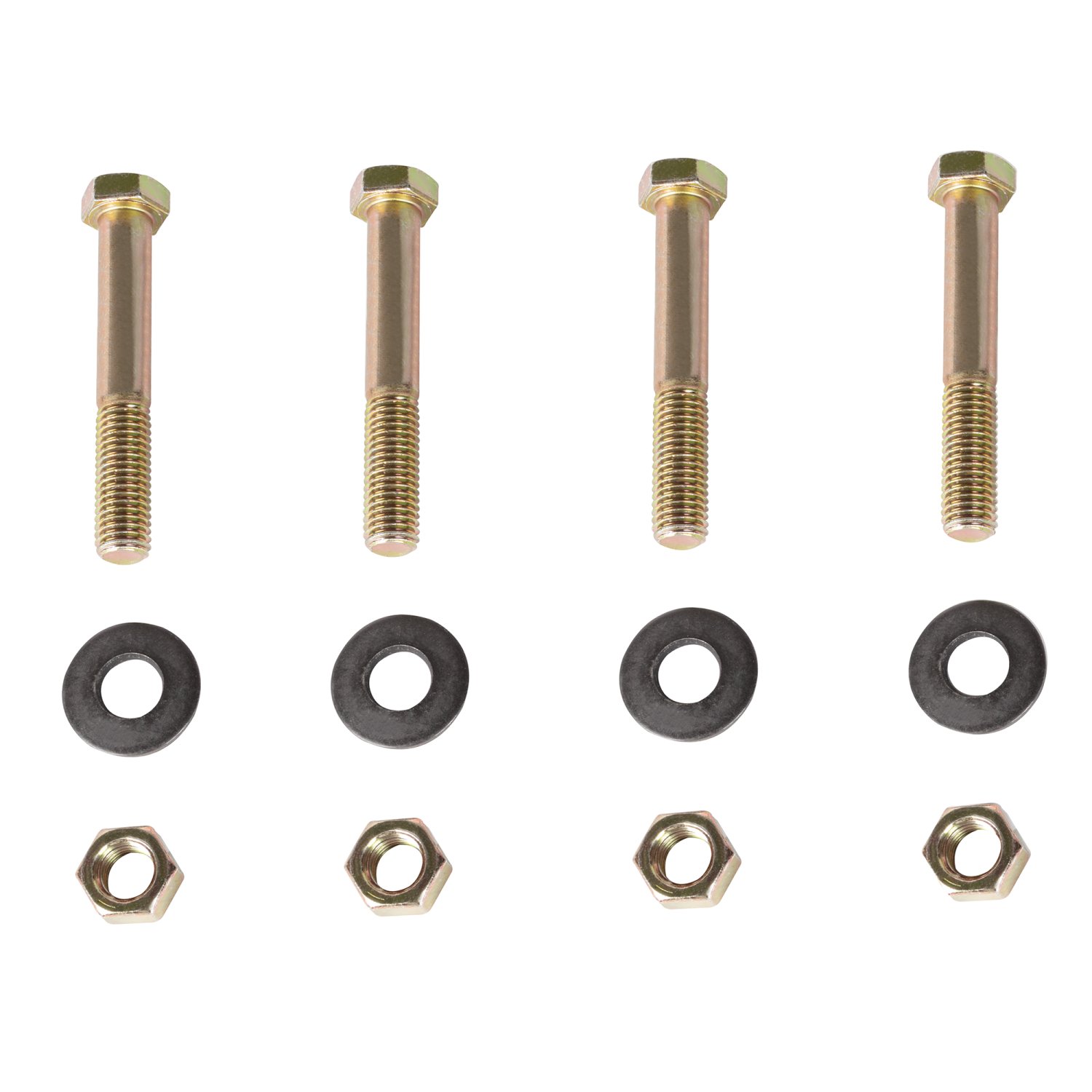
The kit includes: (4) 5/8"-11 x 4.25" Grade 8 bolts, (4) 5/8" conical washers, (4) 5/8"-11 nuts, (4) T-pin locking handles, (2) lynch pin handle locks, (4) castle nuts, (8) cotter pins, (4) T-pins, and (4) T-bushings. Additional cotter pins are provided for convenience.
Yes. The M5 GM Leg comes pre-assembled, adjusted, and ready to install. You do not need to assemble the leg itself before attaching it to the center section.
Yes. Legs must be attached at the same height on both sides of the unit. The M5 GM Leg has 4 inches of vertical adjustment to allow you to match the height on both sides while maintaining the required 6-inch minimum clearance.
1. Insert the (4) 5/8" hex-head bolts from the outside of the center section through the bolt holes in the legs and into the inside of the center section. 2. Thread on the 5/8" nuts and conical washers (teeth side toward hitch). 3. Finger-tighten the fasteners initially until final adjustments are made. 4. Once positioning is correct, tighten each bolt to 210 ft-lb of torque. The conical washers must have the teeth side facing toward the hitch on both the top and bottom.
1. Remove the (2) lynch pins. 2. Position the legs over the pucks with the handles in the OPEN position. 3. Once the unit is placed in the pucks, rotate the handles back to the CLOSED position. 4. Insert the lynch pins back into the leg to prevent the handles from opening during operation.
Due to variations in truck underbeds, some handles may be loose or too tight. If a handle rattles or cannot close fully: 1. Remove the cotter pin. 2. Adjust the castle nut by hand to a position where the handle does not rattle and can close. 3. Finger-tighten the castle nut only. 4. Re-insert the cotter pin and bend the end with pliers to hold it in place. Additional cotter pins are provided in the hardware kit.
Each 5/8" hex-head bolt that connects the leg to the center section must be tightened to 210 ft-lb of torque. This torque is applied after the GM Leg T-pin handles are locked and the T-pins are securely held in the truck bed structure.
After tightening all bolts to 210 ft-lb of torque, lift each side of the hitch to verify that it is tight to the truck bed. There should be no movement or play. If the hitch moves, recheck that all bolts are torqued correctly and that the lynch pins are fully seated.
After the legs are installed and torqued to 210 ft-lb, assemble the M5 Head to the M5 Center Section following the instructions included with those components.
Before any trip, verify that: (1) cotter pins, foot bracket, and castle nut are undamaged and securely locked; (2) lynch pins are securely locked in place with little to no vertical play; (3) the orientation of the lynch pin is correct in relation to the foot (see the image in the maintenance section for proper orientation).
Every 1,000 miles, check the 5/8" hex bolts that connect the center section to the legs to ensure they are still torqued to 210 ft-lb of torque. Retighten if necessary.
Failure to follow installation and hitch-up instructions may cause property loss, serious injury, or death. Additionally, do not exceed the towing vehicle manufacturer's recommended towing capacity under any circumstances.
Yes. A torque wrench is required because the 5/8" hex-head bolts must be tightened to exactly 210 ft-lb of torque.
Yes. The M5 GM Leg comes pre-assembled, adjusted, and ready to install. No assembly is required before attachment to the center section.
Tighten each 5/8" hex-head bolt to 210 ft-lb of torque after the legs are positioned and the T-pins are locked in place.
Every 1,000 miles, check and retorque the 5/8" hex bolts to 210 ft-lb if necessary.
A minimum of 6 inches of clearance is required between the truck bed rail and the bottom of the trailer. The M5 GM Leg provides 4 inches of vertical adjustment to help achieve this.
Before any trip, verify that cotter pins, foot bracket, castle nut, and lynch pins are undamaged, securely locked, and have little to no vertical play.
Loose and rattling handles are normal due to variations in truck underbeds. To fix: (1) Remove the cotter pin. (2) Adjust the castle nut by hand to a position where the handle does not rattle. (3) Finger-tighten the castle nut only. (4) Re-insert the cotter pin and bend the end with pliers to hold it in place.
The handle may be too tight due to variations in truck underbeds. To fix: (1) Remove the cotter pin. (2) Adjust the castle nut by hand to a position where the handle is able to close. (3) Finger-tighten the castle nut only. (4) Re-insert the cotter pin and bend the end with pliers to hold it in place.
Movement indicates the hitch is not properly secured. Check that: (1) All 5/8" hex-head bolts are tightened to 210 ft-lb of torque. (2) The lynch pins are fully inserted and secured in the truck bed structure. (3) The T-pin handles are locked in the closed position. Retighten any loose bolts and verify all pins are seated.
Jennifer
The staff was able to quickly assist me with locating the correct product I needed. Shipping was really fast. Item arrived in 2 days. Will be using TowUniverse again!!
May 22, 2023

On Sale Today
You save $134.61 (22%)
Free Shipping
Ships free on all orders
 Authorized Dealer
Quick Ship
In stock and ready to ship — order now!
FREE ShippingFREE SHIPPING
Estimated delivery Tue, Sep 22 - Fri, Sep 25
Order before 2 PM EST Monday–Friday for same-day processing
Guaranteed safe & secure checkout