
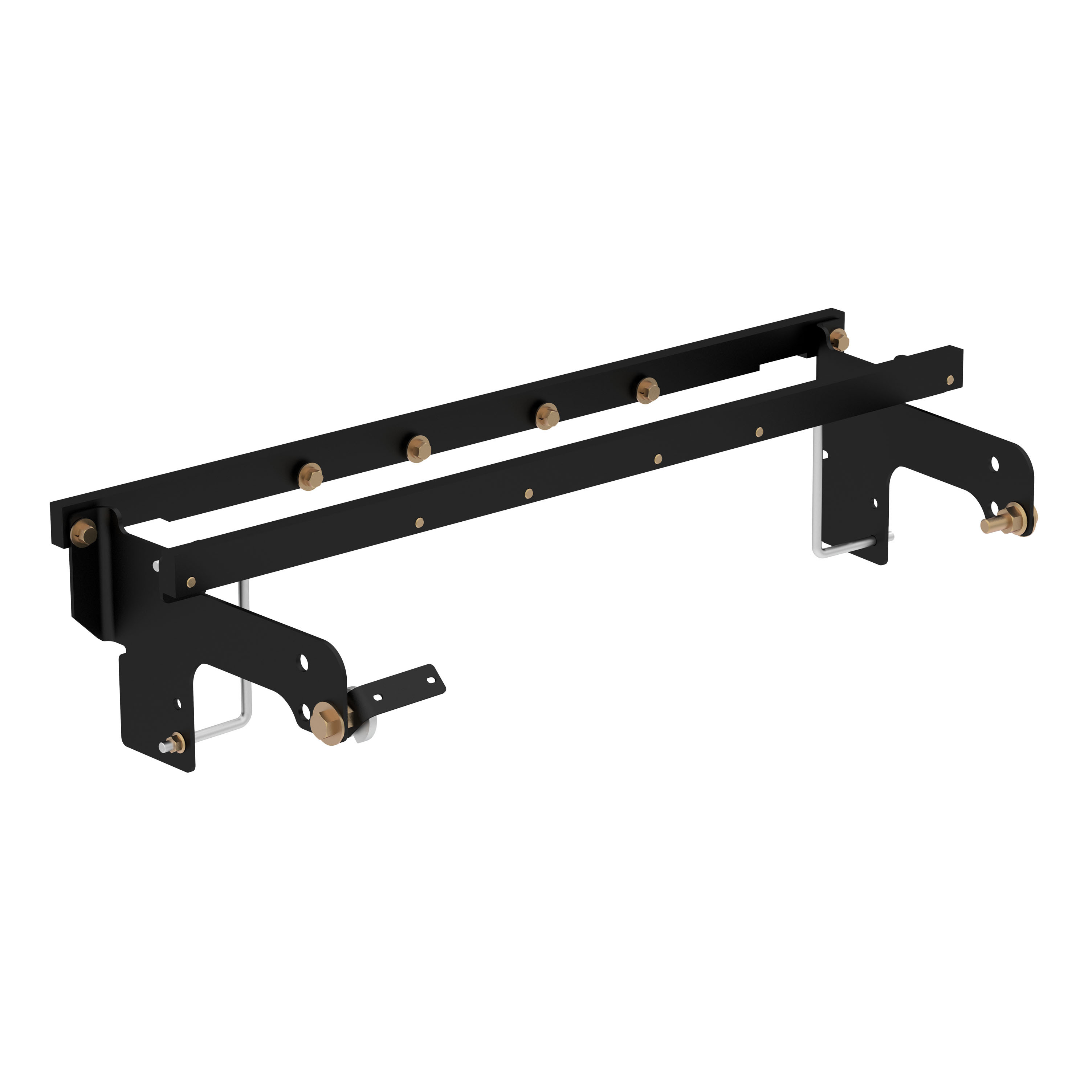
CURT 61503 Over-Bed Gooseneck Installation Brackets, Fits Select Chevrolet, GMC C / K-Series, 8-Foot BedCURTOriginal price was $388.95. Current price is $236.71.Out of Stock
View productOur in-house experts typically reply within one business day.

CURT
Verify Fitment
Select your vehicle to confirm this part fits.


Always the correct part
We know our products
Quality Products
Free Shipping!
Always the correct part
We know our products
Quality Products
Free Shipping!
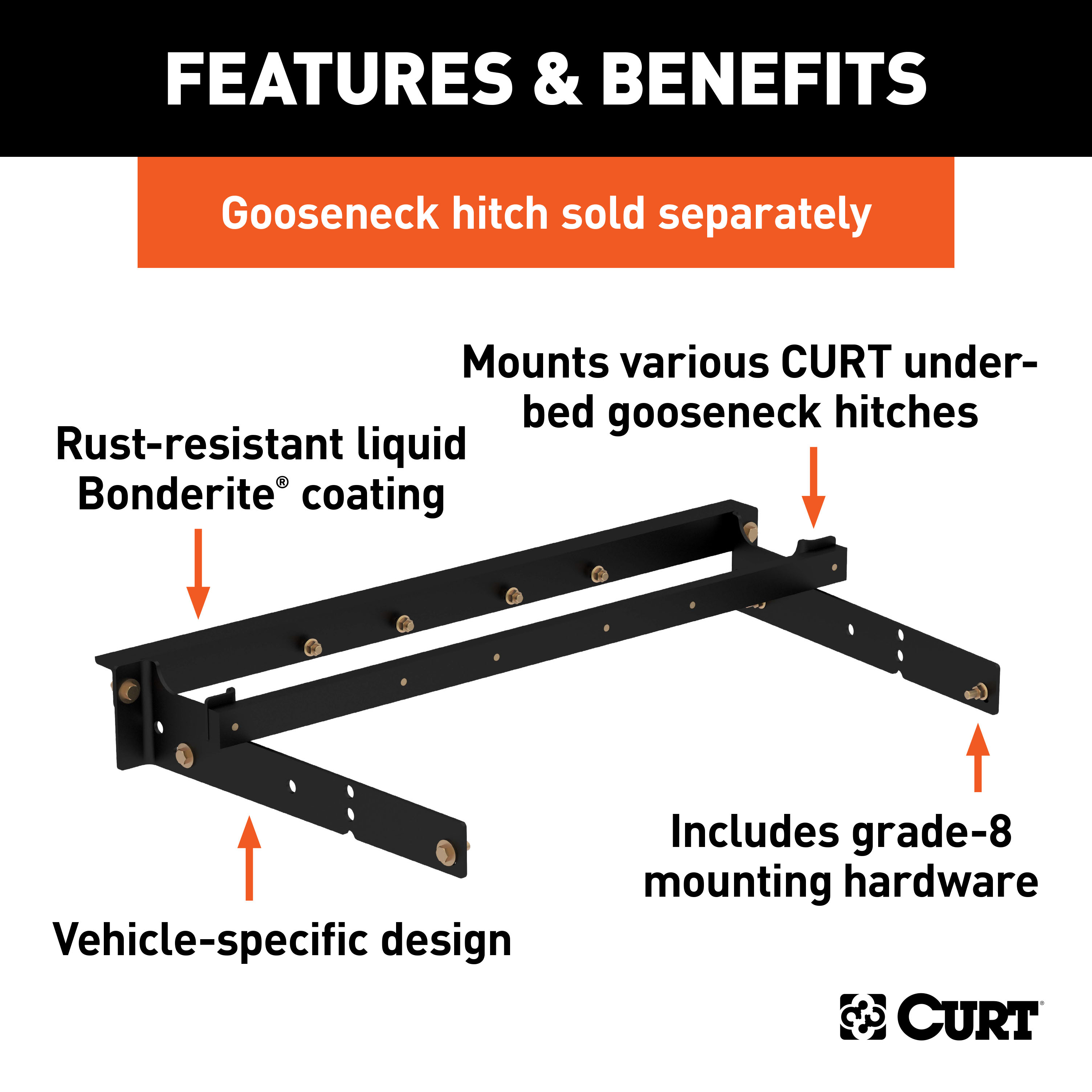
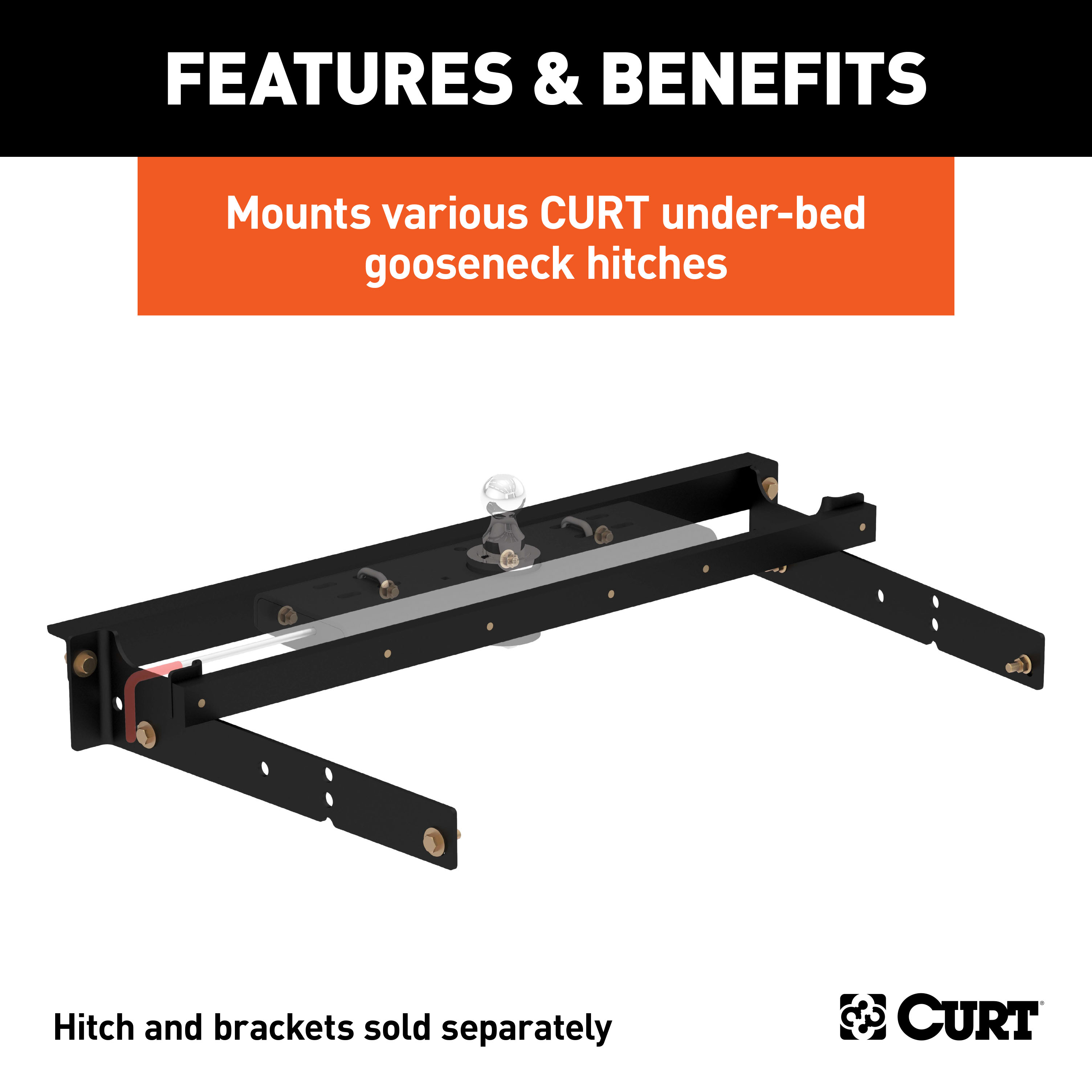
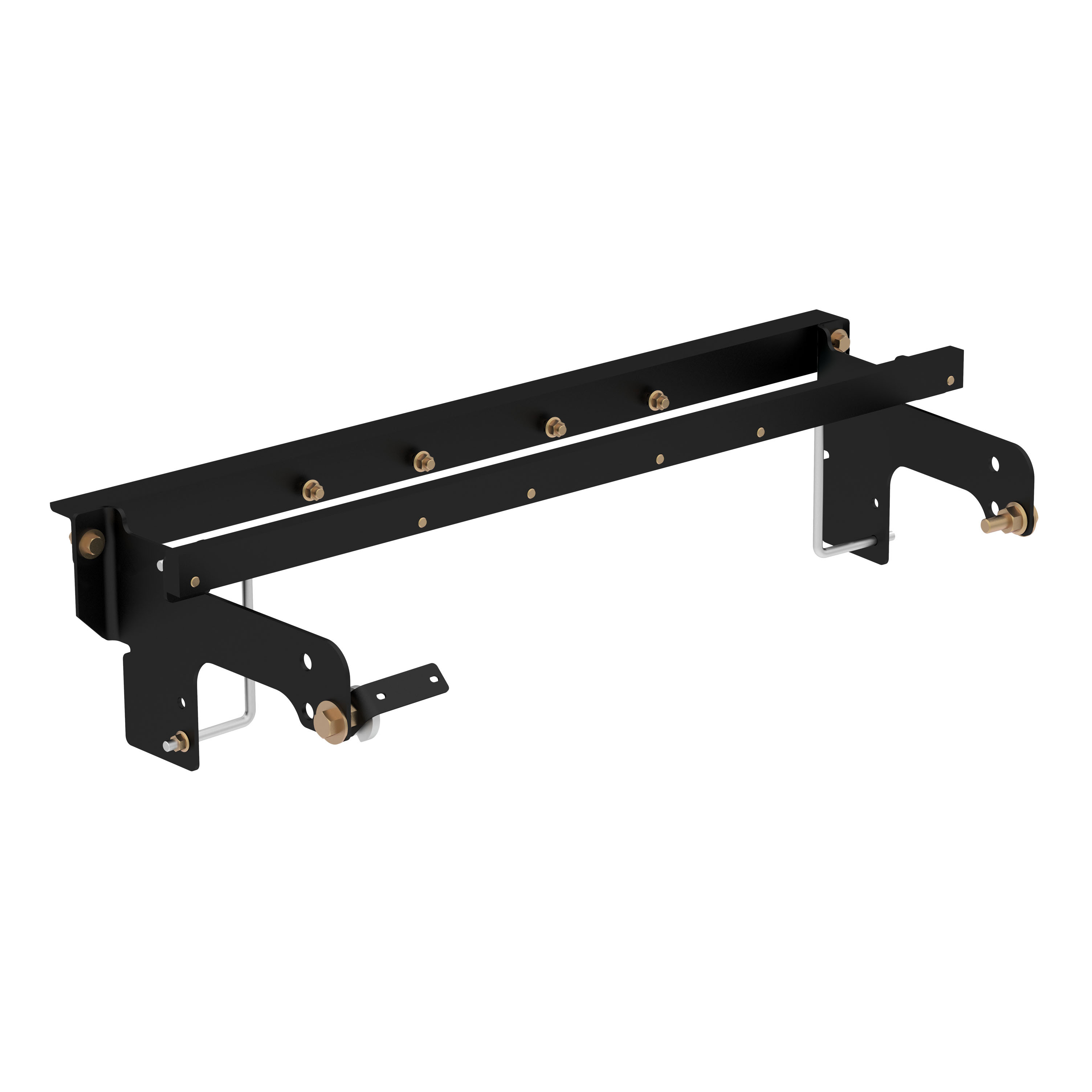
Includes mounting brackets only (gooseneck hitch sold separately)
Capacity limited to lowest-rated towing component

Includes mounting brackets only (gooseneck hitch sold separately)
Warranty: Limited Lifetime Warranty (One-Year Finish, One-Year Parts)
Finish: A-COAT
Installation Time Exact (Minutes): 0
Choosing the right gooseneck hitch is only half the battle in preparing your pickup truck for towing a gooseneck trailer. CURT gooseneck hitches are a premium option in the heavy-duty towing industry, but they are only one of the members in the heavyweight tag team that is CURT gooseneck towing. While a gooseneck hitch gets all the glory above the floor of your truck bed, gooseneck installation brackets provide sure footing and a solid foundation for that oversized gooseneck trailer. Gooseneck installation brackets work by bolting onto the frame of your truck, typically using pre-existing holes. With a set of brackets firmly bolted on, a gooseneck hitch is able to be attached and is given the strength it needs to manage the massive amount of weight of a gooseneck trailer. With so many gooseneck hitch options available from CURT, we wanted to make sure we offered the gooseneck installation products needed to give you a complete towing package. Our installation brackets fit multiple vehicles and hitch heads. This particular set of gooseneck installation brackets is able to work with CURT Double Lock, Quick Goose II and under-bed folding ball gooseneck hitches. It is rated to the vehicle's maximum gross trailer weight capacity and provides a custom fit for certain years of the Chevrolet Silverado 2500 or 3500 with old body style, Chevrolet full-size pickup (excluding 34" frame), GMC Sierra 2500 or 3500 with old body style or GMC full-size pickup (excluding 34" frame) (see application info to verify fitment). With each set of CURT gooseneck installation brackets, we provide the necessary hardware for an easier installation, and we coat our gooseneck brackets in a liquid A-coat to make sure rust and other potential damages are not a problem.

CURT offers a variety of high-quality trailer hitches and accessories for select vehicle models. Find the perfect fit for your towing needs at TowUniverse.
CURT, a Lippert brand, offers a complete line of towing products and is the leading manufacturer of custom-fit trailer hitches. We offer the broadest selection of custom-fit hitches, and each one is designed, welded, and coated in Wisconsin.
CURT is also a leader in flat towing products, as well as 5th wheel, gooseneck, and weight distribution hitches, ball mounts, electrical components, cargo solutions, and other towing accessories.
For everything from passenger cars and vans to full-size pickups and SUVs, CURT is 'The First Name in Towing Products®.'
Experts available to answer your questions
Call 888-634-949428 compatible vehicles
| Year | Make & Model | Style | Notes |
|---|---|---|---|
| 1988 - 1999 | Chevrolet C1500 | — | No Drilling Required |
| 1999 - 2000 | Chevrolet C2500 | Crew Cab Pickup | No Drilling Required |
| 1988 - 2000 | Chevrolet C2500 | Extended Cab Pickup · 2-Door | No Drilling Required |
| 1988 - 2000 | Chevrolet C2500 | Standard Cab Pickup · 2-Door | No Drilling Required |
| 1992 - 2000 | Chevrolet C3500 | Crew Cab Pickup | No Drilling Required |
| 1988 - 2000 | Chevrolet C3500 | Extended Cab Pickup · 2-Door | No Drilling Required |
| 1988 - 2000 | Chevrolet C3500 | Standard Cab Pickup · 2-Door | No Drilling Required |
| 1988 - 1999 | Chevrolet K1500 | — | No Drilling Required |
| 1999 - 2000 | Chevrolet K2500 | Crew Cab Pickup | No Drilling Required |
| 1988 - 2000 | Chevrolet K2500 | Extended Cab Pickup · 2-Door | No Drilling Required |
| 1988 - 2000 | Chevrolet K2500 | Standard Cab Pickup · 2-Door | No Drilling Required |
| 1992 - 2000 | Chevrolet K3500 | Crew Cab Pickup | No Drilling Required |
| 1988 - 2000 | Chevrolet K3500 | Extended Cab Pickup · 2-Door | No Drilling Required |
| 1988 - 2000 | Chevrolet K3500 | Standard Cab Pickup · 2-Door | No Drilling Required |
| 1988 - 1999 | GMC C1500 | — | No Drilling Required |
| 1999 - 2000 | GMC C2500 | Crew Cab Pickup | No Drilling Required |
| 1988 - 2000 | GMC C2500 | Extended Cab Pickup · 2-Door | No Drilling Required |
| 1988 - 2000 | GMC C2500 | Standard Cab Pickup · 2-Door | No Drilling Required |
| 1992 - 2000 | GMC C3500 | Crew Cab Pickup | No Drilling Required |
| 1988 - 2000 | GMC C3500 | Extended Cab Pickup · 2-Door | No Drilling Required |
| 1988 - 2000 | GMC C3500 | Standard Cab Pickup · 2-Door | No Drilling Required |
| 1988 - 1999 | GMC K1500 | — | No Drilling Required |
| 1999 - 2000 | GMC K2500 | Crew Cab Pickup | No Drilling Required |
| 1988 - 2000 | GMC K2500 | Extended Cab Pickup · 2-Door | No Drilling Required |
| 1988 - 2000 | GMC K2500 | Standard Cab Pickup · 2-Door | No Drilling Required |
The CURT 60631 Under-Bed Gooseneck Installation Brackets, Fits Select Chevrolet Silverado, GMC Sierra C / K (Part #BKDK60631) fits 1988-1999 Chevrolet C1500 models. The 2000 model year is the last year covered by this part number. For newer models, check for an updated version.
Yes, the CURT 60631 Under-Bed Gooseneck Installation Brackets, Fits Select Chevrolet Silverado, GMC Sierra C / K (Part #BKDK60631) is designed to fit the 1988-1999 Chevrolet C1500.
The CURT 60631 Under-Bed Gooseneck Installation Brackets, Fits Select Chevrolet Silverado, GMC Sierra C / K (Part #BKDK60631) fits the following vehicles: 1988-1999 Chevrolet C1500; 1988-2000 Chevrolet C2500; 1988-2000 Chevrolet C3500; 1988-1999 Chevrolet K1500; 1988-2000 Chevrolet K2500; 1988-2000 Chevrolet K3500; 1988-1999 GMC C1500; 1988-2000 GMC C2500; 1988-2000 GMC C3500; 1988-1999 GMC K1500; 1988-2000 GMC K2500; 1988-2000 GMC K3500. Always verify your specific year, make, and model before ordering.
The CURT 60631 Under-Bed Gooseneck Installation Brackets, Fits Select Chevrolet Silverado, GMC Sierra C / K (Part #BKDK60631) Drilling is not required for installation. Basic hand tools are typically all you need.
The Curt 60631 is designed for 88–98 Chevy and GMC 1/2, 3/4, and 1 ton trucks, and 99–00 Chevy and GMC 3/4 and 1 ton heavy duty trucks with old body style, in both long and short bed configurations. Verify your truck model year, make, tonnage, and bed length against these specifications before purchasing.
Yes, the 60631 is designed for both short and long bed trucks. However, on short-bed models you must check for adequate turning clearance between the front of all trailers and the truck cab before use. The manual provides a clearance calculation method on page 3 to verify the trailer will not interfere with the cab during turns.
Yes. On two-wheel drive trucks, a clearance check must be performed when the truck is both loaded and unloaded to verify the inverted ball will not interfere with the top of the differential. This is a critical safety check before towing.
The 60631 includes: 10 serrated flange nuts 1/2–13 UNC grade 8 (part 20-00062); 4 carriage bolts 1/2–13 UNC 1-1/2 inch grade 8 (part 10-10287); 12 hex head cap screws 1/2–13 UNC 1-1/2 inch grade 8 (part 10-10334); 12 flat washers 1/2 inch (part 30-00133); and 6 lock washers 1/2 inch (part 30-00153).
You will need a 4-inch hole saw or a saber saw equipped with a metal cutting blade (for drilling the truck bed hole), a tape measure, a torque wrench capable of 110 ft.-lbs., standard wrenches or sockets for 1/2-inch fasteners, and an overhead lifting device such as chain falls, an engine hoist, or a cable come-a-long to lift the center section into position.
Yes. The first installation step is to lower and remove the spare tire to provide clearance for the hitch assembly.
Measure from the tailgate end of the truck bed by hooking a tape measure over the back of the truck box. For short bed trucks, the hole should be 44 1/16 inches from the tailgate; for long bed trucks, 48 7/8 inches. Mark the center point between the wheel wells. This location is critical and will position the ball 4–5 inches in front of the axle. Do not measure from the edge of the tailgate.
Make a 4-inch hole using a 4-inch hole saw, or by marking a 4-inch circle and cutting it out with a saber saw equipped with a metal cutting blade. If your truck has a plastic bed liner, you may drill through both, but it is more difficult to accurately locate the midpoint between the wheel wells and to keep the bed liner from moving while cutting.
Yes. All models require modification or removal of heat shields. The manual does not provide specific details on how to modify them; consult the manufacturer or a qualified installer for guidance on your specific truck.
Slide the front cross arm between the truck bed and truck frame on the passenger side. Swing the driver's side into place, then push the cross arm towards the front of the truck. The holes in the cross arm must be facing the back end of the truck.
Slide the rear cross arm between the truck frame and truck bed above one of the rear tires. Slide through until both sides are resting on the truck frame. Rotate the cross arm up into the vertical position.
Raise the center section in position between the cross arms with the ball cylinder towards the back of the truck. The round hitch receiver that protrudes from the top of the center section must fit through the hole in the truck bed. An overhead lifting device such as chain falls, engine hoist, or cable come-a-long can be used to lift the center section. Lower a loop of rope or chain through the hole in the truck bed floor and attach it to the round hitch receiver tube in the center section. Maintaining upward pressure may facilitate fastening the crossmember to the center section, especially if the truck bed floor has been distorted downward from heavy use. Disconnect the lifting device before squaring the center section across the frame, installing the sideplates, and torquing fasteners.
Using four 1/2-inch bolts, washers, and lock washers, attach the center section to the threaded holes in the rear cross arm. Next, attach the front cross arm (angle iron) to the center section using four 1/2-inch carriage bolts and flange nuts. Leave these fasteners finger tight only at this stage; they will be torqued to 110 ft.-lbs. after the assembly is squared and the sideplates are installed.
Thread a 1 1/2-inch bolt with a flat and lock washer through the back flange of the sideplate into the rear cross arm. Place a 1 1/2-inch bolt with a flat washer through the front flange of the sideplate into the front cross arm. Finger tighten with a 1/2-inch flange nut. Repeat for the other side. Leave all fasteners finger tight at this stage.
Align one front hole and one rear hole on each sideplate to the existing holes in the truck frame. Using a 1 1/2-inch bolt with a 1/2-inch flat washer, attach the sideplates to the truck frame. Finger tighten with a 1/2-inch flange nut. Repeat for both sides.
All fasteners on the 60631 must be torqued to 110 ft.-lbs. Torque in the following order: First, torque the center section to the front and rear cross arms. Second, torque the sideplates to the truck frame on both sides. Third, torque the sideplate flanges to the front and rear cross arms. This final torque step is performed only after the sideplates are installed on both sides.
Do not exceed the recommended vehicle towing weight. The manual does not specify a weight limit for the 60631 itself; consult your vehicle manufacturer's documentation for your truck's towing capacity.
No. Do not tow a trailer with worn or damaged parts. Check for ball wear before each use.
Maintenance is required every 30 days or prior to use. Keep the hitch ball lubricated regularly using silicone spray or equivalent to prevent wear and rust. Keep the hitch assembly free of dirt and other foreign debris. Check for proper torque on all nuts and bolts before each use and check for excessive wear. Check for ball wear before each use.
Use silicone spray or equivalent to lubricate the hitch ball regularly. This prevents wear and rust.
The manual provides a clearance calculation method on page 3. Measure the distance from the cab to the ball center (X), subtract half the trailer width (Y), and subtract any coupler overhang (W) if present. If the result is positive, the trailer will not interfere with the cab. If negative, the trailer will interfere. The formula is: (X) − (Y) = (Z) for standard trailers, or [(X) − (W)] − (Y) = (Z) for trailers with overhang. Generally, 8-foot-wide trailers taper to 6 feet at the coupler, and 7-foot-wide trailers taper to 5 feet at the coupler.
Yes, the 60631 is designed for 88–98 Chevy 1/2 ton trucks in both short and long bed. However, you must verify adequate turning clearance between the trailer and cab on short-bed models before towing.
Yes. You must drill a 4-inch hole in the truck bed at a specific location (44 1/16 inches from the tailgate for short bed, 48 7/8 inches for long bed) using a 4-inch hole saw or saber saw with metal cutting blade. Heat shield modification or removal is also required on all models.
You will need a 4-inch hole saw or saber saw with metal cutting blade, a tape measure, a torque wrench for 110 ft.-lbs., wrenches for 1/2-inch fasteners, and an overhead lifting device (chain falls, engine hoist, or cable come-a-long) to position the center section.
All fasteners must be torqued to 110 ft.-lbs. in this order: first the center section to the cross arms, second the sideplates to the truck frame, and third the sideplate flanges to the cross arms.
Every 30 days or before use: lubricate the ball with silicone spray, keep the assembly clean, check all fastener torque, and inspect the ball for wear. Do not tow with worn or damaged parts.
Yes. The spare tire must be lowered and removed before installation.
On Sale Today
Original price was $420.95. Current price is $260.99.You save $159.96 (38%)
Free Shipping
Ships free on all orders
 Authorized Dealer


Quick Ship
In stock and ready to ship — order now!
Shipping from Eau Claire, WIFREE SHIPPING
Estimated delivery Tue, Oct 20 - Thu, Oct 22
Order before 2 PM EST Monday–Friday for same-day processing
Guaranteed safe & secure checkout
No reviews have been added for this product.