
CURT (10-15K, 28-3/8") Short Trunnion Bar Weight Distribution Hitch with Sway ControlCURTOriginal price was $763.95. Current price is $472.99.In Stock
View productOur in-house experts typically reply within one business day.

CURT






Always the correct part
We know our products
Quality Products
Free Shipping!
Always the correct part
We know our products
Quality Products
Free Shipping!
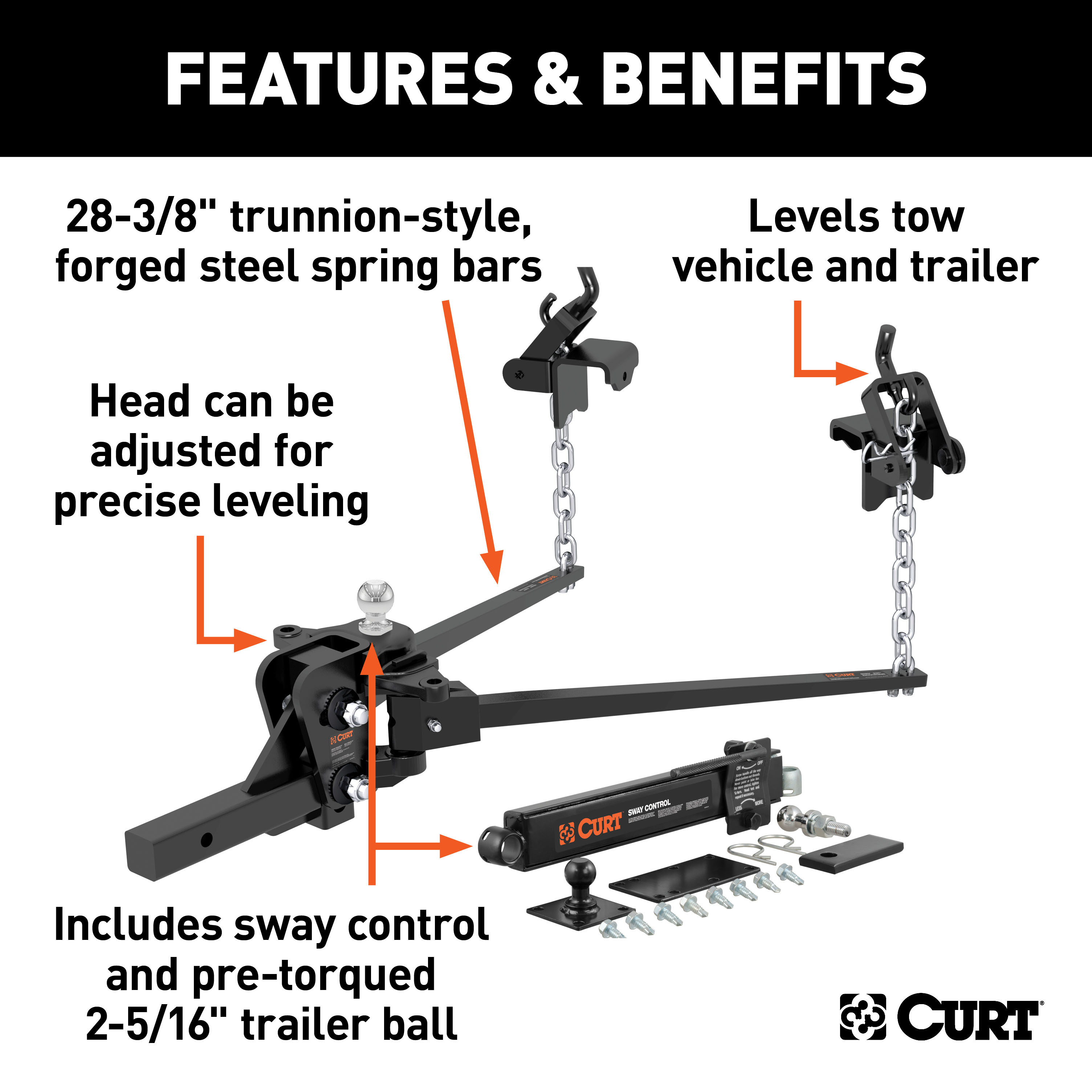
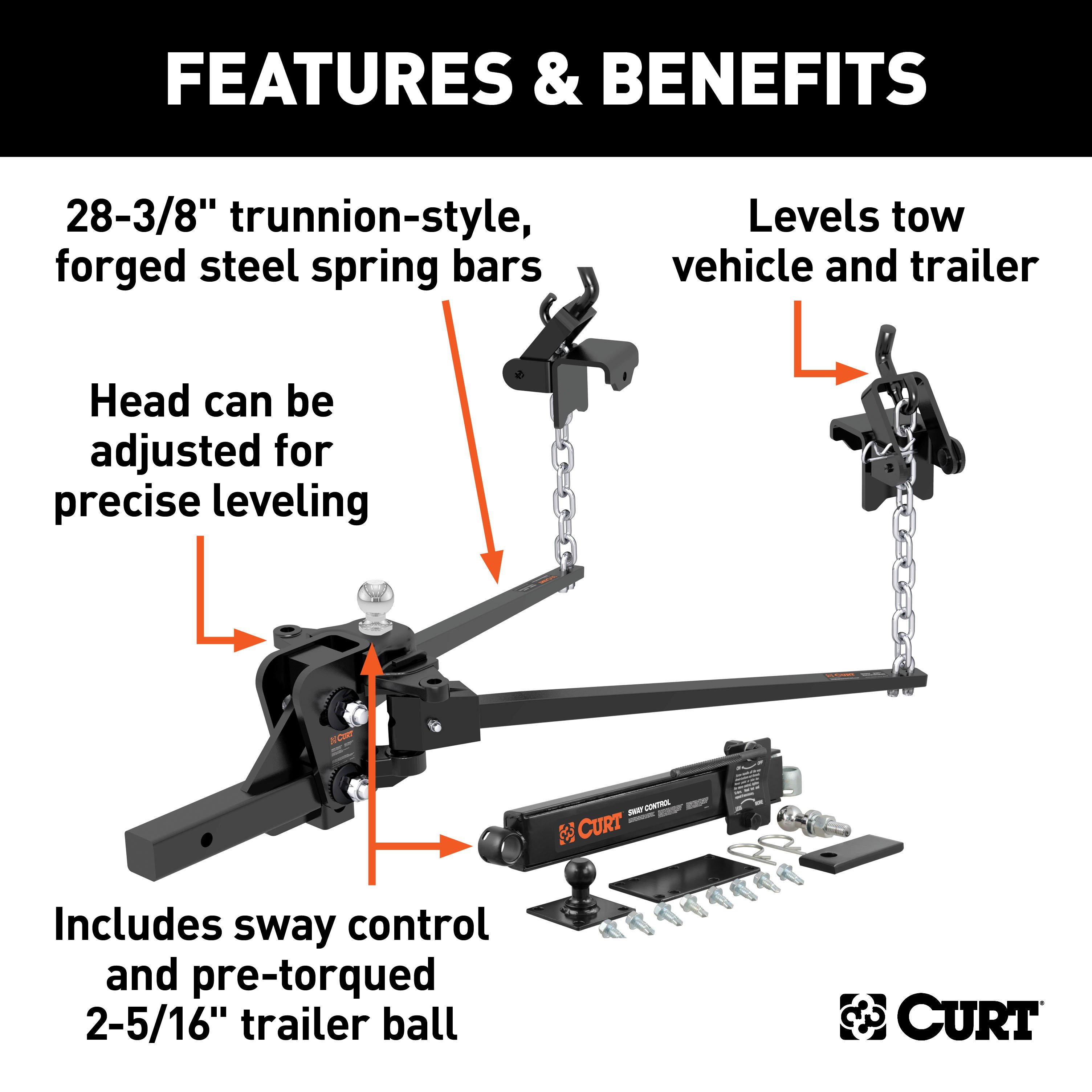
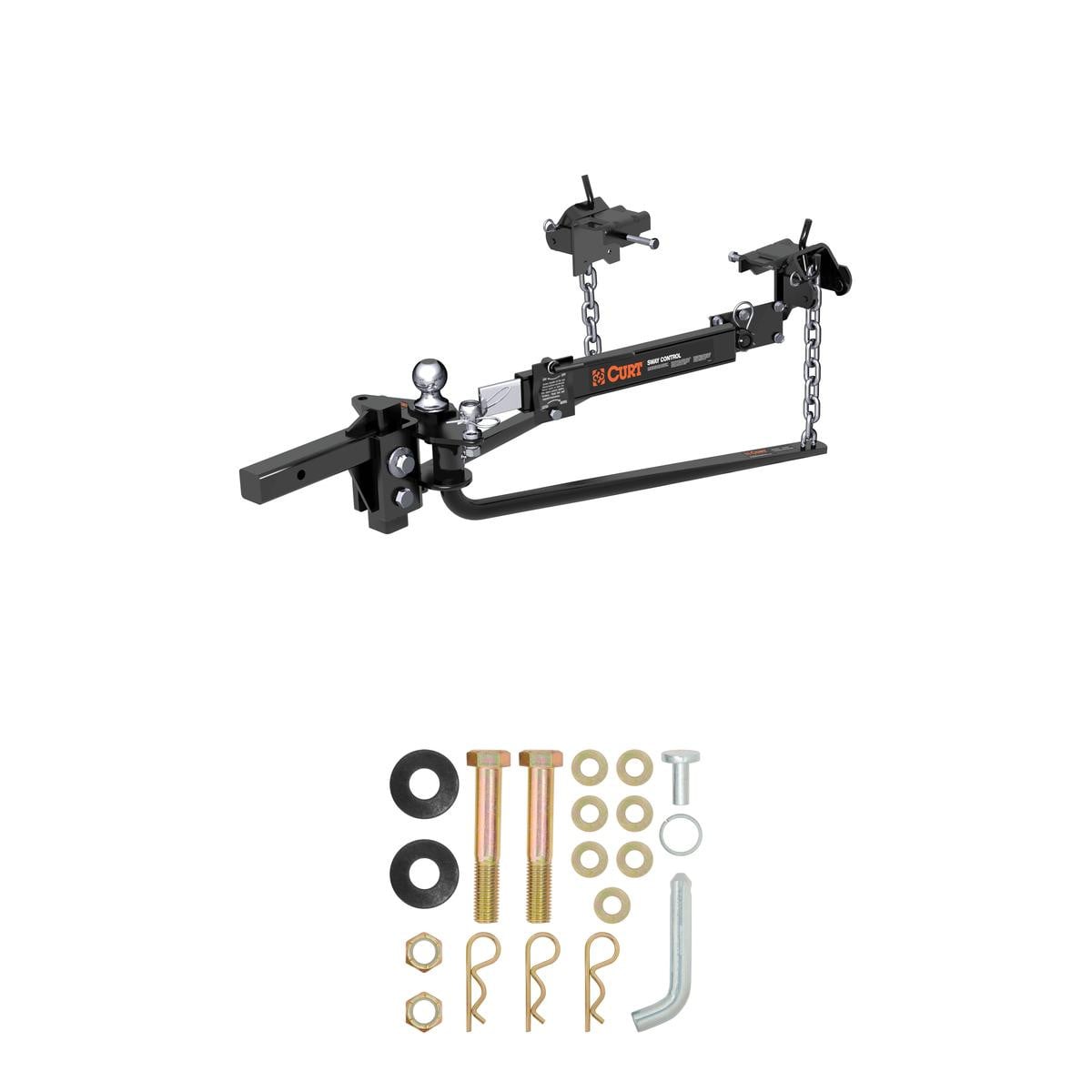
Includes weight distribution hitch, sway control unit and trailer ball

Includes weight distribution hitch, sway control unit and trailer ball
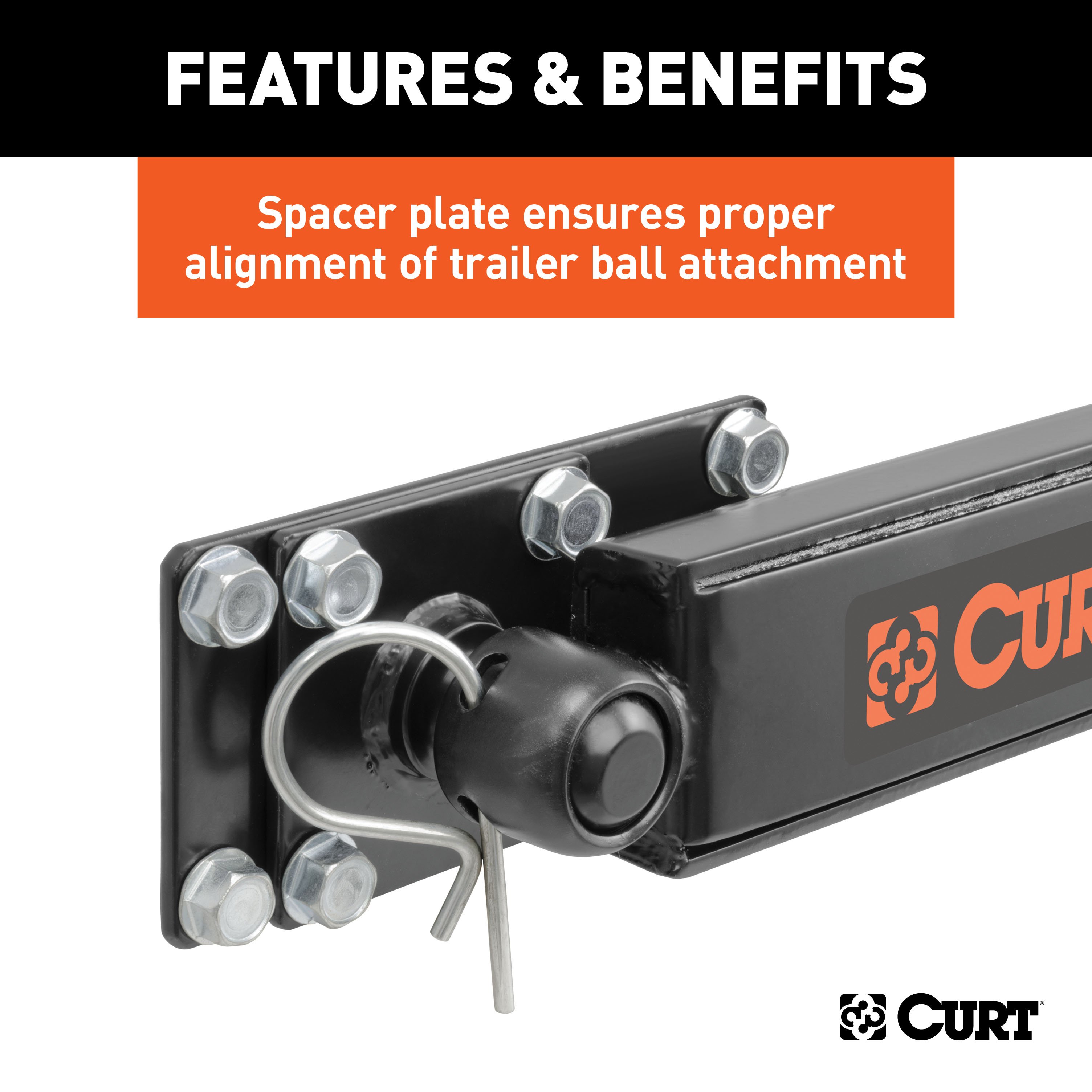
Warranty: Limited Lifetime Warranty (One-Year Finish, One-Year Parts)
Color: Black
Finish: CARBIDE BLACK POWDER COAT
WC / TW (Pounds): 1,000 LB
WC Tongue Weight (Pounds): 1,000 LB
Gross Trailer Weight (Pounds): 10,000 LB
Installation Time Exact (Minutes): 0
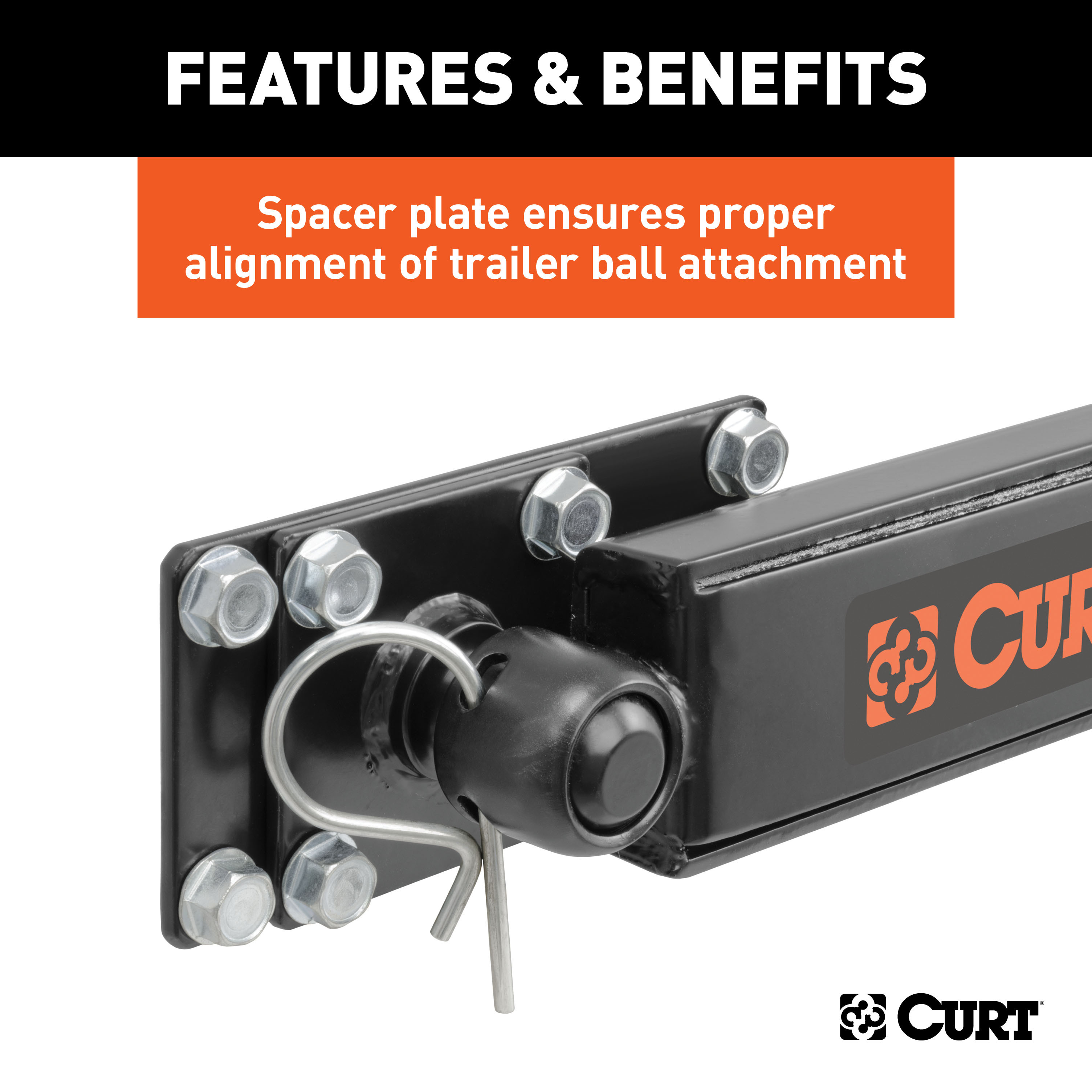
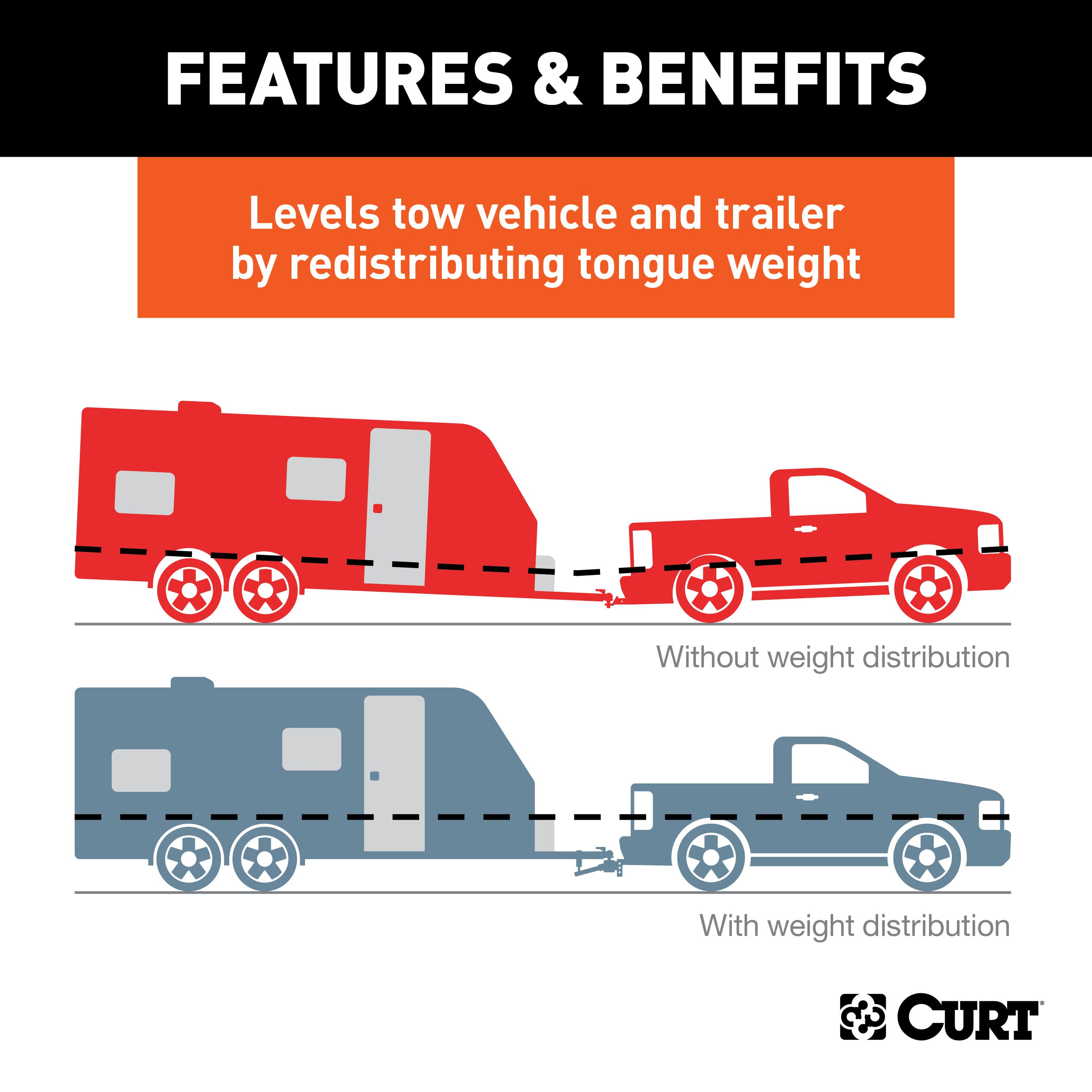
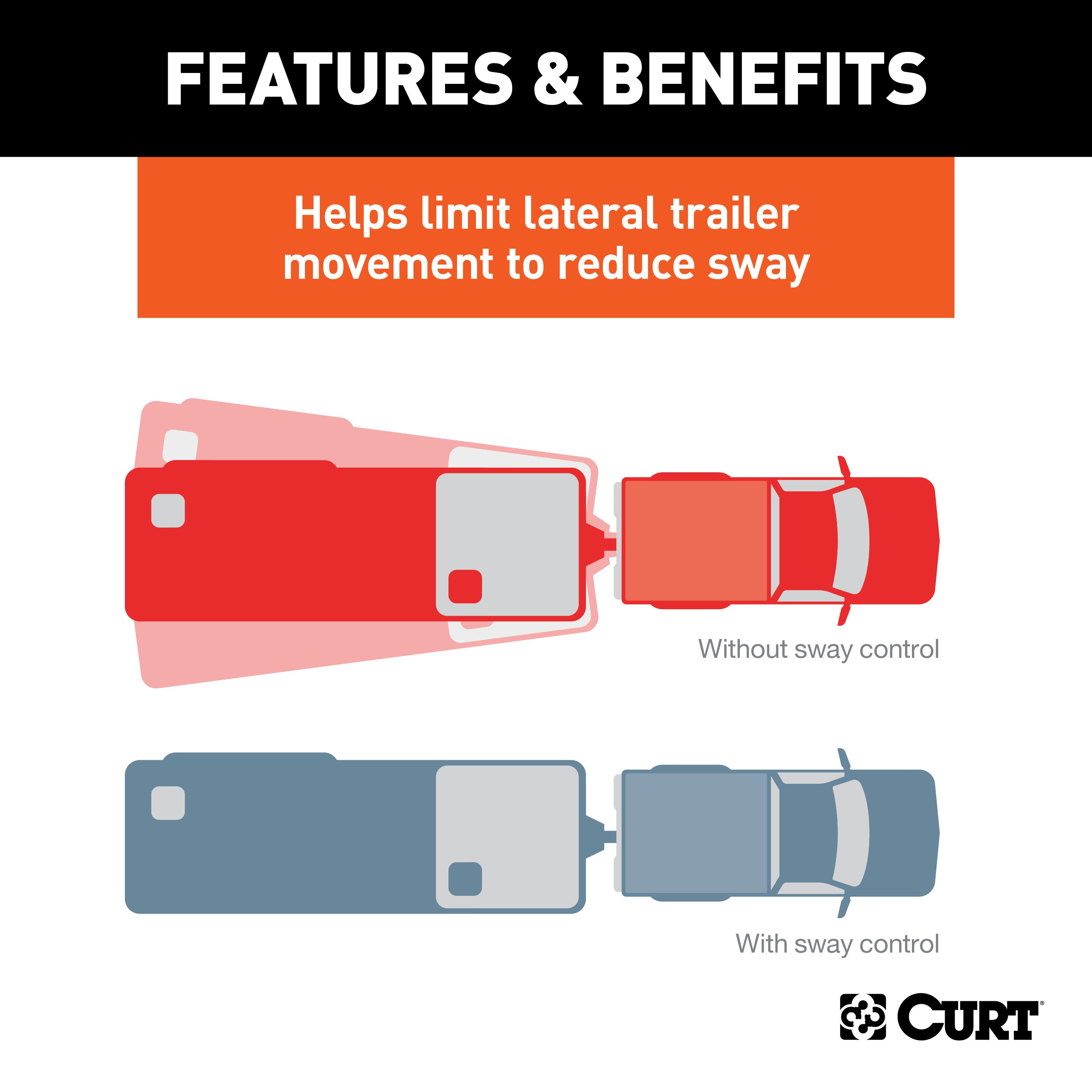
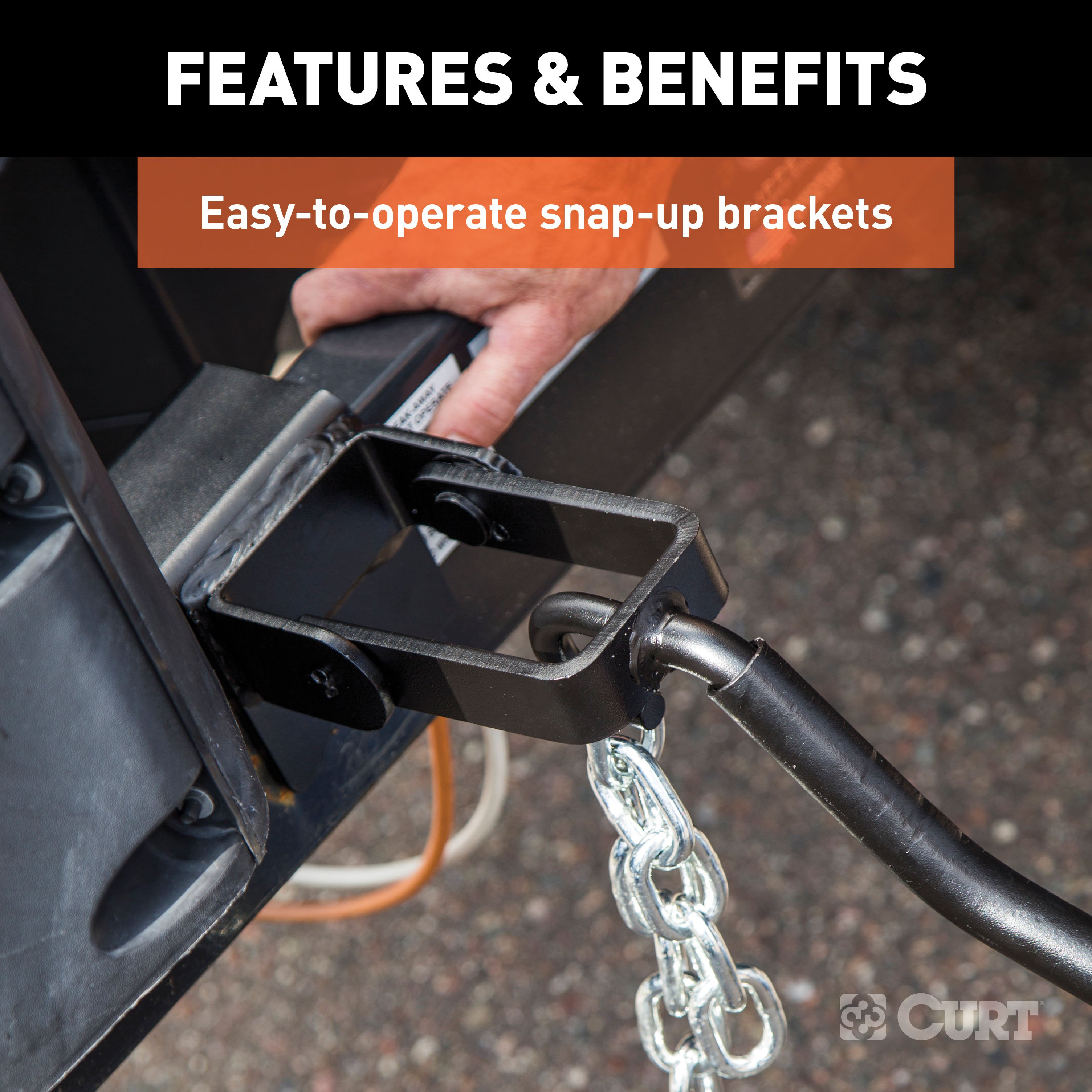
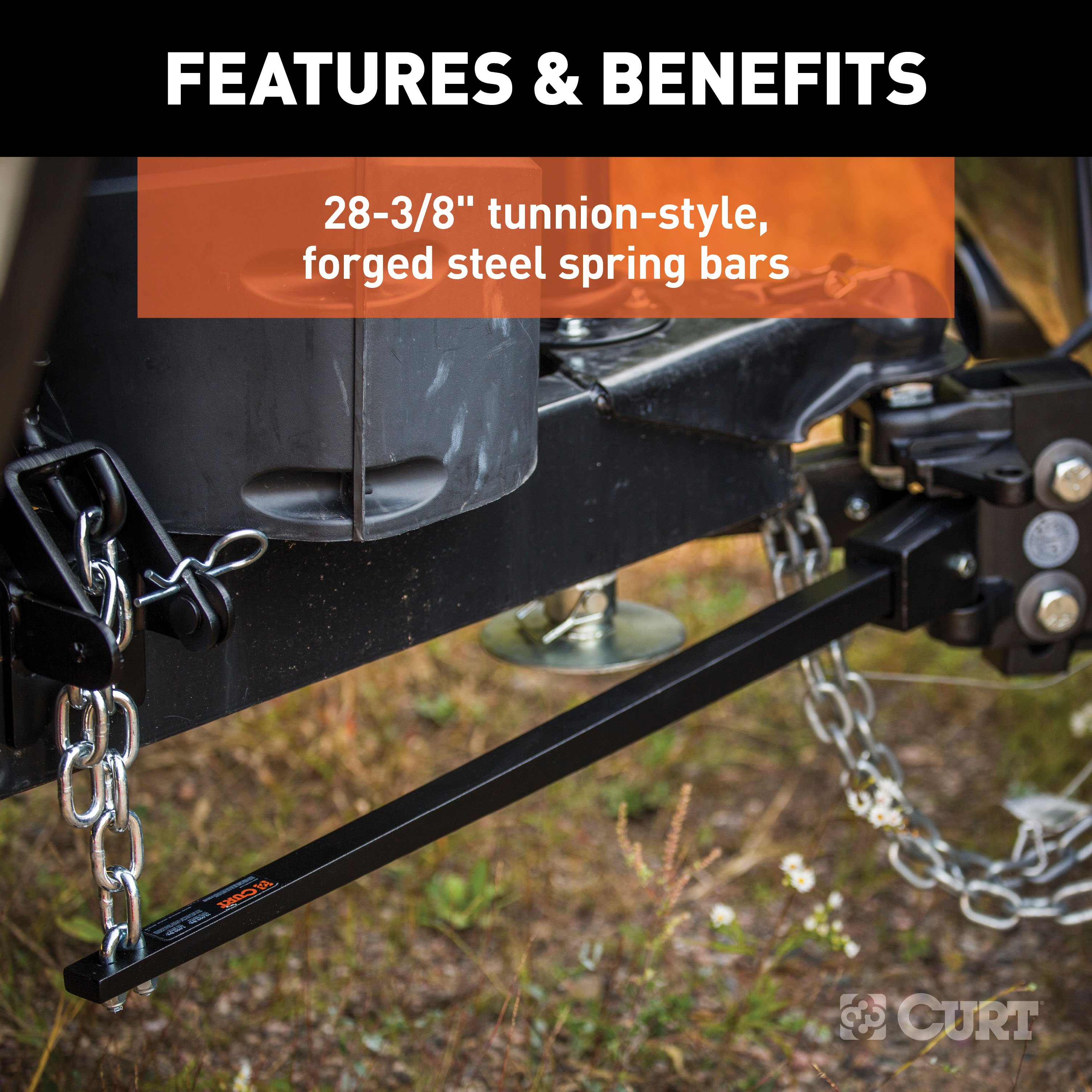
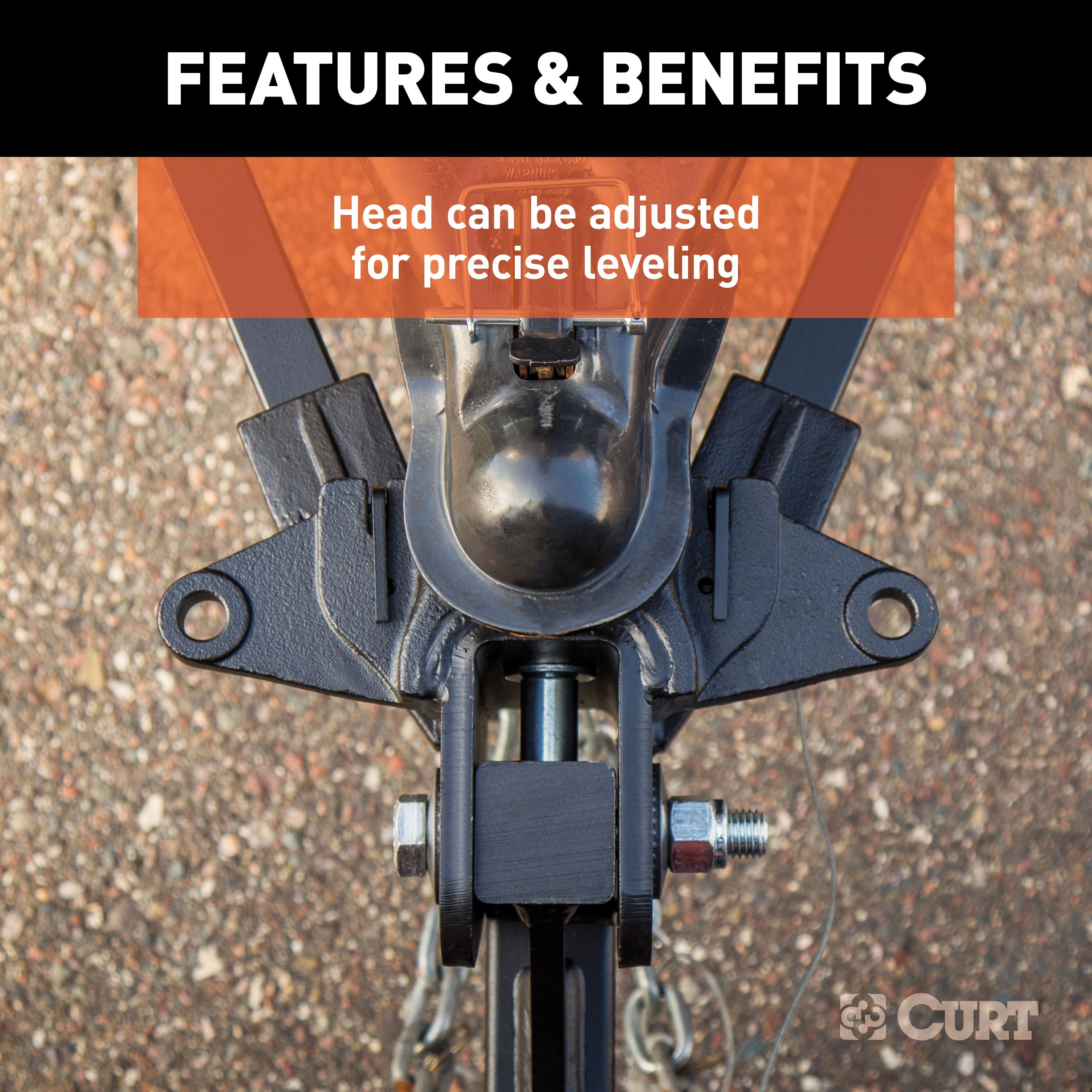
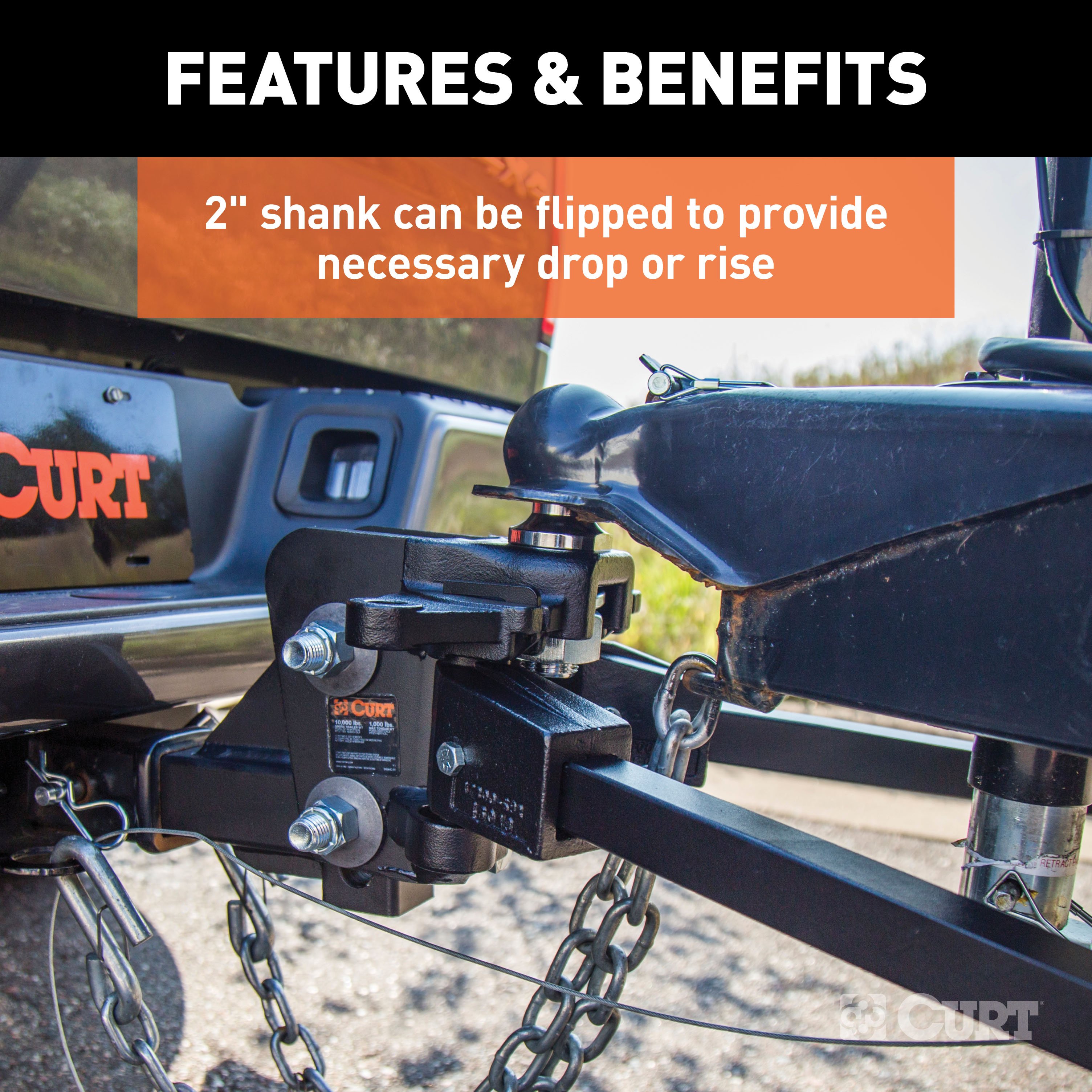
The CURT weight distribution hitch is a specialized towing system that provides improved vehicle and trailer control by leveling the trailer and more evenly distributing its tongue weight across the trailer's and vehicle's axles. Weight distribution hitches are commonly used on travel trailers and campers but can also be applied to other large loads. CURT WD hitches come with a 2" x 2" shank and are compatible with class 3, 4 and most 5 trailer hitches, including Xtra Duty and Commercial Duty (2-1/2" replacement WD shank may be required), as well as some RV trailer hitches. While a weight distribution hitch will increase the gross trailer weight capacity of most trailer hitches, the vehicle's weight carrying capacity must be taken into consideration before towing a heavier trailer (NOTE: Never exceed the lowest weight capacity of any towing component).This trunnion bar weight distribution hitch features a heavy-duty formed head and square spring bars constructed from forged steel. It offers a gross trailer weight capacity up to 10,000 lbs. and a tongue weight capacity of 1,000 lbs. It also includes hook-up brackets, spring bar safety chains, a trailer ball and a pin and clip. To protect this hitch from scratching, chipping, rust and UV damage, it also comes with a durable black powder coat finish. For added sway control, this weight distribution hitch includes a sway control unit. While weight distribution hitches are an effective solution for stabilizing and leveling out your towing rig, they should not be considered a sway control. However, when combined with a CURT sway control kit, the WD hitch maximizes its effectiveness in controlling sway. The sway control kit includes a sway control unit, trailer balls to attach to the trailer and hitch, a reinforcement plate and attachment clips.

CURT offers a variety of high-quality trailer hitches and accessories for select vehicle models. Find the perfect fit for your towing needs at TowUniverse.
CURT, a Lippert brand, offers a complete line of towing products and is the leading manufacturer of custom-fit trailer hitches. We offer the broadest selection of custom-fit hitches, and each one is designed, welded, and coated in Wisconsin.
CURT is also a leader in flat towing products, as well as 5th wheel, gooseneck, and weight distribution hitches, ball mounts, electrical components, cargo solutions, and other towing accessories.
For everything from passenger cars and vans to full-size pickups and SUVs, CURT is 'The First Name in Towing Products®.'

Experts available to answer your questions
Call 888-634-9494Rediscover "Us" Time | Tested. Proven. Safe. Towing Products
The CURT 17322 is a weight distributing hitch designed for trailers with A-frame tongues. It uses spring bars and lift brackets to distribute tongue weight across the towing vehicle's axles, improving stability and braking. Without spring bars, it supports up to 10,000 lbs gross trailer weight and 1,000 lbs tongue weight. With spring bars installed, it supports 8,000–10,000 lbs gross trailer weight and 800–1,000 lbs tongue weight.
The CURT 17322 is designed for trailers with an A-frame tongue and a 1 1/4" threaded-shank hitch ball coupler. If your trailer has a straight (pole) tongue instead, you will need to order a pole tongue adapter kit separately. The hitch supports trailers up to 10,000 lbs gross weight (without spring bars) or 8,000–10,000 lbs (with spring bars).
No, the CURT 17322 is designed for a 1 1/4" threaded-shank hitch ball. If you require a 1" shank, you must order a CURT reducer bushing #21101 separately and attach it to the head assembly.
You will need a wrench to tighten fasteners, a torque wrench to tighten bolts to specification, and a trailer tongue jack to level the trailer and raise it during installation. The manual does not specify additional tools such as a socket set or specific wrench sizes beyond what is needed to turn the fasteners listed in the parts list.
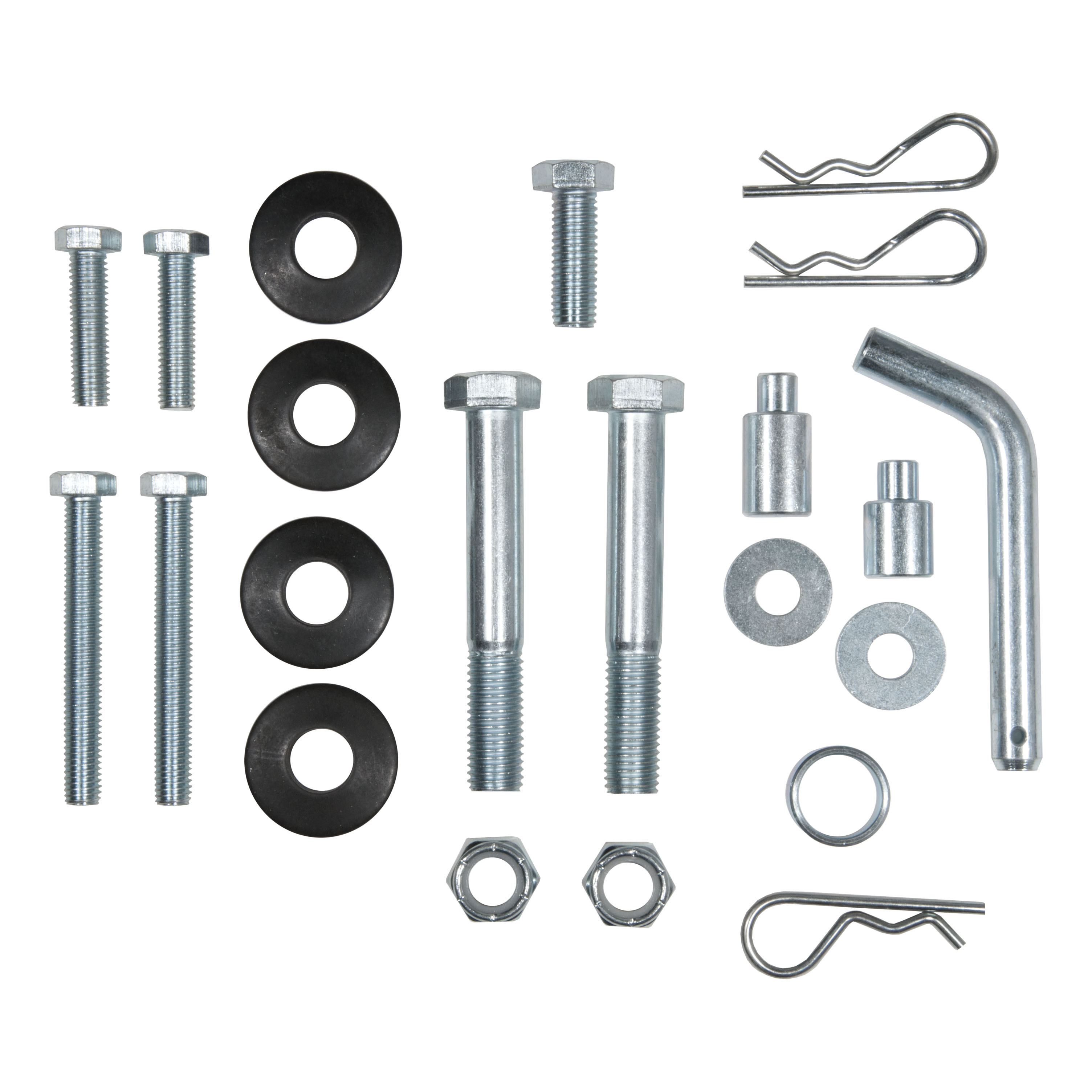
The kit includes: 1 hitch head, 1 adjustable shank bar, 2 spring trunnion bars, 2 snap-up brackets, 1 pipe handle, 2 lift chains (8mm × 400mm), 1 bolt (5/8"–11 × 1 1/2"), 2 hex bolts (3/4"–10 × 5"), 4 conical washers (3/4"), 2 nylock nuts (3/4"–10), 1 hitch pin (5/8" × 3"), 1 clip, 2 U-bolts (3/8"–16), 4 nylock nuts (3/8"–16), 2 bolts (1/2"–13 × 2"), 2 bolts (1/2"–13 × 4"), 2 clips for snap-up brackets, 1 short adjustment rod, 1 long adjustment rod, and 2 flat washers (1/2").
Yes, if your towing vehicle has air springs, air shocks, or automatic leveling systems, you must deflate them to their minimum recommended pressure before assembling and adjusting the weight distributing hitch. Check your vehicle's owner's manual for the correct minimum pressure. This ensures accurate height measurement and adjustment.
You must use level pavement to assemble and adjust the hitch. Line up the tow vehicle and trailer on level pavement in a straight position, and use the trailer tongue jack to level the trailer before measuring coupler height and determining the target ball height.
Measure the distance from pavement to the top of the trailer coupler socket with the trailer level. Then measure the height from pavement to your tow vehicle's front and rear bumpers. For passenger cars, add 1/8" to the coupler height for each 100 lbs of tongue weight. Position the head assembly on the shank at the nearest bolt hole that matches this target height. The uncoupled ball height should be set higher than the coupler height to allow for vehicle squat when coupled.
Yes, the shank bar can be inverted as shown in the manual to obtain proper ball height on high ground clearance vehicles. However, you must check for adequate ground clearance when the shank is in the inverted position to ensure it does not contact the pavement or other obstacles.
Attach each lift chain (8mm × 400mm) to the tapered end of each spring bar using a 3/8" U-bolt and 3/8" nylock nut. Let 2 to 3 threads of the U-bolt extend through the bottom of the locknut. The chain must be free to move in the U-bolt. Apply heavy fibrous grease to the top section of each spring bar before installation.
Hold the spring bar perpendicular to the shank with the trunnion ribbed side up. Insert the bottom knob of the trunnion into the lower pocket of the head assembly. Rotate the spring bar up so the top knob of the trunnion passes through the entrance slot in the upper pocket of the head assembly.
Position the spring bar parallel with the trailer tongue and hold the lift chain vertical alongside the tongue. Position the lift bracket so the chain is centered between the bracket. Mark the location on the trailer tongue. If your trailer has an obstruction on one side of the frame, order an offset lift bracket kit from your dealer and follow the instructions supplied with that kit.
Install a 1/2"–13 bolt (either #15 or #16, depending on frame width) into the threaded hole in the lift bracket. Turn the bolt in until it contacts the trailer tongue, then tighten an additional 1/4 turn with a wrench. Do not overtighten.
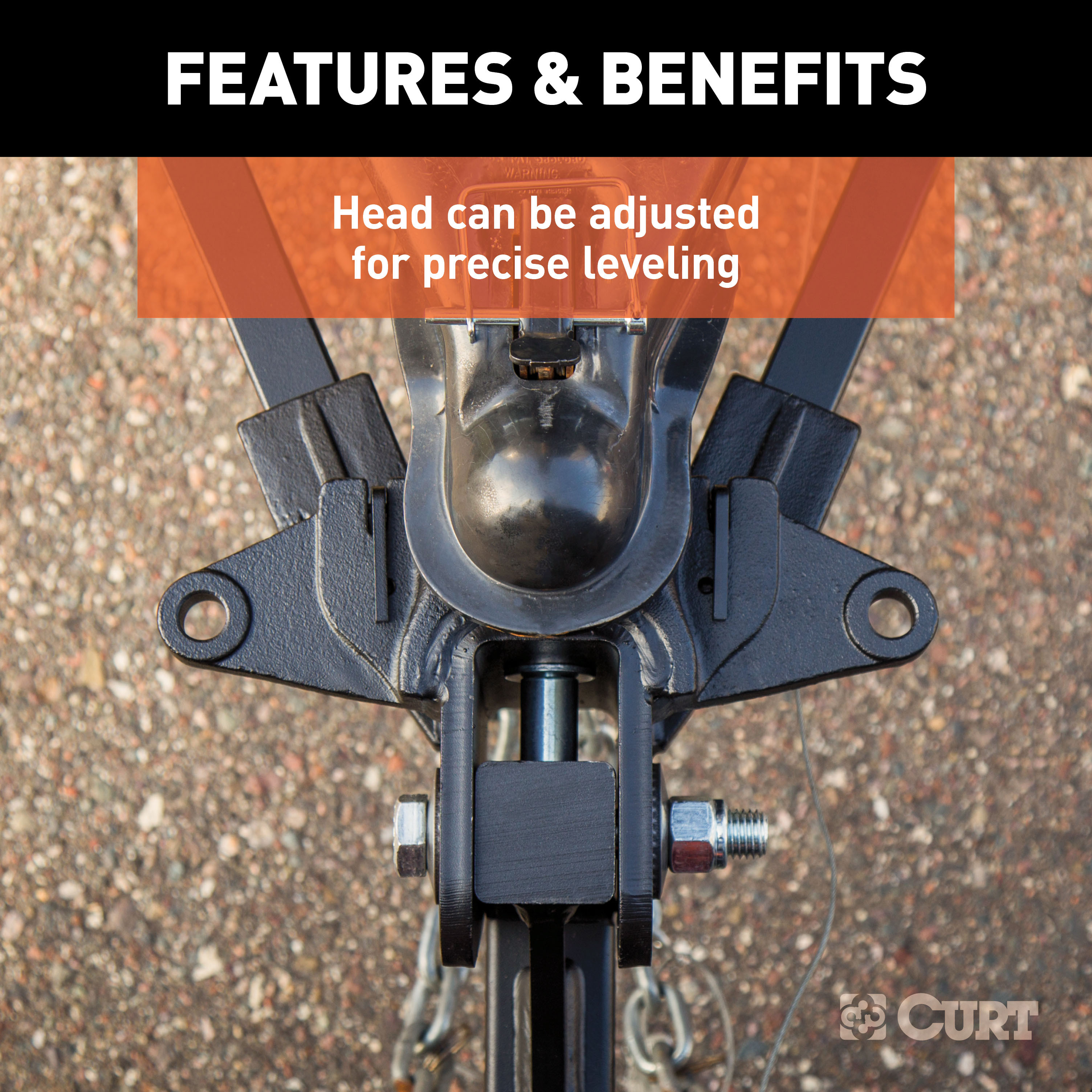
Install the 3/4"–10 × 5" hex bolts through the conical washers and through the head channel holes. Rotate the head forward as far as it will go; the ball should be vertical or tilted slightly back. If not, remove the short adjustment rod and replace it with the long adjustment rod, or change the number of washers on the rod and reassemble. Finger-tighten the nylock nuts only until the head position is correct.
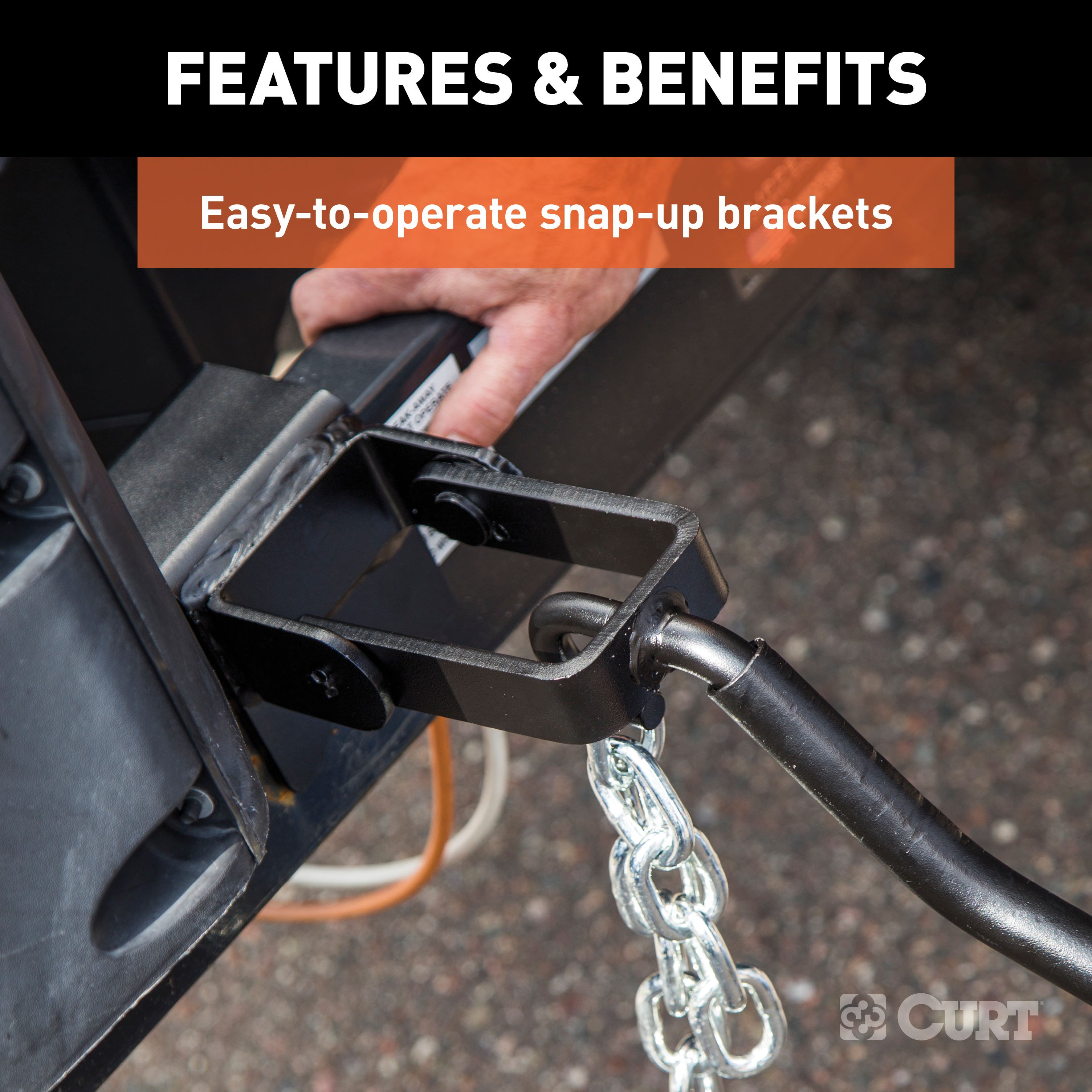
Before raising the bracket, raise the front of the trailer approximately 3" with the tongue jack to reduce chain tension and make operation easier. Slip the marked chain link over the hook on the lift bracket, insert the lift handle onto the heavier rod above the chain attachment, and raise the bracket up and over center so it is fully seated against the mounting bracket. Secure by inserting the clip through the lift bracket and mounting bracket. Ensure the chain is not twisted and the hook extends through the link.
Remove the locking pin from the lift bracket. Insert the lift handle onto the rod above the chain attachment. Carefully lower the bracket with the handle. It will require effort to bring the bracket over center and then to resist the chain tension as the bracket rotates downward. Before lowering, raise the front of the trailer to reduce chain tension.
At least 5 links must remain between the lift bracket and the spring bar. If fewer than 5 links are engaged, the chain and snap-up bracket will bind. The number of links should be the same on both bars. If the front of the vehicle settles much more than the rear, increase the number of chain links to adjust leveling.
Tighten the two 3/4"–10 × 5" hex bolts and their nylock nuts to 200 ft. lbs. torque. Failure to tighten these bolts to specification may result in fastener loss or failure.
Tighten the 1/2" head attachment bolts to 75 ft. lbs. torque. Failure to tighten these bolts to specification may result in fastener loss or failure.
Tighten the set-screw to 50 ft. lbs. torque. Failure to tighten the set-screw to specification may result in fastener loss or failure.
Before towing, check the following: pin and clip securing shank to receiver; head to shank fasteners; trailer ball nut; coupler latch; snap-up bracket bolt; safety chains; lights and turn signals; and braking system including breakaway switch. At the beginning of every tow day, check all trailer to towing vehicle connections for security and operation.
Tongue weight should be 10–15% of the gross trailer weight for most trailers. Too low a tongue weight often produces a tendency to sway. The CURT 17322 supports 800–1,000 lbs tongue weight with spring bars installed.
No, trailers should not be occupied while being towed. Most states enforce this regulation.
Always hook up all trailer lights, electric brakes, and break-away switch connections whenever the trailer is being towed.
Surge brakes require a small amount of fore and aft movement for their actuating mechanism to function correctly. To avoid restricting movement, it may be necessary to increase the number of chain links between the lift brackets and spring bars by tilting the head down. Some surge brake actuators not designed for use with a weight distributing hitch may bind and not operate freely. Check your surge brake operating instructions for specific requirements regarding use with weight distributing hitches.
The loaded ball height should never be greater than the uncoupled ball height. If it is, front wheel overload and loss of rear wheel traction can result, leading to unstable handling, reduced braking ability, and a tendency to jackknife when turning or braking. If the loaded trailer ball height is greater than the uncoupled height, reduce take-up on the spring bar chains, re-measure, and adjust until the proper height is obtained.
If the lift chain is angled fore or aft at the top within the lift bracket, it may catch on the bracket when turning. This could damage the lift bracket or pry it open. The chain must be positioned vertically and centered between the lift bracket.
Some states require a clear view of license plates. If the trailer ball restricts the view of your license plate, remove the trailer ball when not in use.
Keep the socket-mounted ends of the spring bars and the lock pins in the head assembly free from dirt and well lubricated. Excessive wear in this area may indicate an overload or inadequate lubrication. Keep the head assembly exterior clean and do not allow dirt or stones to lodge between the spring bars and the head. Keep hitch parts painted to prevent rust and maintain good appearance, but do not paint over labels. Keep lift brackets clean and lubricated to ensure ease of operation.
Apply heavy fibrous grease to the top section of each spring bar during assembly. Coat the clevis pins in the head assembly with fibrous grease. Clean the ball and coupler socket, and coat the ball lightly with grease. Check spring bar chains and U-bolts for wear and security, and replace if they become worn.
At the beginning of every tow day, check all trailer to towing vehicle connections for security and operation. Periodically check the condition of all your towing equipment and keep it in top condition. Check spring bar chains and U-bolts for wear and security, and replace if they become worn. Check that all trailer balls are properly tightened and that the locking pins in the lift brackets are securely in place. Also check that the hitch pin is in place and secure.
After raising the lift bracket, re-measure the front and rear bumper reference points. The vehicle should settle evenly, within 1/2". If the front has settled much more than the rear, increase the number of chain links between the lift bracket and the spring bar. The spring bars should be nearly horizontal when correct height is achieved. When even settling and correct spring bar position have been achieved, mark the spring bar chain at the hooked position with paint for future hook-up reference.
Yes, remove the weight distributing hitch from the trailer hitch on the towing vehicle when not towing a trailer. This reduces the chances of striking the hitch on the driveway or other objects and reduces the chance of parts being stolen.
Yes, the head assembly will accept two sway control attachment balls. A sway control device is recommended, as it can help minimize the effects of sudden maneuvers, wind gusts, and buffeting caused by passing vehicles. Use of a sway control device is recommended for trailers with a large surface area, such as travel trailers.
Yes, if your vehicle has air springs, air shocks, or automatic leveling systems, deflate them to minimum recommended pressure before assembly. Check your vehicle's owner's manual for the correct pressure.
Tighten the 3/4" bolts to 200 ft. lbs., the 1/2" head attachment bolts to 75 ft. lbs., and the set-screw to 50 ft. lbs. Failure to tighten to specification may result in fastener loss or failure.
With spring bars installed, the CURT 17322 supports 800–1,000 lbs tongue weight. Without spring bars, it supports up to 1,000 lbs, but the weight rating is dependent on the trailer ball manufacturer's weight ratings.
If the front has settled much more than the rear, increase the number of chain links between the lift bracket and the spring bar. The vehicle should settle evenly, within 1/2". Adjust the head tilt to accomplish the correct chain length. The spring bars should be nearly horizontal when correct height is achieved.
Excessive wear in the area where the socket-mounted ends of the spring bars and lock pins meet the head assembly may indicate an overload or inadequate lubrication. Keep these areas well lubricated and free from dirt.
Some surge brake actuators not designed for use with a weight distributing hitch may bind and not operate freely. To avoid restricting movement, increase the number of chain links between the lift brackets and spring bars by tilting the head down. Check your surge brake operating instructions for specific requirements regarding use with weight distributing hitches.
Before raising or lowering the lift bracket, raise the front of the trailer approximately 3" with the tongue jack to reduce spring bar chain tension. This will make the lift bracket operation easier and safer. Ensure the lift brackets are clean and well lubricated.
| Kit # | Hitch # | GTW | TW | Bar Length | Kit Includes |
|---|---|---|---|---|---|
| -- | 17300 | 5,000 - 6,000 lbs. | 500 - 600 lbs. | 30-5/8" | -- |
| -- | 17302 | 8,000 - 10,000 lbs. | 800 - 1,000 lbs. | 30-5/8" | -- |
| 17322 | 17332 | 8,000 - 10,000 lbs. | 800 - 1,000 lbs. | 28-3/8" | Sway control (17200), pre-torqued 2-5/16" trailer ball (40006) and chains pre-assembled to spring bars |
| 17422 | 17333 | 10,000 - 15,000 lbs. | 1,000 - 1,500 lbs. | 28-3/8" | Sway control (17200), pre-torqued 2-5/16" trailer ball (40030) and chains pre-assembled to spring bars |

Total for 2 items:
$646.98$1,042.90
On Sale Today
Original price was $725.95. Current price is $449.99.You save $275.96 (38%)
Free Shipping
Ships free on all orders
 Authorized Dealer


Quick Ship
In stock and ready to ship — order now!
Shipping from Eau Claire, WIFREE SHIPPING
Estimated delivery Mon, Sep 28 - Wed, Sep 30
Order before 2 PM EST Monday–Friday for same-day processing
Guaranteed safe & secure checkout
No reviews have been added for this product.