
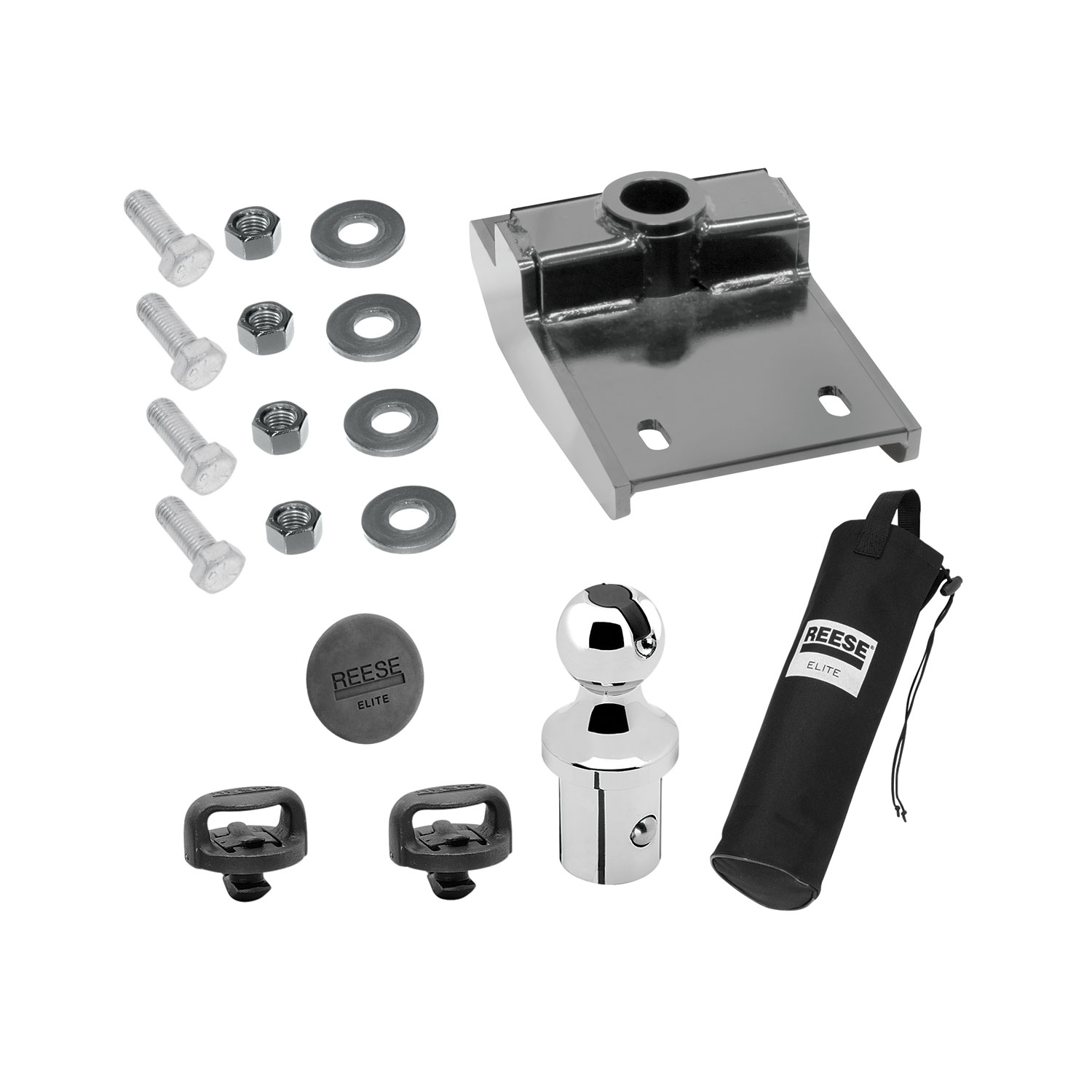
Reese Elite Series Gooseneck Hitch Head, 25,000 lbs. Capacity, FordReeseOriginal price was $410.00. Current price is $352.60.Out of Stock
View productOur in-house experts typically reply within one business day.

Reese


Always the correct part
We know our products
Quality Products
Free Shipping!
Always the correct part
We know our products
Quality Products
Free Shipping!

| BRAND: | REESE |
| PART NUMBER: | 30158 |
| WARRANTY: | LIMITED LIFETIME WARRANTY |
| WEIGHT: | 48.8 LBS |
| BALL DIAMETER: | 2.313 IN. |
| GROSS TOWING WEIGHT: | 25,000 LBS. |
| COLOR: | BLACK |
| DRILLING REQUIRED: | YES |
| PIN WEIGHT CAPACITY: | 6,250 LBS. |
| MATERIAL: | STEEL |
| MOUNTING HARDWARE INCLUDED: | YES |
| MOUNTING HOLE QUANTITY: | 2 |
| UNIVERSAL OR SPECIFIC FIT: | SPECIFIC |
| WELDING REQUIRED: | NO |
| BOLT GRADE: | GRADE 8 |

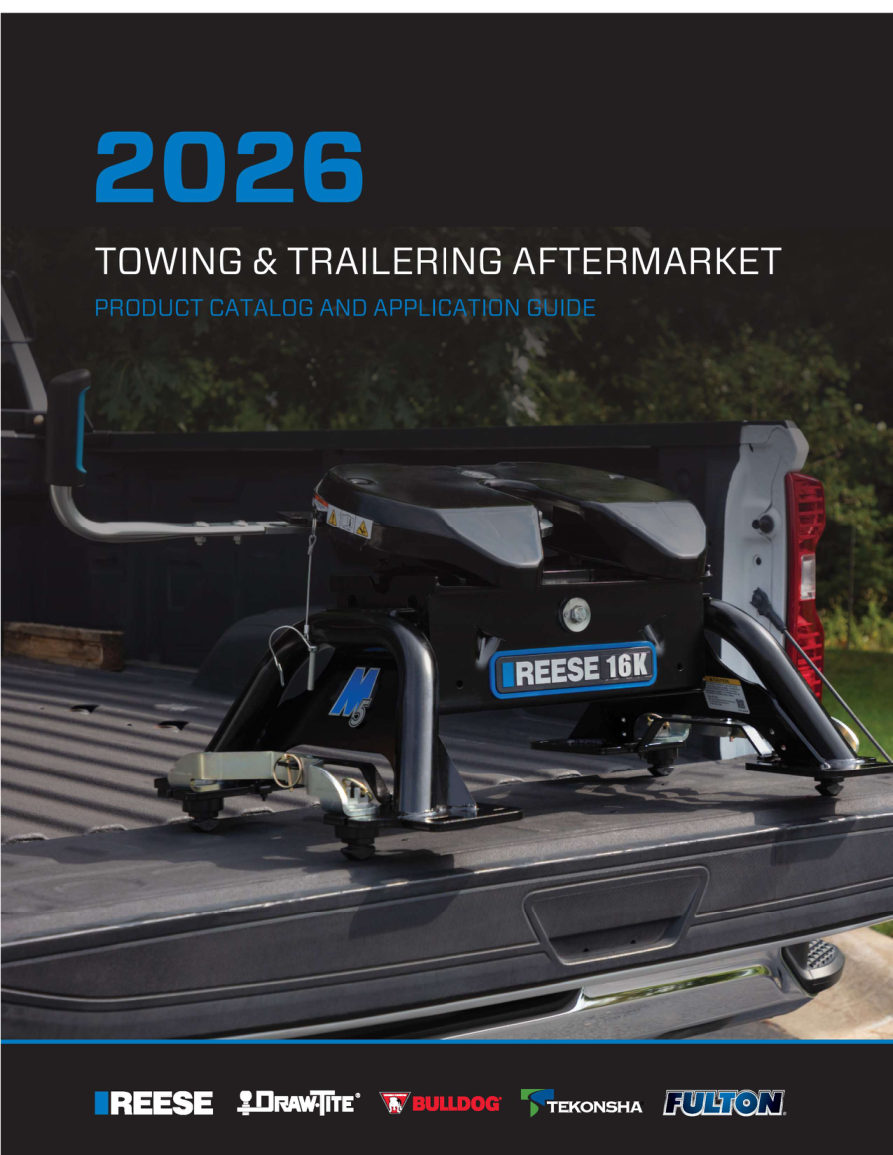
Reese has designed towing equipment since 1952 and remains a benchmark for heavy-duty towing. The line covers fifth wheel hitches such as the modular M5, gooseneck couplers including the Goose Box, air-ride and short-bed pin boxes, weight distribution systems with active sway control, and the accessories that connect them, all built to exceed published industry standards.
Reese has been pioneering towing performance since 1952, when Margaret Reese asked her husband TJ to stop travel trailers rocking every time somebody walked through them. His answer, the first pair of stabilising jacks, was simple and effective enough to change the RV industry. From that starting point Reese grew into a designer and manufacturer of complete towing systems, and today it anchors the heavy-duty end of the Horizon Global towing portfolio.
Fifth wheel towing is where the brand's engineering is most visible. The M5 fifth wheel hitch uses a modular design that breaks into manageable sections for assembly, with a wider stance, tighter tolerances and a shock absorption system aimed at the jolts that travel up through a truck bed. For owners who would rather tow from a gooseneck coupler and keep the bed clear, the Goose Box 20K replaces the trailer's king pin with a gooseneck connection carrying its own air-ride cushioning.
Pin boxes are a Reese speciality. The 5th Airborne uses air-ride technology to dampen road shock and reduce the chucking motion that makes fifth wheel towing tiring, while the Sidewinder was designed for short-bed pickups, pivoting the connection point so the trailer can turn sharply without the front cap meeting the cab.
For conventional towing, Reese weight distribution systems restore load to the tow vehicle's front axle and control sway. The Pro Round Bar distributes weight evenly while damping sway, and the Pro Dual Cam II uses active cam-based sway control that works harder the stronger the sway force becomes. Complete kits pair bars, head and shank to a rated tongue weight, and dedicated sway control kits can be added to existing setups. The products suit RV owners, horse and livestock haulers and anyone towing near the upper end of a vehicle's rating.
Experts available to answer your questions
Call 888-634-9494Lifetime
Draw•Tite® and Reese® Elite® Under-Bed Gooseneck Hitch Features & Benefits
The Reese Elite Gooseneck Hitch fits Chevy, GMC, and Dodge 2500HD and 3500HD pickup trucks only. Your truck must have a bed length of at least 6 feet. Do not install on short bed trucks with beds shorter than 6 feet. A separate rail kit (Kit #30868 for Chevy or Kit #30852 for Dodge) is required and sold separately.
You will need: safety glasses, 3-1/2 inch hole saw, impact wrench, torque wrench, and 1-1/8 inch socket.
Tighten the 3/4 inch Grade 8 hex bolts to 180 ft/lbs using a torque wrench.
Yes. A 3-1/2 inch hole must be cut in the truck bed. The cutting pattern and rail installation instructions are provided in separate manuals: 30868N for Chevy applications or 30852N for Dodge applications.
The maximum gross trailer weight is 25,000 pounds. The maximum pin weight (vertical load on the hitch ball) is 6,250 pounds. Pin weight should be 15–25% of the gross trailer weight. Your tow vehicle's manufacturer rating must equal or exceed the gross trailer weight. Always use the lowest rating among your truck, hitch, and trailer.
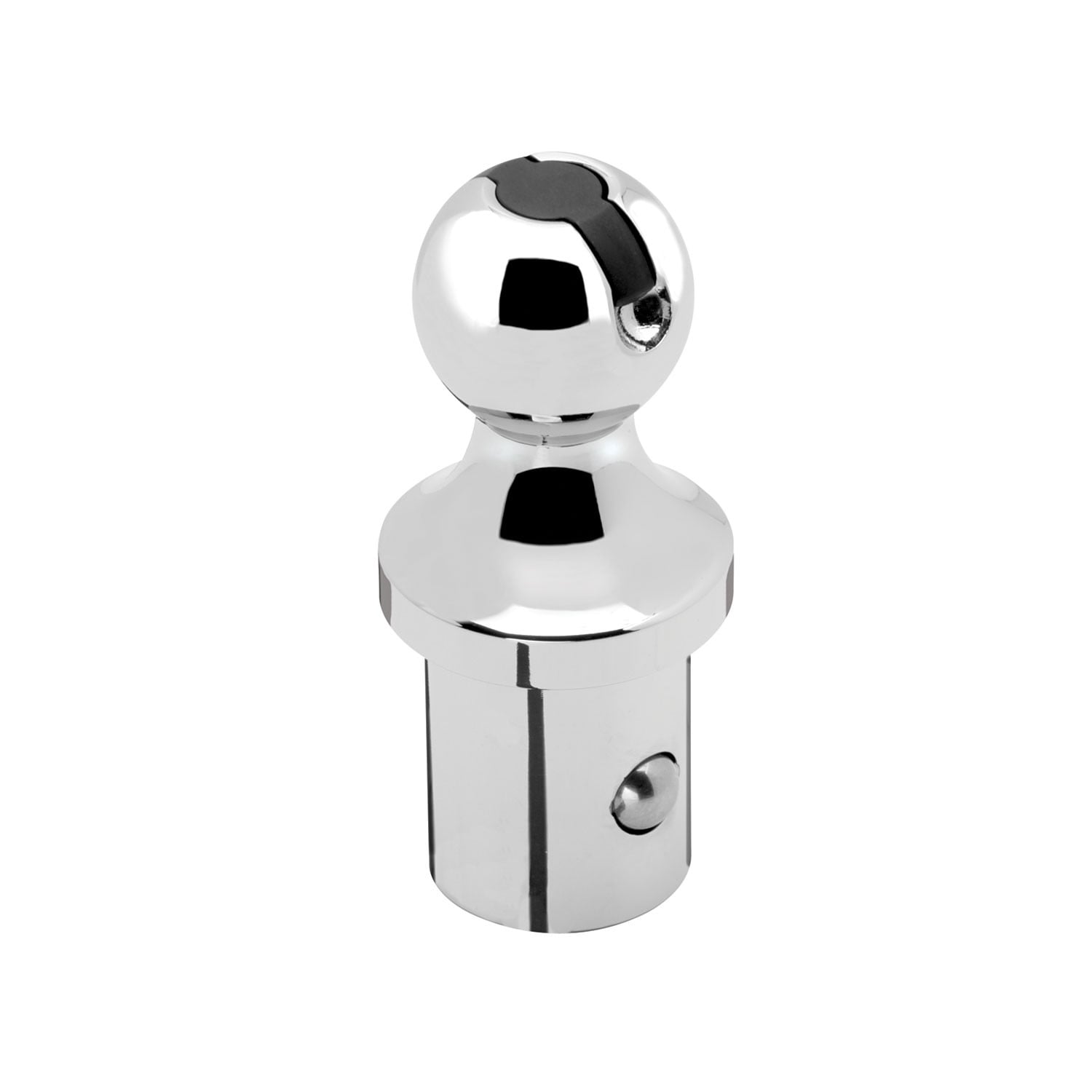
Use only a SAE 2-5/16 inch hitch ball. The hitch comes with one 2-5/16 inch Reese pop-in ball included.
A long bed (8 foot) light truck is recommended for the best combination of truck-trailer turning clearance. Do not install on trucks with beds shorter than 6 feet.
Allow approximately 6 inches of clearance between the top of the pickup bed walls and the underside of the front of the trailer for pitch and roll. Allow more clearance for off-road use. The trailer must be approximately level when towed.
The kit includes: one gooseneck assembly, four 3/4 inch conical washers, four 2 inch x 3/4 inch Grade 8 hex bolts, two safety chain holders, one 2-5/16 inch Reese pop-in ball, and one hole cover (for use when the hitch ball is not being used). The rail kit is sold separately.
No. Do not install this hitch on or attempt to tow with a short bed pickup truck that has a bed shorter than 6 feet. A minimum 6-foot bed is required.
No. When you first slide the gooseneck assembly and bolts into place, do not tighten the hardware at that time. Loosely assemble all four bolts first. Only after the gooseneck receiver tube is properly located in the 3-1/2 inch hole should you tighten the bolts to 180 ft/lbs.
1. Check all components against the parts list. 2. Refer to the appropriate rail kit manual (30868N for Chevy or 30852N for Dodge) for cutting pattern and rail installation. 3. Place the gooseneck assembly under the truck and slide the 3/4 inch hex bolts and conical washers through the slots in the gooseneck center section. 4. Slide the gooseneck center section up around the holes on the bottom of the rails and loosely assemble all four bolts without tightening. 5. Locate the collar in the 3-1/2 inch hole that was cut in the truck bed. 6. Once the top of the gooseneck receiver tube is located in the hole, tighten the bolts to 180 ft/lbs. 7. Install the safety chain holders and 2-5/16 inch hitch ball.
Tighten the 3/4 inch Grade 8 hex bolts to a torque of 180 ft/lbs using a torque wrench and 1-1/8 inch socket.
With the trailer leveled and on level ground, measure from the ground to the coupler (dimension A). Then measure from the inside height of the truck bed to the ground (dimension B). Use this formula: Hitch Height = A – B + 2 inches. The 2-inch value estimates suspension compression from the trailer's king pin weight, which can range from 1–5 inches depending on the truck and trailer. You can also use dimensions C and D to determine clearance over the side rails. The clearance (D – C + 2 inches) should be greater than 6 inches.
The distance from the back of the truck cab to the center of the rear truck axle (X) should be approximately 4 inches greater than one-half the trailer width (Y). This helps ensure adequate turning clearance.
Approximately 15–25% of the gross trailer weight should be on the hitch (pin weight). The remaining 75–85% should be distributed over the trailer axles. If in doubt, have the pin weight measured by a qualified facility.
If you must place any part of your body under the trailer or between the truck and trailer, you must perform all of the following steps: (1) Check that the truck transmission is in park. (2) Check that the emergency brake is on. (3) Block in front of and behind all trailer tires. (4) Check that the trailer landing gear are resting on firm ground.
The connection for trailer wiring must be located at the side of the truck bed between the driver's seat and the rear wheel to prevent operators from working between the truck and trailer.
Connect safety chains properly every time you tow. Attach them securely through the chain loops provided so they cannot bounce loose. Leave only enough slack to permit full turning. Too much slack may prevent chains from maintaining control if other connections separate.
Before each tow, check the operation of trailer lights, turn signals, electric brakes, and breakaway switch connections. Make these safety-critical connections every time you tow, no matter how short the trip. Check the ball, coupler, chains, and all other connections every time you tow. Re-check at fuel and rest stops. Ensure the coupler is smooth, clean, and lightly lubricated per the coupler manufacturer's instructions.
Never allow people in the trailer while towing, under any circumstances. When loading the trailer, place heavy objects on the floor ahead of the axle and balance the load side-to-side. Secure the load to prevent shifting. Never load the trailer rear-heavy. Load the trailer heavier in the front, but not greater than the tongue weight rating of the hitch.
The additional weight of a trailer affects acceleration, braking, and handling. Allow extra time for passing, stopping, and changing lanes. A gooseneck trailer requires a large turning radius as the trailer tracks to the inside of turns. Severe bumps can damage your towing vehicle, hitch, and trailer. Drive slowly on rough roads. Stop and make a thorough inspection if any part of your towing system strikes the road. Correct any problems before resuming travel.
Cequent Performance Products warrants the Reese Elite Gooseneck Hitch for 7 years from the date of purchase against defects in material and workmanship under normal use and service (ordinary wear and tear excepted) to the original consumer purchaser when a Cequent Performance Products mounting kit is used. The company will replace any defective part free of charge when presented to a dealer, warehouse, or returned to the factory with transportation charges prepaid. The warranty covers defective parts replacement only; labor charges and damage incurred in installation or replacement, as well as incidental and consequential damages, are excluded. Any damage resulting from misuse, abuse, neglect, accident, improper installation, or use violating the instructions will void the warranty.
The Reese Elite Gooseneck Hitch is designed for use with recreational gooseneck trailers only. Hitch applications other than recreational gooseneck trailers must be approved in writing by Cequent Performance Products Engineering Department.
No. Do not tow one trailer behind another, which may cause loss of control. Do not modify the hitch. Failure to heed these warnings and follow instructions may result in serious personal injury or death, vehicle crash, and/or property damage.
Depending on your application, you may find the following useful: air springs, air shocks, or helper springs for some applications; a transmission cooler may be necessary for heavy towing. Many states require towing mirrors on both sides. Check your vehicle and trailer manufacturer's recommendations for tire inflation.
Before installation, check all the boxes for all components listed in the parts list and become familiar with component terminology. Verify that your truck is a Chevy, GMC, or Dodge 2500HD or 3500HD with a bed length of at least 6 feet. Obtain the appropriate rail kit (Kit #30868 for Chevy or Kit #30852 for Dodge) which is sold separately. Review the cutting pattern and rail installation instructions in the appropriate rail kit manual before beginning installation.
The measurements above are guidelines. If your measurements are close to these numbers, re-check clearances. If your vehicle and/or trailer has any added bed vicinity accessories (fairings, air dams, ground effects, bed rails, etc.), additional dimensioning and clearance checks must be made. Measure the distance from the back of the truck cab to the center of the rear truck axle (X) and compare it to one-half the trailer width (Y); X should be approximately 4 inches greater than Y. Measure the clearance between the top of the pickup walls and the underside of the front of the trailer; it should be at least 6 inches.
The height of the coupler should be adjusted so the trailer is approximately level as it is towed. If the trailer is not level, recalculate the hitch height using the formula: Hitch Height = A – B + 2 inches, where A is the distance from ground to coupler (with trailer leveled on level ground) and B is the distance from the inside height of the truck bed to the ground. Adjust the hitch mounting height as needed to achieve a level trailer.
If the clearance between the top of the pickup bed walls and the underside of the front of the trailer is less than 6 inches, recalculate the hitch height using the formula D – C + 2 inches (where D is the distance from the top of the truck bed to the ground and C is the distance from the top of the trailer to the ground). The result should be greater than 6 inches. If you have added bed vicinity accessories (fairings, air dams, ground effects, bed rails, etc.), additional clearance checks and adjustments may be necessary. For off-road use, allow even more clearance.
Stop immediately and make a thorough inspection of your entire towing system. Correct any problems before resuming travel. Severe bumps can damage your towing vehicle, hitch, and trailer, so it is important to identify and address any damage or misalignment before continuing to tow.
| Part Number | Description | Capacity (lbs.) |
|---|---|---|
| 30138 | Elite Gooseneck Head with Pop-In 2-5/16 in. Ball (Use with #30126 Rail Kit) | 25,000 |
| 30158 | Elite Gooseneck Head with Pop-In 2-5/16 in. Ball (Use with #30852 or #30868 Rail Kit) | 25,000 |
| 30183 | Elite Gooseneck Head and Rail Kit (Use with #30182** Inner Frame Brackets) | 35,000 |
Matt
Ordered online. Shipment arrived on time and with all the correct parts. Great customer service and friendly staff. Also, pricing was great!
May 22, 2023
On Sale Today
Original price was $498.75. Current price is $465.08.You save $33.67 (7%)
Free Shipping
Ships free on all orders
 Authorized Dealer

Quick Ship
In stock and ready to ship — order now!
FREE ShippingFREE SHIPPING
Estimated delivery Sat, Sep 26 - Tue, Sep 29
Order before 2 PM EST Monday–Friday for same-day processing
Guaranteed safe & secure checkout