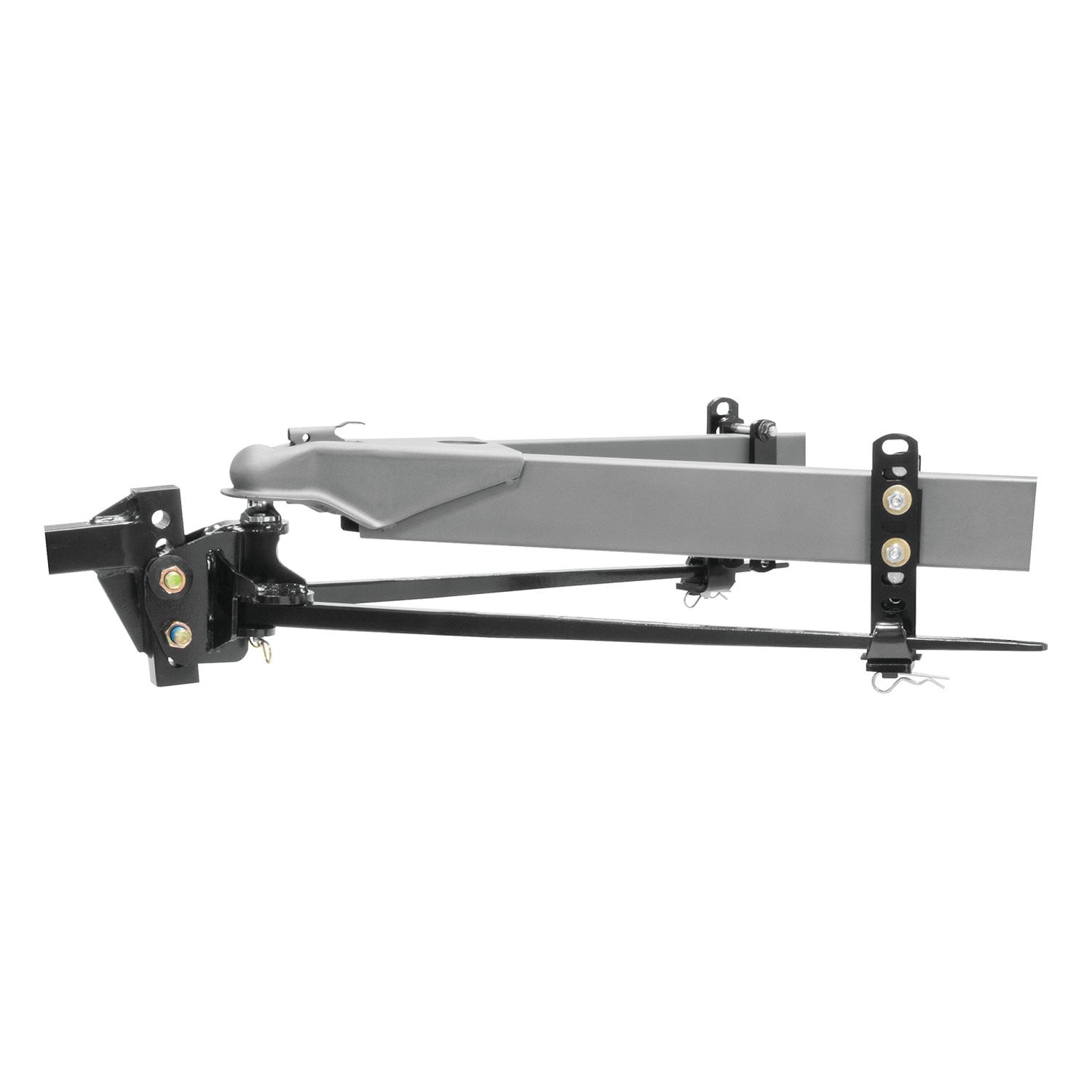
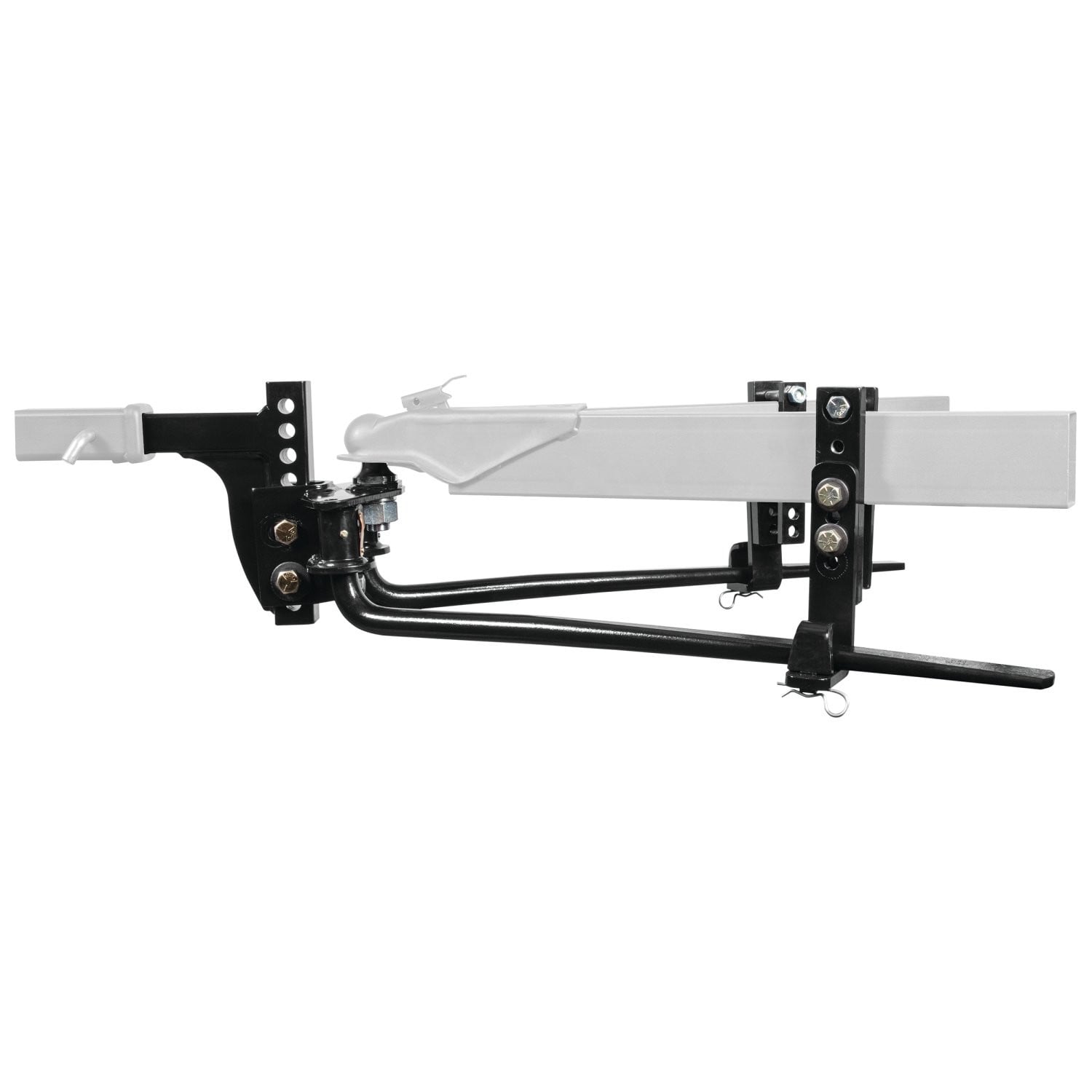
Reese Steadi-Flex Integrated Sway Control Weight Distribution Kit, 6,000 lbs. Capacity, Shank IncludedReeseOriginal price was $975.00. Current price is $809.68.In Stock
View productOur in-house experts typically reply within one business day.

Reese



Always the correct part
We know our products
Quality Products
Free Shipping!
Always the correct part
We know our products
Quality Products
Free Shipping!

| BRAND: | REESE |
| PART NUMBER: | 66559 |
| WARRANTY: | LIMITED LIFETIME WARRANTY |
| WEIGHT: | 107.3 LBS |
| CAPACITY: | 10,000 LBS. |
| GROSS TONGUE WEIGHT: | 1,000 LBS. |
| INCLUDES SWAY CONTROL: | YES |
| UNIVERSAL OR SPECIFIC FIT: | UNIVERSAL |
| LENGTH: | 37 IN. |
| SAFETY CHAINS INCLUDED: | NO |
| MATERIAL: | STEEL |
| MOUNTING HARDWARE INCLUDED: | YES |
| ADJUSTABLE ARMS: | YES |
| MOUNTING BRACKET POSITION: | 25 IN. TO 32 IN. |
| COLOR: | BLACK |
| BOLT GRADE: | GRADE 5 & GRADE 8 |

Reese has designed towing equipment since 1952 and remains a benchmark for heavy-duty towing. The line covers fifth wheel hitches such as the modular M5, gooseneck couplers including the Goose Box, air-ride and short-bed pin boxes, weight distribution systems with active sway control, and the accessories that connect them, all built to exceed published industry standards.
Reese has been pioneering towing performance since 1952, when Margaret Reese asked her husband TJ to stop travel trailers rocking every time somebody walked through them. His answer, the first pair of stabilising jacks, was simple and effective enough to change the RV industry. From that starting point Reese grew into a designer and manufacturer of complete towing systems, and today it anchors the heavy-duty end of the Horizon Global towing portfolio.
Fifth wheel towing is where the brand's engineering is most visible. The M5 fifth wheel hitch uses a modular design that breaks into manageable sections for assembly, with a wider stance, tighter tolerances and a shock absorption system aimed at the jolts that travel up through a truck bed. For owners who would rather tow from a gooseneck coupler and keep the bed clear, the Goose Box 20K replaces the trailer's king pin with a gooseneck connection carrying its own air-ride cushioning.
Pin boxes are a Reese speciality. The 5th Airborne uses air-ride technology to dampen road shock and reduce the chucking motion that makes fifth wheel towing tiring, while the Sidewinder was designed for short-bed pickups, pivoting the connection point so the trailer can turn sharply without the front cap meeting the cab.
For conventional towing, Reese weight distribution systems restore load to the tow vehicle's front axle and control sway. The Pro Round Bar distributes weight evenly while damping sway, and the Pro Dual Cam II uses active cam-based sway control that works harder the stronger the sway force becomes. Complete kits pair bars, head and shank to a rated tongue weight, and dedicated sway control kits can be added to existing setups. The products suit RV owners, horse and livestock haulers and anyone towing near the upper end of a vehicle's rating.
Experts available to answer your questions
Call 888-634-9494Lifetime
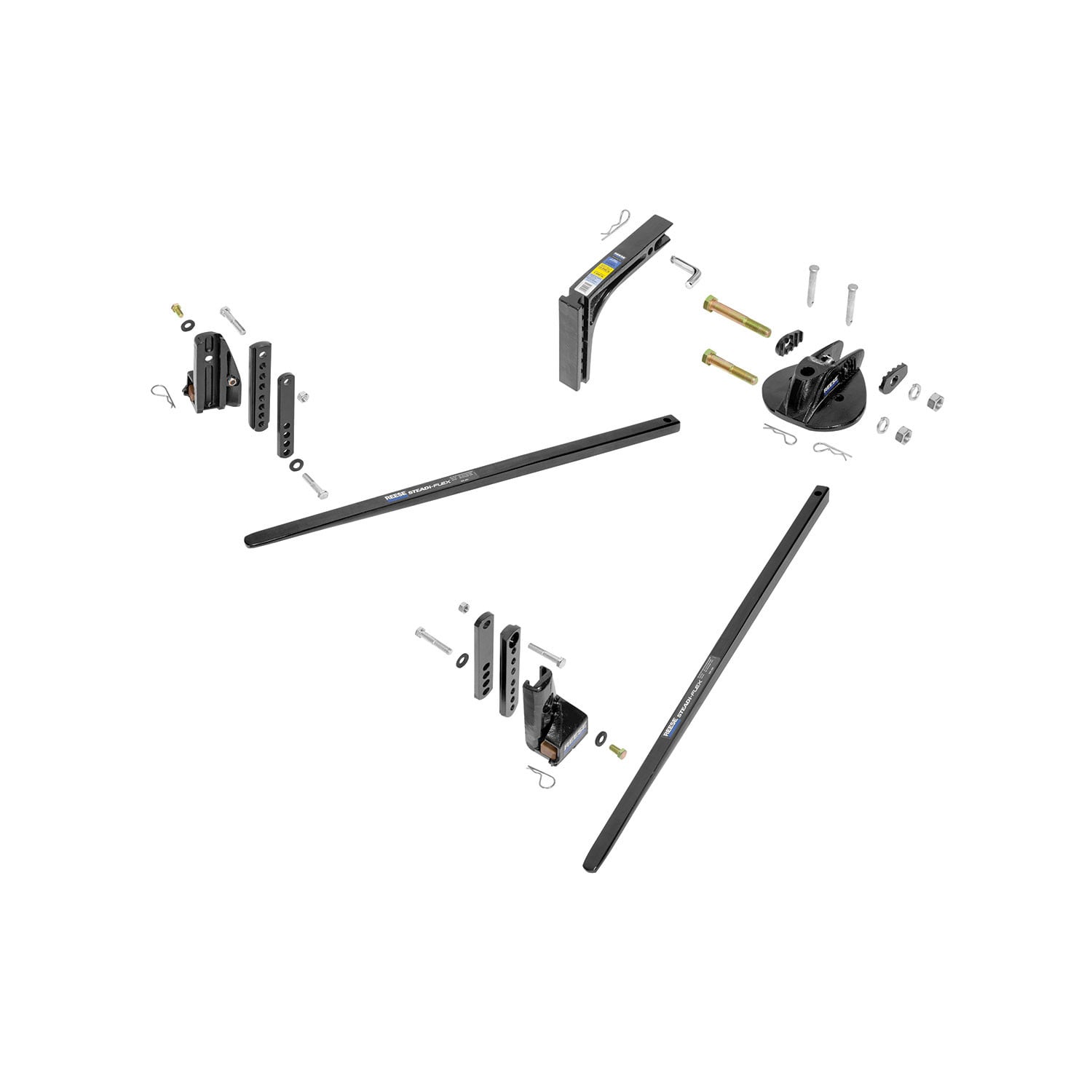
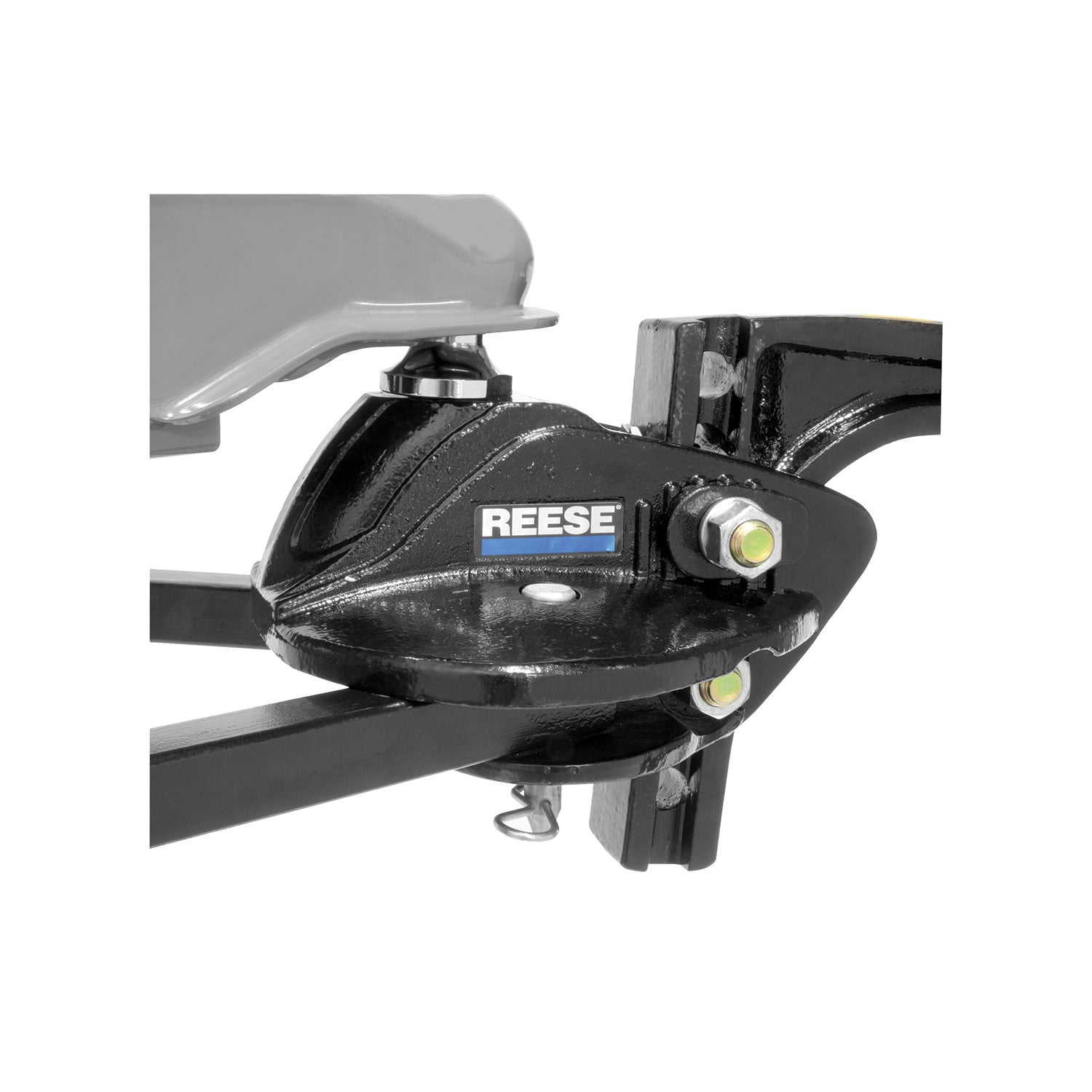
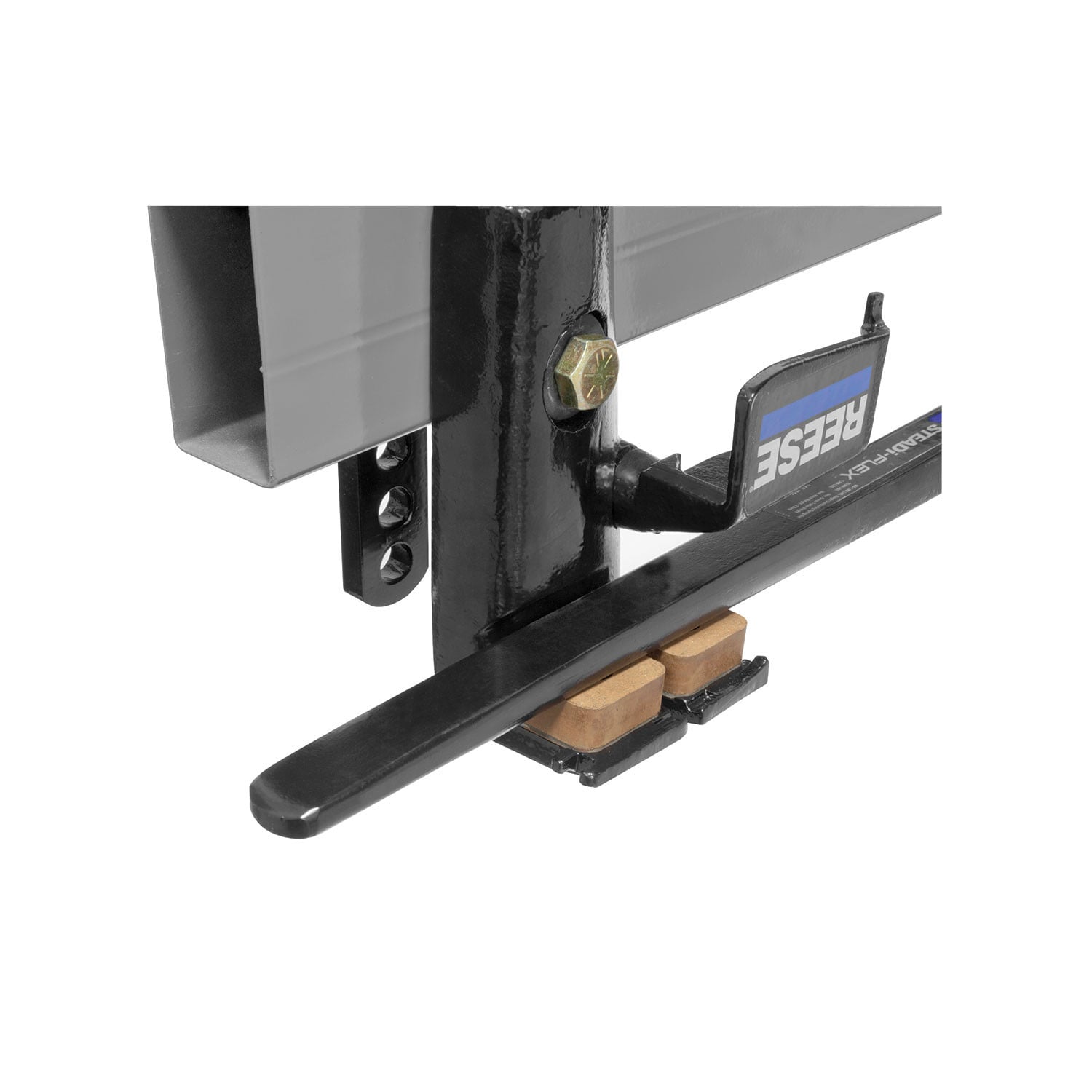
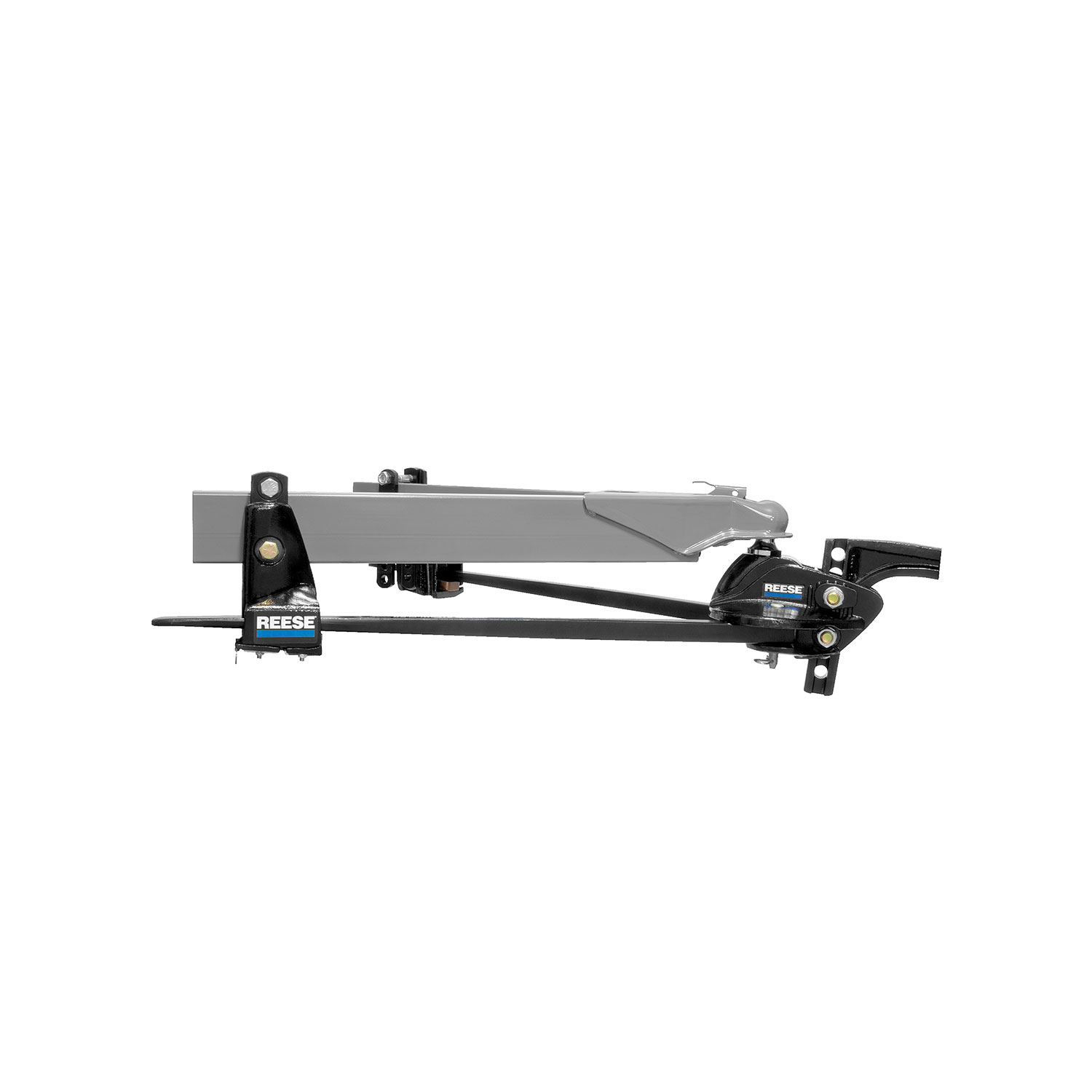
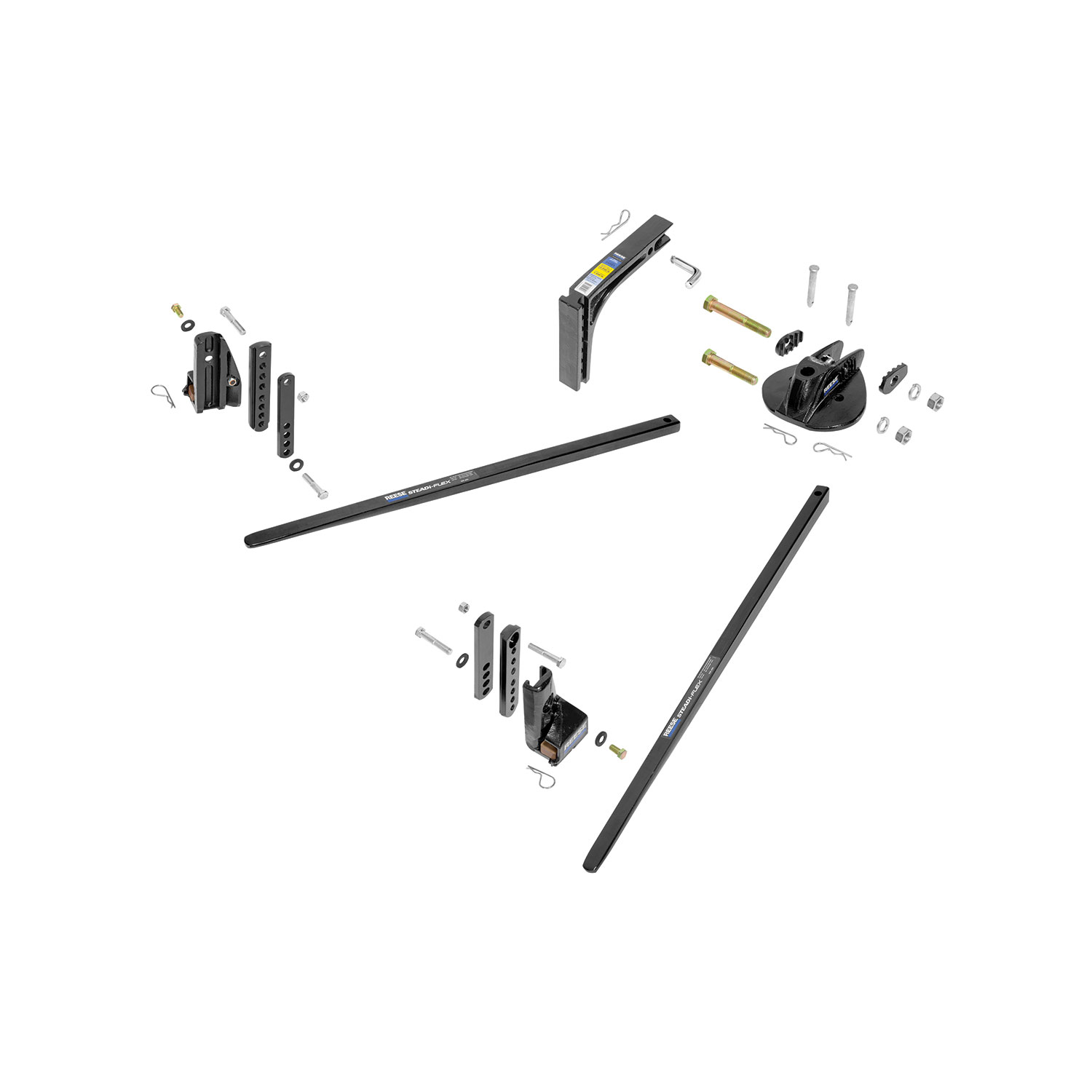
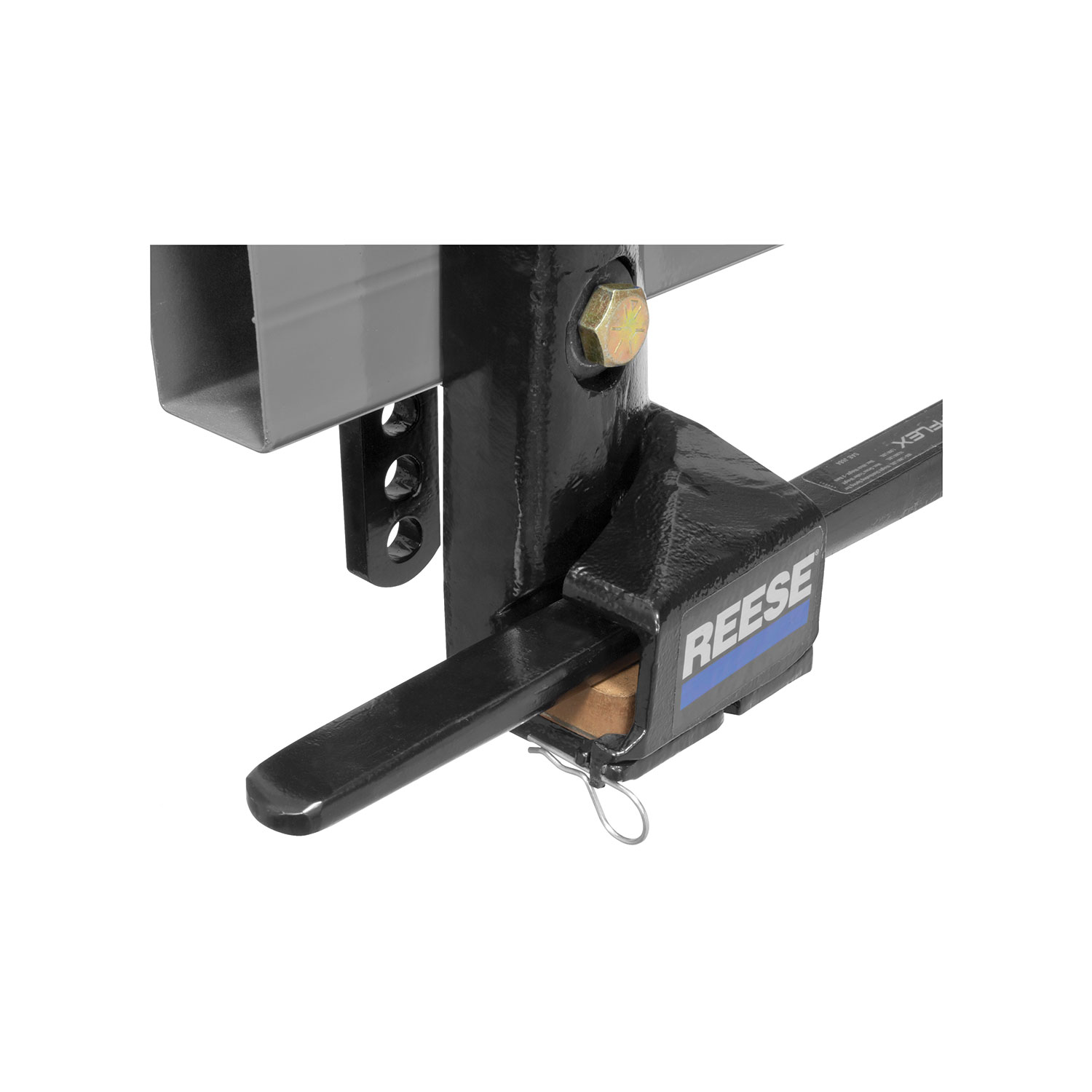
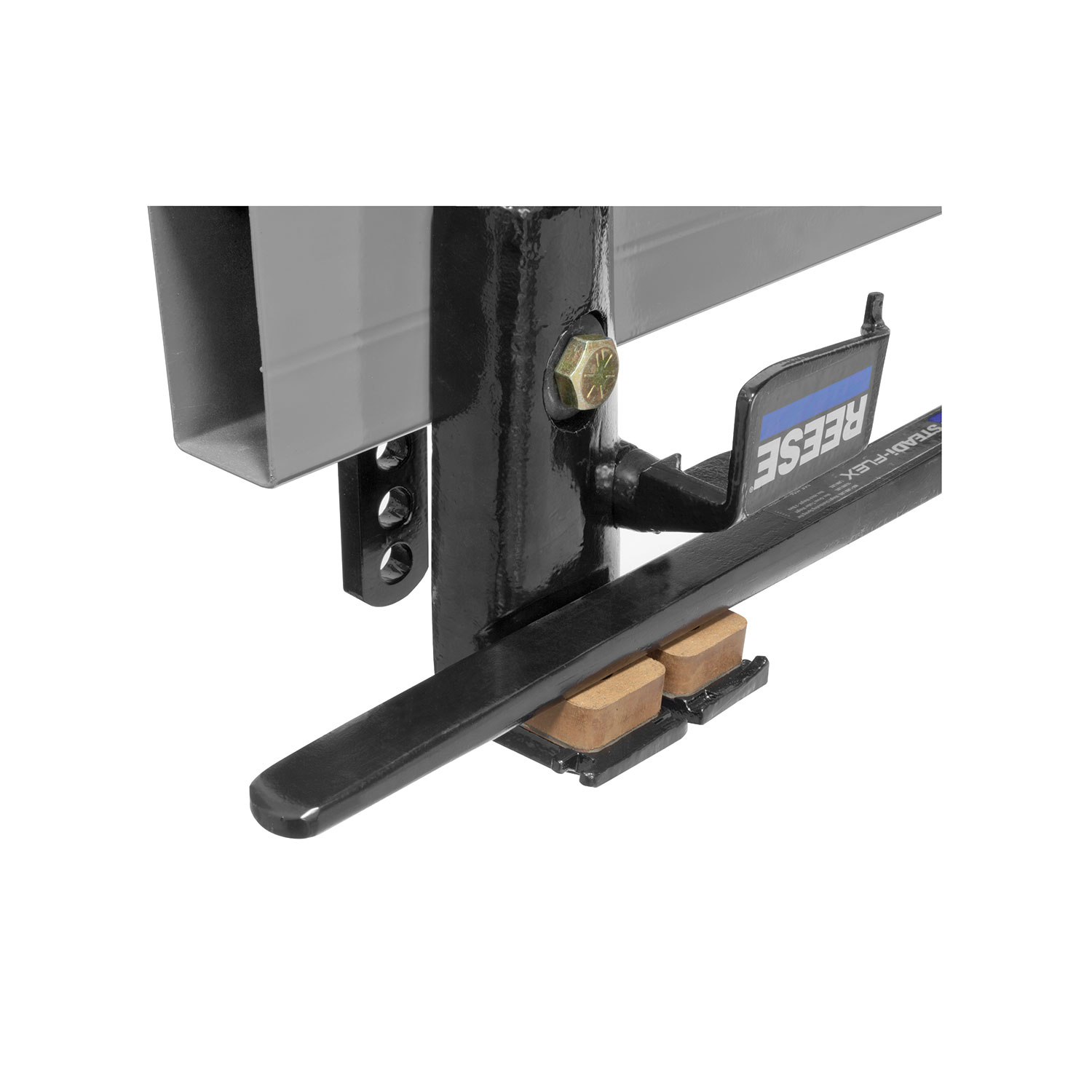
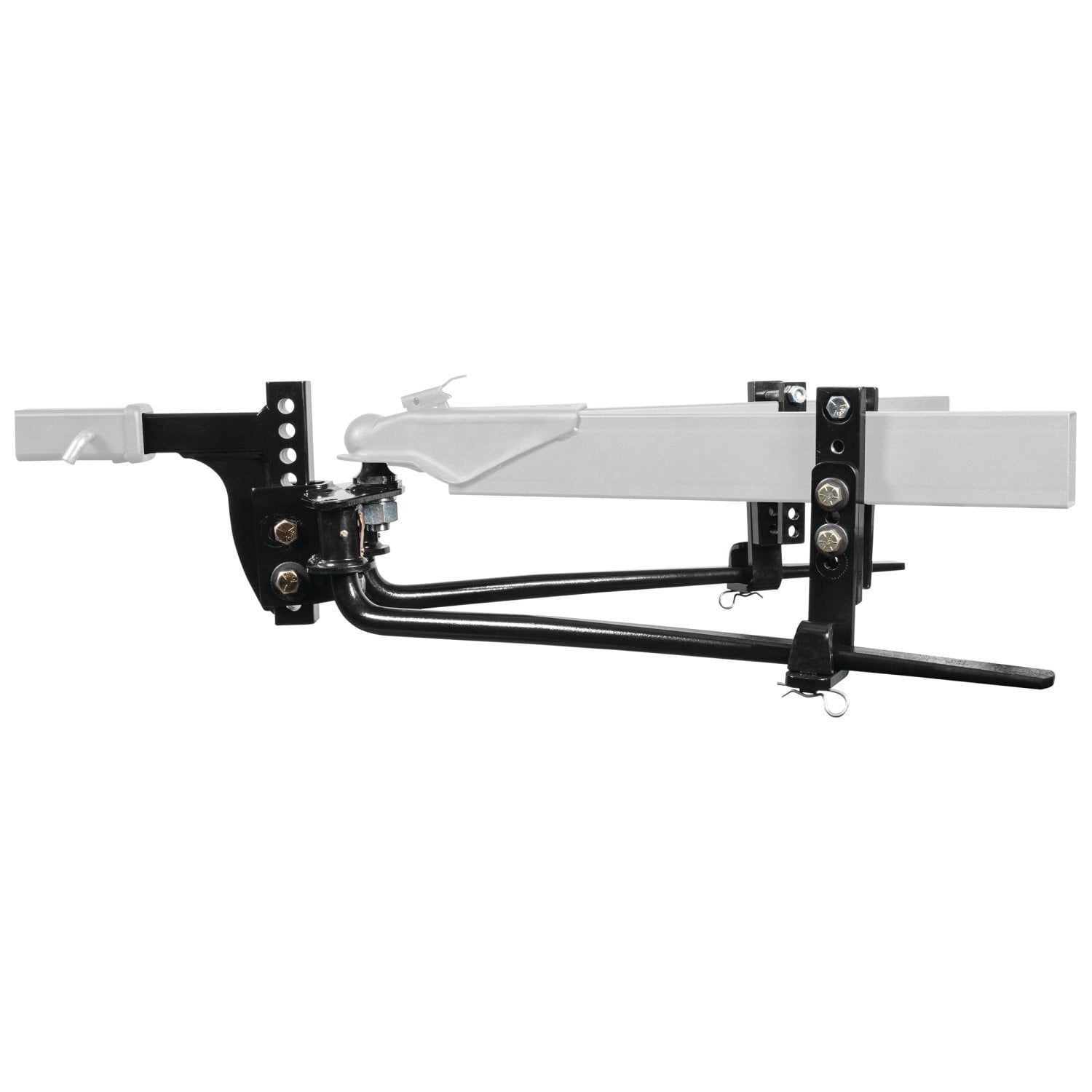
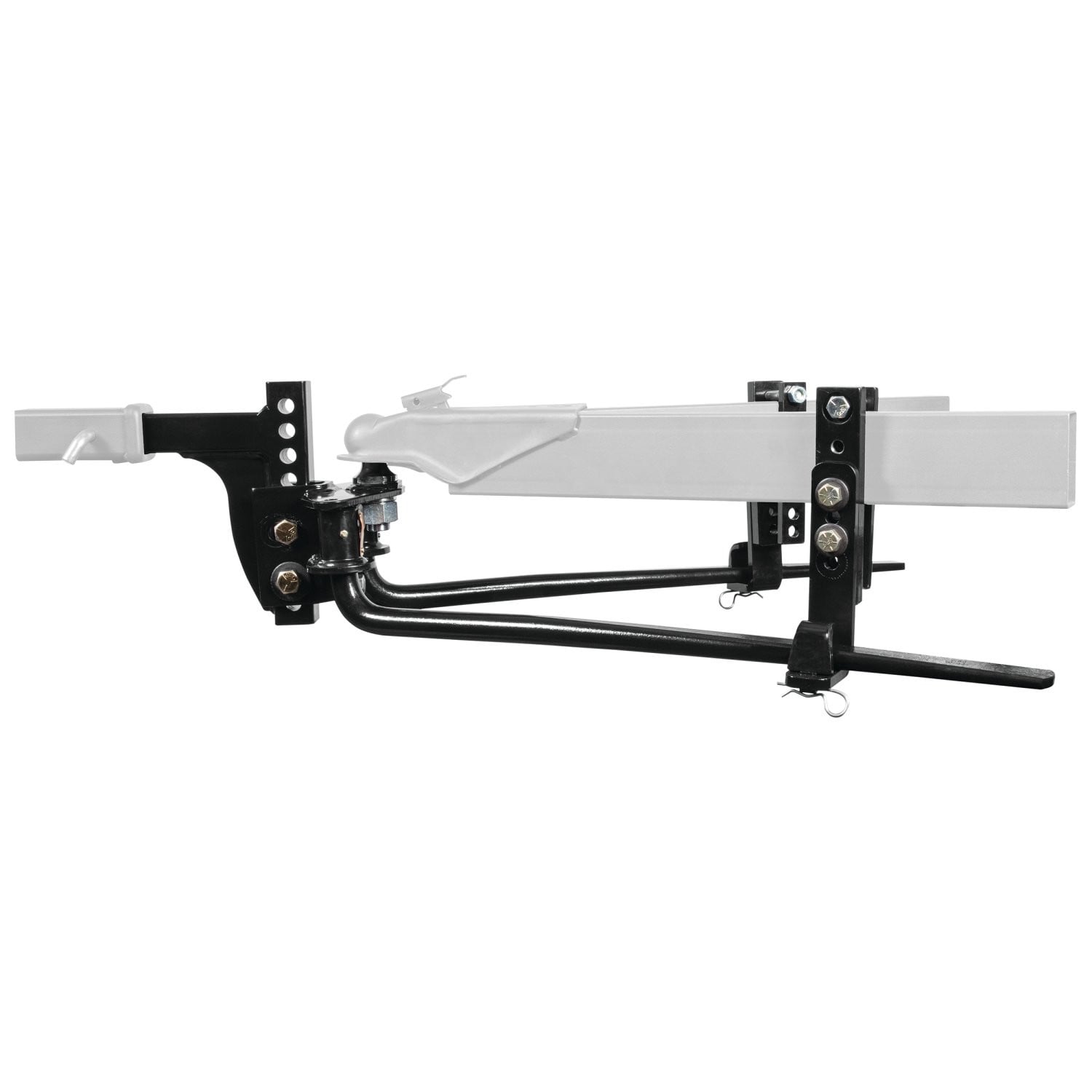
The REESE Steadi-Flex is a weight distributing hitch system designed to distribute a portion of the trailer's tongue weight onto the front axle of the tow vehicle and the trailer axles. It works by loading spring bars and using leverage to level the tow vehicle and trailer. The friction between friction pads and spring bars provides superior sway control. The system is available in three ratings: 66559 (1,000 lb), 66560 (1,200 lb), and 66561 (1,400 lb).
The system is designed for trailers with 4"-7" tall frames with bottom-mount couplers. It also works with all 4" tall frames with top-mount couplers. For trailer frames 5"-7" tall with top-mount couplers, refer to Technical Bulletin TB17-01 for detailed coupler design fitment information.
Yes. Hitch balls with weight ratings above 1,000 lbs typically have 1-1/4" shafts. If a 1" shaft is used, a bushing (sold separately) is required for use with this ball mount.
Required tools: torque wrench capable of 300 ft.-lbs, petroleum-based lubricant (e.g. WD-40), 15/16" socket and wrench, 1-1/8" socket and wrench, tape measure, pencil, flat-head screwdriver, and hammer. Recommended tools: torque wrench capable of 450 ft.-lbs, 1-7/8" socket, and safety gloves.
No. The hitch ball is not included. You must choose a hitch ball with a rating that meets or exceeds the kit rating, and it must be the same size as required for the coupler on your trailer.
Install the system with the tow vehicle and trailer on level ground in the loaded condition. Chock the trailer tires and uncouple the trailer. Verify tire pressure matches the trailer owner's manual. Lower the trailer jack and raise the trailer so it sits level. Use a pencil to mark the center of the trailer coupler for locating the A-Frame brackets. Verify the tow vehicle, hitch, and all components are capable of towing the trailer by referring to the owner's manual.
Locate a point between 27-32" along the A-Frame from the center of the coupler and mark this location with a pencil on both sides. Slide the T-Bar and Clamping Bar over the frame at this marked location. The T-Bar must be located on the outside of the A-Frame with the large hole facing outward. Allow 1" of clearance on either side of the T-Bar.
For top-mounted couplers, one threaded hole should be visible above the Adjustable Frame Bracket. For bottom-mounted couplers, the Adjustable Frame Bracket mounting bolt should be fastened one bolt hole below the bottom bolt on the frame bracket. Use the vertical mounting location as a starting point; the system can be adjusted later if needed.
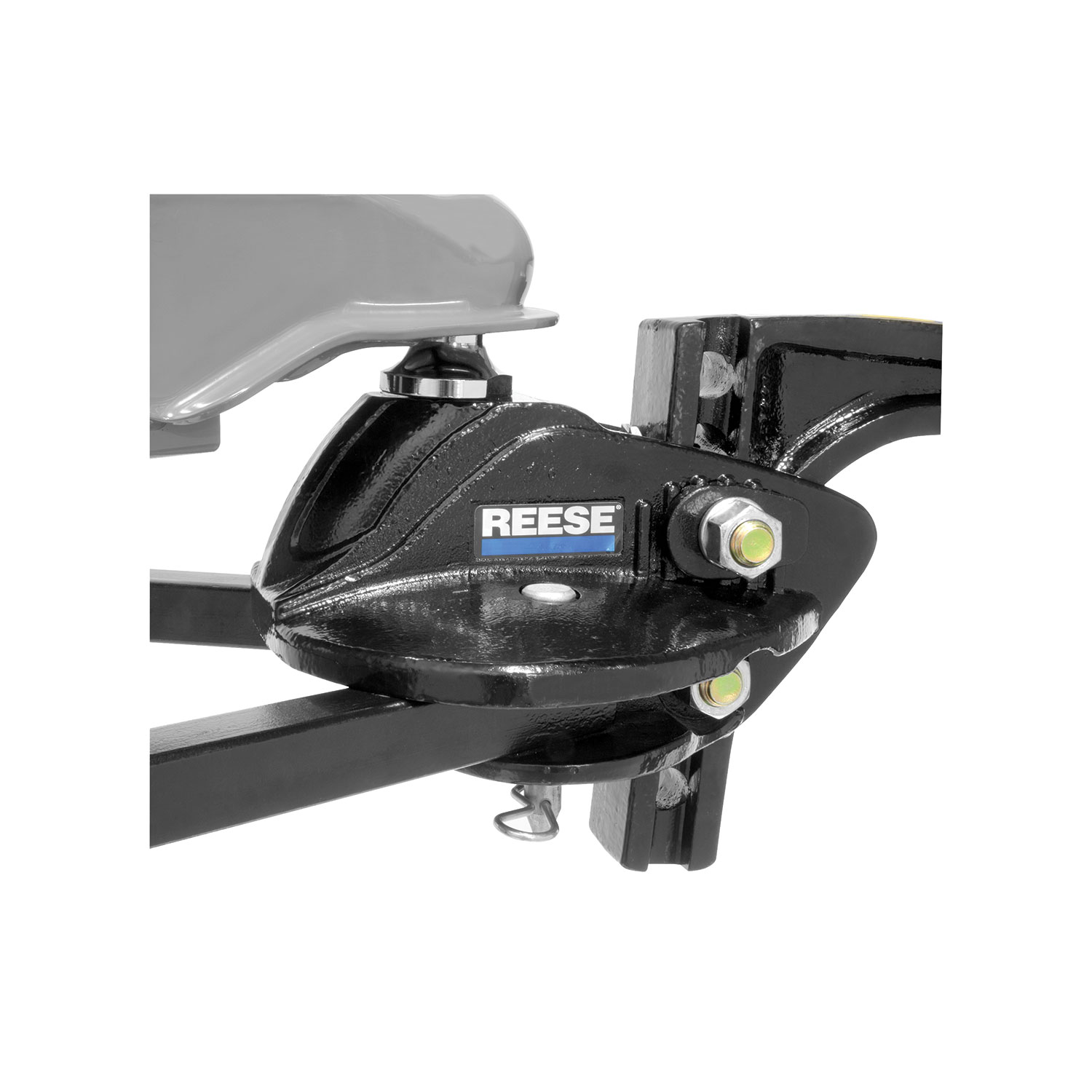
With the trailer level, measure from the top of the coupler to the ground. Insert the short 3/4" bolt through the bottom hole of the ball mount and into a hole in the hitch bar that will position the top of the ball 1/2"-1" above the top of the coupler. Both 3/4" bolts are required for assembly.
Align the toothed washer with the grooves on the ball mount as shown in the manual figures. Use this ball mount angle as a starting point. To adjust the head angle, position the toothed washer in the grooves that will allow the desired head angle. Refer to the Adjustment Guide on page 9 for detailed adjustment based on system performance.
Torque the 3/4" ball mount bolts to 300 ft.-lbs.
After retract the jack and adjusting/angling the friction pads to settle flat against the spring bars, torque all 5/8" nuts and bolts to 130 ft.-lbs.
Lubricate the contact surfaces of the spring bar to the ball mount (approximately the first 7 inches) with petroleum-based lubricant (e.g. WD-40) before initial use. Do not lubricate the friction pads. Lubricate the hitch ball with automotive grease to prevent unnecessary wear.
There should be at least 4" clearance past the end of the spring bars to the trailer. Verify this after placing the spring bars onto the friction pads.
Secure the ball mount position by turning the adjustment bolt counter-clockwise with a hammer and flat-head screwdriver. Once snug, turn an additional 1/4 to 1/2 turn.
Before hitching: Measure the front wheel well height of the tow vehicle before hitching or installing the weight distributing system and record this measurement as H1. After hitching: Retract the trailer jack and measure the front wheel well height with the weight distributing system installed and record this measurement as H2. H2 should never be less than H1 and should be within 1/2" of H1. If measurements are outside this range, refer to the Adjustment Guide on page 9.
Loaded ball height should never be greater than uncoupled ball height. If loaded ball height is greater than uncoupled height, front wheel overload and loss of rear wheel traction can result, leading to unstable handling, reduced braking ability, and a tendency to jackknife when turning and braking at the same time. If this occurs, re-adjust the head and re-measure until proper height is obtained.
No. Never disassemble or remove any part of the weight distributing system while the hitch is under load.
Pull over immediately and make a thorough inspection. Correct any problems before resuming travel. Severe bumps and badly undulating roads can damage the towing vehicle, hitch, and trailer, and should be negotiated at a slow steady speed.
Tongue weight should be about 10-15 percent of the gross trailer weight for most trailers. Too low a percentage of tongue weight will often produce a tendency to sway. Excess weight on the tongue can also lead to sway and damage the hitch and/or tow vehicle.
Before each trip: Check that all bolts are properly tightened and the hitch pin and clip are securely in place. Check that electrical hookups are in working order and that safety chains are connected.
Store the system out of the elements. Always wear hand protection when handling any part of the weight distributing system. Touch up paint if necessary to prevent rust. Do not paint over warning labels. Keep these areas free of debris: hitch ball (lubricate each use), inside the trailer coupler, spring bar contact surfaces in the ball mount, and spring bar contact surfaces on the friction pads. Lubricate spring bar contact surfaces to ball mount when necessary, especially after severe noise or extended non-use.
No. Do not lubricate the friction pads. Lubricate only the hitch ball with automotive grease and the spring bar contact surfaces to the ball mount with petroleum-based lubricant when necessary.
First, verify that you are not exceeding your tow vehicle manufacturer's rating, hitch rating, or tow system rating—do not tow if you are. Check that loaded tongue weight is at least 10% of the loaded trailer rating; if below 10%, rearrange weight in the trailer forward to increase tongue weight to 10-15% of gross trailer rating without exceeding trailer manufacturer recommendations or overloading the rear axle. Verify all tires are filled to manufacturer recommendations. If sway persists, adjust the A-Frame bracket up one hole or adjust the head angle downward. Ensure your hitch rating exceeds your trailer rating and tongue weight rating.
Some noise during use is normal, especially in slow tight turning maneuvers and during break-in, but usually subsides after a few uses. If noise is severe, inspect all components and hardware to ensure all parts are fastened appropriately and tighten or replace components/hardware where necessary. If the system has been in extended non-use, it may need to go through the break-in phase again. Remove the spring bars and apply petroleum-based lubricant (e.g. WD-40) to the top and bottom surfaces of the spring bars only where they contact the ball mount (approximately the first 7 inches, not the friction pads).
The initial ball height may not be set properly. Readjust the head height up one hole. If the problem persists, there may not be enough weight distributing; adjust the A-Frame bracket up one hole or adjust the head angle downward. If the hitch is undersized or flexing, replace it with the appropriate Reese WD system.
The initial ball height may not be set properly. Readjust the head height down one hole. If the problem persists, there may be too much weight distributing; adjust the A-Frame bracket down one hole or adjust the head angle upward.
The clamping bar may be under-tightened or over-tightened. Review the proper clamping instructions on page 5 of the manual to ensure correct installation.
The Steadi-Flex fits trailers with 4"-7" tall frames with bottom-mount couplers, and 4" tall frames with top-mount couplers. For 5"-7" tall frames with top-mount couplers, consult Technical Bulletin TB17-01.
Required: torque wrench (300 ft.-lbs), petroleum-based lubricant, 15/16" and 1-1/8" sockets/wrenches, tape measure, pencil, flat-head screwdriver, hammer. Recommended: 450 ft.-lbs torque wrench, 1-7/8" socket, safety gloves.
No battery disconnection is mentioned in the installation instructions.
No drilling is required. The system uses existing holes on the trailer A-Frame and tow vehicle hitch receiver.
Ball mount 3/4" bolts: 300 ft.-lbs. Final 5/8" nuts and bolts: 130 ft.-lbs. Hitch ball installation typically 400 ft.-lbs (per manufacturer specification).
No. Do not attempt to tow any type of trailer behind another trailer. Towing multiple trailers may cause severe instability, loss of control, structural failure, and is illegal in many jurisdictions.
Lubricate the hitch ball with automotive grease each time you use the system. Remove excess grease and dirt whenever the trailer is uncoupled.
Some noise is normal, especially during break-in and slow tight turns. If noise is severe, inspect all components and hardware to ensure proper fastening; tighten or replace as needed. If the system has been in extended non-use, remove the spring bars and apply petroleum-based lubricant (e.g. WD-40) to the top and bottom surfaces of the spring bars only where they contact the ball mount (approximately the first 7 inches, not the friction pads).
The clamping bar is either under-tightened or over-tightened. Review the proper clamping instructions on page 5 to ensure the T-Bar and Clamping Bar are correctly positioned with 1" clearance on each side and that all 5/8" hardware is properly snugged and eventually torqued to 130 ft.-lbs.
On Sale Today
Original price was $1,056.25. Current price is $962.48.You save $93.77 (9%)
Free Shipping
Ships free on all orders
 Authorized Dealer
Quick Ship
In stock and ready to ship — order now!
FREE ShippingFREE SHIPPING
Estimated delivery Thu, Sep 17 - Sun, Sep 20
Order before 2 PM EST Monday–Friday for same-day processing
Guaranteed safe & secure checkout
Ann
Ordered online. Shipment arrived on time and with all the correct parts. Great customer service and friendly staff. Also, pricing was great!
May 22, 2023