Air Lift AIR LIFT 1000 80702Air LiftOriginal price was $194.99. Current price is $179.56.In Stock
View productOur in-house experts typically reply within one business day.

Air Lift
Verify Fitment
Select your vehicle to confirm this part fits.
2008 - 2016 Buick Enclave
Confirmed to Fit
2009 - 2016 Chevrolet Traverse
Confirmed to Fit
2007 - 2016 GMC Acadia
Confirmed to Fit
2007 - 2010 Saturn Outlook
Confirmed to Fit


Always the correct part
We know our products
Quality Products
Free Shipping!
Always the correct part
We know our products
Quality Products
Free Shipping!
AD-938 LS user guide.pdf
MN-693_60816.pdf
AD-985-ALC-Warranty- Flyer.pdf
Air Lift 1000
Coil Spring
Rear
No Drill

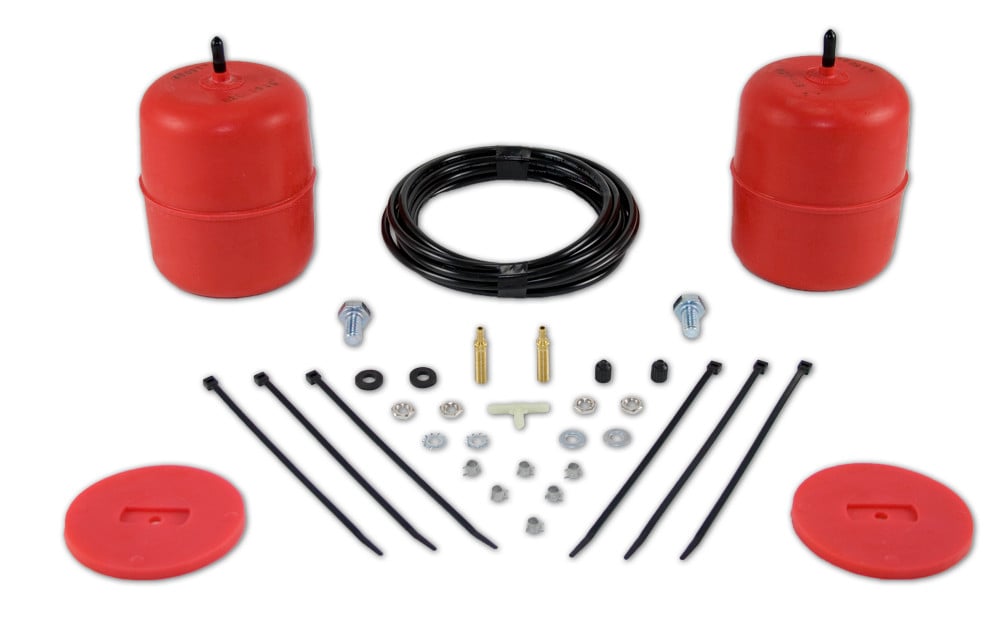
Air Lift adjustable air helper springs level your load, and give your truck, van, or SUV a safer, more comfortable ride. Air springs are easy to install inside the existing coil spring with common mechanic's tools. Just add air when towing or hauling a heavy load, and reduce air pressure when unloaded, they are fully adjustable for a great ride. Air Lift air springs eliminate sag, sway, and bottoming out. They are made with rugged, durable components for long, reliable service. Air Lift 1000 kits fit many popular customer vehicles with coil springs. They're designed to: add support to rear springs on many popular SUVs, replace OEM front air springs on P-30 motor homes, provide front end support for snowplows, winches, etc., improve muscle car traction for drag racing, and improve ride and handling for full-size vans and trucks with front coil springs. Air adjustable with quick connecting, easy-to-use air fittings, Air Lift 1000 air helper springs have a typical max pressure of 35 PSI on cars and SUVs, and 90 PSI on motorhomes. They also have up to 1000 pounds of leveling capacity, right up to the manufacturer's recommended Gross Vehicle Weight Rating. Air Lift 1000 kits also come standard with a limited lifetime warranty and an exclusive 60 day ride satisfaction guarantee.
Air Lift Company has developed dependable air spring suspension products since our inception in 1949. Our original product, a rubber air spring inserted into a car’s factory coil spring, was created and patented in 1950. We’ve come a long way since 1949 and are proud to be a dedicated suspension specialist company.
Today, Air Lift load support products are sold worldwide and are engineered to fit over 540 vehicles. Our extensive product line offers air helper springs for trucks, RVs, SUVs, CUVs, and vans, as well as the most technologically advanced on-board air compressor systems for on-the-go air spring control.
Air Lift leads the industry in no-drill applications – kits that bolt onto your vehicle’s frame, speeding the installation process. Our teams work constantly to bring innovative products to you and upgrade existing products with the latest technology.
All of our efforts are spent ensuring your safety and comfort by designing, engineering, and manufacturing the highest quality suspension products. We are a family-owned business based in Lansing, Michigan, and make your family and cargo’s safety our top priority.
Experts available to answer your questions
Call 888-634-9494Limited Lifetime
4 compatible vehicles
| Year | Make & Model | Notes |
|---|---|---|
| 2008 - 2016 | Buick Enclave | — |
| 2009 - 2016 | Chevrolet Traverse | — |
| 2007 - 2016 | GMC Acadia | — |
| 2007 - 2010 | Saturn Outlook | — |
Yes, the Air Lift AIR LIFT 1000 60816 (Part #BBCG60816) is designed to fit the 2008-2016 Buick Enclave.
The Air Lift AIR LIFT 1000 60816 (Part #BBCG60816) fits the following vehicles: 2008-2016 Buick Enclave; 2009-2016 Chevrolet Traverse; 2007-2016 GMC Acadia; 2007-2010 Saturn Outlook. Always verify your specific year, make, and model before ordering.
The Air Lift AIR LIFT 1000 60816 (Part #BBCG60816) fits 2008-2016 Buick Enclave models. The 2016 model year is the last year covered by this part number. For newer models, check for an updated version.
The Air Lift AIR LIFT 1000 60816 (Part #BBCG60816) Refer to the included instructions for installation details. Basic hand tools are typically all you need.
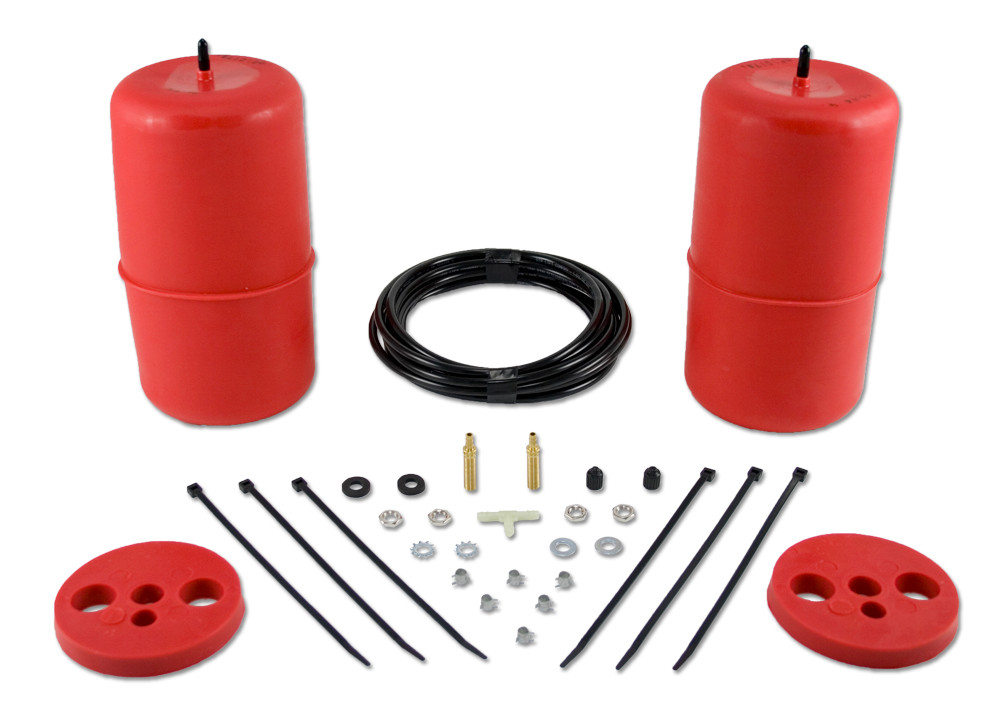
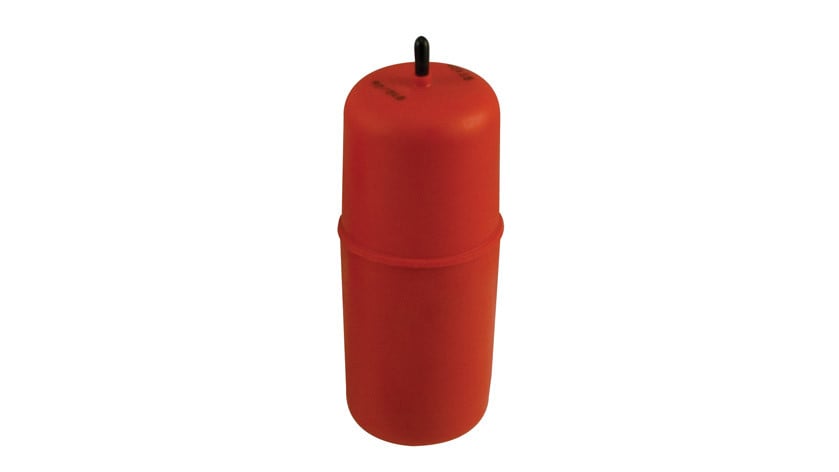
The Air Lift 1000 System is an air spring suspension kit that provides load support for your vehicle. It consists of two air springs (cylinders) that work with your existing suspension to help level the vehicle when carrying cargo or passengers. The system includes air springs, air lines, valves, and all necessary hardware for installation.
Kit 60816 is designed for Buick Enclave, GMC Acadia, and Saturn Outlook vehicles. If you own one of these models, the kit should fit. For confirmation of your specific vehicle year and configuration, contact Air Lift Company customer service at (800) 248-0892 or visit www.airliftcompany.com.
No. The installation of this kit does not alter the Gross Vehicle Weight Rating (GVWR) or payload of the vehicle. You must not exceed the maximum load listed in your vehicle's owner's manual or on the Safety Compliance Certification Label. The air springs provide load support but do not increase the weight your vehicle is designed to carry.
You will need: a hoist or floor jacks, two safety stands, safety glasses, metric and standard sockets/ratchet and wrenches, a drill with drill bits, a grinder or rotary tool, pliers, an air compressor or compressed air source, and a spray bottle with dish soap and water solution. These tools are required for proper installation and testing.
The kit includes: two air springs (part 46165), one 15-foot air line (part 20315), four zip ties (part 10466), two valve caps (part 21230), four 5/16" hex nuts (part 21233), two rubber washers (part 21234), two star washers (part 18411), two M8 flat washers (part 18501), four tees (part 21236), and four valves (part 21455).
The manual does not specify whether the battery must be disconnected. Contact Air Lift Company customer service at (800) 248-0892 for guidance on this step.
1. Jack up the rear of the vehicle or raise it on a hoist. Support the frame with safety stands so the wheels hang freely. 2. Remove the rear wheels. 3. Position a floor jack or adjustable jack stand under the control arm. 4. Disconnect the sway bar and shock from the lower control arm. 5. Unbolt the brake line bracket from the side of the frame and pull it loose. The lower control arm is under pressure from the coil spring, so use caution during this work.
Yes. You must drill out the existing hole in the center of the upper spring seat to 1/2" diameter, then use an air grinder or rotary tool to open it to 3/4" diameter. You must also drill a 5/16" hole for the inflation valve. Remove any burrs or sharp edges after drilling.
Yes. You must cut the jounce bumper in two above the rubber isolator using a hack saw or cut-off wheel. This is a permanent modification required for proper air spring clearance.
The flange bolt connecting the lower control arm to the knuckle must be torqued to 147 lb.-ft. This is done after raising the control arm up far enough to just pick the vehicle up off the safety jack.
Tee air line routing uses a single tee fitting to connect both air springs to one inflation valve. Dual air line routing uses separate air lines and two separate inflation valves, one for each air spring. The manual recommends tee air line installation. Use dual air lines only if the weight in the vehicle varies from one side to the other and unequal pressures are needed to level the load or compensate for axle torque transfer in racing applications.
The air line must be maintained at least 8 inches from the exhaust system to prevent the air line from melting. Additionally, maintain at least 6 inches clearance from all heat sources for both air springs and air lines.
1. Slide an air line clamp onto the air line. 2. Push the air line over the barbed stem, covering all the barbs. 3. Using pliers, slide the air line clamp forward until it fully covers the barbed section. This procedure must be used for all air line connections to ensure a secure fit.
For tee air line routing, select a location for the inflation valve in the gas cap well, the trunk, rear bumper, fender flange, or behind the license plate, ensuring that the valve will be protected and accessible with an air hose. For dual air line routing, select locations in the rocker panel flange or rear bumper for each valve. The valve must be accessible and protected from damage.
The tail pipe must be at least 2-3 inches away from the air spring. If necessary, loosen the clamps and rotate or move the tail pipe to obtain additional clearance.
Leave sufficient air line slack to prevent any strain on the fitting during axle motions. Additionally, leave slack at the top for the air line to move in and out freely during normal driving and in case the vehicle is serviced on a frame contact hoist. Loosely attach the air line to the brake line using a zip tie.
Inflate the air springs to 35 PSI after installation is complete. Test for air leaks by applying a soapy water solution to all valve cores, fittings, and connections. A 2-4 PSI loss after initial installation is normal. If pressure has dropped more than 5 PSI after 24 hours, retest for leaks.
The maximum air pressure is 35 PSI (2.4 BAR). Never inflate beyond this pressure. Although the air springs are rated at this maximum, the air pressure actually needed is dependent on load and gross vehicle weight rating. Do not exceed the maximum GVWR or payload rating as indicated by the vehicle manufacturer.
The minimum recommended pressure is 5 PSI (0.34 BAR). Always maintain normal ride height and check air pressure weekly.
Perform the following checks: 1. Clearance test—inflate to 30 PSI and verify at least 1/2" clearance from the tire, brakes, frame, shock absorbers, and brake cables. 2. Leak test—inflate to 30 PSI and check all connections for leaks before road testing. 3. Heat test—verify at least 6" clearance from heat sources. 4. Fastener test—after 500 miles, recheck all bolts for proper torque. 5. Road test—drive 10 miles and recheck for clearance, loose fasteners, and air leaks.
Check air pressure weekly. Always maintain normal ride height. Never inflate beyond 35 PSI. If the system develops an air leak, use a soapy water solution to check all air line connections and the inflation valve core before deflating and removing the air spring. After 500 miles, recheck all bolts for proper torque.
Apply a soapy water solution to all valve cores, fittings, and connections. Bubbles will indicate a leak. Check all connections before road testing. If the system develops a leak, use the soapy water solution to locate it before deflating and removing the air spring.
Yes. A 2-4 PSI loss after initial installation is normal. Recheck air pressure after 24 hours. If pressure has dropped more than 5 PSI, retest for leaks using a soapy water solution on all valve cores, fittings, and connections.
While raising and lowering the control arm, watch the stem on the cylinder. If interference is noted from the new hole in the upper spring seat hitting the stem or cylinder boss, grind the new upper spring seat hole for clearance.
Yes, kit 60816 is designed for these three vehicle models. For confirmation of your specific year and configuration, contact Air Lift at (800) 248-0892.
You need a hoist or floor jacks, safety stands, safety glasses, metric and standard sockets/wrenches, a drill, a grinder or rotary tool, pliers, an air compressor, and a spray bottle with soapy water.
Torque the flange bolt to 147 lb.-ft.
Maintain at least 8 inches from the exhaust system to prevent the air line from melting.
Perform a clearance test at 30 PSI, a leak test using soapy water, a heat test (6" minimum from heat sources), and after 500 miles, recheck all fasteners for proper torque.
Check air pressure weekly. A 2-4 PSI loss after initial installation is normal.
The hole may not have been enlarged sufficiently or may not be positioned correctly. While raising and lowering the control arm, watch the stem on the cylinder. If interference is noted from the new hole in the upper spring seat hitting the stem or cylinder boss, use an air grinder or rotary tool to grind the new upper spring seat hole for additional clearance.
A pressure loss greater than 5 PSI indicates a leak. Use a soapy water solution to check all air line connections and the inflation valve core. Bubbles will indicate the location of the leak. Repair or reseal the leaking connection before continuing to use the system.
On Sale Today
Original price was $206.99. Current price is $149.99.You save $57.00 (28%)
Free Shipping
Ships free on all orders
 Authorized Dealer

Quick Ship
In stock and ready to ship — order now!
FREE ShippingFREE SHIPPING
Estimated delivery Tue, Sep 22 - Fri, Sep 25
Order before 2 PM EST Monday–Friday for same-day processing
Guaranteed safe & secure checkout
No reviews have been added for this product.