

BlueOx Tow Bar Base Plate, Front Mount, RV Flat Towing for Select, DODGE AVENGER E13Blue OxOriginal price was $699.99. Current price is $609.00.Out of Stock
View productOur in-house experts typically reply within one business day.

Blue Ox
Verify Fitment
Select your vehicle to confirm this part fits.
1978 - 1990 Dodge Omni
Confirmed to Fit
1978 - 1990 Plymouth Horizon
Confirmed to Fit


Always the correct part
We know our products
Quality Products
Free Shipping!
Always the correct part
We know our products
Quality Products
Free Shipping!

Custom-fit design: The BX1903 is specifically designed for each unique vehicle, ensuring a flawless fit and optimal towing performance.
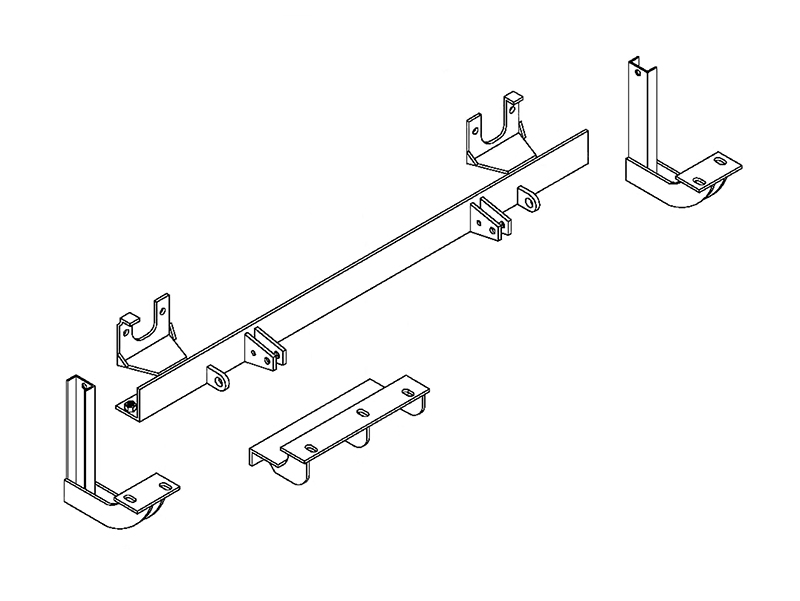
Material: Steel
Color: Black
Finish: Powder Coat
Mounting Type: Bolt On
Mounting Hardware Included Yes/No: Yes
The Blue Ox BX1903 Tow Bar Bracket is a state-of-the-art towing solution designed to fit your specific vehicle perfectly. Constructed from high-grade steel and finished with a durable powder coat, this bracket promises longevity and exceptional performance. With its bolt-on mounting type and included hardware, installation is straightforward and hassle-free. The black color offers a sleek, professional look that complements any vehicle. Whether you’re towing for work, pleasure, or necessity, trust the Blue Ox BX1903 to deliver reliable and secure towing performance for years to come.

Blue Ox is known internationally for recreational and commercial towing products, manufacturing in Pender, Nebraska since 1925. The line covers tow bars and vehicle-specific baseplates for flat towing behind a motorhome, sway control and weight distributing hitches, supplemental braking accessories and towing wiring, backed by patented designs and long-standing customer service.
Blue Ox has manufactured since 1925 and is recognised internationally for towing products and customer service. The company operates from Pender, Nebraska, where it grew out of Automatic Manufacturing Co., a business that started with cattle oilers and developed into agricultural equipment, tractor accessories and trailer towing hardware. That agricultural engineering heritage still shows in how the towing products are built, and the company holds patents across weight distribution, fifth wheel and tow bar designs.
Flat towing is the discipline Blue Ox is best known for. Towing a car with all four wheels on the ground behind a motorhome demands a system that stays rigid under braking, articulates properly over uneven ground, and connects to the towed vehicle at points strong enough to take the load. Blue Ox tow bars handle the first two, with self-aligning arms that latch under tension and release without a struggle when the load is off them. Vehicle-specific baseplates handle the third, engineered per make and model to tie into structural mounting points behind the fascia.
The wider flat towing range covers supplemental braking systems, safety cables and the accessories that make a complete legal setup, along with baseplate wiring and dinghy towing harnesses that pass lighting signals to the towed vehicle without back-feeding its electrical system.
For conventional trailer towing, Blue Ox weight distributing hitches with integrated sway control transfer tongue load onto the tow vehicle's front axle and resist the yaw that crosswinds and passing trucks induce.
The company describes its foundation as customer service, designing around what owners actually ask for, and it runs an RV park adjacent to the factory where customers can stay. Sister operations at the same Nebraska site include Automatic grain roller mills and MAD-RAMPS pivoting ramp systems.
Experts available to answer your questions
Call 888-634-94943 Years
2 compatible vehicles
| Year | Make & Model | Notes |
|---|---|---|
| 1978 - 1990 | Dodge Omni | No GLH or 024 Comes with Standard Attachment Tabs Install Rating 4 Vehicle May Accumulate Miles When Flat Towing. Consult Your Vehicle's Owner's Manual. |
| 1978 - 1990 | Plymouth Horizon | No TC: 3 Comes with Standard Attachment Tabs Install Rating 4 Vehicle May Accumulate Miles When Flat Towing. Consult Your Vehicle's Owner's Manual. |
The BX1903 is designed for 1978–90 Dodge Omni and 1978–90 Plymouth Horizon vehicles, but fitment varies by model year and drivetrain. It fits: 1978–83 all models; 1984 all models except those with automatic transmission and air conditioning; 1985 and later with standard transmission; 1984 with automatic transmission and air conditioning; and 1985 and later with automatic transmission. Confirm your vehicle's year, transmission type, and air conditioning configuration before purchase.
On some models, installation of the BX1903 requires removing the front bumper assembly. The manual does not specify which model years or configurations require bumper removal. Consult the General Instruction Sheet included with the baseplate or contact the manufacturer to confirm whether your specific vehicle requires bumper removal before beginning installation.
You will need: 13mm socket, 15mm socket, 3/4 socket, and 13mm open end wrench. The 13mm open end wrench is specifically required for removing the passenger-side bumper bracket bolt, which is located close to a plastic air canister and cannot be accessed with a socket.
The kit includes: main baseplate assembly (61-3347), center bracket (61-3348), passenger's side bracket (61-3349), driver's side bracket (61-3350), four spacer plates (102-2806), two reinforcement brackets (102-2807), seven 1/2-13 x 1 1/2 hex bolts grade 5 (201-0051), four 8mm-1.25 x 50mm hex bolts grade 8.8 (201-0419), two 8mm-1.25 hex nuts (202-0118), seven 1/2 lock washers (203-0012), six 8mm flat washers (203-0107), and six 8mm lock washers (203-0102). You will also reuse existing bolts from the vehicle.
The manual does not specify whether the battery must be disconnected. Consult the General Instruction Sheet included with the baseplate or contact the manufacturer for guidance on pre-installation safety procedures.
Read the General Instruction Sheet included with the baseplate. This sheet contains important information referenced throughout the installation process, including guidance on bolt reuse and other critical procedures.
The baseplate mounts using ten bolts: three on each side of the vehicle and four in the center. These bolts are secured to the front underside of the vehicle.
The two bolts on each side that hold the bumper brackets to the chassis are hidden by a plastic cover. Pull the plastic cover away from the chassis to move it off the press-on fasteners and access the bolts.
The passenger-side bumper bracket bolt is located directly behind the bumper bracket on the outside of the sheet metal frame, close to a plastic air canister. It must be removed with an open end wrench (13mm) because its location prevents socket access. Inspect the bolt for reuse per the General Instruction Sheet.
Remove the four nuts in a straight line along the bottom center motor mount. Also remove the metal strip that holds the pressed-in studs these nuts were on. These nuts will be reused to secure the bolt strip through the center bracket and motor mount.
Dimensional variations between otherwise identical vehicles can be considerable. While the baseplate holes were designed for easy installation, it may be necessary to file a hole slightly to allow a bolt to clear. This is not required on all vehicles but should be anticipated as a possible modification.
The center bracket (61-3348) is positioned in front of the sheet metal where the motor mount bolts were. The bolt strip is installed through the center bracket and motor mount, then loosely secured with the nuts previously removed from the motor mount. The baseplate upper brackets then assemble to the center bracket.
Use Locktite on all bolts. Apply it when hand-starting the bolts, but do not tighten the bolts yet. Final tightening occurs after all bolts are started.
Spacer plates (102-2806) are used on models where the bumper brackets have short outward-turned flanges. Position one spacer plate between the bumper bracket and the baseplate upper bracket at each mounting hole. Not all vehicles require spacer plates.
For 1978–83 all models, 1984 all models except automatic transmission & air conditioning, and 1985 & later standard transmission: assemble the baseplate to the center bracket with upper brackets in front of the bumper brackets (steps 8–12). For 1984 automatic transmission & air conditioning and 1985 & later automatic transmission: pull the bumper assembly straight forward and out, remove the limiter brackets, assemble the baseplate to the center bracket against the vehicle where the limiter brackets were, then reinstall the bumper assembly (steps 9–12).
Position the outer brackets and loosely secure them to the vehicle with the bolts previously removed during disassembly. The passenger-side outer bracket is cleared away for the air canister. Then attach the outer brackets to the baseplate with the remaining 1/2 inch bolts and lock washers provided.
Hand start all bolts first. When all bolts are started, snug them all up, then tighten them securely. Do not fully tighten bolts until all have been started.
On models with a round tinnerman-type fastener behind the bumper bracket, place a reinforcement bracket (102-2807) on the exposed threaded end of the outside bumper bracket bolt on both sides of the vehicle. The bracket rests against the flat parts of the tinnerman fastener. Install a flat washer, lock washer, and nut as shown in the bolt sequence diagram and tighten securely. Models with a square nut do not need reinforcement.
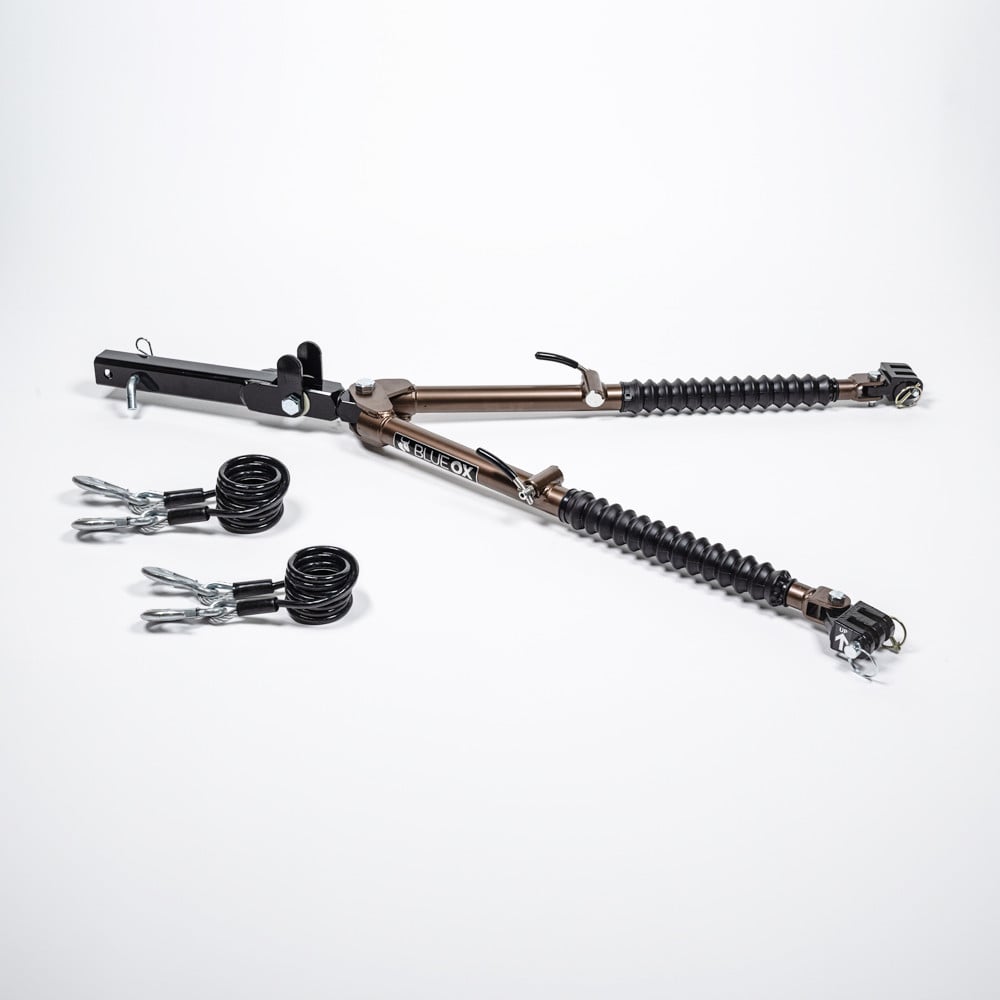
With all baseplate bolts properly installed, hold the tow bar in position with the tabs aligned inside the tabs of the baseplate and insert the pins. Slide the hairpin clip through the holes in the pins. Then install the tow bar and safety cables according to the instructions included in their packages.
Do not substitute other devices if the tow bar pin and clip are lost. Contact the manufacturer to obtain replacement pins and clips.
Verify that all bolts are properly installed and tightened securely. Confirm that the tow bar is correctly positioned with tabs aligned inside the baseplate tabs, pins inserted, and hairpin clips installed. Ensure the safety cables are installed per their included instructions. Reinstall the plastic bumper bracket covers.
The BX1903 fits most 1978–90 Dodge Omni and Plymouth Horizon models, but fitment depends on your vehicle's year, transmission type, and air conditioning configuration. Confirm your specific model year and drivetrain before purchase.
You will need a 13mm socket, 15mm socket, 3/4 socket, and 13mm open end wrench. The open end wrench is required for the passenger-side bumper bracket bolt.
On some models, yes. The manual does not specify which model years require bumper removal. Check the General Instruction Sheet included with your baseplate or contact the manufacturer to confirm.
Yes. Use Locktite on all bolts when hand-starting them, but do not tighten until all bolts are started.
Filing may be necessary. Dimensional variations between vehicles can require filing a baseplate hole slightly to allow a bolt to clear, but this is not required on all vehicles.
Ten bolts: three on each side and four in the center of the vehicle. The kit includes all necessary hardware.
Do not substitute other devices. Contact the manufacturer for replacement pins and clips.
On Sale Today
Original price was $699.99. Current price is $699.00.You save $0.99
Free Shipping
Ships free on all orders
 Authorized Dealer


FREE ShippingFREE SHIPPING
Estimated delivery Thu, Sep 17 - Sun, Sep 20
Order before 2 PM EST Monday–Friday for same-day processing
Guaranteed safe & secure checkout
Total for 0 items:
$0.00
No reviews have been added for this product.