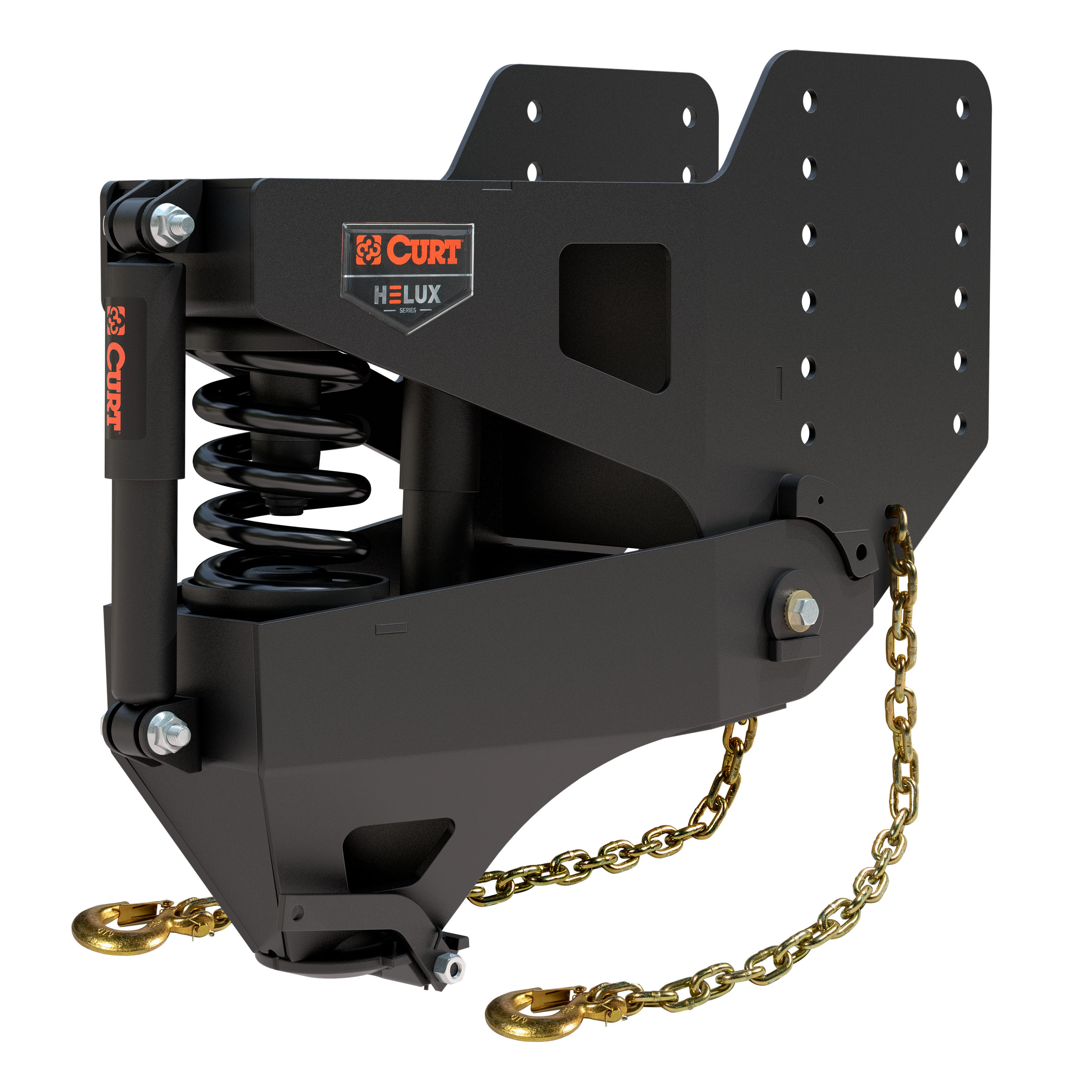
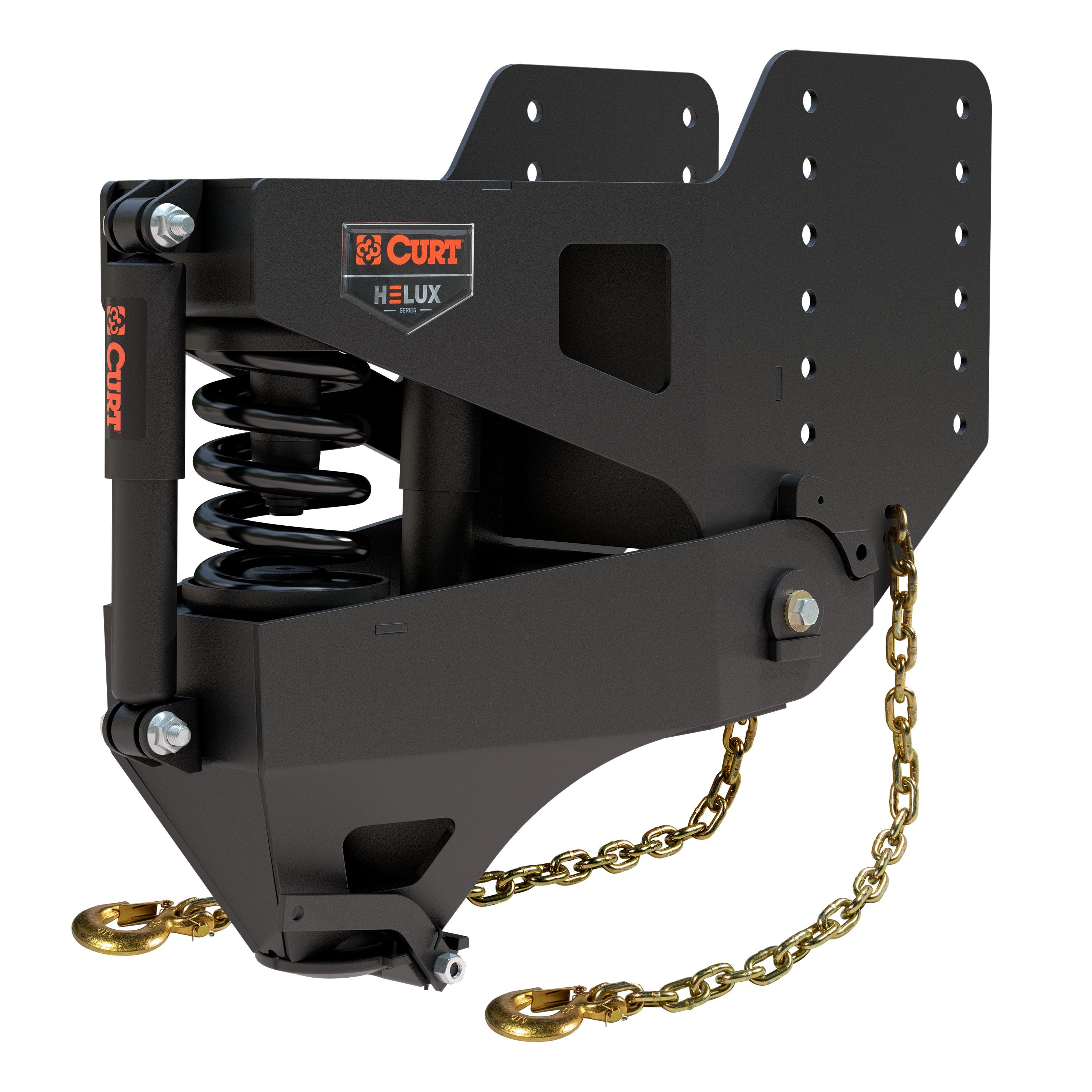
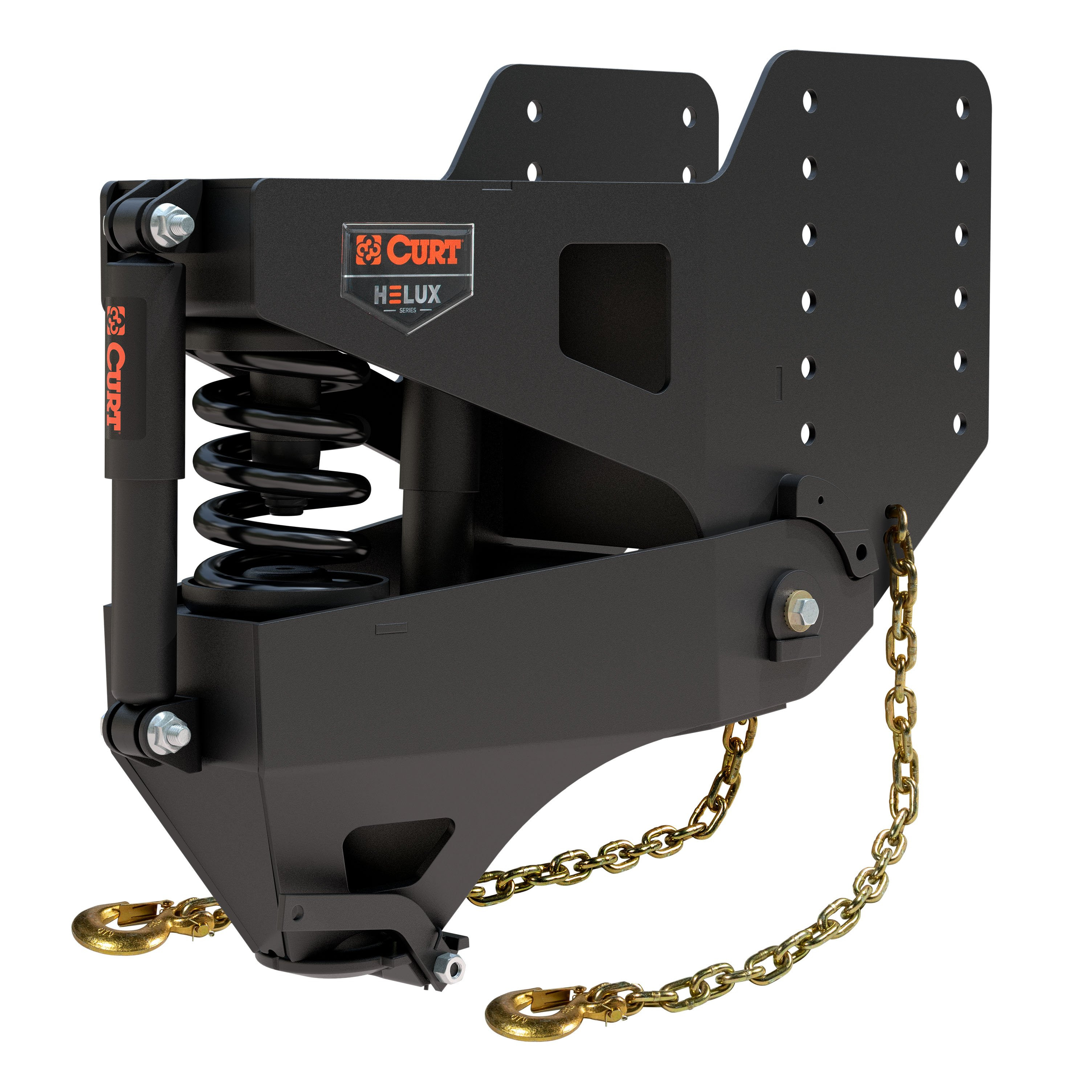
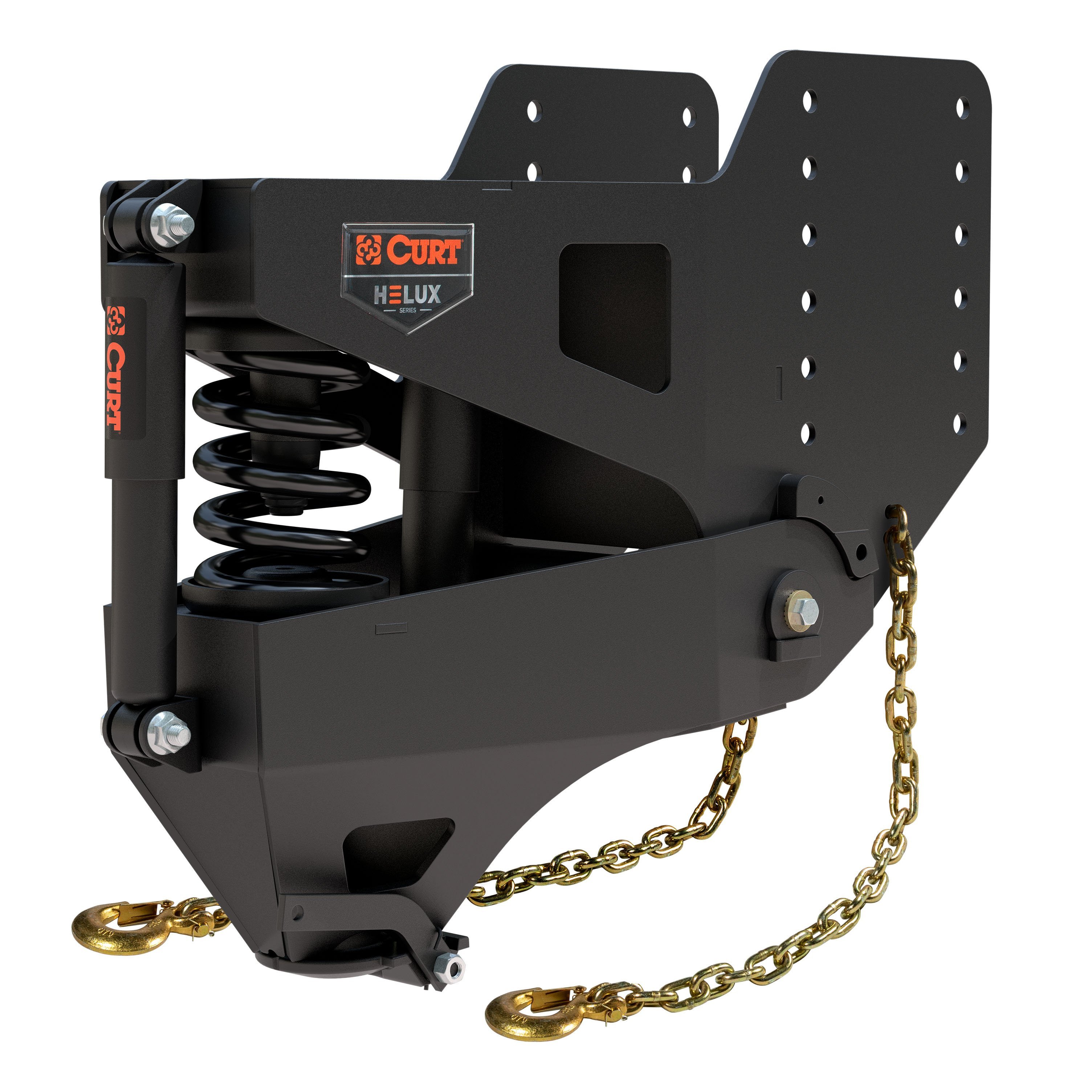
CURT 2024044577 Helux Coil-Spring Gooseneck Pin Box, 3,900 lbs. Pin Weight, 20,000 lbs. CapacityCURT$1,951.95In Stock
View productOur in-house experts typically reply within one business day.

CURT

Always the correct part
We know our products
Quality Products
Free Shipping!
Always the correct part
We know our products
Quality Products
Free Shipping!
Purchase verification required. Refer to instruction sheet for pin weight measuring process
Allows for additional cargo space in the bed of your truck versus traditional 5th wheel towing

Purchase verification required. Refer to instruction sheet for pin weight measuring process
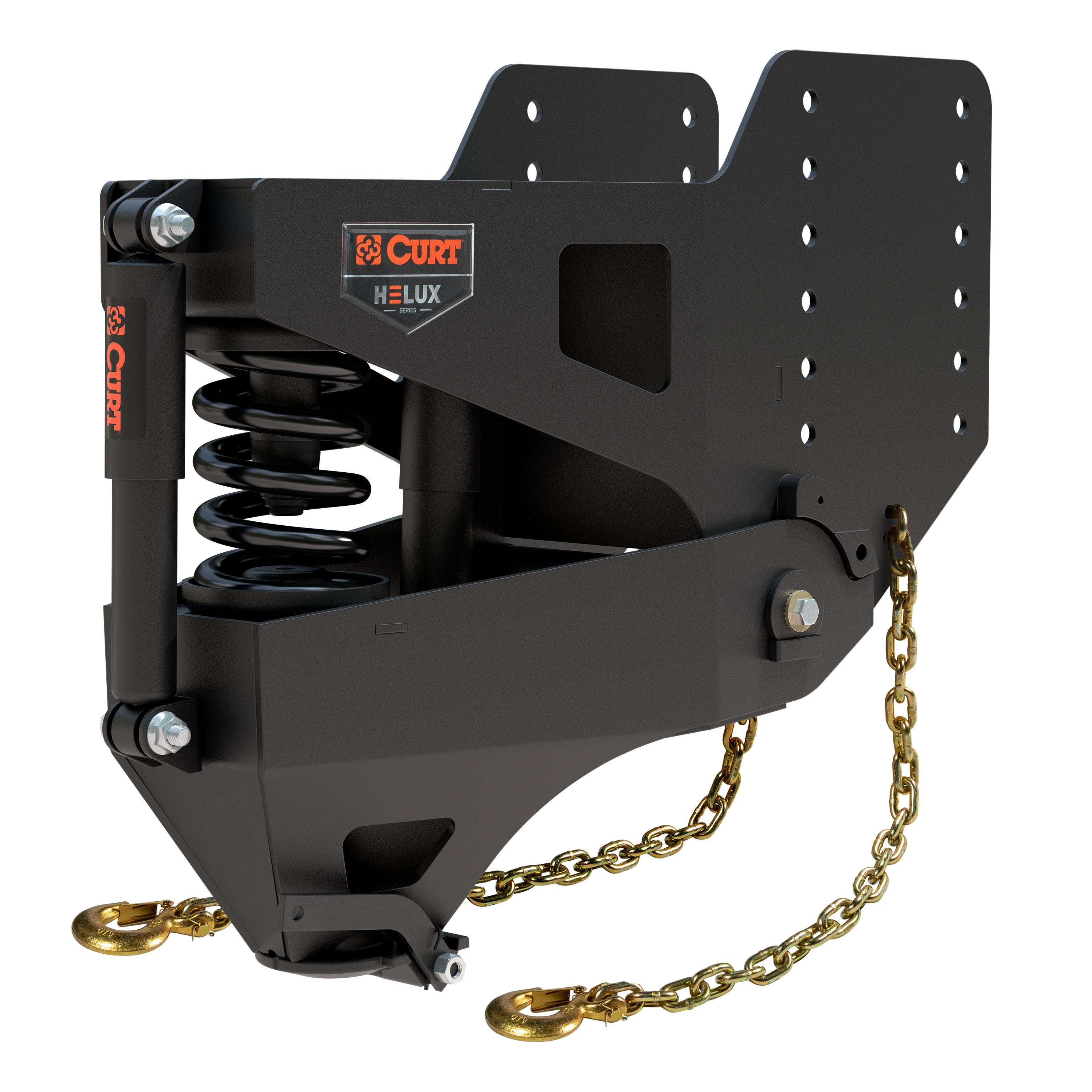
Material: Carbon Steel
Shipping Weight: 200.000 lbs
Finish: Black
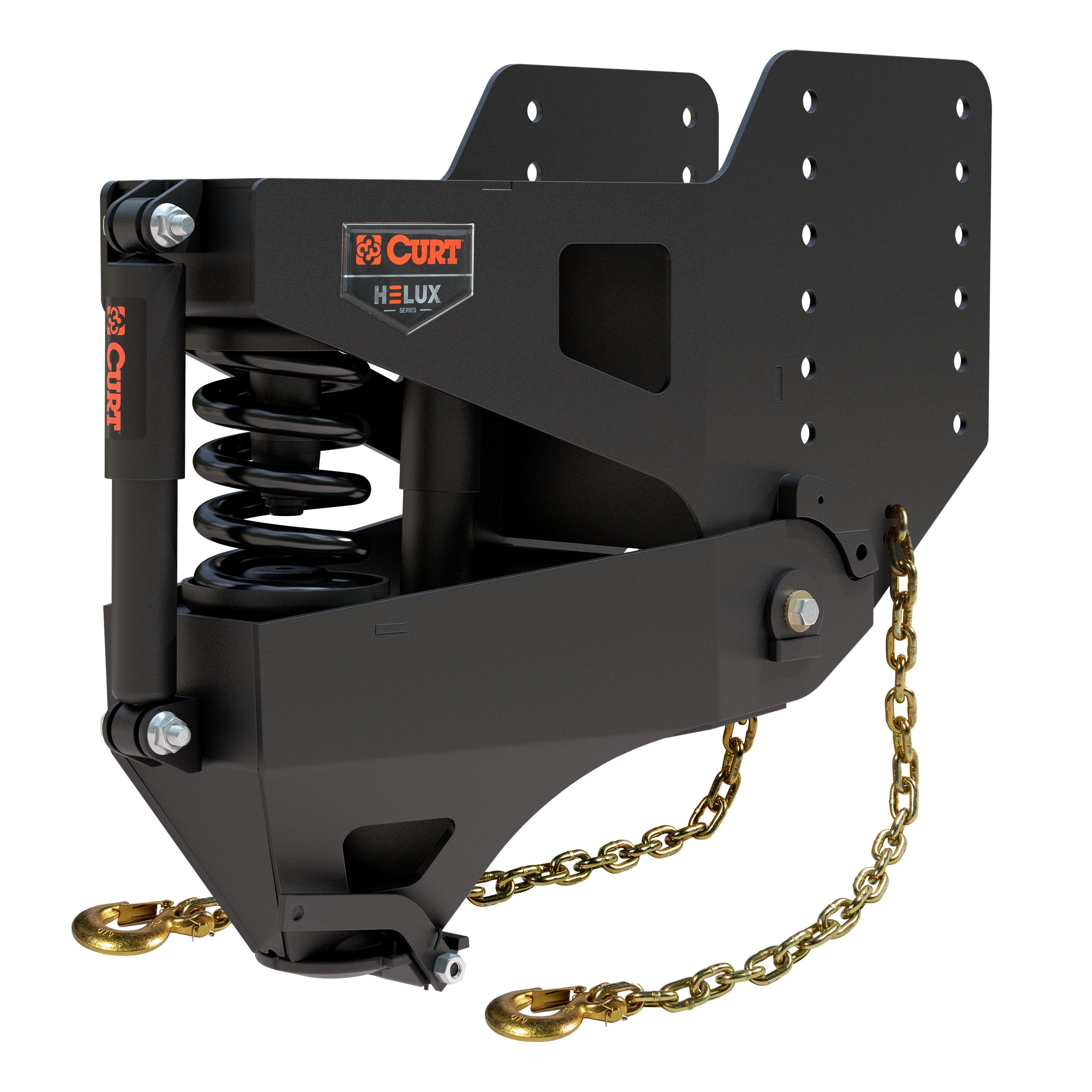
The CURT Coil-Spring Gooseneck Pin Box is engineered for RV owners who demand more from their towing setup more ride comfort, more truck bed space, and more long-term durability. By utilizing a gooseneck connection, this pin box gives you full use of your truck bed without sacrificing performance or stability. At the heart of the system is CURTs proprietary coil and shock technology, designed to dramatically reduce the bumps, jolts, and vibrations that come with towing. Compared to traditional pin boxes, the Helux pin box cuts down on force to your RV frame and body by up to 30% compared to other gooseneck pin boxes. With the Helux, youll feel the difference right away. The automotive-grade coil spring absorbs road shock to deliver a smoother, quieter ride for both pets and passengers. And unlike airbag-style pin boxes, the Helux is virtually maintenance-free. No compressors. No adjustments. No break-in period. Just install it and tow. Built to handle serious loads, this pin box offers a 20,000-lb. gross trailer weight rating with a pin weight range from 1,350 to 2,350 lbs. The auto-latching coupler connects quickly to any standard 2-5/16 gooseneck ball, making hookups fast, easy, and secure. Its also built to last. The CURT Coil-Spring Gooseneck Pin Box features high-strength steel construction, a durable black powder coat finish, and has been rigorously tested to SAE J2638 standards for safety and reliability. Plus, its compatible with Rhino Box bolt patterns and approved for use on Lippert RV frames, so it wont void your manufacturer warranty. This Helux Pin Box is compatible with #23082, #23503, #23520, #23522, #23523, and #23546 CURT locks.

CURT offers a variety of high-quality trailer hitches and accessories for select vehicle models. Find the perfect fit for your towing needs at TowUniverse.
CURT, a Lippert brand, offers a complete line of towing products and is the leading manufacturer of custom-fit trailer hitches. We offer the broadest selection of custom-fit hitches, and each one is designed, welded, and coated in Wisconsin.
CURT is also a leader in flat towing products, as well as 5th wheel, gooseneck, and weight distribution hitches, ball mounts, electrical components, cargo solutions, and other towing accessories.
For everything from passenger cars and vans to full-size pickups and SUVs, CURT is 'The First Name in Towing Products®.'
Experts available to answer your questions
Call 888-634-9494Limited lifetime warranty (one-year finish, one-year parts)
The CURT Helux Gooseneck Pin Box is a 5th wheel coupling assembly that connects a 5th wheel trailer to a tow vehicle. It uses a ball-and-coupler mechanism with a spring-loaded jaw that automatically latches onto the hitch ball. The product is available in six different pin weight ratings to match the weight of your specific 5th wheel trailer.
You must determine your 5th wheel's pin weight before purchasing. The best method is to take your fully loaded 5th wheel (including all cargo, ATVs, motorcycles, etc.) to a certified scale such as CAT Scale. Weigh the tow vehicle and 5th wheel together, then weigh the tow vehicle alone, and subtract to find the pin weight. Alternatively, multiply your 5th wheel's GVWR by 22% (0.22) for an approximate pin weight. Match your pin weight to the correct model: 2024044575 (1650–2144 lb), 2024044574 (2145–2484 lb), 2024044576 (2485–2984 lb), 2024044577 (2985–3469 lb), 2024044578 (3470–3964 lb), or 2024044579 (3965–5000 lb).
Each model has a minimum pin weight (unloaded, with empty tanks) and maximum pin weight (loaded with cargo). Part 2024044575: min 1350 lb, max 2350 lb. Part 2024044574: min 1550 lb, max 2700 lb. Part 2024044576: min 1800 lb, max 3200 lb. Part 2024044577: min 2200 lb, max 3900 lb. Part 2024044578: min 2450 lb, max 4300 lb. Part 2024044579: min 2800 lb, max 5000 lb. Always select the model whose pin weight range includes your fully loaded pin weight.
Yes. The manual specifies 'Use 2 5/16" Ball only' (Fig. 3). Do not use a different ball size.
A minimum of 7 inches clearance must be maintained between the truck bed rails and the underside of the 5th wheel's front. This clearance is critical to avoid contact while hitching and turning. The Gooseneck mounting height must be adjusted using the trailer bracket holes to ensure this clearance is achieved with a level towing setup.
The measurement from the bottom of the coupler to the ground must be at least 2 inches greater than the combined height of the tailgate and tow vehicle bed. To verify: measure from ground to the top of the lowered tailgate, measure from the tow vehicle bed to the top of the hitch ball, add these together, then ensure the coupler bottom is at least 2 inches higher than this total.
Required tools include: SAE socket set, SAE wrenches, tape measure, box-end wrench set, safety glasses, air compressor, and level. Proper tools will improve installation quality and reduce time required.
The kit includes: one gooseneck assembly, ten hex bolts (5/8"-11 x 1 3/4", grade 5), ten serrated-flange nuts (5/8"-11, grade 5), two safety chains, and one cable release. The manual states 'Do NOT reuse the mounting hardware from the previous pin box'—use only the new hardware supplied.
No. The manual explicitly states 'Do NOT reuse the mounting hardware from the previous pin box.' You must use the new hex bolts and serrated-flange nuts supplied with the kit.
A minimum of two people are required; three people are recommended. The pin box assembly weighs 170 pounds. The manual states 'Installation and removal of pin boxes requires a minimum of two people.' A forklift may be used to lift the Gooseneck into position as an alternative.
Yes. Step 1 of the installation process requires you to 'Level the RV front-to-back using the landing gear' before removing the old pin box. This ensures proper positioning and measurement for the new Gooseneck installation.
The pin box assembly weighs 170 pounds. This weight requires a minimum of two people to safely lift and position it during installation.
The Gooseneck has adjustable mounting holes to ensure level towing and proper clearance. Key measurements are: (1) the distance from the bottom of the hitch ball to the first set of mounting holes on the 5th wheel's upper deck (varies by manufacturer, typically graduated by 1 inch); (2) the distance from the bottom of the Gooseneck coupler to the center of the first mounting hole is 15½ inches; (3) holes above the first are graduated in 2-inch increments; (4) the distance from the bottom of the coupler to the center of the top mounting hole is 21½ inches. Use these measurements to select the correct mounting hole height for a level towing condition.
Ten fasteners total are used: five hex bolts and flange nuts on each side of the 5th wheel. Three fasteners are installed in the forward position and two in the rearward position on each side. All bolts are 5/8"-11 x 1 3/4", grade 5, with serrated-flange nuts (5/8"-11, grade 5).
The mounting bolts must be torqued to 120 ft-lb ± 5 ft-lb. This applies to all ten mounting bolts (five on each side). The manual warns: 'Failure to properly torque the mounting bolts can result in a failure, causing property damage, severe personal injury or death.'
The cable release is a lever mechanism that disengages the Gooseneck coupler. To unhitch, pull the cable release toward the rear into the 'hold open' position, locking it into the cable hook. The cable can either be stowed in the hook or left free in the tow vehicle once the coupler latch is closed. The manual warns: 'Safety chains and the cable release must be stowed to avoid catching on the tow vehicle. Property and personal damage could occur.'
The coupler lock is a padlock with a 2.5-inch lock pin length and 11/32-inch maximum pin diameter. It locks into a hole on the Gooseneck to secure the coupler in the latched position. The lock is optional but recommended for security when the 5th wheel is parked.
After lowering the RV onto the hitch ball, observe the coupler latch mechanism. The latch must be in the locked position (Fig. 9A). If the latch is in the unlocked position (Fig. 9B), the coupler has not latched properly. The manual warns: 'If the latch is in the unlocked position, a failure to latch may result in severe property damage, serious personal injury or death.' Do not tow until the latch is fully locked.
Two electrical connections must be made to the tow vehicle: (1) the 7-pin power cable, which provides power to the 5th wheel's lights and accessories, and (2) the breakaway switch connector, which activates the trailer brakes if the 5th wheel becomes disconnected. Both must be connected before towing. If the breakaway switch kit is installed on the previous pin box, uninstall it and reinstall it per the manufacturer's recommendations.
Before hitching: (1) place chocks firmly against the front and rear of each RV tire to prevent movement; (2) lower the tow vehicle's tailgate if necessary to allow the Gooseneck to clear, but monitor clearance during hookup; (3) ensure a minimum of 7 inches clearance between the RV and the tow vehicle's cab and bed rails to avoid contact while hitching and turning; (4) place the tow vehicle in PARK and set the parking brake before lowering the coupler onto the hitch ball.
After the coupler automatically latches: (1) connect the safety chains to the tow vehicle anchors; (2) verify the coupler latch is in the locked position (Fig. 9A); (3) connect the 7-pin power cable and breakaway switch connector to the tow vehicle. Do not tow until all connections are complete and the coupler is fully latched.
The manual identifies three main pinch point areas where serious physical injury can occur: (1) the spring and shock areas (Fig. 3A); (2) the coupler and locking mechanism (Fig. 3B); (3) the pivot point of the upper and lower jaw (Fig. 3C). Be mindful of these areas when handling the Gooseneck, as any place with moving parts or where two parts come together can cause pinch injuries.
No. The manual explicitly warns: 'Do not tow the RV with the coupler latch in the unlatched position.' Towing with an unlatched coupler can result in severe property damage, serious personal injury, or death. Always verify the coupler is fully latched before towing.
Never exceed the vehicle manufacturer's recommended towing capacity. The Gooseneck Pin Box is designed to support the pin weight of your 5th wheel, but your tow vehicle has its own maximum towing capacity that must not be exceeded. Consult your vehicle's owner's manual for this limit.
After installation, verify: (1) all mounting bolts are torqued to 120 ft-lb ± 5 ft-lb; (2) the RV is level when hitched to the tow vehicle; (3) there is a minimum of 7 inches clearance between the truck bed and the 5th wheel underside; (4) the coupler latches fully and the latch is in the locked position; (5) safety chains are connected to the tow vehicle anchors; (6) the 7-pin power cable and breakaway switch are connected; (7) the cable release and safety chains are properly stowed.
Regular maintenance includes: (1) always check the Gooseneck and its components for damage or loose nuts and bolts; (2) ensure the RV pulls in a level condition before traveling; (3) check the coupler for grease and maintain it regularly; (4) apply grease to the hitch ball and coupler ball socket to avoid galling of similar metals. There is a grease zerk in the Gooseneck coupler for lubrication.
Applying grease to the hitch ball and coupler ball socket prevents galling, which is damage caused by friction between similar metals. Regular greasing maintains smooth operation and extends the life of the coupling mechanism.
Fitment depends on your 5th wheel's pin weight. Weigh your fully loaded 5th wheel at a certified scale to determine the pin weight, then match it to the correct model: 2024044575 (1650–2144 lb), 2024044574 (2145–2484 lb), 2024044576 (2485–2984 lb), 2024044577 (2985–3469 lb), 2024044578 (3470–3964 lb), or 2024044579 (3965–5000 lb). The product requires a 2 5/16-inch hitch ball and a minimum of 7 inches clearance between the truck bed and 5th wheel.
You will need: SAE socket set, SAE wrenches, tape measure, box-end wrench set, safety glasses, air compressor, and level. A minimum of two people (three recommended) are required to lift and position the 170-pound assembly.
The manual does not mention drilling or any modifications to the truck bed. Installation uses existing mounting holes on the 5th wheel's upper deck. However, the manual does not provide complete details about whether the 5th wheel's mounting brackets are reusable or if any modifications are needed for specific truck bed styles.
All ten mounting bolts must be torqued to 120 ft-lb ± 5 ft-lb. Failure to properly torque can result in failure, property damage, serious injury, or death.
A minimum of 7 inches clearance must be maintained between the truck bed rails and the underside of the 5th wheel's front to avoid contact while hitching and turning. The Gooseneck mounting height must be adjusted to achieve this clearance with a level towing setup.
Two connections must be made to the tow vehicle: the 7-pin power cable (for lights and accessories) and the breakaway switch connector (for emergency braking). Both must be connected before towing.
Check the Gooseneck and components for damage or loose bolts regularly. Ensure the RV tows level. Grease the coupler and hitch ball to prevent galling. Verify all mounting bolts remain at 120 ft-lb ± 5 ft-lb torque.
If the RV is not level, adjust the Gooseneck or hitch ball accordingly. The Gooseneck mounting height can be adjusted using the trailer bracket holes (which are graduated in 2-inch increments). Alternatively, the tow vehicle height or suspension may need adjustment to achieve a level towing condition.
Excessive chucking can be caused by: (1) damage to the Gooseneck coil spring—inspect it for condition and replace if damaged or broken; (2) unbalanced cargo—ensure cargo is balanced from side to side and front to back. Check the spring condition first, then verify cargo distribution.
Excessive noise can be caused by: (1) loose mounting bolts—verify the Gooseneck is securely attached to the 5th wheel and check all bolts; (2) damaged or broken coil spring—inspect and replace if needed; (3) damaged or disconnected shock—look for damage and reconnect or replace if necessary. Also verify the noise is not coming from the hitch mechanism itself; consult the hitch manufacturer for guidance if needed.
If the coupler will not close with the coupler lever in the forward position: (1) the hitch ball could have excessive wear—inspect the ball for damage or wear and replace if necessary; (2) the coupler ball socket may need lubrication—apply grease to both the hitch ball and coupler ball socket to avoid galling of similar metals, which can prevent proper latching.
Free Shipping
Ships free on all orders
 Authorized Dealer

Quick Ship
In stock and ready to ship — order now!
Shipping from Lancaster, TXFREE SHIPPING
Estimated delivery Mon, Oct 12 - Wed, Oct 14
Order before 2 PM EST Monday–Friday for same-day processing
Guaranteed safe & secure checkout
No reviews have been added for this product.