CURT (10-14K) Round Bar Weight Distribution Hitch with Integrated LubricationCURTIn Stock
View productOur in-house experts typically reply within one business day.

CURT




Always the correct part
We know our products
Quality Products
Free Shipping!
Always the correct part
We know our products
Quality Products
Free Shipping!
On Sale Today
You save $248.20 (39%)
Free Shipping
Ships free on all orders
 Authorized Dealer


Quick Ship
In stock and ready to ship — order now!
Shipping from Eau Claire, WIFREE SHIPPING
Estimated delivery Fri, Sep 18 - Sun, Sep 20
Order before 2 PM EST Monday–Friday for same-day processing
Guaranteed safe & secure checkout
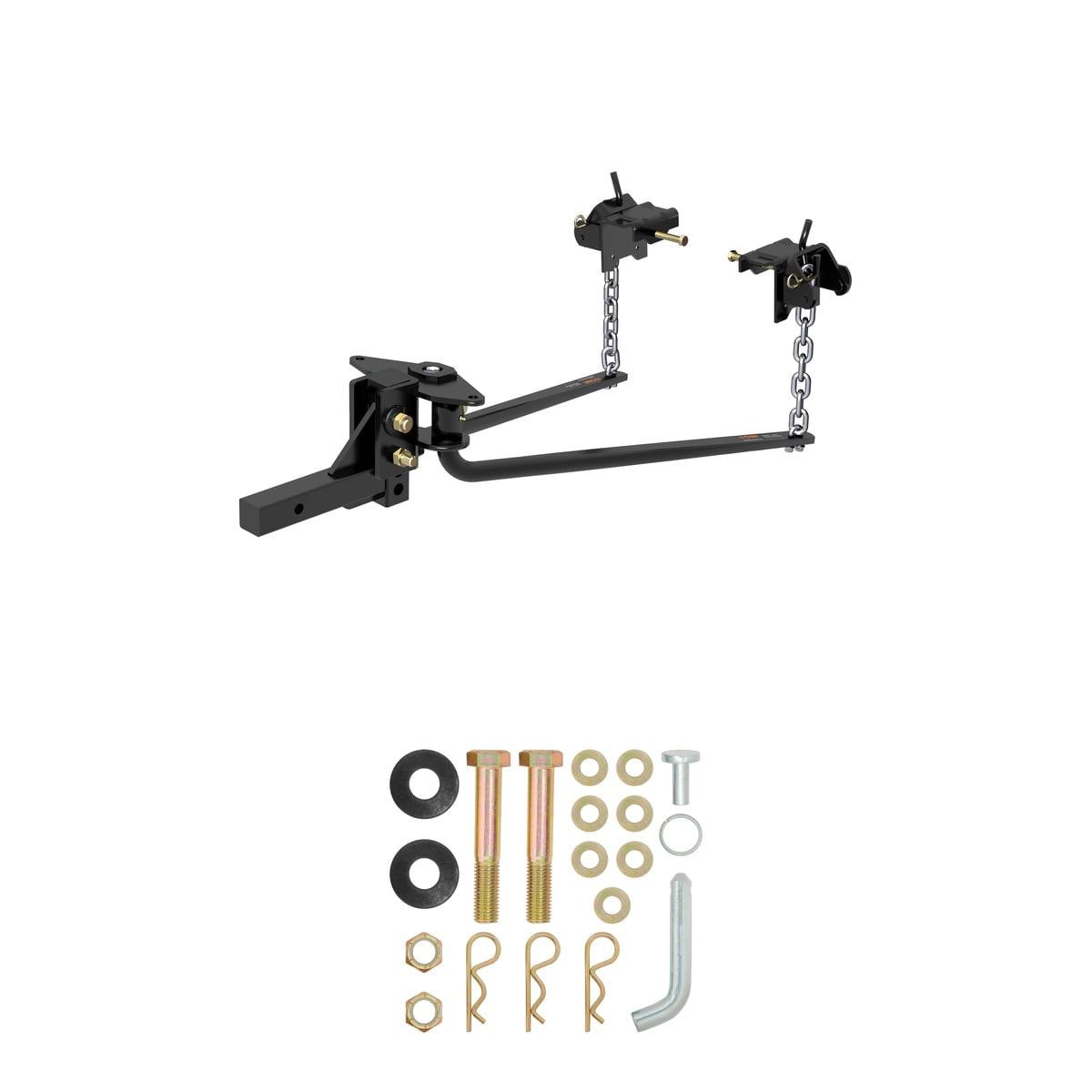
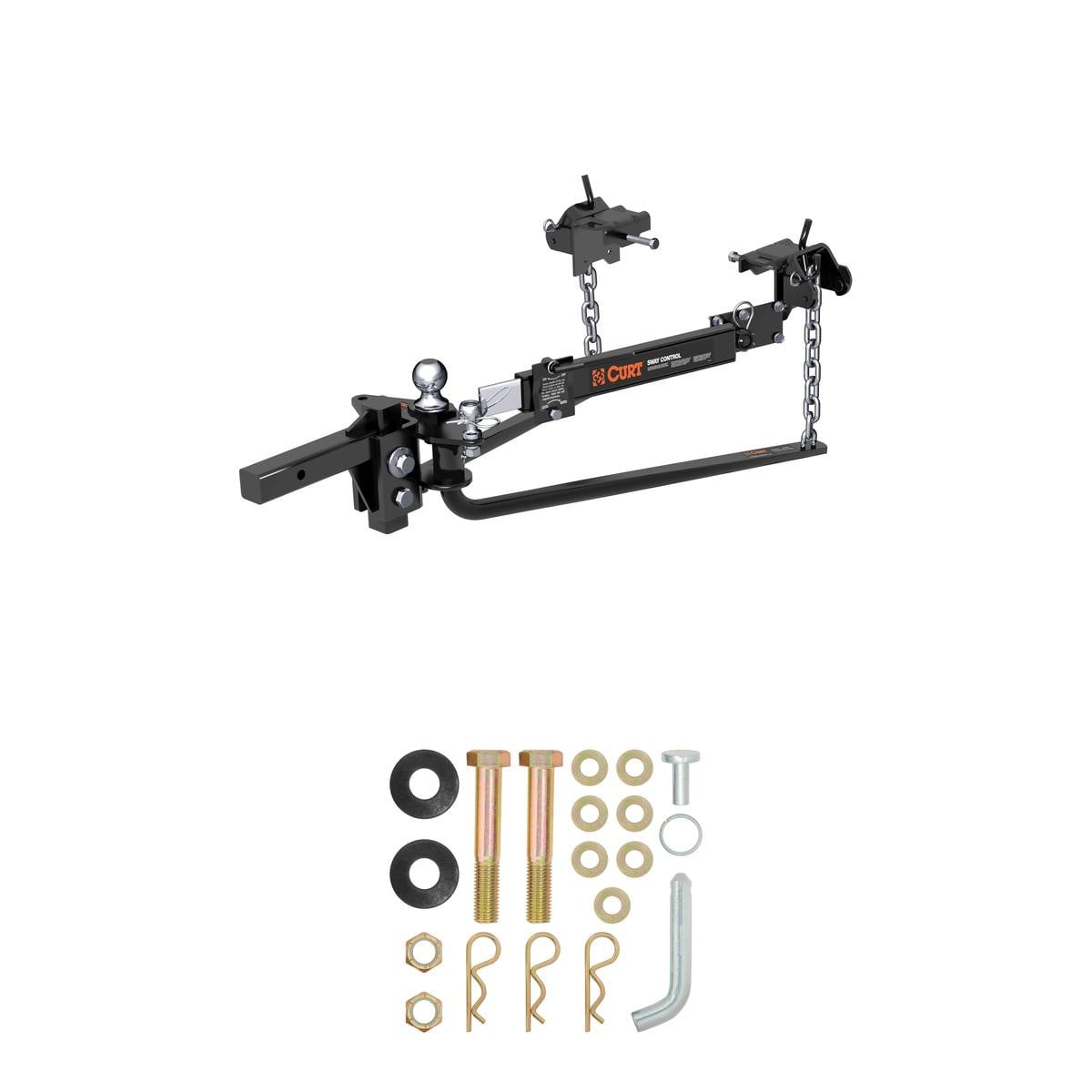
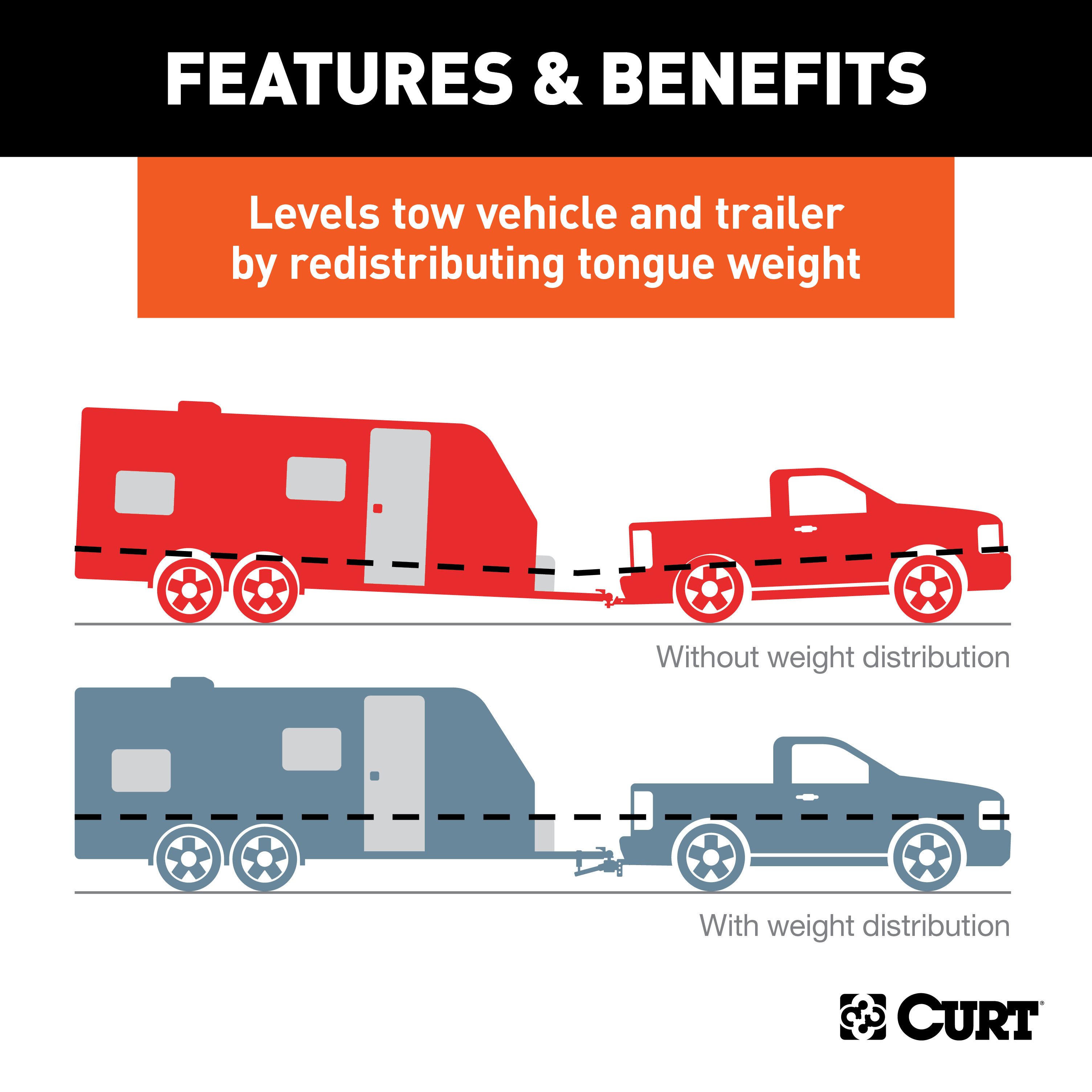
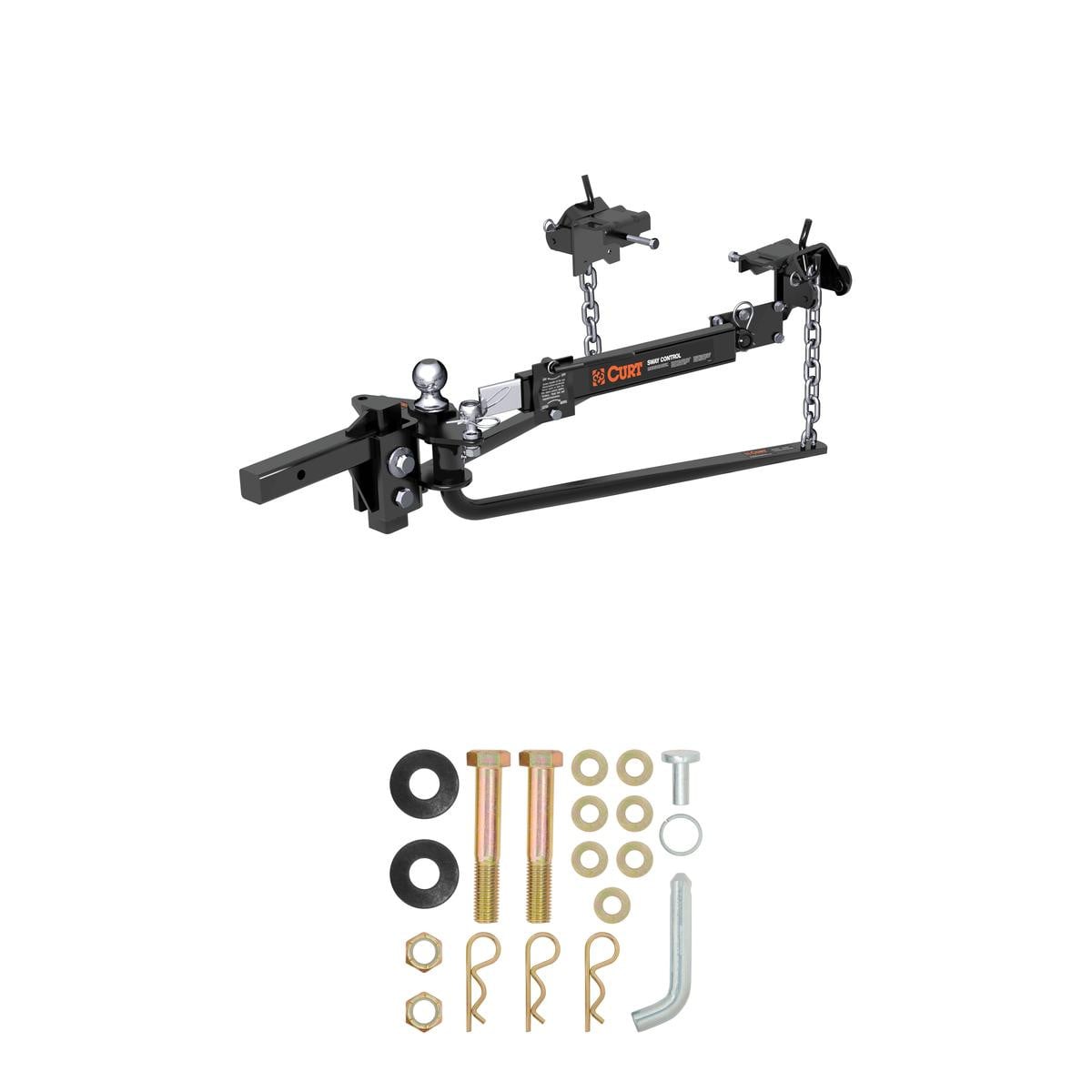
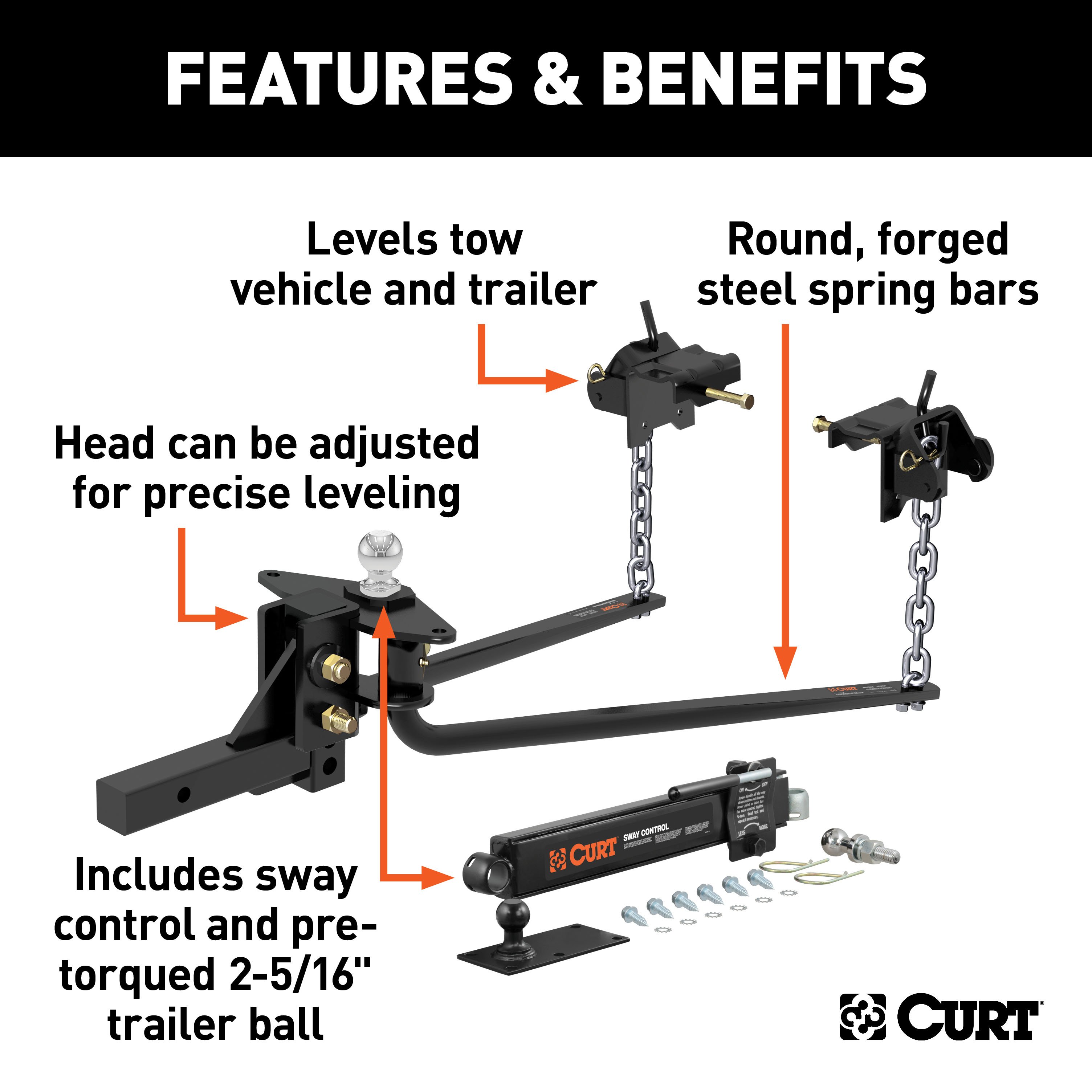
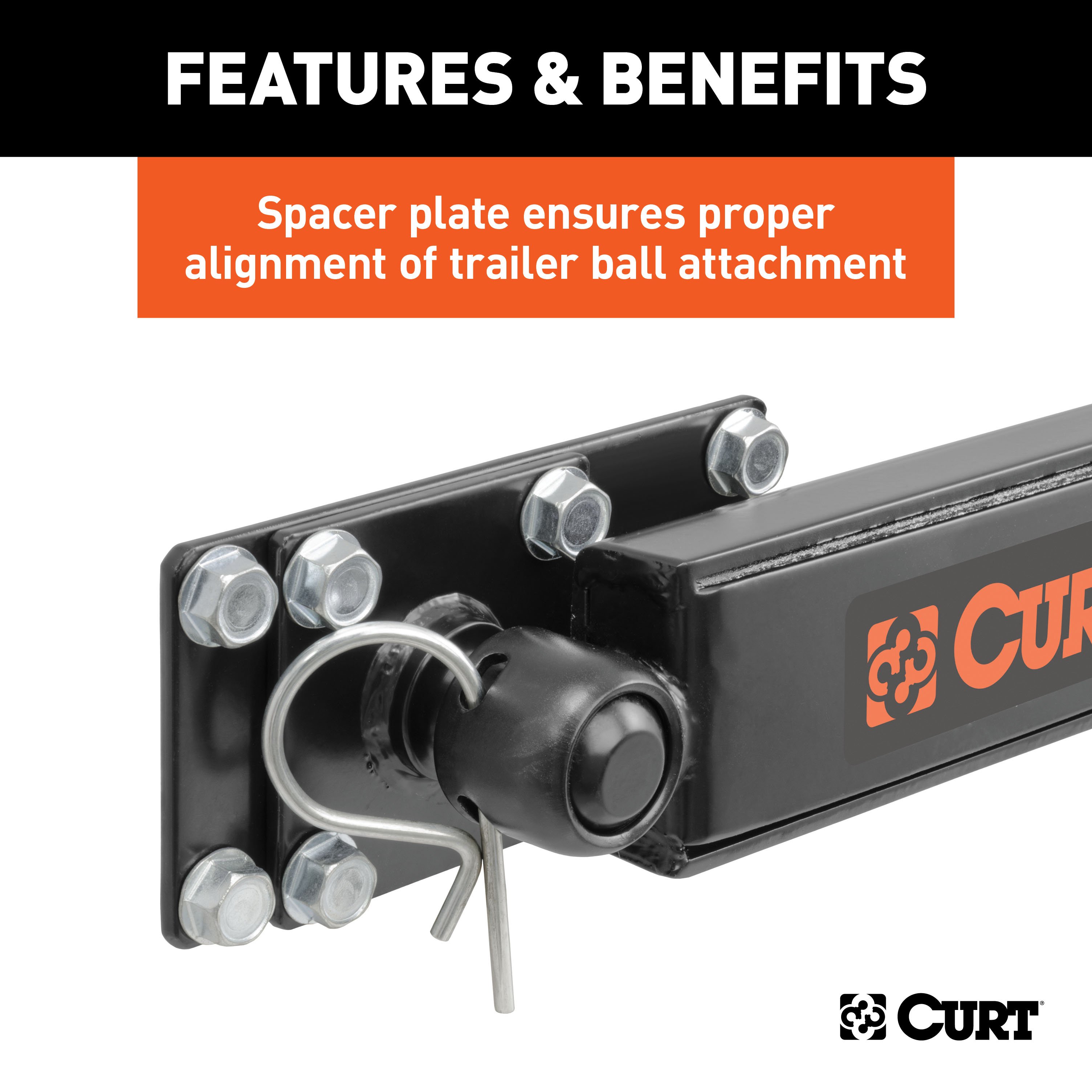
Includes weight distribution hitch, sway control unit and trailer ball

Includes weight distribution hitch, sway control unit and trailer ball
Warranty: Limited Lifetime Warranty (One-Year Finish, One-Year Parts)
Color: Black
Finish: CARBIDE BLACK POWDER COAT
WC / TW (Pounds): 1,400 LB
WC Tongue Weight (Pounds): 1,400 LB
Gross Trailer Weight (Pounds): 14,000 LB
Installation Time Exact (Minutes): 0
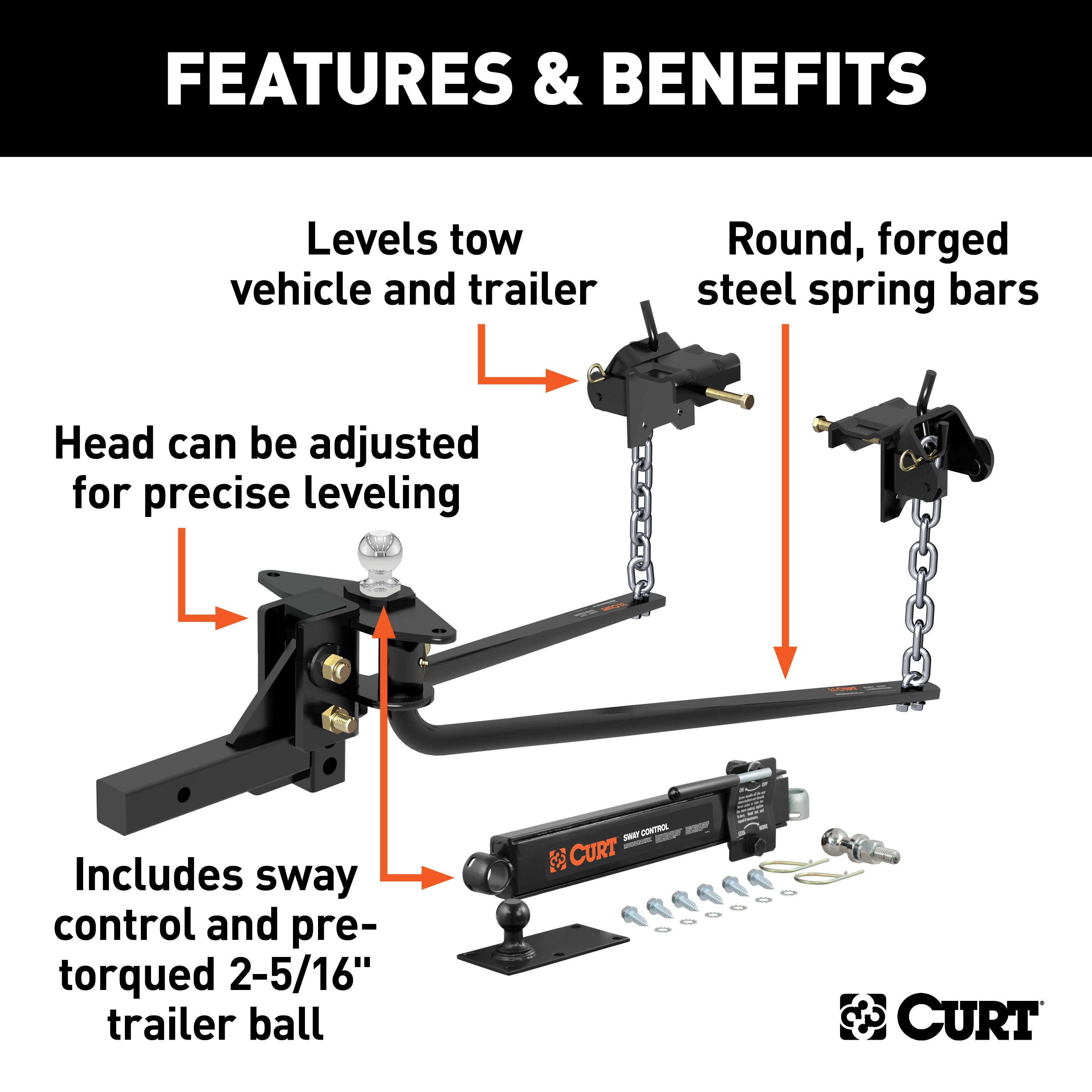
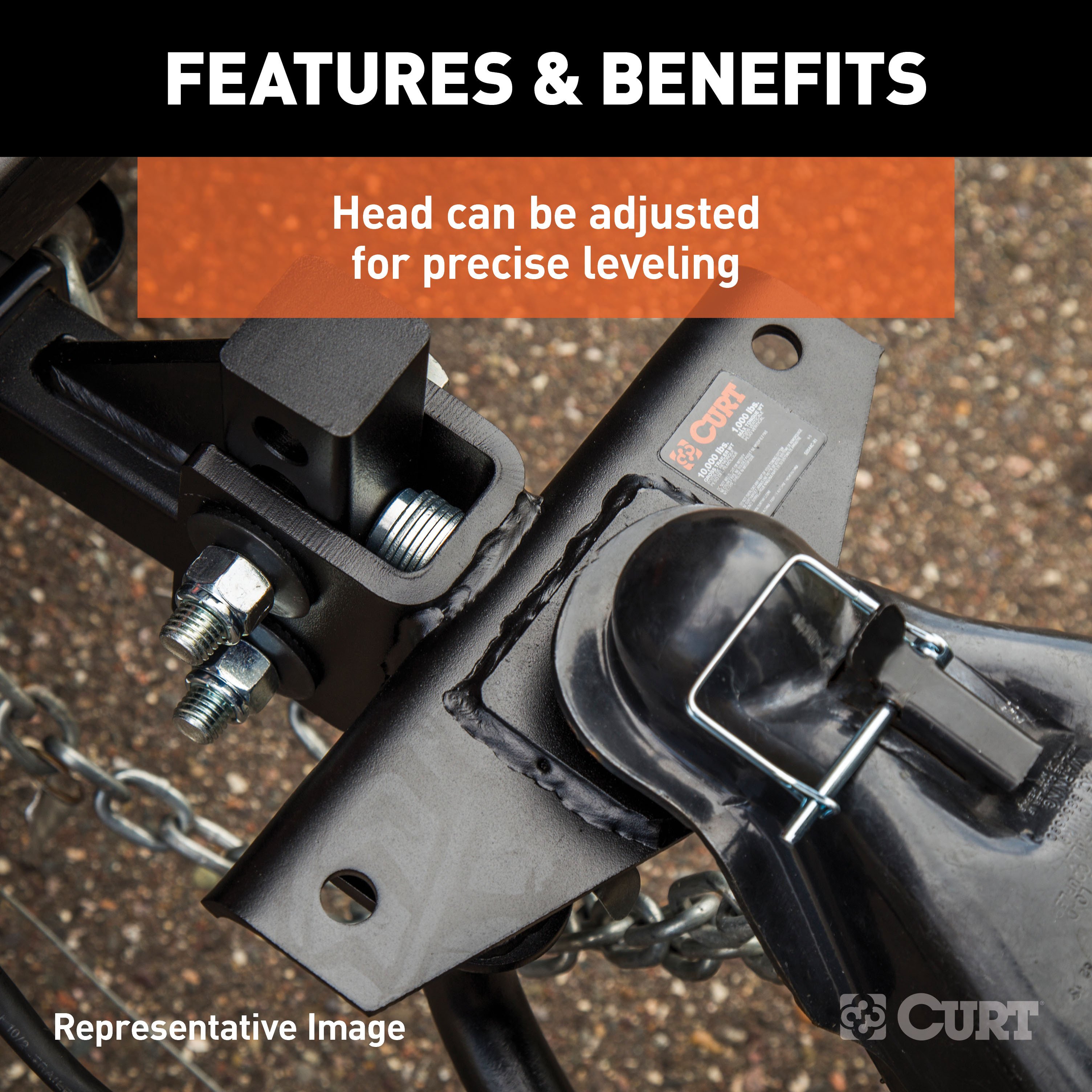
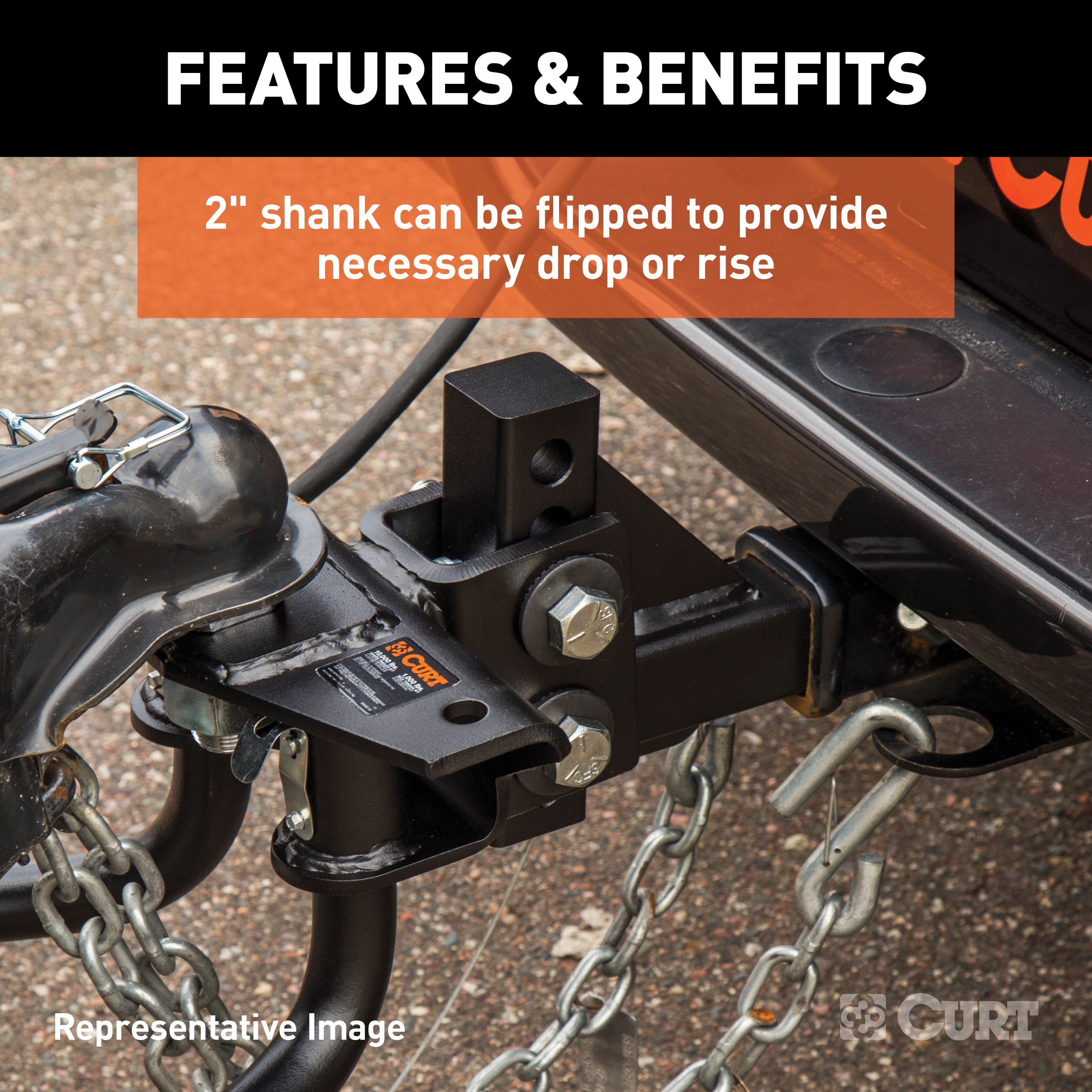
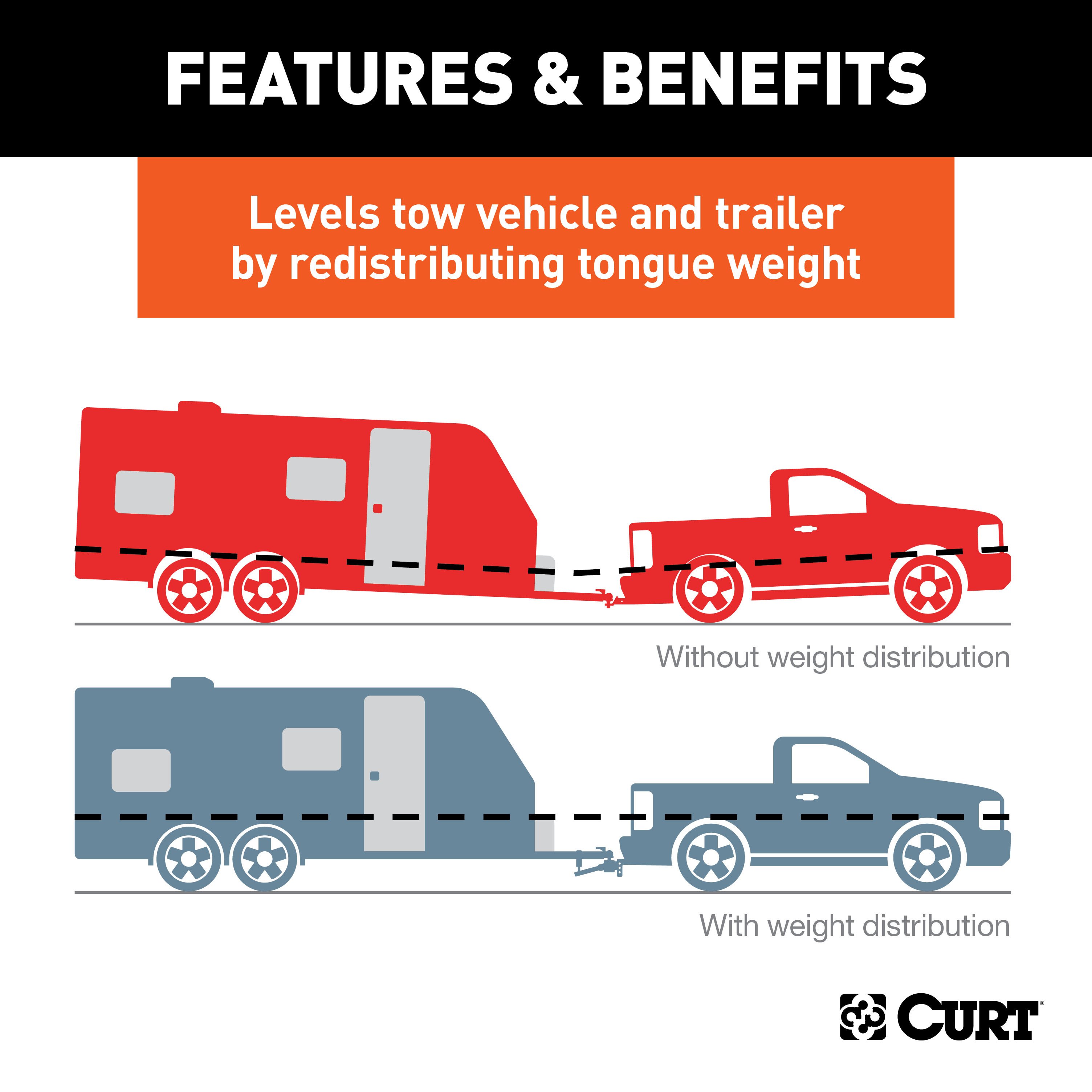
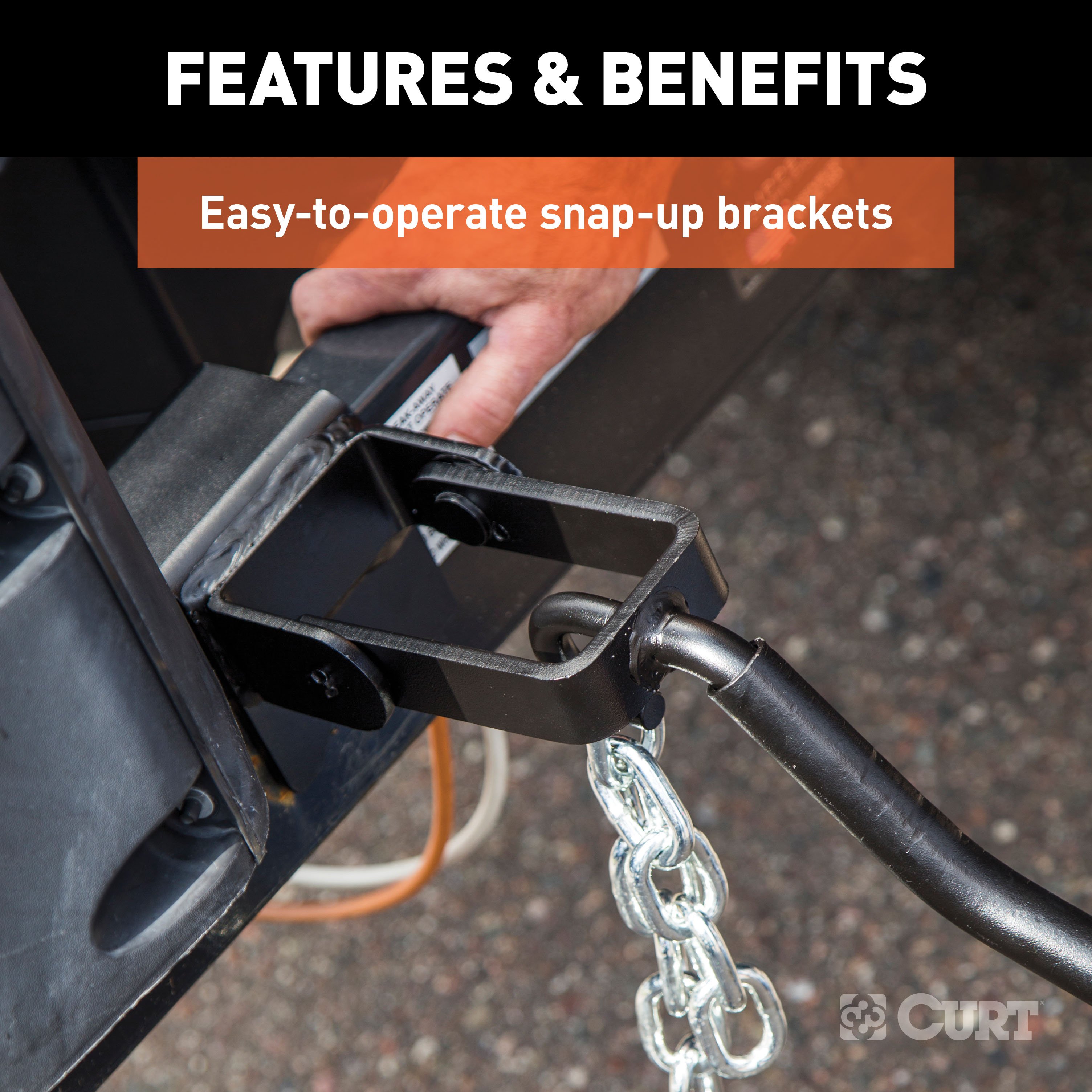
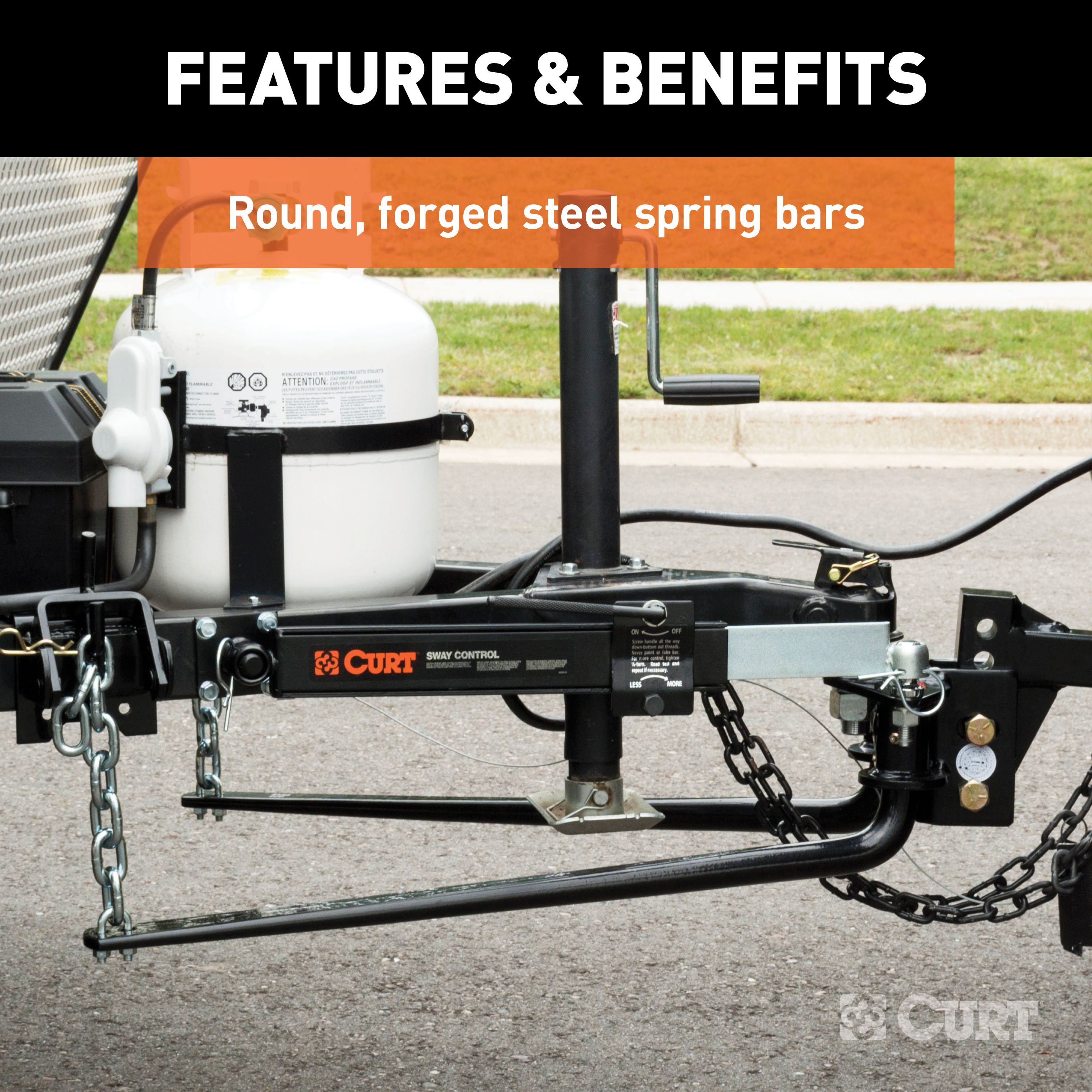
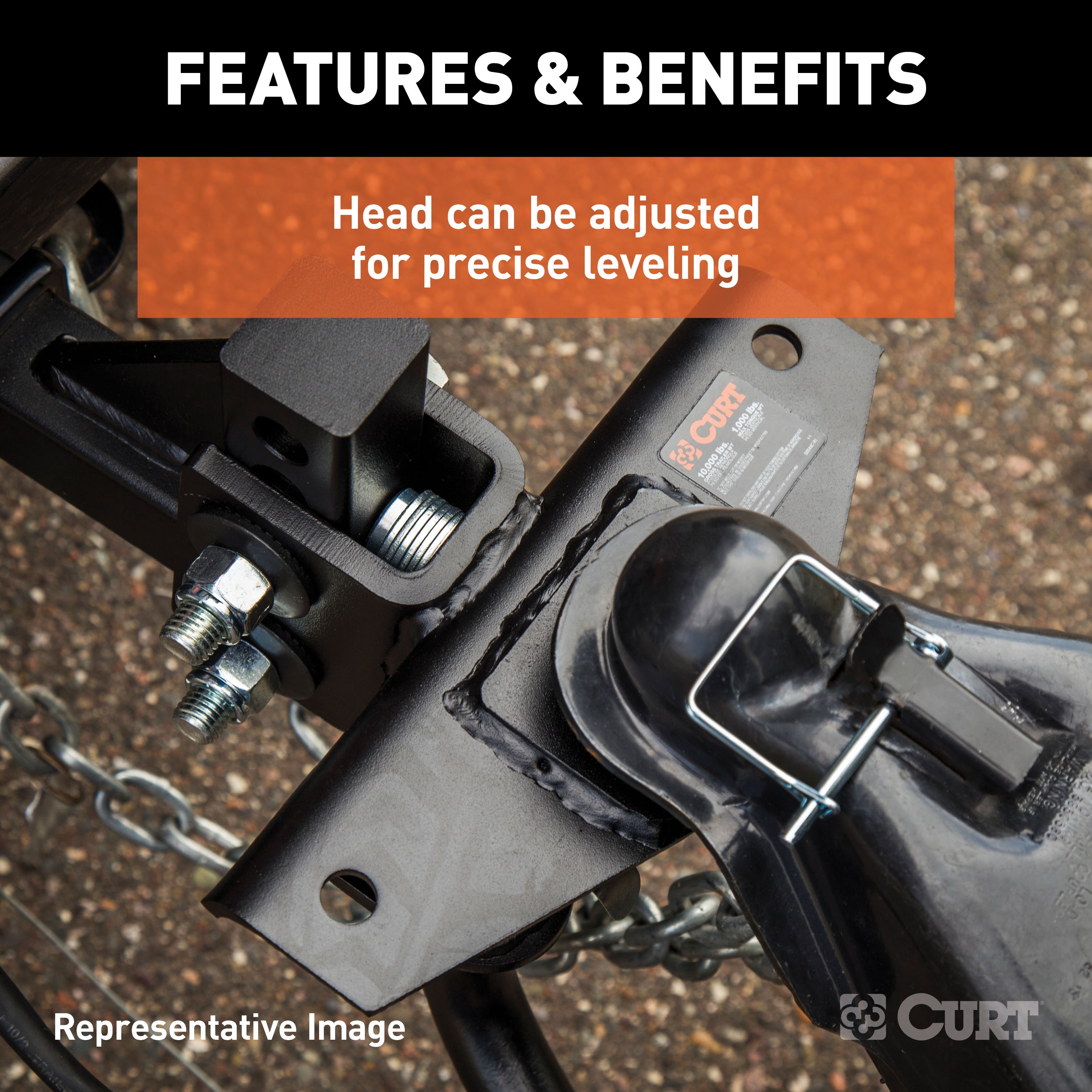
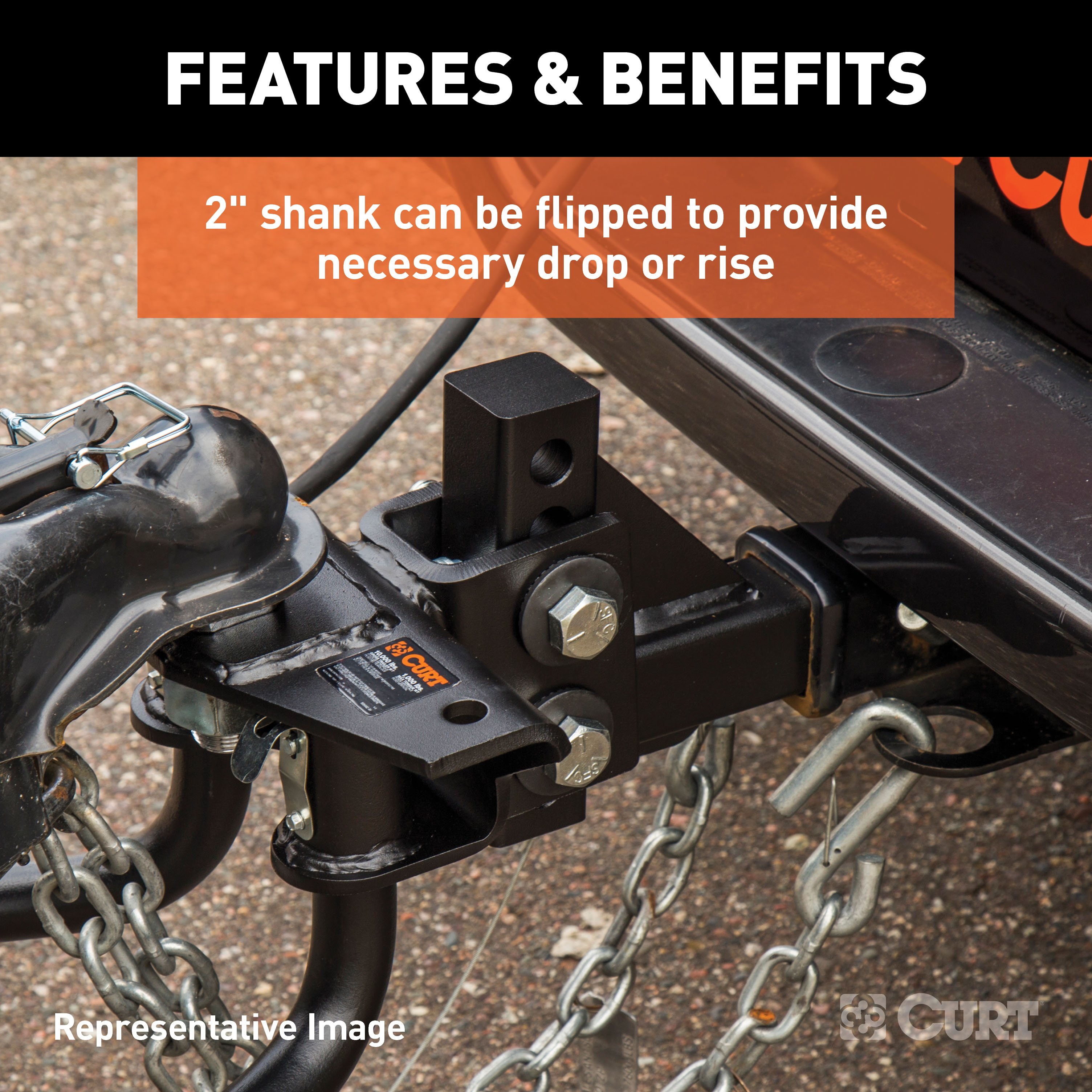
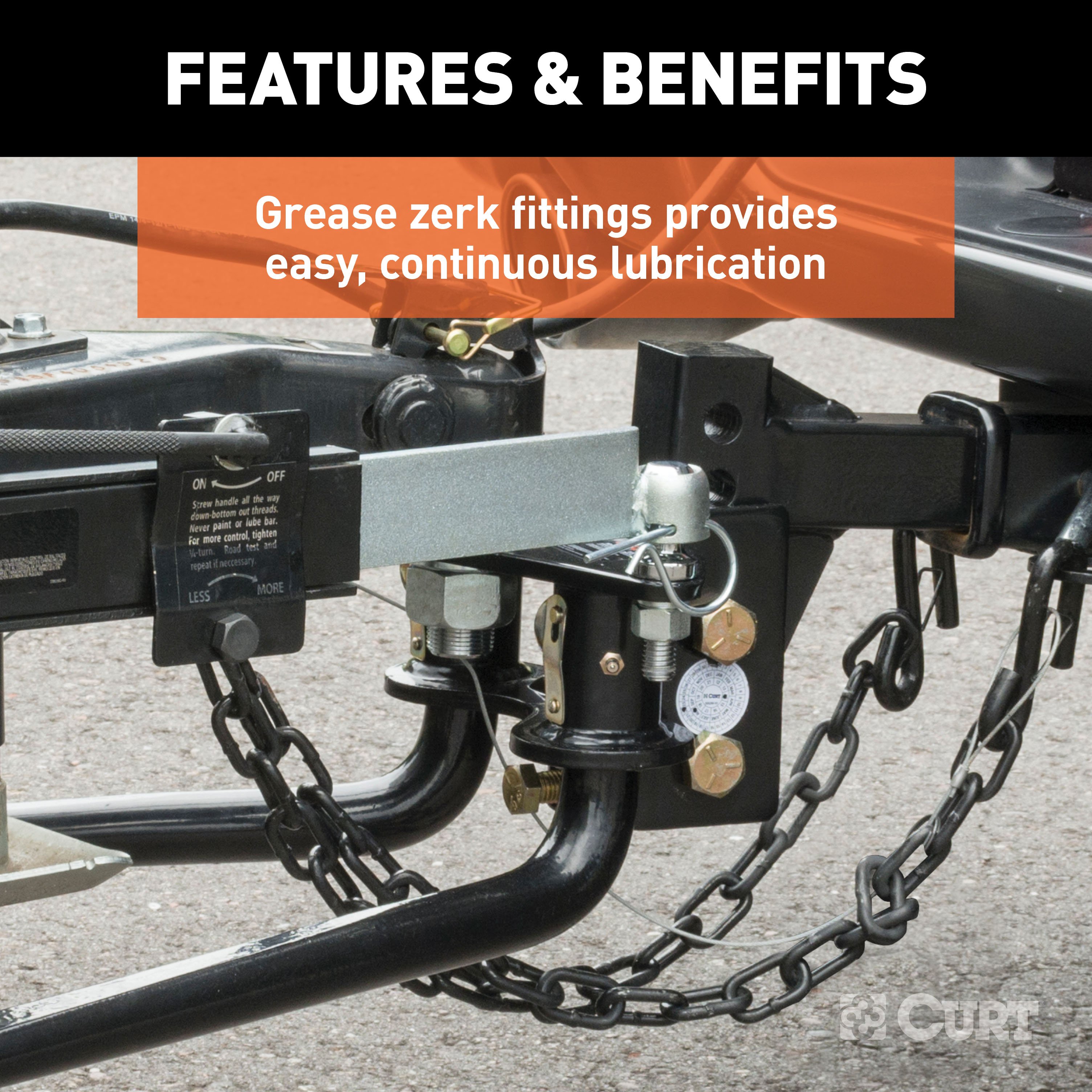
Your route is planned and the trails are calling, but before you can cover any ground, you need to start with a solid connection between your tow vehicle and trailer. The CURT round bar weight distribution hitch with integrated lubrication offers a smooth ride and level towing with its heavy-duty components and built-in lubrication system. From travel trailers to popup campers, the CURT WD hitch is the perfect camping companion to let you Bring It. The strength of the round bar WD hitch begins with its heavy-duty, formed steel head. The formed construction allows for a precise design and supplies the durability needed to manage the weight of heavy trailers. Something unique to the weight distribution hitch is its grease zerk fittings, built directly into the head, allowing for easy, continuous lubrication at the spring bar mounting location. The spring bars are installed from the underside of the WD head and are made with forged steel for optimum strength. Like other CURT weight distribution hitches, the round bar hitch comes with a highly adjustable shank and chain hookup brackets for the perfect amount of tension to level the load. The shank fits any 2" x 2" receiver tube opening, making it compatible with most class 3, class 4 and class 5 trailer hitches. The head is also compatible with our 2-1/2" weight distribution shanks to match the heaviest of class 5 hitches. The hookup brackets and spring bars of the CURT WD hitch use chains and a simple snap-up design for easy setup and adjustment. This particular round bar weight distribution hitch offers a towing capacity ranging from 10,000 to 14,000 lbs. GTW and 1,000 to 1,400 lbs. TW. It comes with installation hardware, a pre-torqued 2-5/16" trailer ball and a sway control unit #17200. To protect this WD hitch on the way to your next destination and beyond, it also comes with a durable carbide powder coat finish.

CURT offers a variety of high-quality trailer hitches and accessories for select vehicle models. Find the perfect fit for your towing needs at TowUniverse.
CURT, a Lippert brand, offers a complete line of towing products and is the leading manufacturer of custom-fit trailer hitches. We offer the broadest selection of custom-fit hitches, and each one is designed, welded, and coated in Wisconsin.
CURT is also a leader in flat towing products, as well as 5th wheel, gooseneck, and weight distribution hitches, ball mounts, electrical components, cargo solutions, and other towing accessories.
For everything from passenger cars and vans to full-size pickups and SUVs, CURT is 'The First Name in Towing Products®.'
Experts available to answer your questions
Call 888-634-9494Rediscover "Us" Time | Tested. Proven. Safe. Towing Products
The Curt 17063 is a weight distribution hitch system designed to level a tow vehicle when towing a trailer. It uses spring bars and lift brackets to distribute tongue weight across the tow vehicle's axles, improving stability and braking. Part 17062 is a lighter-duty version. The 17063 is rated for trailers with gross weights of 10,000–14,000 lbs and tongue weights of 1,000–1,400 lbs when spring bars are used.
The Curt 17063 is designed for trailers with an A-frame tongue. If your trailer has a straight (pole) tongue instead, you will need to use a pole tongue adapter for hook-up of the weight distributing hitch lift brackets. Consult your dealer for the appropriate adapter.
No. The sway control unit included with the kit cannot be used on trailers with surge brakes. Additionally, surge brake actuators not designed for use with a weight distributing hitch may bind and not operate freely. Check your surge brake operating instructions for specific requirements regarding use with weight distributing hitches. You may need to remove the sway control while backing if it interferes with brake operation.
Without spring bars, the Curt 17063 is rated for a maximum gross trailer weight of 14,000 lbs and tongue weight of 1,400 lbs. However, these ratings are dependent upon the trailer ball manufacturer's weight ratings. Do not exceed the maximum weight rating of the trailer ball itself.
With spring bars, the Curt 17063 is rated for a gross trailer weight of 10,000–14,000 lbs and tongue weight of 1,000–1,400 lbs. The tongue weight rating applies to a pair of spring bars; always use both bars and ensure they are of the same weight rating.
The manual does not specify all required tools. You will need a wrench to tighten fasteners to the torque values specified (200 ft. lbs for 3/4" bolts, 50 ft. lbs for 5/8" hex head set-screw, 75 ft. lbs for 1/2" head attachment bolts). A transfer punch and drill with an 11/32" bit are needed to install the sway control trailer-mounted attachment ball. A wire brush or steel wool is needed to clean the sway control slide bar every 10,000 miles. A trailer tongue jack is required for assembly and adjustment.
Yes, if your tow vehicle is equipped with air springs, air shocks, or automatic leveling systems, you must deflate them to their minimum recommended pressure before assembling and adjusting the weight distributing hitch. Consult your vehicle's owner's manual or the instructions for these systems for the correct minimum pressure. This ensures accurate ball height measurement and adjustment.
You must take three measurements on level pavement with the trailer leveled using its tongue jack: (1) the distance from pavement to the top of the trailer coupler socket, (2) the height from pavement to a reference point on the tow vehicle's front bumper, and (3) the height from pavement to a reference point on the tow vehicle's rear bumper. These measurements determine the target uncoupled ball height for your specific tow vehicle.
Measure the trailer coupler height and the front and rear bumper heights of your tow vehicle on level pavement. The uncoupled ball height should be set higher than the coupler height to allow for vehicle squat when coupled to the trailer. For passenger cars, add 1/8" to the coupler height for each 100 lbs of tongue weight. Position the head assembly on the shank at the nearest bolt hole that corresponds to this target height.
Yes. If your tow vehicle has high ground clearance, the adjustable shank may be inverted as shown in the manual's Figure 3. However, you must check for adequate ground clearance when the shank is in the inverted position to ensure it does not contact the ground or other obstacles.
Attach each lift chain (8mm x 400mm) to the tapered end of each spring bar using a 3/8" U-bolt, 3/8" washer, and 3/8" nylock nut. Allow 2 to 3 threads of the U-bolt to extend through the bottom of the locknut. The chain must be free to move within the U-bolt. Apply heavy fibrous grease to the round end of each spring bar before inserting it into the head socket.
Apply heavy fibrous grease to the round end of each spring bar. Push the greased end up into the head socket until you hear a click. This indicates the spring bar is locked into place. To release a spring bar later, lift up slightly on the spring bar and gently pull out the retaining pin in the hitch head; the spring bar will drop free.
Raise the front of the trailer and back of the tow vehicle approximately 3" with the tongue jack to make installation easier. Position each spring bar parallel with the trailer tongue. Hold the lift chain vertical alongside the trailer tongue and position the lift bracket so the chain is centered between the bracket. Mark the bracket location, then install the 1/2" - 13 x 3 3/4" bolt into the threaded hole in the lift bracket. Turn the bolt until it contacts the trailer tongue, then tighten a 1/4 turn with a wrench. Do not overtighten.
The lift chain must be held vertical up alongside the trailer tongue and centered between the lift bracket. If the chain is angled fore or aft at the top within the lift bracket, it may catch on the bracket when the trailer turns, which could damage the lift bracket or pry it open. Maintain vertical alignment to prevent this damage.
Place six 1/2" flat washers on the pin and insert the pin into the unthreaded hole in the upper portion of the head channel. Install the head on the shank at the marked position. Insert the 3/4" - 10 x 4 1/2" hex bolt through the lower hole in the head channel. Rotate the head forward as far as it will go; the ball should be vertical or tilted slightly back. Install the remaining 3/4" - 10 x 4 1/2" bolt with 3/4" conical washers through the upper slotted hole. Start 3/4" nylock nuts and finger tighten only. Tighten the lower 5/8" hex bolt just enough to hold the head tight against the pin. These bolts will be fully tightened later.
Before raising the lift bracket, raise the front of the trailer approximately 3" with the tongue jack to reduce spring bar chain tension. Slip the marked chain link over the hook on the lift bracket. Insert the lift handle onto the lift bracket rod above the lift chain hook. Using the handle, raise the lift bracket up and over center so it is fully seated against the mounting bracket. Secure by inserting the clip through the lift bracket and mounting bracket. Ensure the chain is not twisted and the hook extends through the link.
There should be at least 5 links minimum between the lift bracket and the spring bar. If fewer than 5 links are used, the chain and snap-up bracket will bind. The number of links should be the same on both bars. If the front of the vehicle settles much more than the rear, increase the number of chain links between the lift bracket and the spring bar to achieve even settling.
Remove the locking pin from the lift bracket. Insert the lift handle onto the rod above the lift chain attachment. Carefully lower the bracket with the handle. It will require effort to bring the bracket over center and then to resist the chain tension as the bracket rotates downward. Before lowering, raise the front of the trailer to reduce spring bar chain tension, which makes the operation easier and safer.
Tighten the two 3/4" - 10 x 4 1/2" bolts (item #8) and their 3/4" nylock nuts (item #10) to 200 ft. lbs torque. Failure to tighten these bolts to the correct torque may result in fastener loss or failure.
Tighten the 5/8" hex head set-screw to 50 ft. lbs torque. Failure to tighten this bolt to the correct torque may result in fastener loss or failure.
Tighten the 1/2" head attachment bolts to 75 ft. lbs torque. Failure to tighten these bolts to the correct torque may result in fastener loss or failure.
After raising and lowering the lift bracket, re-measure the front and rear bumper reference points. The vehicle should settle evenly, within 1/2". If the front has settled much more than the rear, increase the number of chain links between the lift bracket and the spring bar. The spring bars should be nearly horizontal when correct height is achieved. Mark the spring bar chain at the hooked position with paint for future reference.
Before towing, check the following: (1) pin and clip securing shank to receiver, (2) head to shank fasteners, (3) trailer ball nut torque, (4) coupler latch, (5) snap-up bracket bolt, (6) safety chains, (7) lights and turn signals, (8) braking system including breakaway switch. At the beginning of every tow day, check all trailer to towing vehicle connections for security and operation.
Keep the socket-mounted ends of the spring bars and the lock pins in the head assembly free from dirt and well lubricated. Apply heavy fibrous grease to the round end of each spring bar. If additional grease is needed during operation, use the grease zerk. Check spring bar chains and U-bolts for wear and security; replace them if they become worn. Excessive wear in the socket area may indicate an overload or inadequate lubrication.
Keep the head assembly exterior clean. Do not allow dirt or stones to lodge between the spring bars and the head. Coat the clevis pins in the head assembly with fibrous grease. Keep hitch parts painted to prevent rust and maintain good appearance. Do not paint over labels. Keep lift brackets clean and lubricated to ensure ease of operation.
Clean the ball and coupler socket. Coat the ball lightly with grease. Check to see that all trailer balls are properly tightened. Periodically check the condition of all your towing equipment and keep it in top condition.
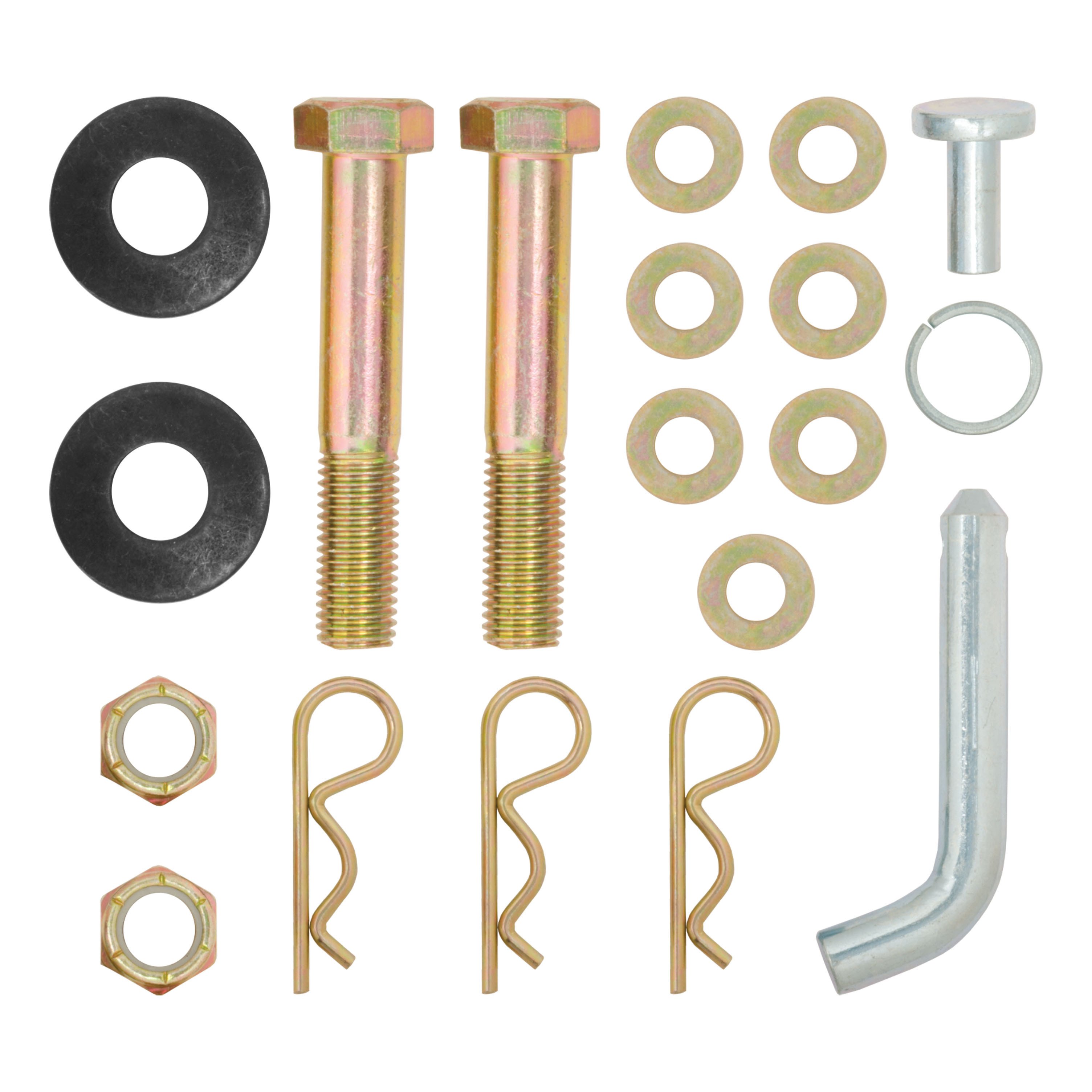
The Curt 17063 kit includes: hitch head, adjustable shank, 2 spring round bars, 2 snap-up brackets, pipe handle, 2 lift chains (8mm x 400mm), sway control unit, 2 hex bolts (3/4" - 10 x 4 1/2"), 2 conical washers (3/4"), 2 nylock nuts (3/4" - 10), hitch pin (5/8" x 3"), clip, 2 U-bolts (3/8" - 16), 4 nylock nuts (3/8" - 16), 4 washers (3/8"), 2 bolts (1/2" - 13 x 3 3/4"), 2 clips for snap-up bracket, pin, 7 flat washers (1/2"), lock washer (1 1/4"), hex nut (1 1/4"), and trailer ball (2 5/16").
The Curt 17063 itself does not require electrical connections. However, you must always hook up all trailer lights, electric brakes, and break-away switch connections whenever the trailer is being towed. Check that all electrical hook-ups are in working order before towing.
The loaded ball height should never be greater than the uncoupled ball height. If it is, front wheel overload and loss of rear wheel traction can result, leading to unstable handling, reduced braking ability, and a tendency to jackknife when turning and braking at the same time. If the loaded trailer ball height is greater than the uncoupled height, reduce take-up on the spring bar chains, remeasure, and adjust until the proper height is obtained.
Keep clear of the pivot path of all moving parts when there is tension on the spring bar chain. Maintain control of the lift handle at all times when raising or lowering the spring bar. Be sure the locking hair pin is in place once the lift bracket is in the up position. Before raising or lowering the lift bracket, raise the front of the trailer to reduce spring bar chain tension; this makes the operation easier and safer.
Never exceed your vehicle manufacturer's recommended towing capacity. The Curt 17063 is rated for trailers up to 14,000 lbs gross weight and 1,400 lbs tongue weight when spring bars are used, but your specific tow vehicle may have a lower capacity. Always consult your vehicle's owner's manual for the maximum towing capacity of your specific vehicle and model year.
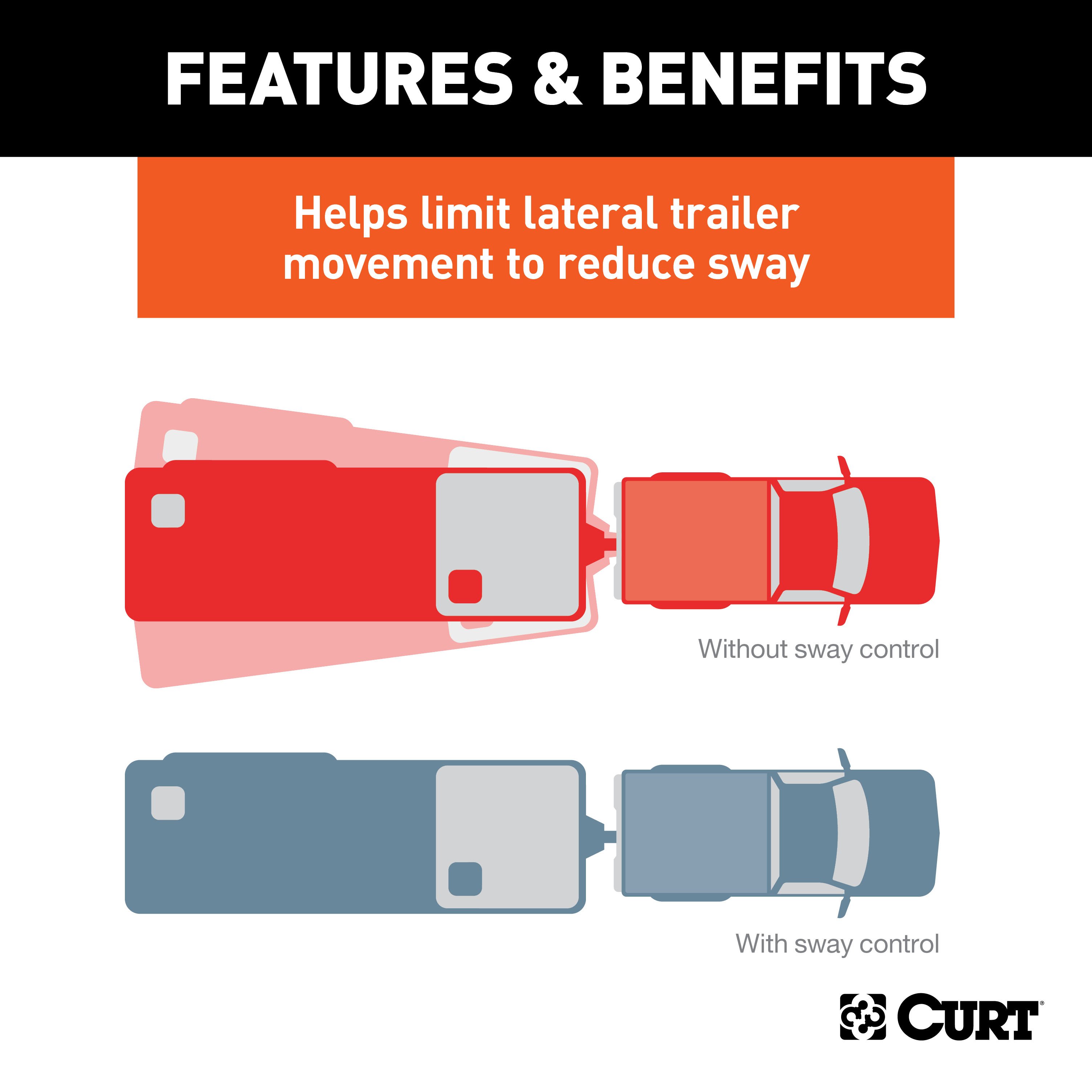
The Curt 17063 includes a sway control unit designed to minimize the effects of sudden maneuvers, wind gusts, and buffeting caused by passing vehicles. The sway control unit consists of a sway control trailer ball, trailer-mounted attachment ball, sway control body, clips, self-tapping screws, and lock washers. It is recommended for trailers with a large surface area, such as travel trailers.
Measure 24" straight back from the center of the coupler to the desired side of the trailer frame to determine the location of the attachment ball. The trailer-mounted attachment ball must be centered on the 24" measurement. Transfer punch the holes from the trailer ball mount plate to the trailer frame and drill six 11/32" holes. Attach the trailer-mounted attachment ball to the trailer frame using the self-tapping screws provided.
Hook up the trailer to the tow vehicle. Lubricate the threads on the sway control handle with a drop of oil. Attach the socket on the slide bar to the sway control ball on the weight distribution hitch and secure with a spring clip. Turn the On/Off handle three turns counterclockwise to release tension. Place the main body socket onto the trailer-mounted attachment ball and secure with a spring clip. Turn the On/Off handle clockwise and tighten firmly until the handle is parallel with the main body.
With a second person watching the sway control and trailer, slowly back the trailer in both directions into a jackknife position. Check that the sway control does not hit the bumper or trailer frame and that it does not become fully compressed or come apart. If any of these occur when jackknifed, the sway control must be removed while backing. Road test the sway control unit starting with the factory preset tension.
After a 1,000 mile break-in period, remove the slide bar and clean it using a wire brush or steel wool. The slide bar should then be cleaned every 10,000 miles. Never paint or lubricate the slide bar, as this will damage its function.
Do not speed up if sway occurs; sway increases with speed. If sway continues, stop the vehicle and inspect all towing equipment until the cause has been determined and corrected. Ensure the sway control is properly adjusted and that the trailer is loaded correctly with heavy items on the floor in front of the axle, balanced side to side. Tongue weight should be 10–15% of gross trailer weight. In slippery conditions such as wet, icy, gravel, or snow-covered roads, the sway control must be removed.
Tongue weight should be 10–15% of the gross trailer weight for most trailers. Insufficient tongue weight or tail-heavy trailers can cause sway. The Curt 17063 is rated for tongue weights of 1,000–1,400 lbs when spring bars are used.
Yes. Remove the weight distribution hitch from the trailer hitch on the towing vehicle when not towing a trailer. This reduces the chances of striking the weight distribution hitch on the driveway or other objects and reduces the chance of parts being stolen.
No. Trailers should not be occupied while being towed. Most states enforce this regulation.
Proper trailer loading is very important. Heavy items should be placed close to the floor near the trailer axle center line. The load should be balanced side to side and firmly secured in the trailer to prevent shifting. Tongue weight should be 10–15% of the gross trailer weight for most trailers. Too low a tongue weight often produces a tendency to sway.
Good habits for normal driving need extra emphasis when towing. The additional weight of the trailer affects acceleration and braking. Extra time should be allowed for passing, stopping, and changing lanes. Signal well in advance of a maneuver. Severe bumps and badly undulating roads can damage your towing vehicle, hitch, and trailer; negotiate them at a slow, steady speed. If any part of your towing system bottoms out or if you suspect damage, pull over and make a thorough inspection before resuming travel.
Some trailers may have an obstruction on one side of the frame that prevents standard lift bracket installation. Order the offset lift bracket kit from your local Curt dealer and follow the installation instructions supplied with that kit for proper installation.
Surge brakes require a small amount of fore and aft movement for their actuating mechanism to function correctly. To avoid restricting movement, it may be necessary to increase the number of chain links between the lift brackets and spring bars by tilting the head down. However, surge brake actuators not designed for use with a weight distributing hitch may bind and not operate freely. Check your surge brake operating instructions for specific requirements regarding use with weight distributing hitches. The sway control unit cannot be used on trailers with surge brakes.
The Curt 17063 is designed for trailers with A-frame tongues and gross weights of 10,000–14,000 lbs. It cannot be used on trailers with surge brakes. If your trailer has a pole tongue, you will need a pole tongue adapter. Consult your dealer for fitment confirmation.
You will need a wrench for torque specifications, a transfer punch and 11/32" drill bit for the sway control attachment ball, and a trailer tongue jack. A wire brush or steel wool is needed for maintenance. Specific tool sizes are not listed in the manual.
Yes, if your vehicle has air springs, air shocks, or automatic leveling systems, deflate them to minimum recommended pressure before assembly. Consult your vehicle's owner's manual for the correct pressure.
Tighten 3/4" bolts to 200 ft. lbs, 5/8" hex head set-screw to 50 ft. lbs, and 1/2" head attachment bolts to 75 ft. lbs. Failure to tighten to specification may result in fastener loss or failure.
With spring bars, the Curt 17063 is rated for 10,000–14,000 lbs gross trailer weight and 1,000–1,400 lbs tongue weight. Never exceed your vehicle manufacturer's recommended towing capacity.
Keep spring bar socket ends and lock pins lubricated with heavy fibrous grease. Clean the hitch head exterior and keep it free of dirt and stones. Coat the trailer ball lightly with grease. Clean the sway control slide bar every 10,000 miles with a wire brush or steel wool. Never paint or lubricate the slide bar.
Check pin and clip securing shank, head to shank fasteners, trailer ball nut torque, coupler latch, snap-up bracket bolt, safety chains, lights and turn signals, and braking system including breakaway switch. At the beginning of every tow day, check all trailer to towing vehicle connections for security and operation.
If the front has settled much more than the rear, increase the number of chain links between the lift bracket and the spring bar. This will distribute the load more evenly. The vehicle should settle evenly, within 1/2". The spring bars should be nearly horizontal when correct height is achieved.
Excessive wear in the socket-mounted end area of the spring bars may indicate an overload or inadequate lubrication. Ensure the spring bars are well lubricated with heavy fibrous grease and that you are not exceeding the weight rating of the hitch.
If the lift chain is angled fore or aft at the top within the lift bracket, it may catch on the bracket when turning, which could damage the lift bracket or pry it open. Reposition the lift bracket so the chain is held vertical and centered between the bracket. The chain must be free to move in the U-bolt.
If the sway control hits the bumper or trailer frame when jackknifed, or if it becomes fully compressed or comes apart, the sway control must be removed while backing. Reposition the trailer-mounted attachment ball or adjust the sway control installation to prevent interference.
If the loaded trailer ball height is greater than the uncoupled height, reduce take-up on the spring bar chains, remeasure, and adjust until the proper height is obtained. This condition can cause front wheel overload, loss of rear wheel traction, unstable handling, reduced braking ability, and a tendency to jackknife when turning and braking.
Do not speed up if sway occurs; sway increases with speed. If sway continues, stop the vehicle and inspect all towing equipment until the cause has been determined and corrected. Check that the trailer is loaded correctly with heavy items on the floor in front of the axle, balanced side to side, and that tongue weight is 10–15% of gross trailer weight. In slippery conditions, remove the sway control.
Starting with the factory preset tension, road test the sway control unit. If the factory preset tension does not provide enough sway control, adjust the break tension screw 1/4 turn clockwise. Road test again and repeat if necessary until proper sway control is achieved. Larger or heavier trailers or broad-sided trailers may require the use of two sway control units.

Total for 2 items:
$589.74$957.90
| Kit # | Hitch # | GTW | TW | Bar Length | Kit Includes |
|---|---|---|---|---|---|
| -- | 17050 | 5,000 - 6,000 lbs. | 500 - 600 lbs. | 31-3/16" | -- |
| -- | 17051 | 6,000 - 8,000 lbs. | 600 - 800 lbs. | 31-3/16" | -- |
| 17062 | 17052 | 8,000 - 10,000 lbs. | 800 - 1,000 lbs. | 31-3/16" | Sway control (17200), pre-torqued 2-5/16" trailer ball (40006) and chains pre-assembled to spring bars |
| 17063 | 17057 | 10,000 - 14,000 lbs. | 1,000 - 1,400 lbs. | 31-3/16" | Sway control (17200), pre-torqued 2-5/16" trailer ball (40030) and chains pre-assembled to spring bars |
No reviews have been added for this product.