
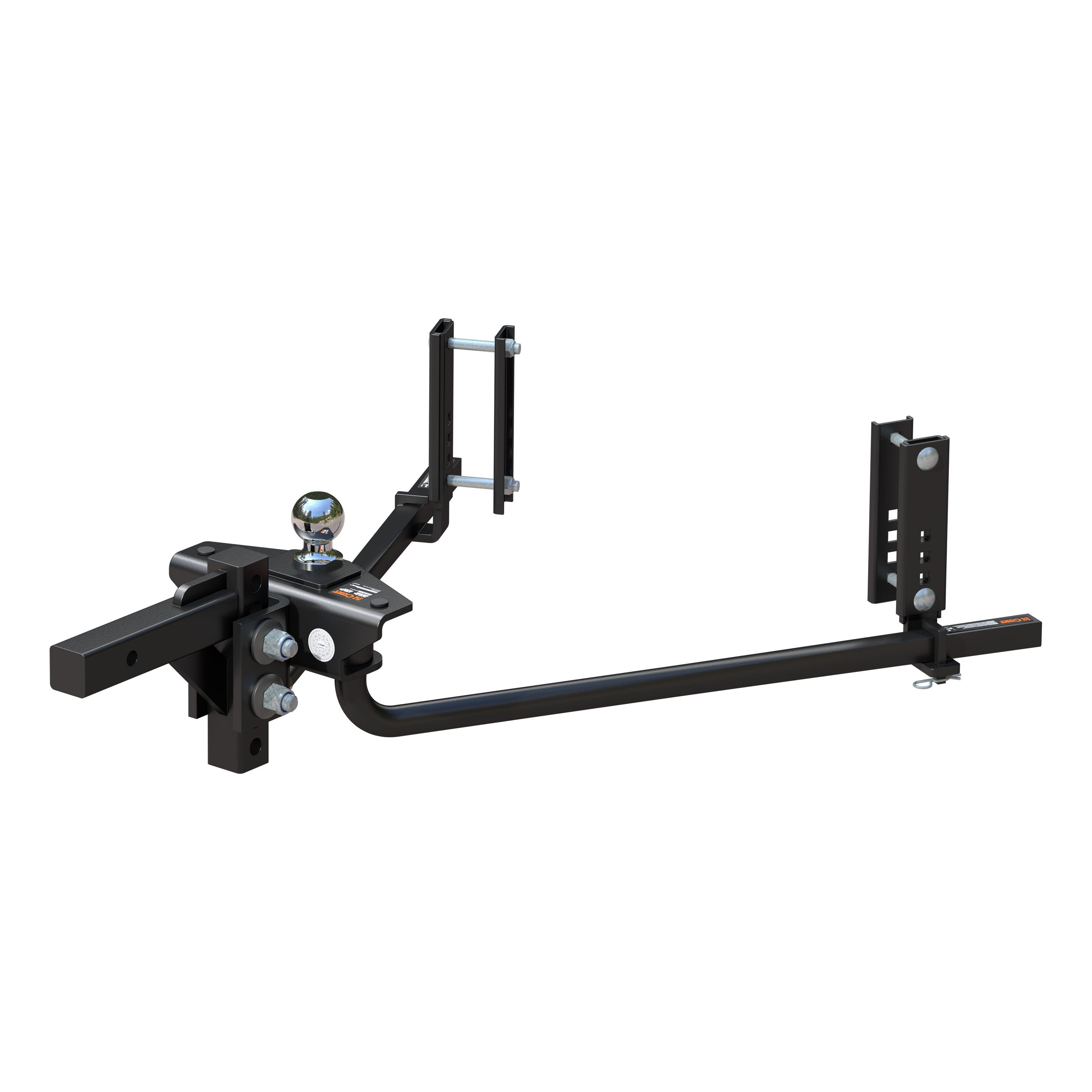
CURT 5-8K TruTrack 4P Weight Distribution Hitch with 4x Sway ControlCURTOriginal price was $876.95. Current price is $596.95.In Stock
View productOur in-house experts typically reply within one business day.

CURT



Always the correct part
We know our products
Quality Products
Free Shipping!
Always the correct part
We know our products
Quality Products
Free Shipping!
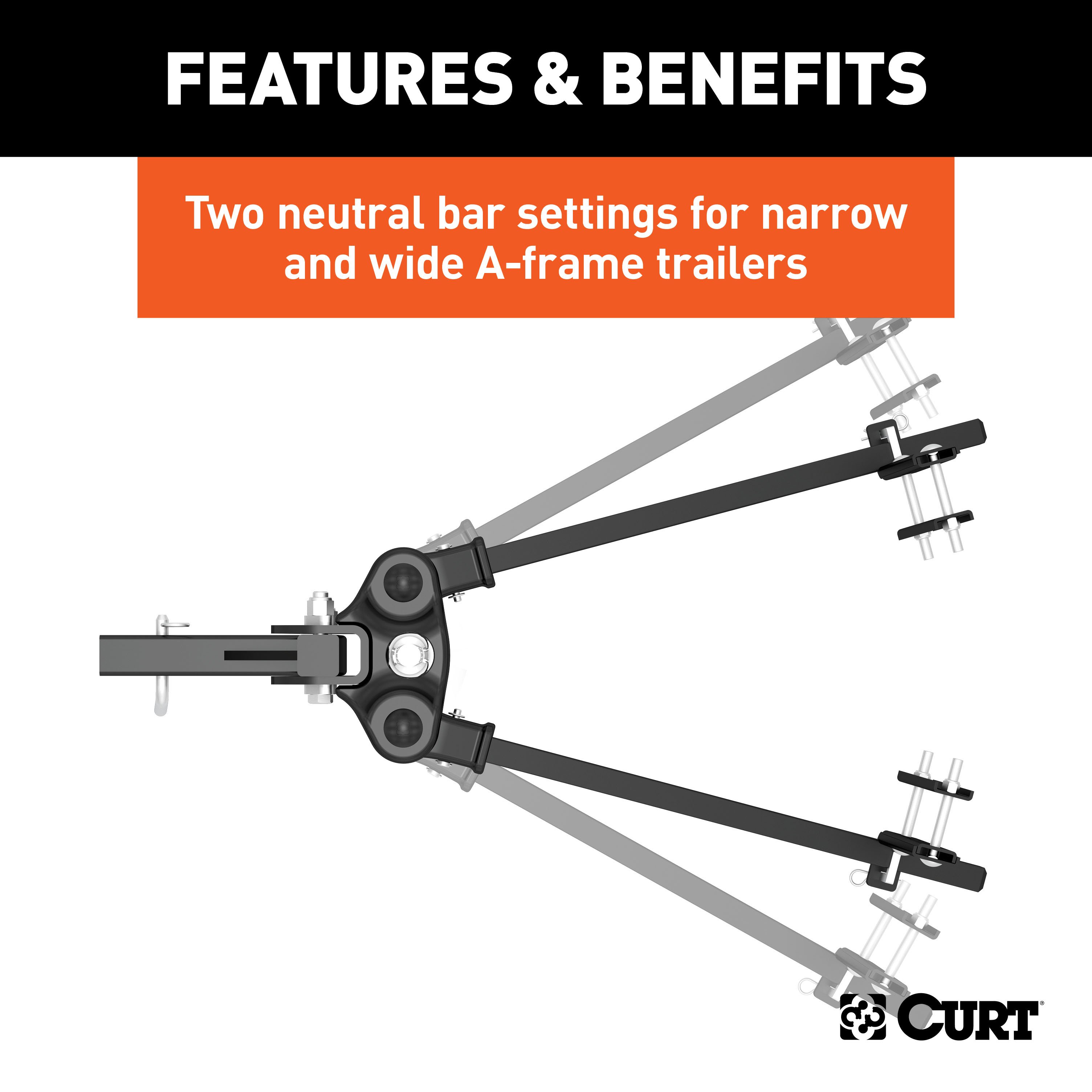
Springs bars can be adjusted to 30 or 70 degrees (+/- 5)
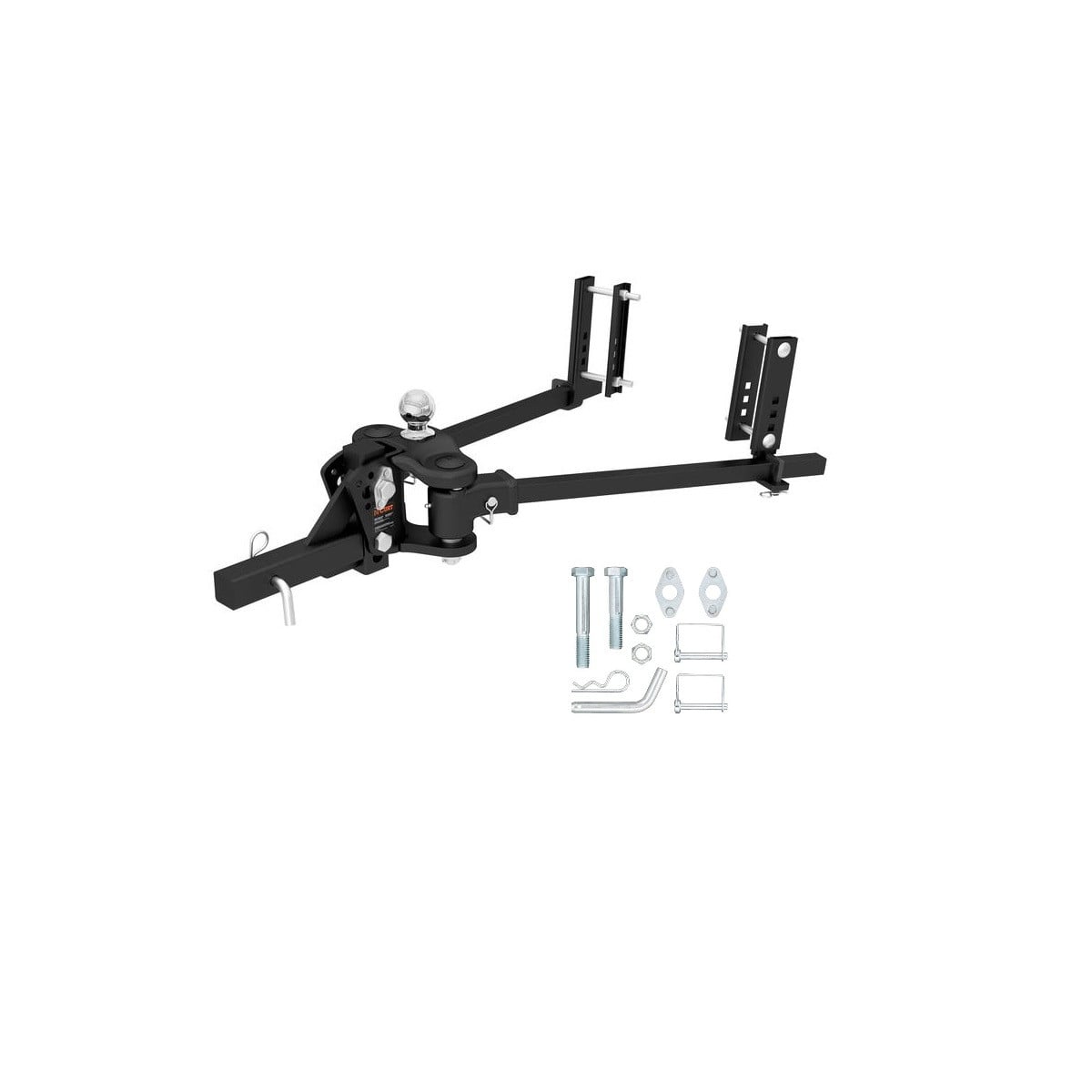
Includes shank, trailer ball, spring bars, head, support brackets, pin & clip
Capacity limited to lowest rated towing component

Includes shank, trailer ball, spring bars, head, support brackets, pin & clip
Warranty: Limited Lifetime Warranty (One-Year Finish, One-Year Parts)
Color: Black
Finish: CARBIDE BLACK POWDER COAT
WC / TW (Pounds): 1,000 LB
WC Tongue Weight (Pounds): 1,000 LB
Gross Trailer Weight (Pounds): 10,000 LB
Installation Time Exact (Minutes): 0
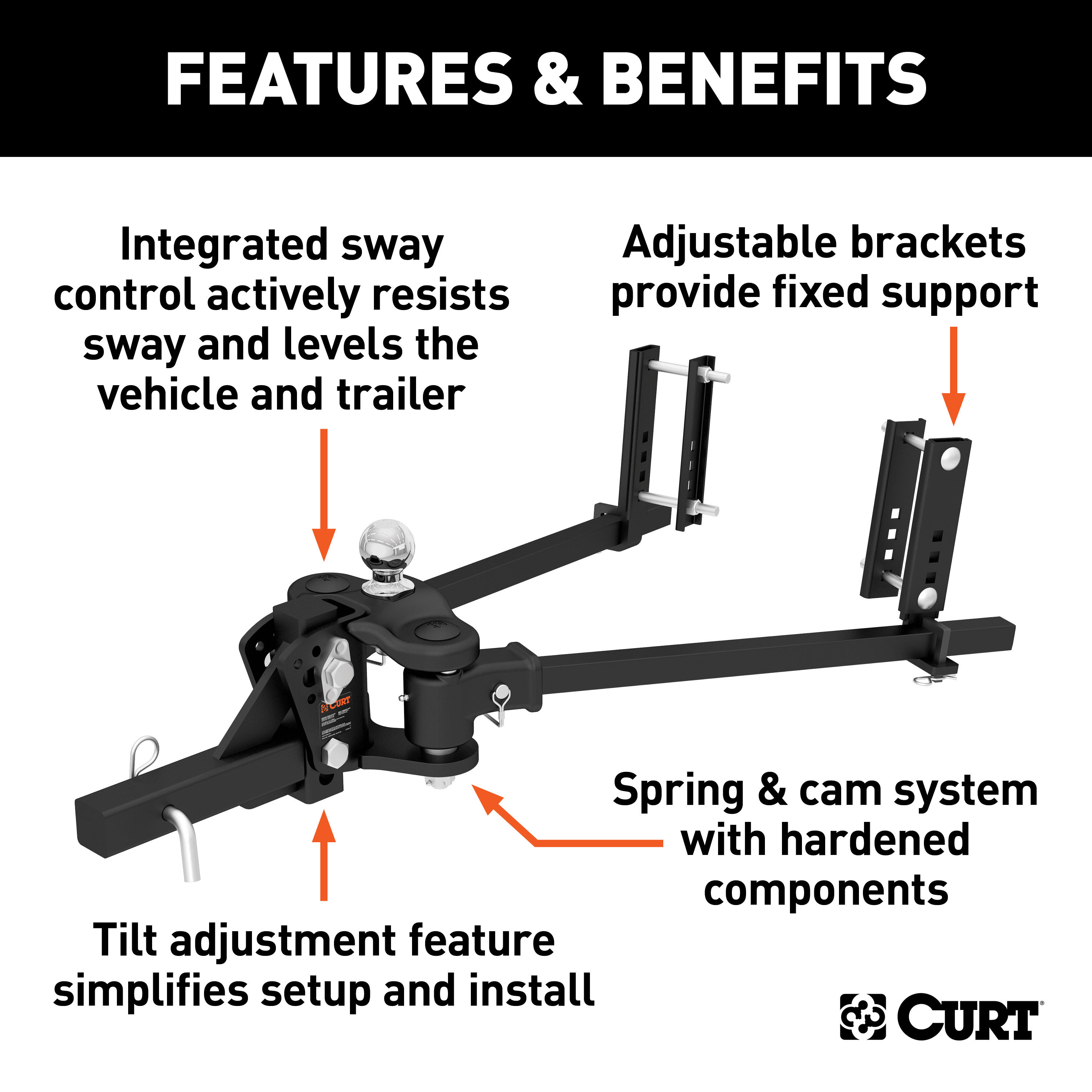
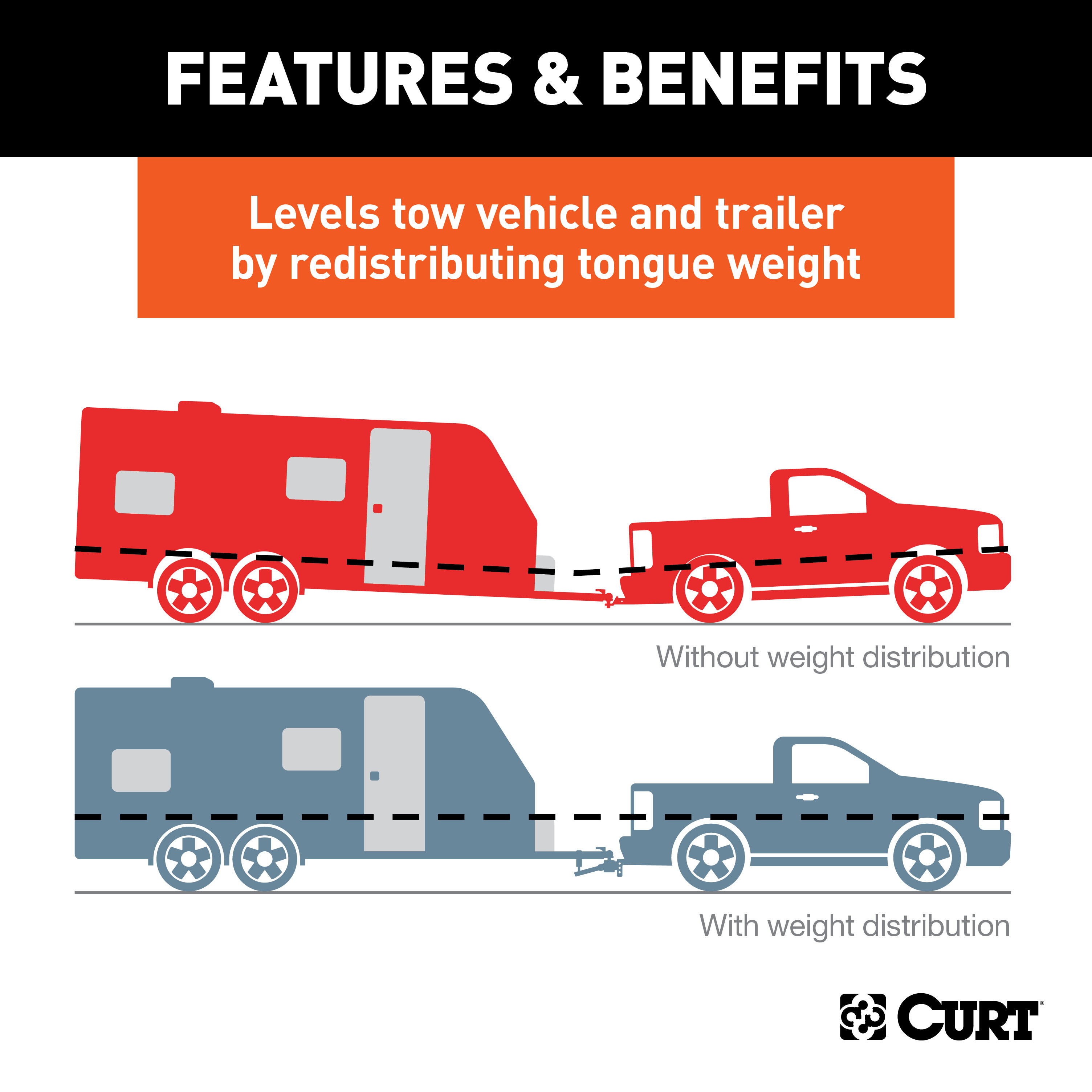
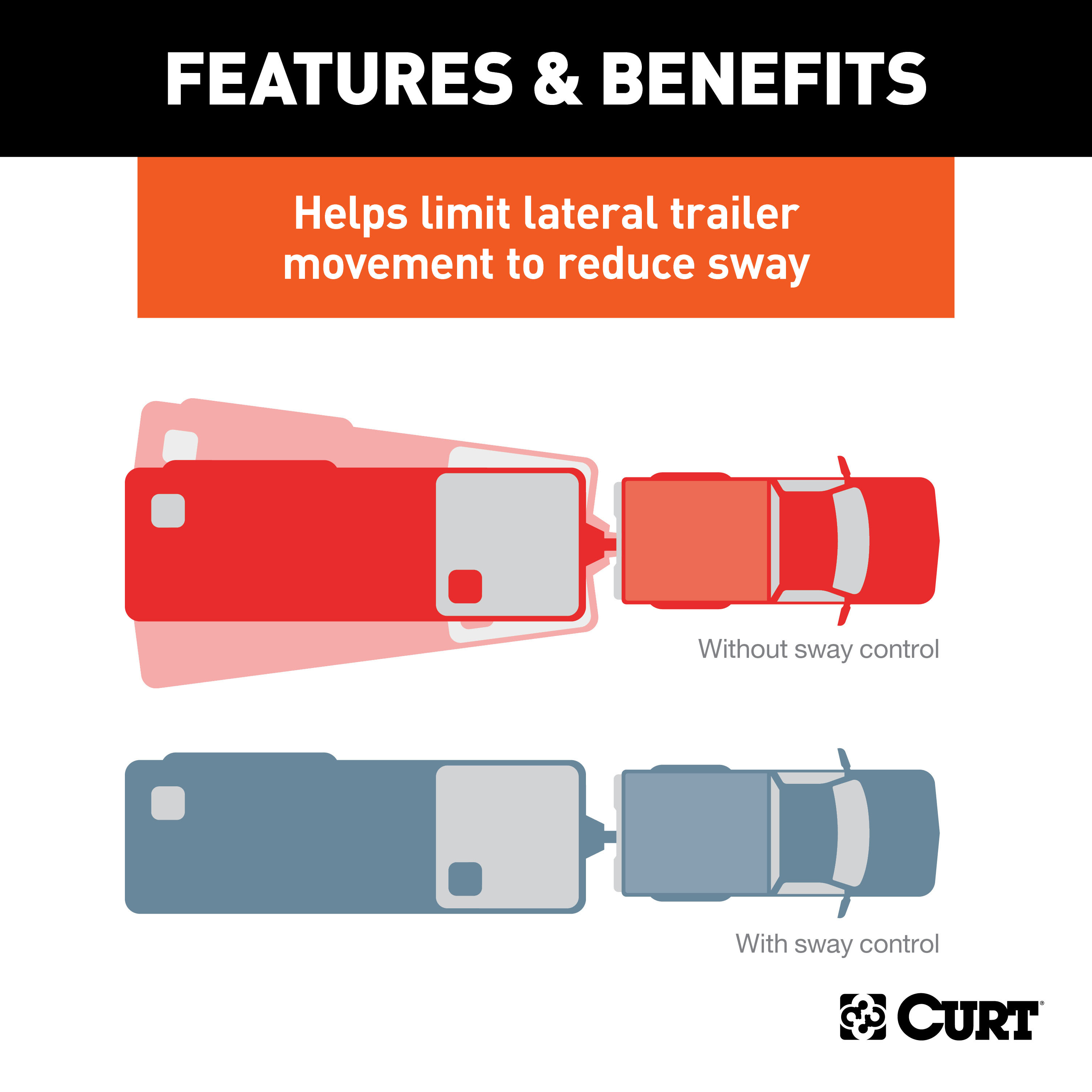
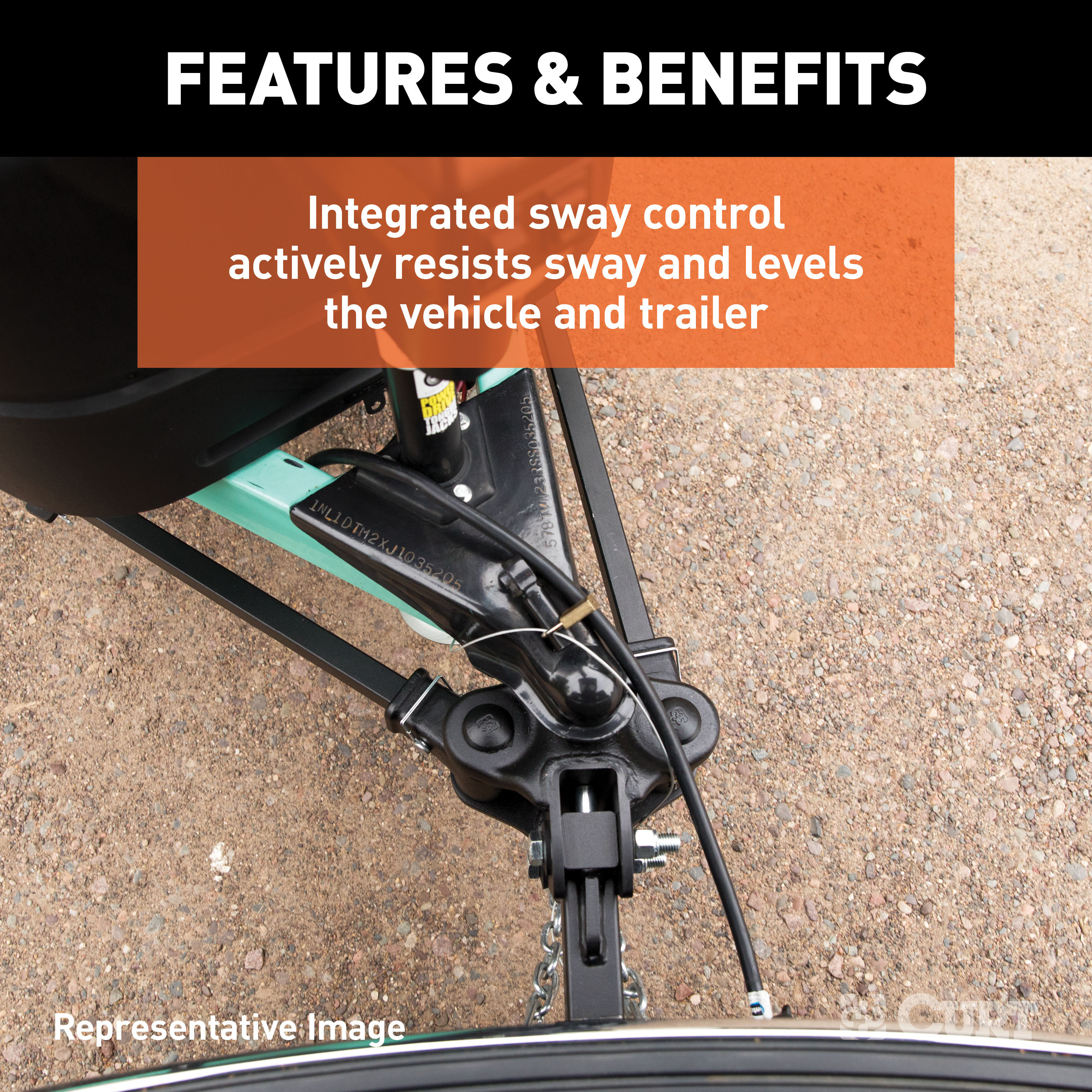
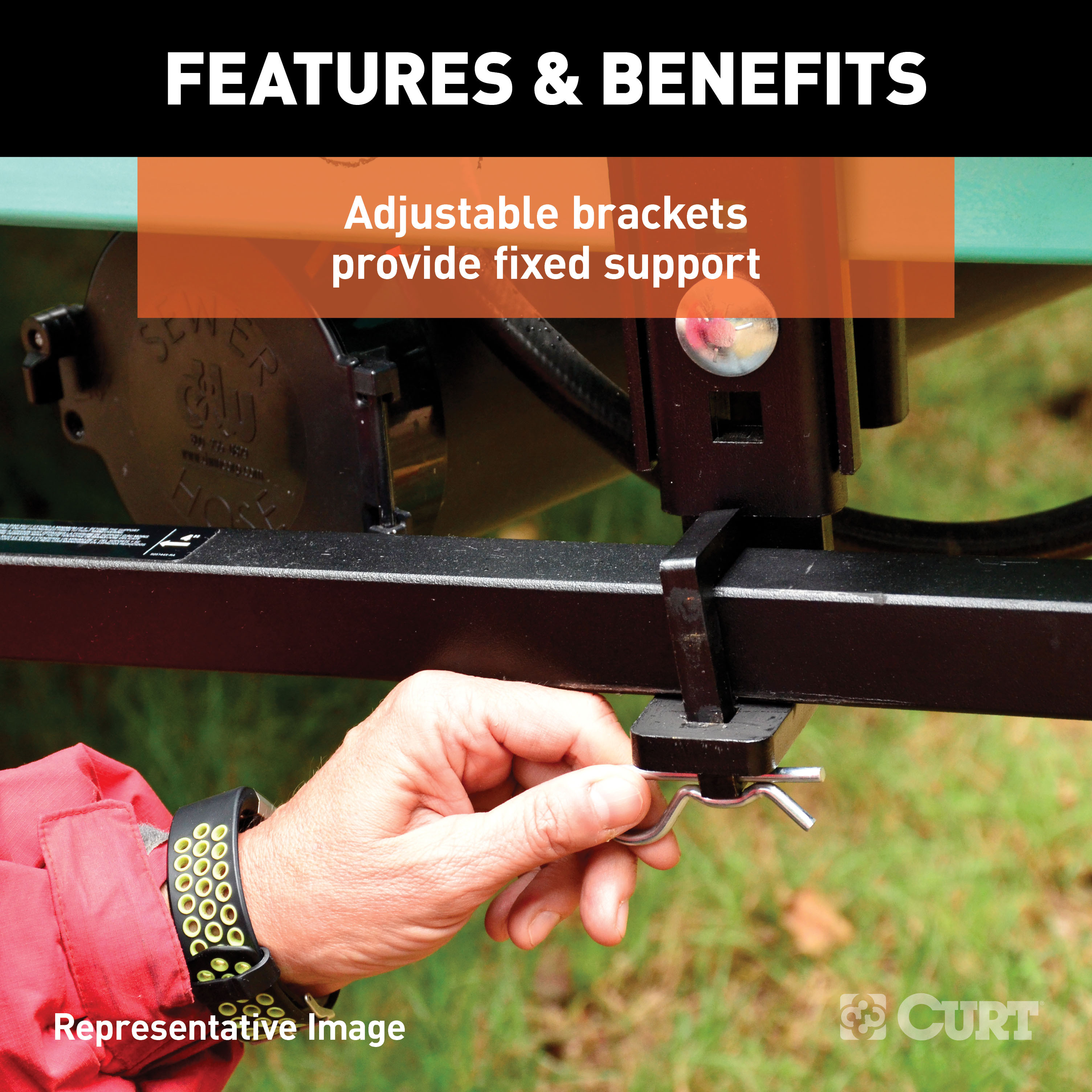
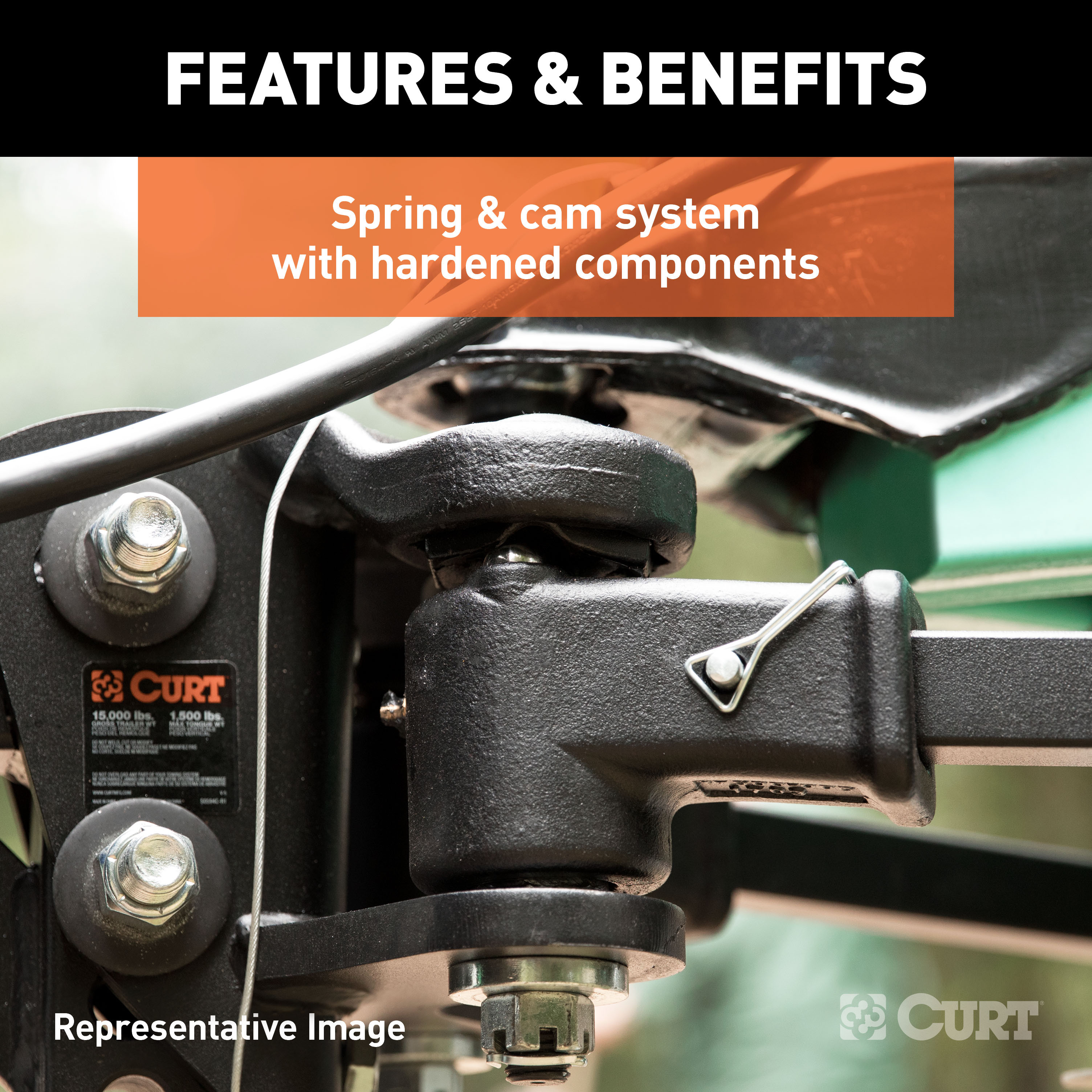
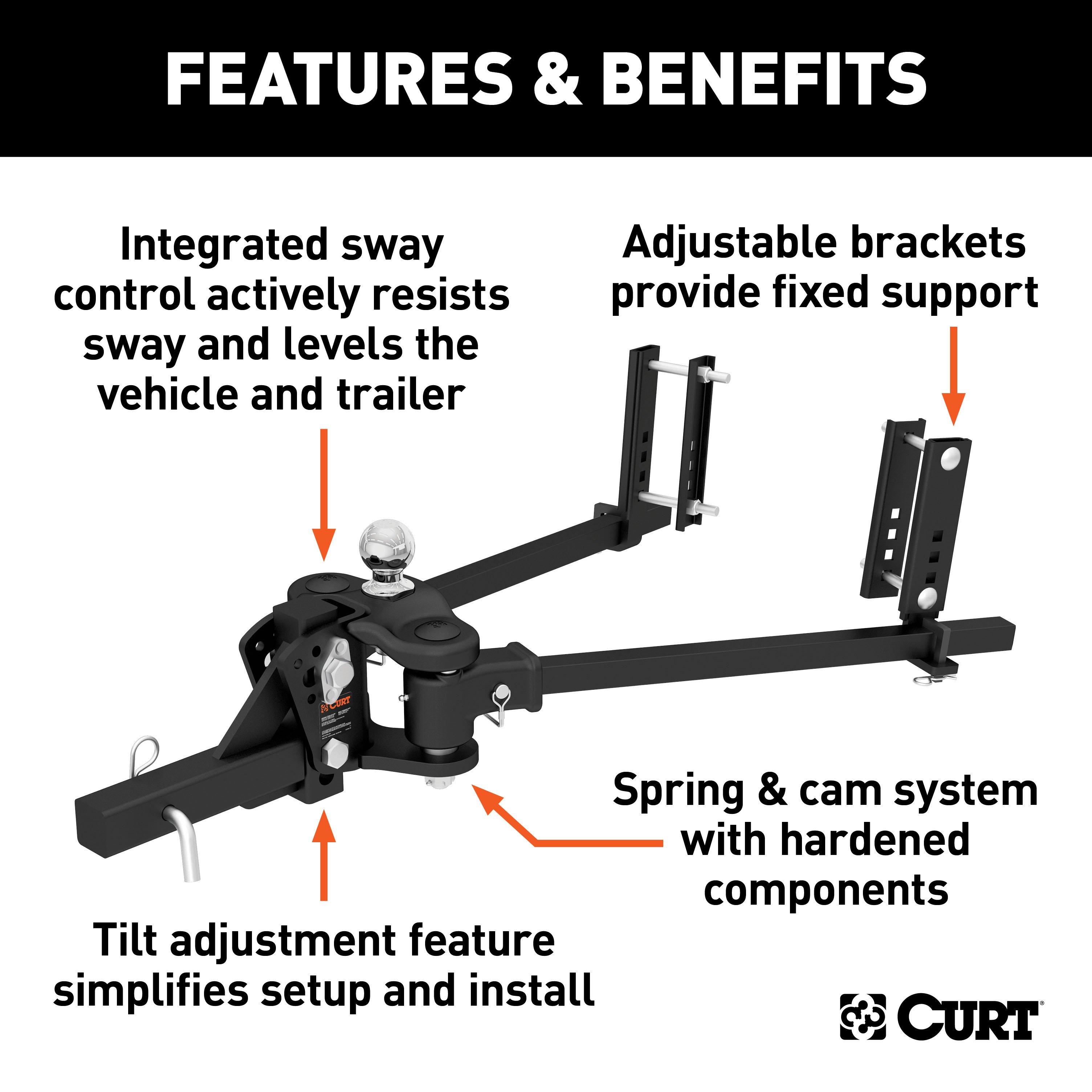
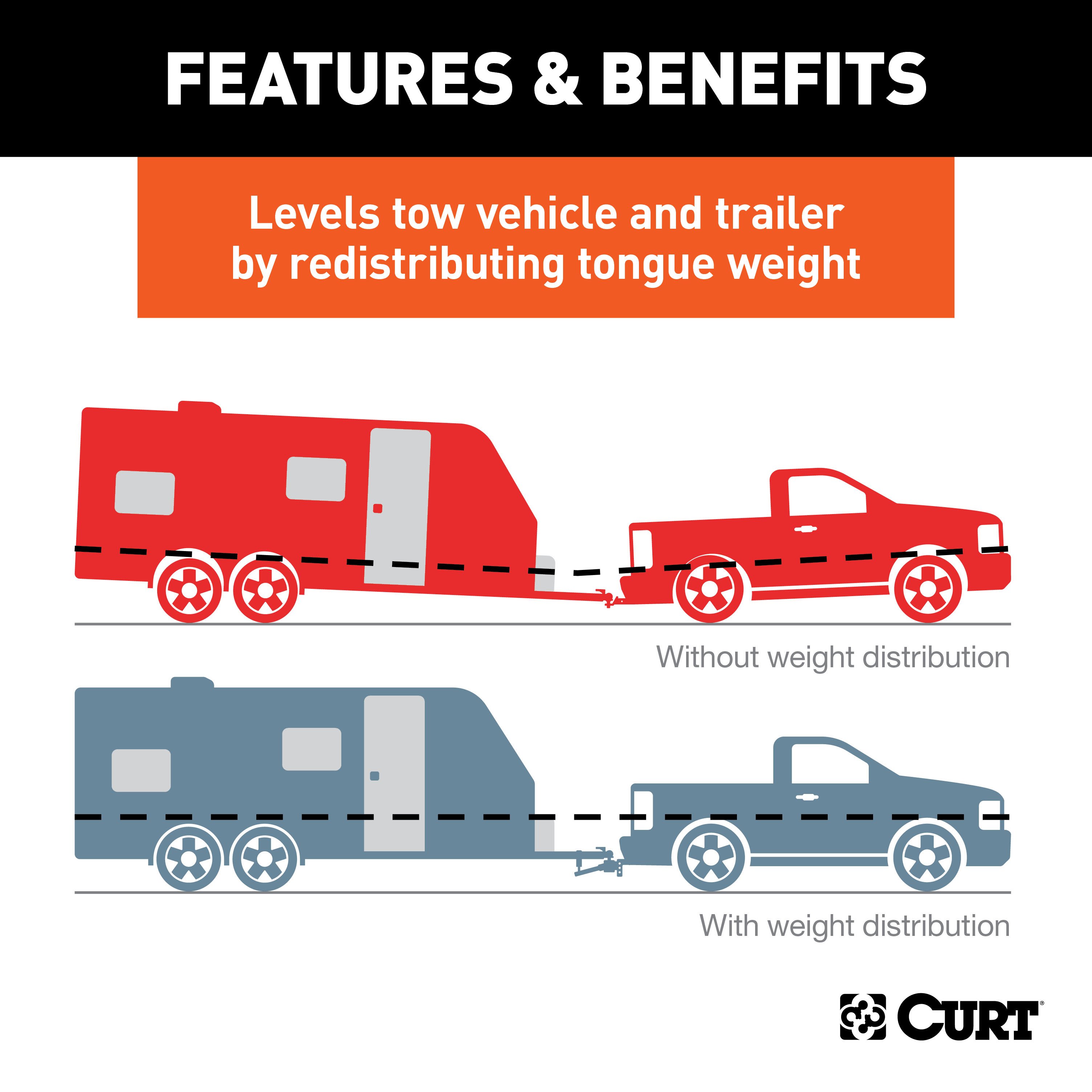
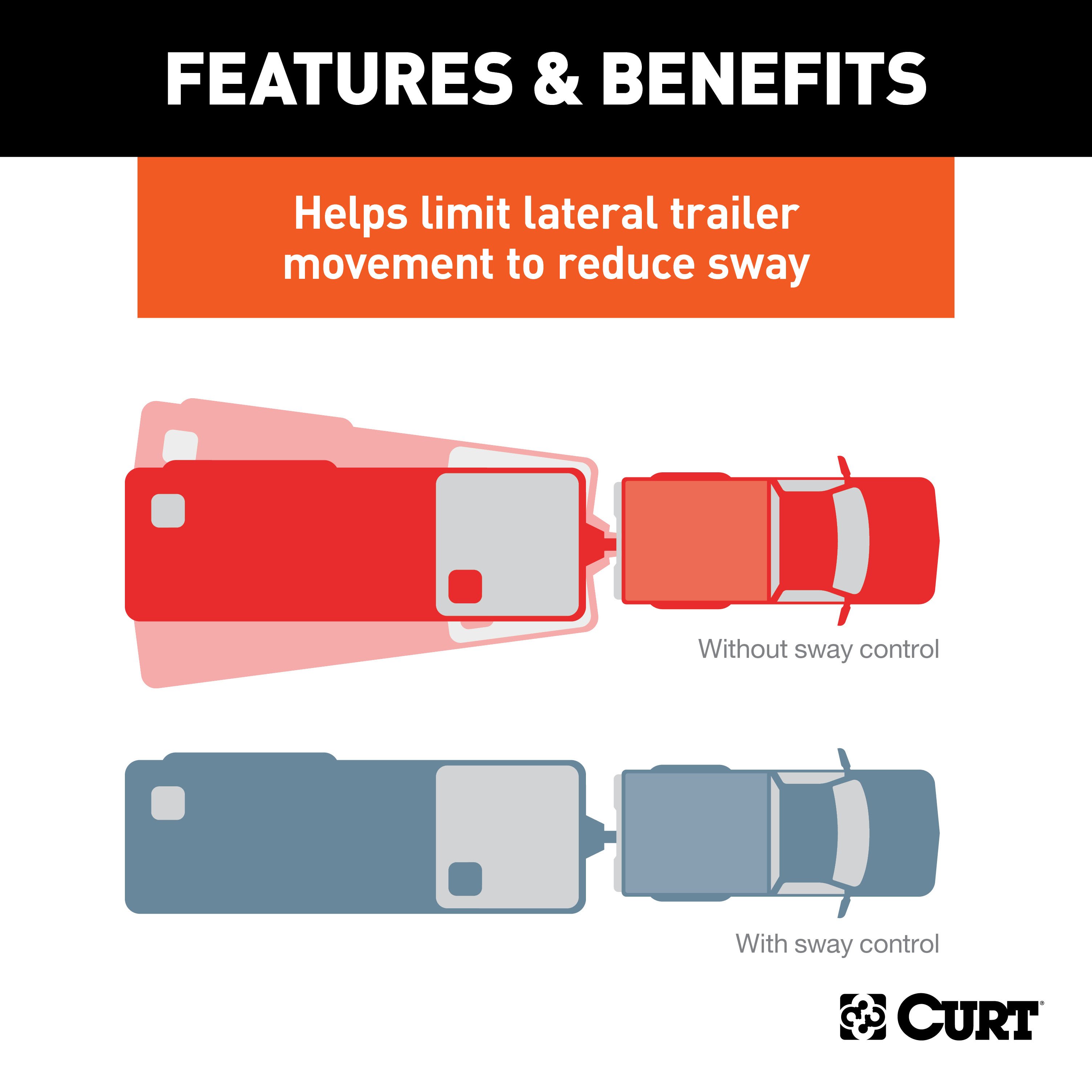
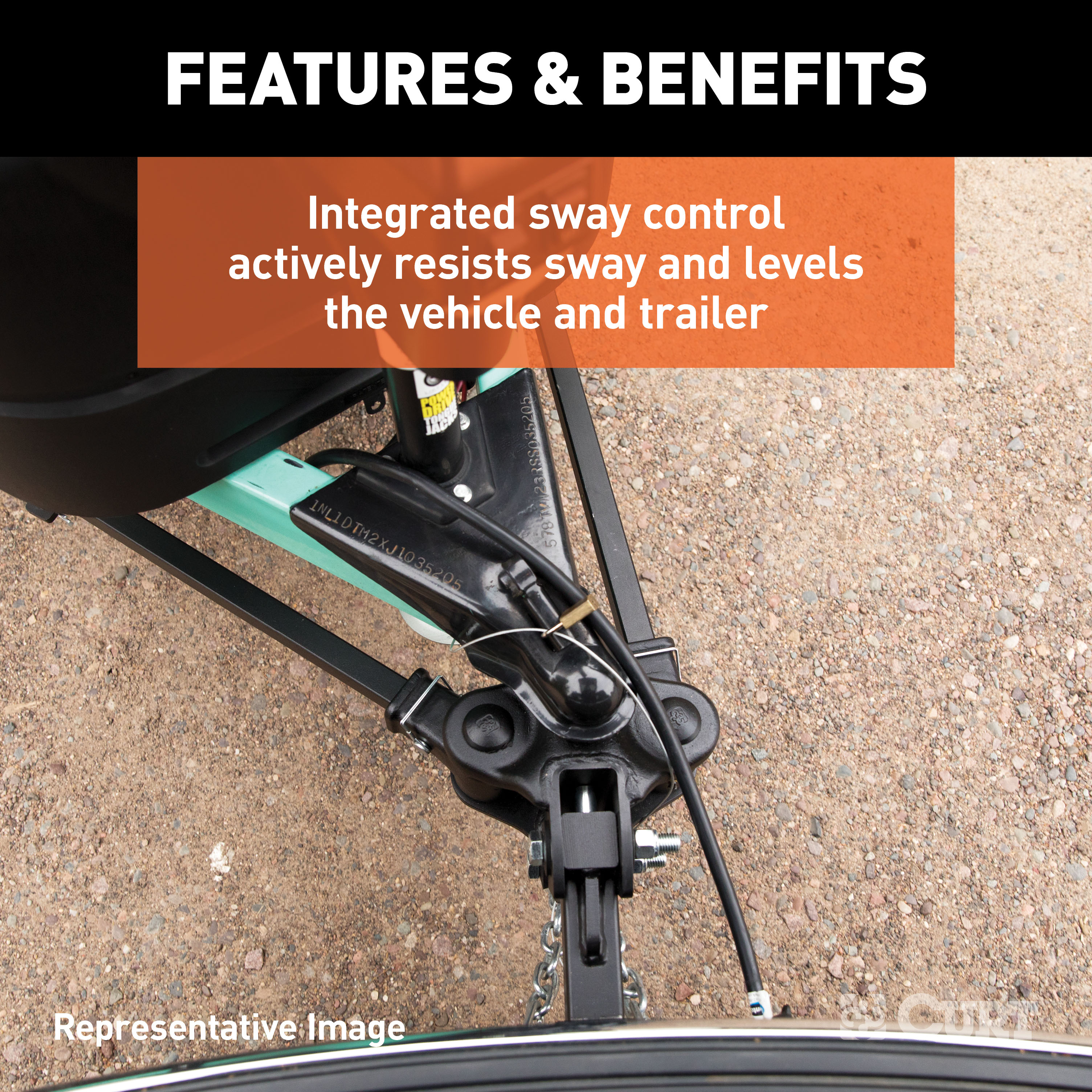
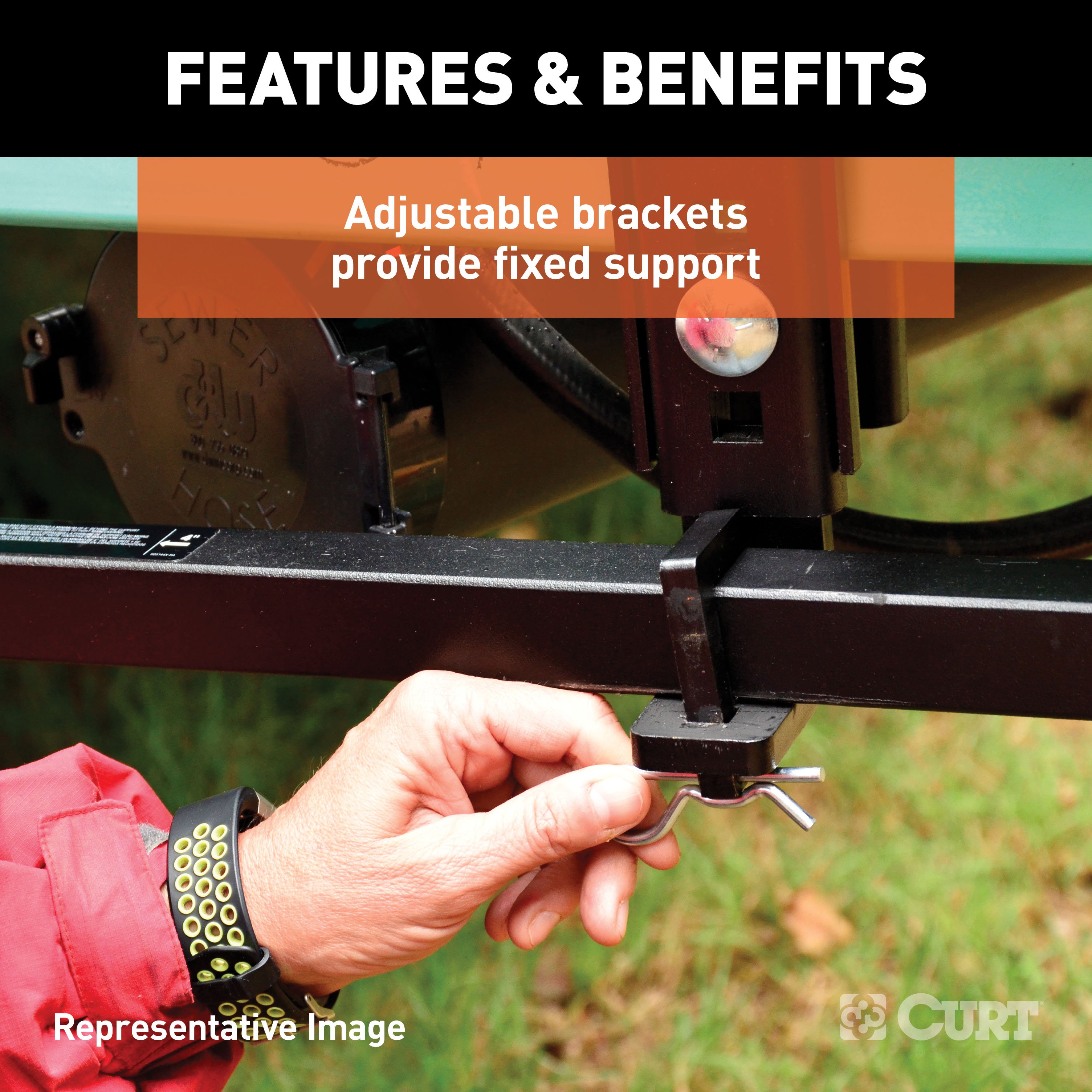
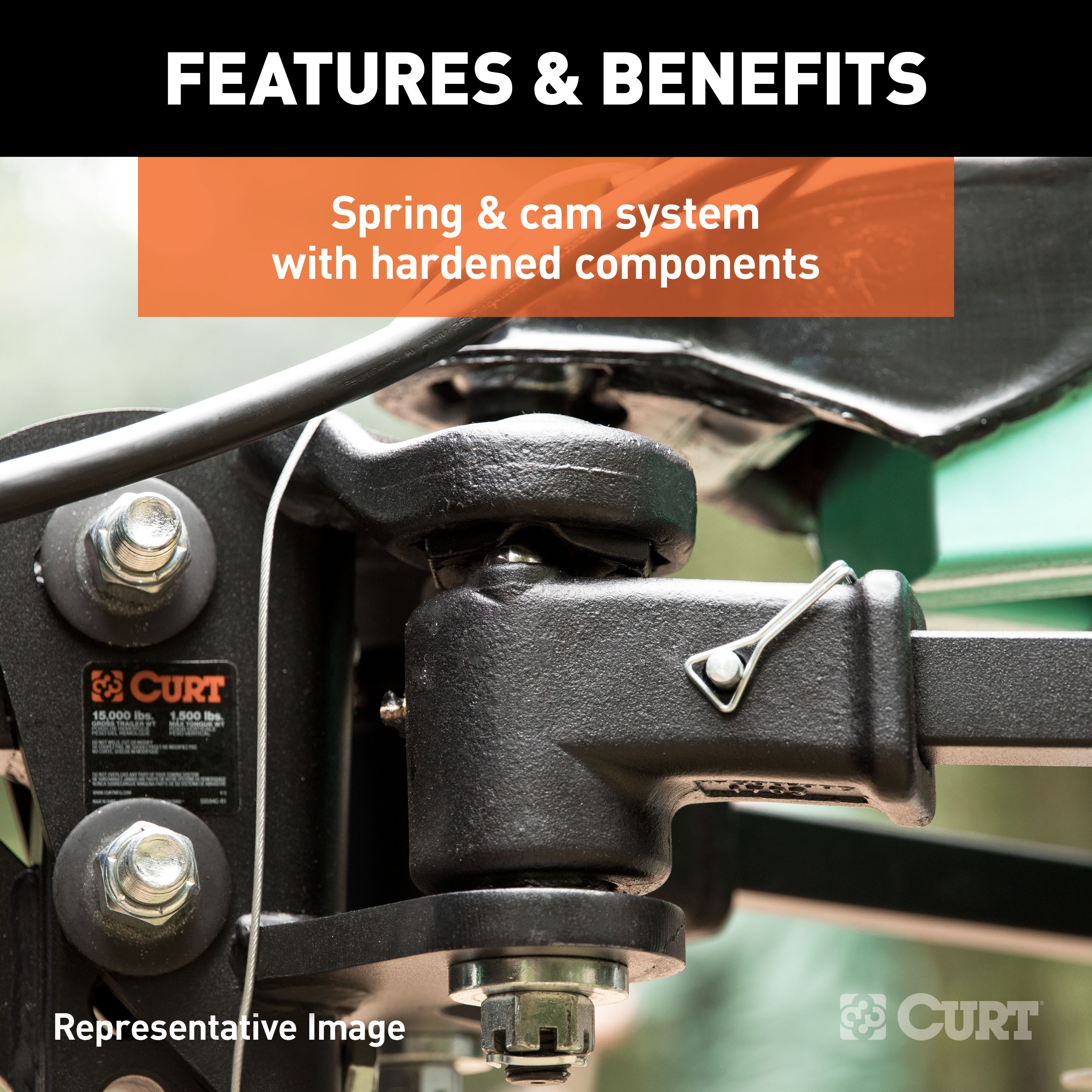
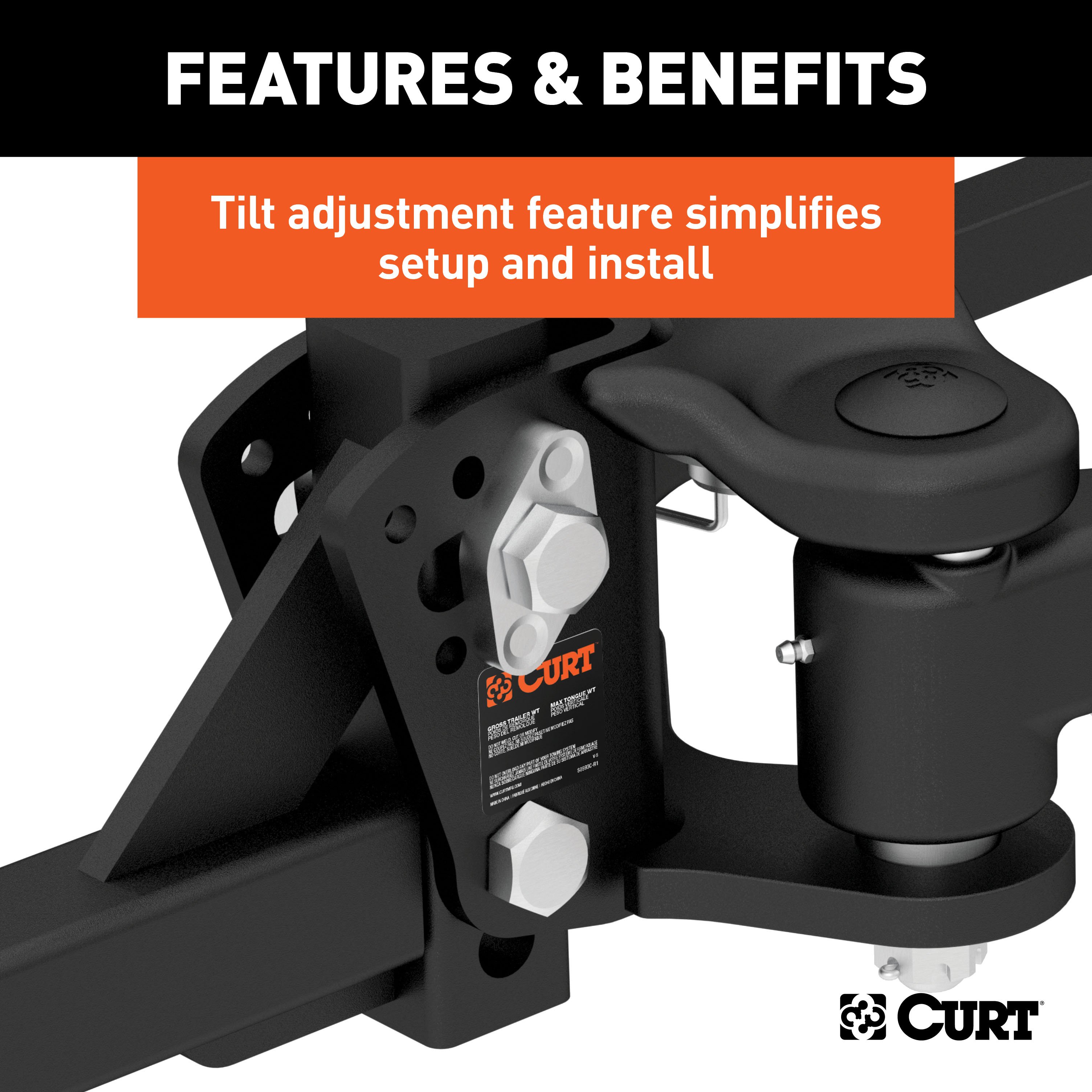
While many weight distribution hitches are made to be compatible with a sway control attachment, the CURT TruTrack is an advanced WD system that integrates the sway control function into the design of the hitch. It combines precise weight distributing with active sway control to deliver the smoothest, safest ride possible. This, coupled with the easiest setup in the industry, truly makes the TruTrack unparalleled in its class. Like all WD hitches, the TruTrack 4P uses a pair of spring bars to leverage the trailer tongue weight and spread it across all axles of the vehicle-trailer combination. However, instead of using spring bar chains, the TruTrack connects to the trailer frame using heavy-duty, adjustable support brackets that hold the spring bars in place laterally and vertically. While regular spring bars angle from side to side, the integrated sway control arms resist this movement and keep the trailer better aligned. The TruTrack also features a unique spring and cam system that builds up pressure to actively stop sway and then relaxes to make smooth turns. The hardened components are less subject to wear and last longer than competitor models. Setting up the TruTrack WD hitch is faster and easier. While other WDs use washers and blind guesswork to find the proper tilt, the TruTrack employs interlocking nuts and six preset holes to provide specific angles of tilt and a simpler adjustment method. Unlike most WD hitches that require you to partially disassemble the hitch head to make adjustments, the interlocking nuts can easily be accessed on the outside of the head, making installation fast and adjustment easy. In addition to its integrated sway control and easy setup, the CURT TruTrack offers the same great quality as our other WD hitches, making it the perfect choice for campers, livestock trailers, car haulers and other heavy-duty trailers.

CURT offers a variety of high-quality trailer hitches and accessories for select vehicle models. Find the perfect fit for your towing needs at TowUniverse.
CURT, a Lippert brand, offers a complete line of towing products and is the leading manufacturer of custom-fit trailer hitches. We offer the broadest selection of custom-fit hitches, and each one is designed, welded, and coated in Wisconsin.
CURT is also a leader in flat towing products, as well as 5th wheel, gooseneck, and weight distribution hitches, ball mounts, electrical components, cargo solutions, and other towing accessories.
For everything from passenger cars and vans to full-size pickups and SUVs, CURT is 'The First Name in Towing Products®.'

Experts available to answer your questions
Call 888-634-9494Rediscover "Us" Time | Tested. Proven. Safe. Towing Products
The CURT 17500 has a maximum gross trailer weight (GTW) of 10,000 lbs and tongue weight (TW) of 1,000 lbs without spring bars. With spring bars, the GTW is 8,000–10,000 lbs and TW is 800–1,000 lbs. Never exceed your vehicle manufacturer's recommended towing capacity.
Required tools are a ratchet, socket set, torque wrench, and tape measure. Installation is rated as moderate difficulty.
The 3/4" hex bolts (#7 and #9) must be torqued to 200 lb-ft after the correct tilt position has been determined and the tow vehicle is level. Failure to tighten these bolts to specification may result in complete system failure.
Yes, the adjustable shank may be inverted to obtain proper ball height on high-ground-clearance vehicles. If the shank is inverted, check for adequate ground clearance.
Yes. The spring bars come preset in the narrow (30°) position for frames 50° and less. For wider frames (over 50°), you must adjust the cam blocks to the 70° position. Adjustment involves removing cotter pins, castle nuts, springs, and carriage bolts, then rotating the cam block to the next position.
Before towing, check: hitch pin & clip (securing shank to receiver), head to shank fasteners, trailer ball nut, coupler latch, spring bar support brackets, safety chains, lights and turn signals, and braking system (including breakaway switch). Apply grease to the grease zerk and brush grease on inner and outer ball bearings before each use.
The CURT 17500 is a weight distribution hitch designed for A-frame trailers. It uses spring bars to distribute tongue weight across the tow vehicle's axles, improving stability and handling. The hitch head mounts on an adjustable shank that inserts into the vehicle's receiver tube, and the spring bars attach to support brackets on the trailer A-frame.
Without spring bars, the CURT 17500 supports a maximum gross trailer weight of 10,000 lbs and tongue weight of 1,000 lbs. However, the weight rating is dependent upon the trailer ball manufacturer's weight ratings. Do not exceed the maximum weight rating of the trailer ball.
The CURT 17500 spring bars can be positioned at 30° (narrow setting, preset) or 70° (wide setting). The 30° position is for A-frame trailers with frames 50° and less. The 70° position is for wider frames over 50°. The position is adjusted by rotating the cam blocks inside the hitch head.
First, measure the trailer coupler height from pavement to the top of the coupler socket with the trailer level. Then, measure the tow vehicle's front and rear bumper heights to pavement. For cars, vans, and small SUVs, add 1/8" to the coupler height for each 100 lbs of tongue weight to determine the target uncoupled ball height. This allows for vehicle squat when the trailer is coupled.
Yes. For vehicles with air springs, air shocks, or automatic leveling systems, check the vehicle owner's manual or other instructions on these items. Unless otherwise indicated, air springs and air shocks should be deflated to their minimum recommended pressure before assembling and adjusting the weight distribution hitch.
Slide the hitch head up or down on the adjustable shank to the nearest bolt hole alignment position that corresponds with the target uncoupled ball height determined in Step 3. Mark the position on the shank. Then loosely attach the hitch head to the shank using the head tilt spacers in the initial position shown in the manual.
For initial setup, place the head tilt spacers (#6) into Position 1. The 3/4" hex bolts (#7, #9) should be tightened just enough to hold the spacers in the hitch head. These bolts will be fully torqued to 200 lb-ft after the correct tilt setting has been determined.
Mark the position of the support brackets by making a center line on the trailer A-frame 4" in from the end of the spring bars. Place a carriage bolt through the top hole on all three support brackets, spin the nylock nut loosely onto the bolt, and hang the assembly over the trailer A-frame on the center line. The wide channel bracket should be installed over the narrow channel. Slide the L-support between the two captive support brackets and set the bracket height closest to the spring bar position. Install the second carriage bolt in the first hole directly below the trailer A-frame. Tighten both nylock nuts to 25 lb-ft.
Pull the spring bar out from the A-frame and hook the lift bar into the L-bracket. Pry the spring bar onto the L-bracket by rotating the lift bar to vertical. With the spring bar supported by the L-bracket, remove the lift handle. Secure the spring bar by installing the retainer clip and cotter pin. Repeat for the second spring bar on the opposite side.
If the tow vehicle cannot be leveled with Position 1, increase the tilt position. Each position increases spring bar height: Position 1 is 9.25", Position 2 is 10.75", Position 3 is 12.75", Position 4 is 14.75", and Position 5 is 16". After determining the correct tilt position and leveling the vehicle, torque the 3/4" hex bolts and nylock nuts to 200 lb-ft.
With the spring bars secured, lower the jack to apply load to the hitch. The vehicle should settle evenly. Remeasure the front and rear bumper reference points. If the front has settled much more than the rear, lower the L-brackets to reduce the load on the spring bars. The spring bars should be nearly horizontal when correct height is achieved.
The castle nuts on the spring bar carriage bolts should be torqued to 75 lb-ft. After torquing, reinstall the cotter pins.
The nylock nuts on the support bracket carriage bolts should be torqued to 25 lb-ft initially when installing the L-support. After the correct tilt position has been determined, the 3/4" hex bolts and nylock nuts must be torqued to 200 lb-ft.
The loaded ball height should never be greater than the uncoupled ball height. If it is, front wheel overload and loss of rear wheel traction can result, leading to unstable handling, reduced braking ability, and a tendency to jackknife when turning and braking at the same time. If the loaded trailer ball height is greater than the uncoupled height, reduce take-up on the spring bar, remeasure, and adjust until the proper height is obtained.
Keep clear of the pivot path of all moving parts when there is tension on the spring bar. Maintain control of the lift handle at all times when raising or lowering the spring bar. Be sure that the locking clip and cotter pin are in place once the spring bar is in position.
Keep the socket-mounted ends of the spring bars and the lock pins in the head assembly free from dirt and well lubricated. Excessive wear in this area may indicate overload or inadequate lubrication. Keep the head assembly exterior clean and do not allow dirt or stones to lodge between the spring bars and the head. Keep hitch parts painted to prevent rust and maintain good appearance; do not paint over labels. Keep lift brackets clean and lubricated to ensure ease of operation. Apply grease to the grease zerk and brush grease on inner and outer ball bearings before each use.
Apply grease to the locations shown in the manual prior to each use to ensure quiet and trouble-free operation. Specifically, grease the grease zerk and brush grease on the inner and outer ball bearings.
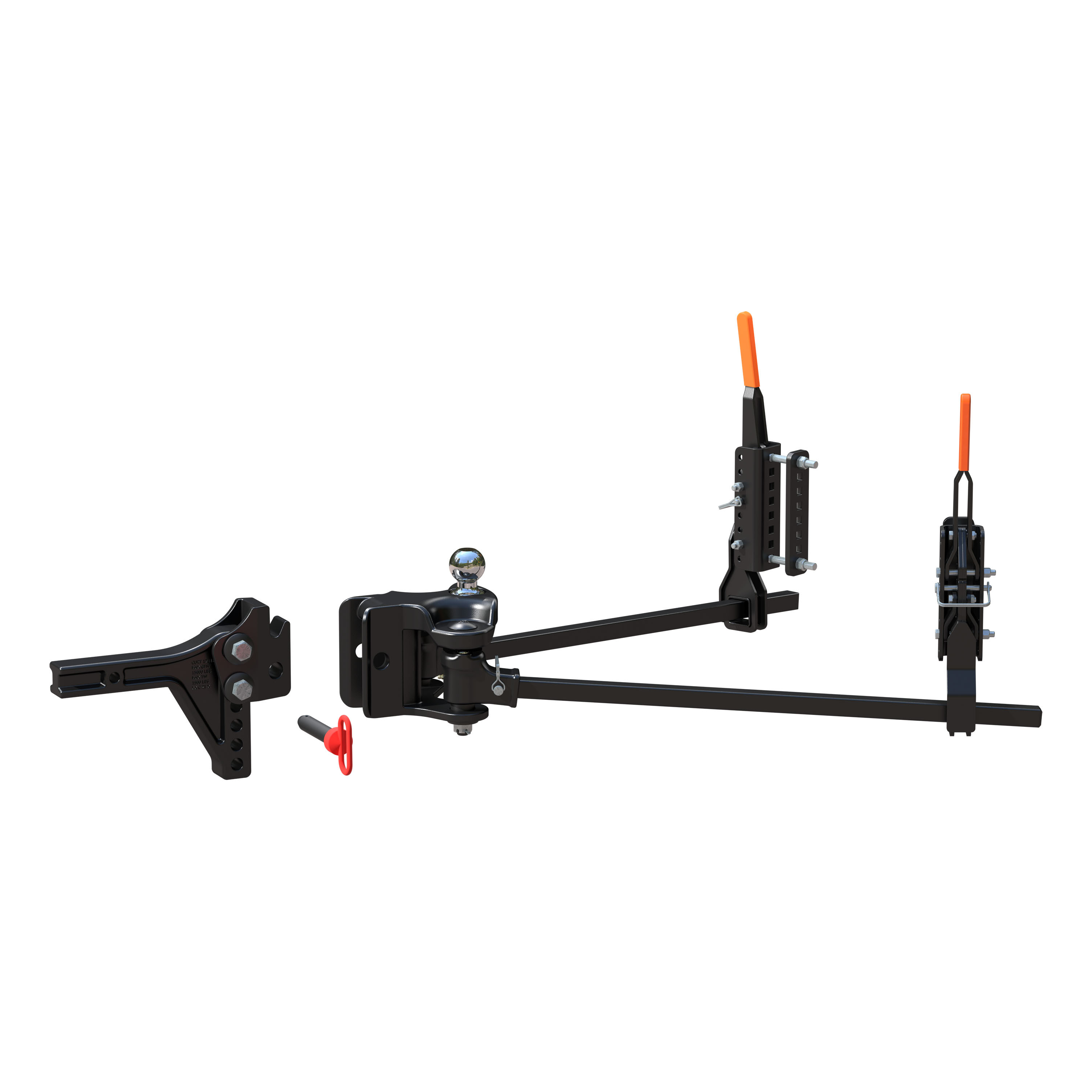
The CURT 17500 includes: 1 hitch head, 1 adjustable shank, 2 spring trunnion bars, 2 spring bar support brackets, 1 snap-up handle, 2 head tilt spacers, 1 hex bolt 3/4"-10 x 5", 2 nylock nuts 3/4"-10, 1 hex bolt 3/4"-10 x 4", 2 wire lock lynch pins, and 1 hitch pin & clip 5/8".
Remove the weight from the spring bars by using the trailer jack to lift the front of the trailer and rear of the tow vehicle. With the tension removed from the spring bars, carefully remove the cotter pin and retainer clip. With the spring bar retainer clip removed, use the lift bar as a lever to pry the spring bar off of the L-bracket.
The head tilt spacers (#6) are used to set the initial tilt position of the hitch head on the adjustable shank. They are placed in Position 1 for initial setup and loosely held in place with the 3/4" hex bolts. The tilt position can be adjusted to Positions 2–5 if the vehicle cannot be leveled with Position 1, allowing more tension to be applied to the spring bars.
Secure the two spring bars (#3) with the wire lock lynch pins (#10). After raising the spring bars onto the L-brackets, install the retainer clip and cotter pin to secure each spring bar in position.
The snap-up handle (#5) is used as a lift bar to raise and lower the spring bars. It is hooked into the L-bracket to pry the spring bar onto the bracket when raising, and used as a lever to pry the spring bar off the bracket when lowering.
The tongue weight rating of the spring bars represents the capacity of a pair of bars, not an individual bar. With spring bars, the CURT 17500 supports a tongue weight of 800–1,000 lbs. Always use a pair of spring bars and be sure they are rated the same.
Yes. The CURT 17500 complies with regulation V-5, C.S.A. Standard D-264, and safety requirements for connecting devices and towing systems of the State of New York.
Yes. CURT stands behind the CURT 17500 with industry-leading warranties. To get copies of the product warranties, register your purchase, or provide feedback, visit warranty.curtgroup.com/surveys.
Yes. Some states require a clear view of license plates. Remove the trailer ball when not in use if it restricts the view of the license plate.
Periodic inspection of the CURT 17500 should be performed to ensure all hardware and components remain secure. Before each tow, check the hitch pin & clip (securing shank to receiver), head to shank fasteners, trailer ball nut, coupler latch, spring bar support brackets, safety chains, lights and turn signals, and braking system (including breakaway switch).
Lower the L-brackets to reduce the load on the spring bars. This will help achieve more even settlement between the front and rear of the vehicle. The spring bars should be nearly horizontal when correct height is achieved.
Reduce take-up on the spring bar, remeasure the ball height, and adjust until the proper height is obtained. The loaded ball height should never be greater than the uncoupled ball height, as this can cause front wheel overload, loss of rear wheel traction, unstable handling, reduced braking ability, and jackknife tendency.
Excessive wear in the socket-mounted ends of the spring bars and lock pins in the head assembly may indicate an overload or inadequate lubrication. Keep these areas free from dirt and well lubricated to prevent excessive wear.
| Part # | GTW | TW | Bar Length | Description |
|---|---|---|---|---|
| 17499 | 5,000 - 8,000 lbs. | 500 - 800 lbs. | 35-9/16" | WD system only (trailer ball not included) |
| 17500 | 8,000 - 10,000 lbs. | 800 - 1,000 lbs. | 35-9/16" | WD system (17500) and pre-torqued 2-5/16" trailer ball (40006) |
| 17501 | 10,000 - 15,000 lbs. | 1,000 - 1,500 lbs. | 35-9/16" | WD system (17501) and pre-torqued 2-5/16" trailer ball (40030) |

Total for 2 items:
$806.94$1,223.90
On Sale Today
Original price was $906.95. Current price is $609.95.You save $297.00 (33%)
Free Shipping
Ships free on all orders
 Authorized Dealer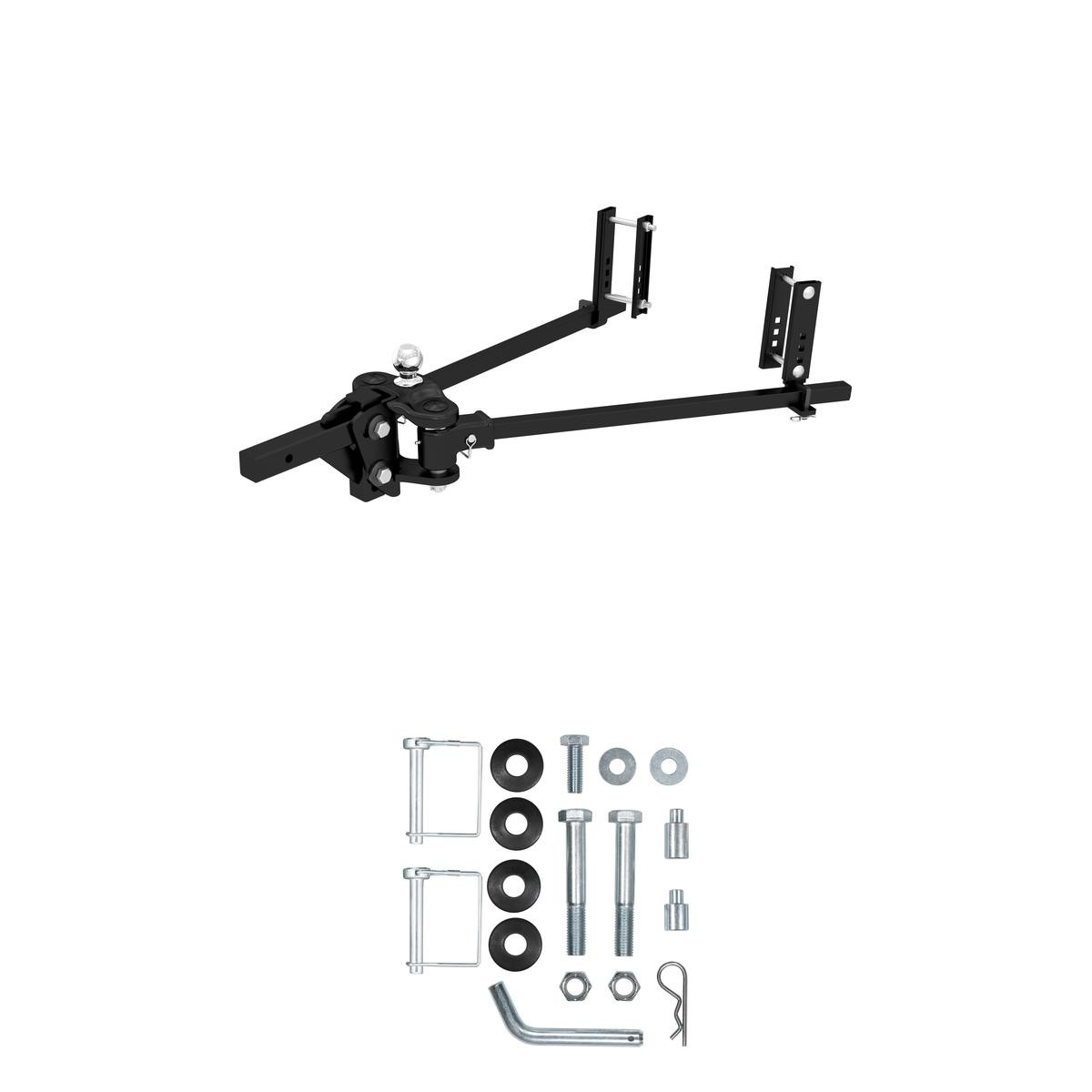

Quick Ship
In stock and ready to ship — order now!
Shipping from Eau Claire, WIFREE SHIPPING
Estimated delivery Sun, Sep 27 - Tue, Sep 29
Order before 2 PM EST Monday–Friday for same-day processing
Guaranteed safe & secure checkout
No reviews have been added for this product.